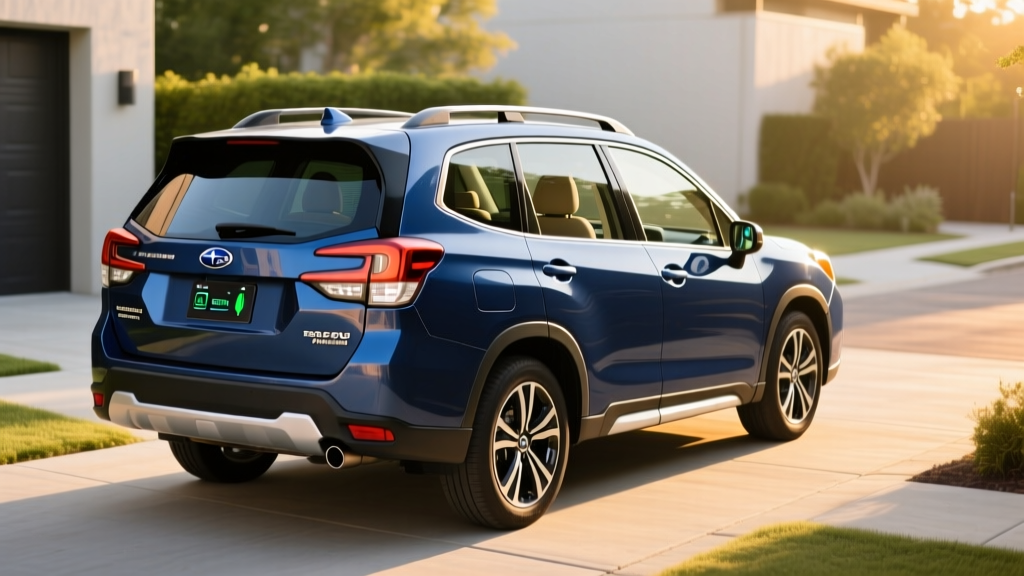
The 2026 Subaru Forester Hybrid Premium slots into one of the most competitive compact-SUV segments as a conventional hybrid (HEV) — meaning it recharges its own battery through regenerative braking and the gasoline engine, with no plug required. For buyers searching specifically for the Subaru Forester Hybrid Premium, the appeal is straightforward: standard all-wheel drive, meaningful fuel-economy gains over the gas-only Forester, and a price point that undercuts most plug-in hybrid and full-electric rivals.
This guide covers everything you need to decide whether the Forester Hybrid Premium is the right electrified SUV for your driveway — EPA fuel economy, real-world MPG expectations, powertrain details, battery longevity, tax-credit eligibility, and how it compares to PHEVs and BEVs.
Subaru Forester Hybrid Premium: Key Specs at a Glance
| Specification | 2026 Forester Hybrid Premium |
|---|---|
| Powertrain | 2.5L flat-4 + electric motor (HEV) |
| Combined Horsepower | ~194 hp (net system) |
| Drivetrain | Symmetrical AWD (standard) |
| EPA MPG (City / Hwy / Combined) | 35 / 34 / 35 (est.) |
| Fuel Tank | 14.0 gal |
| Total Driving Range | ~490 miles |
| Battery Type | Lithium-ion (sealed, ~1.1 kWh usable) |
| Plug-In Required? | No — self-charging HEV |
| 0–60 mph | ~7.6 sec (est.) |
| Cargo Volume (behind rear seats) | ~28.9 cu ft |
| Starting MSRP | ~$35,500 (est.) |
| Hybrid Battery Warranty | 8 years / 100,000 miles |
Note: Specs reflect Subaru's announced hybrid powertrain details and EPA projections for the 2026 model year. Verify final figures at fueleconomy.gov and Subaru USA before purchasing.
HEV vs. PHEV: What the Forester Hybrid Actually Is
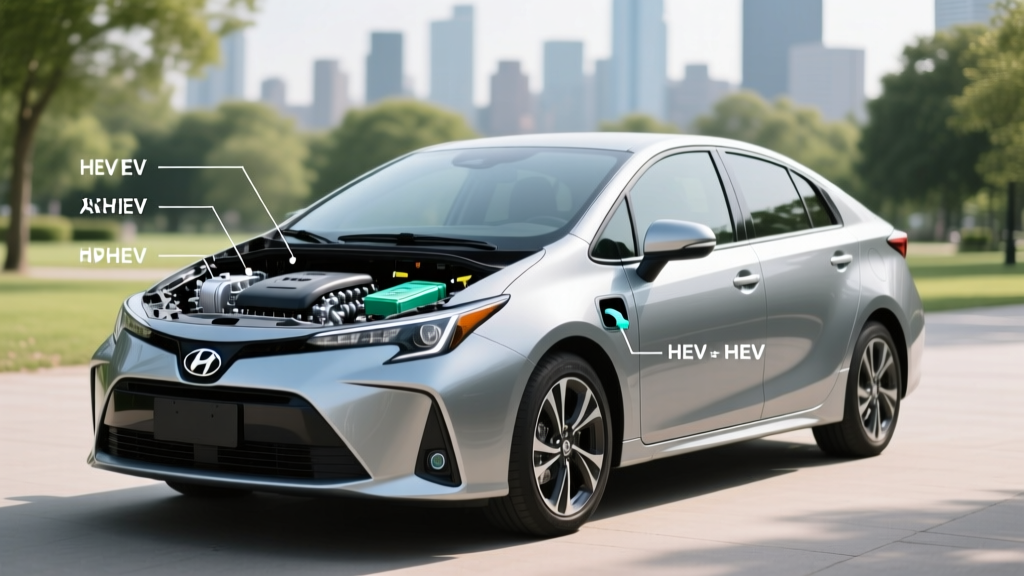
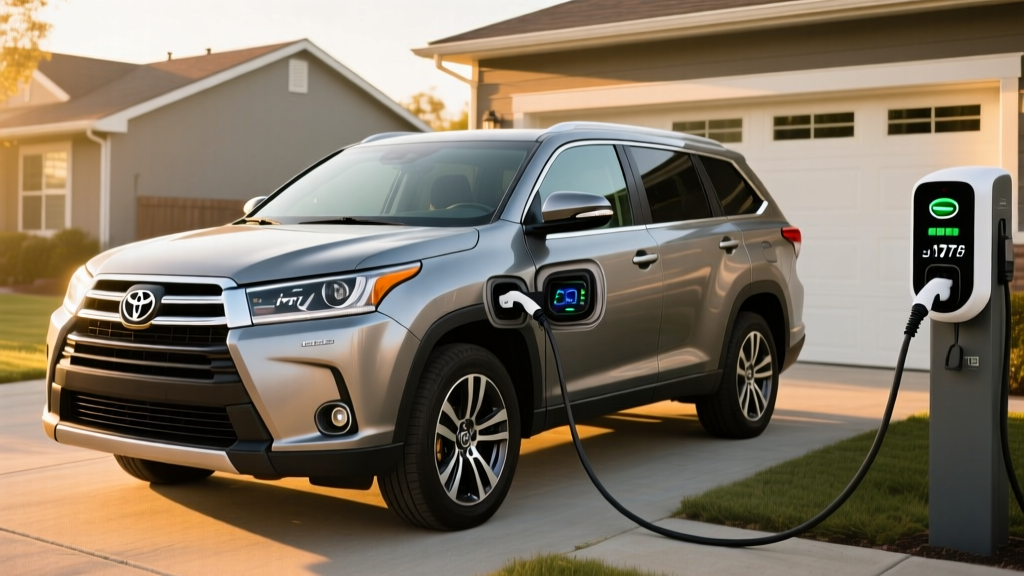
A common source of confusion in the hybrid market is the difference between a conventional hybrid (HEV) and a plug-in hybrid (PHEV). The 2026 Forester Hybrid Premium is an HEV. Here is what that means in practice:
| Feature | HEV (Forester Hybrid) | PHEV (e.g., Toyota RAV4 Prime) |
|---|---|---|
| Plug-in charging | No — charges via regen + engine | Yes — plug in for EV-only miles |
| Electric-only range | Less than 1 mile at low speed | 25–42 miles typical |
| Battery size | ~1–2 kWh | ~13–20 kWh |
| DC fast charging | No | Rarely (most PHEVs are L2 only) |
| Federal tax credit (§30D) | Not eligible | Up to $7,500 if eligible |
| Best for | Drivers who want better MPG without lifestyle change | Drivers with home charging who want short EV commutes |
The Forester Hybrid's small lithium-ion battery assists the gasoline engine during acceleration and captures energy during braking. You never plug it in — it simply refuels at any gas station like a conventional car. If you want electric-only commuting, you need a PHEV or a full battery-electric vehicle (BEV).
Fuel Economy: EPA Ratings and Real-World MPG
| Driving Condition | EPA Estimate | Real-World Expectation |
|---|---|---|
| City | 35 MPG | 34–38 MPG (hybrids often exceed EPA in stop-and-go) |
| Highway | 34 MPG | 30–33 MPG (sustained 70+ mph reduces regen benefit) |
| Combined | 35 MPG | 32–36 MPG depending on driving mix |
Hybrids like the Forester Hybrid Premium shine in city driving, where regenerative braking recaptures energy that a gas-only car wastes as heat at every stoplight. Expect the real-world city figure to match or slightly beat the EPA sticker. Highway driving is a different story: at sustained speeds above 65 mph, the electric motor provides minimal assistance, and aerodynamic drag dominates. Cold weather (below 30°F) will also reduce MPG by roughly 5–10% as the engine runs longer to heat the cabin and the battery's charge/discharge efficiency drops.
Compared to the gas-only 2026 Forester (approximately 26 city / 33 highway / 29 combined), the Hybrid Premium delivers a meaningful ~20% improvement in combined fuel economy — saving an estimated $400–$600 per year in fuel at 15,000 miles driven annually and $3.30/gallon.
Powertrain Details: Boxer Engine Meets Electric Assist
The Forester Hybrid Premium pairs Subaru's 2.5-liter naturally aspirated flat-four (boxer) engine with an electric motor integrated into the drivetrain. Combined system output is approximately 194 horsepower — a notable bump over the gas-only Forester's 180 hp. The electric motor fills in torque at low RPMs, which makes the hybrid feel more responsive from a stoplight and smoother during low-speed maneuvering.
Subaru's Symmetrical All-Wheel Drive remains standard, which is a key differentiator in the compact hybrid SUV segment. Most competitors (Toyota RAV4 Hybrid, Honda CR-V Hybrid) offer AWD, but Subaru's system is full-time rather than on-demand, providing more predictable traction in snow and rain. The hybrid battery is packaged under the rear seat area, preserving the Forester's 28.9 cu ft of cargo space and avoiding the compromised trunk floors that plagued earlier-generation hybrid SUVs.
Battery Longevity, Warranty, and Replacement Cost
Hybrid Battery Warranty
Coverage: 8 years / 100,000 miles (10 years / 150,000 miles in CARB states including CA, NY, MA, and others)
What's covered: Defects and capacity loss below a defined threshold (typically ~60–70% of original capacity)
Estimated out-of-warranty replacement cost: $2,500–$4,500 including labor (based on comparable Subaru/Toyota HEV battery replacements)
Hybrid battery anxiety is common among first-time hybrid buyers, but the data is reassuring. Modern lithium-ion HEV batteries use conservative charge/discharge windows — the Forester Hybrid never fully depletes or fully charges its small battery, which dramatically extends cycle life. Toyota's hybrid batteries (a comparable architecture) routinely last 150,000–200,000+ miles before notable degradation. Subaru's hybrid system, developed with Toyota collaboration, follows similar engineering principles.
If a replacement is eventually needed, the cost is far lower than a full EV battery swap. A hybrid's ~1–2 kWh battery is a fraction of the size of a BEV's 60–100 kWh pack, and independent hybrid shops increasingly offer refurbished battery modules for $1,500–$2,500 as an alternative to OEM replacement.
Pricing, Trims, and Tax Credit Eligibility
The 2026 Subaru Forester Hybrid Premium is expected to start around $35,500 MSRP, positioning it between the gas-only Forester Premium (~$32,000) and fully loaded Forester Touring Hybrid trims. The hybrid powertrain is available across multiple trim levels, with the Premium serving as the volume seller.
Federal Tax Credit Status: Not Eligible
- The Forester Hybrid is a conventional HEV, not a plug-in vehicle
- IRS §30D clean vehicle credit applies only to PHEVs and BEVs with ≥4 kWh battery capacity and plug-in capability
- No federal tax credit is available for this vehicle
- Some states or utilities may offer small rebates for hybrid purchases — check your local programs
- Verify current rules at IRS.gov §30D
While the lack of a federal tax credit stings compared to PHEVs like the RAV4 Prime or BEVs like the Hyundai Ioniq 5, the Forester Hybrid Premium's lower base price and zero charging-infrastructure cost often result in a lower total cost of ownership for buyers who cannot install a home charger or who drive in areas with sparse public charging.
Forester Hybrid Premium vs. PHEV vs. Full EV: Which Fits You?
Choose the Forester Hybrid (HEV) if:
- You have no access to home or workplace charging
- You want better MPG with zero change to your refueling routine
- You drive in cold climates where EV range loss is a concern
- You want standard AWD for snow/bad weather without EV price premiums
- Your budget is $33,000–$40,000 and you want to avoid charging logistics
Choose a PHEV (e.g., RAV4 Prime, Forester PHEV if available) if:
- You can install a Level 2 home charger
- Your daily commute is under 30 miles round-trip (covers most EV-only range)
- You want to qualify for the §30D federal tax credit (up to $7,500)
- You want EV-like quietness on short trips with gas flexibility for road trips
Choose a Full BEV (e.g., Ioniq 5, Tesla Model Y) if:
- You have reliable home Level 2 charging
- You want zero tailpipe emissions and the lowest per-mile fuel cost
- You drive under 300 miles daily and can plan DC fast-charging stops for road trips
- You want maximum tax credit eligibility and lowest long-term maintenance cost
Pros and Cons: The Honest Assessment
Pros
- ~35 MPG combined with standard AWD — strong efficiency for the segment
- No plug-in required — zero charging infrastructure needed
- ~194 hp hybrid system is more responsive than gas-only Forester
- Preserved cargo space (no battery intrusion)
- 8-year/100k-mile hybrid battery warranty (10/150k in CARB states)
- Subaru's EyeSight safety suite standard (pre-collision braking, adaptive cruise, lane keep)
Cons
- No federal tax credit (HEVs excluded from §30D)
- Highway MPG barely exceeds gas-only Forester at sustained speeds
- No electric-only driving mode for meaningful zero-emission miles
- Premium trim misses some features available on Touring Hybrid (ventilated seats, panoramic roof)
- CVT transmission can drone under hard acceleration (common to most hybrids)
Frequently Asked Questions
How many MPG does the Subaru Forester Hybrid Premium get?
The 2026 Forester Hybrid Premium is EPA-rated at approximately 35 city / 34 highway / 35 combined. Real-world results typically range from 32–38 MPG depending on driving conditions — city-heavy routes trend toward the higher end, while sustained highway driving and cold weather pull the average down.
Does the Forester Hybrid need to be plugged in?
No. The Forester Hybrid is a conventional HEV. Its small lithium-ion battery charges through regenerative braking and the gasoline engine. You refuel it at a gas station like any other car.
How far can the Forester Hybrid go on electric power alone?
Less than one mile, and only at very low speeds (under 25 mph). The HEV system uses its electric motor to assist the engine and enable brief engine-off coasting, but it is not designed for meaningful electric-only driving. For 25–40 miles of EV range, you need a PHEV.
Is the Subaru Forester Hybrid reliable?
Subaru's hybrid system benefits from Toyota's hybrid engineering collaboration, and the brand's hybrid batteries carry an 8-year/100,000-mile warranty (extended in CARB states). Subaru's EyeSight driver-assistance system has strong safety records with IIHS. Long-term reliability data for the redesigned hybrid platform is still accumulating, but the architecture is proven in Toyota's hybrid lineup.
What does a Forester Hybrid battery replacement cost?
Out-of-warranty hybrid battery replacement is estimated at $2,500–$4,500 including labor at a Subaru dealer. Independent hybrid specialists may offer refurbished modules for $1,500–$2,500. Most hybrid batteries last well beyond 150,000 miles with proper operation.
Does the Forester Hybrid Premium qualify for any tax credits?
No federal tax credit applies — the IRS §30D clean vehicle credit is limited to plug-in vehicles (PHEVs and BEVs). Some state programs, local utilities, or employer incentives may offer small rebates for hybrid purchases. Check IRS.gov and your state's energy office for current programs.
How does the Forester Hybrid compare to the RAV4 Hybrid?
The Toyota RAV4 Hybrid (219 hp, ~41 MPG combined) is the segment benchmark for efficiency. The Forester Hybrid trades a few MPG for standard full-time AWD, better outward visibility, and Subaru's reputation for ruggedness. Both are strong choices; the RAV4 Hybrid wins on pure fuel economy, while the Forester Hybrid wins on all-weather confidence and interior practicality.
Sources: EPA fueleconomy.gov, Subaru of America, IRS Clean Vehicle Credits, IIHS.