Subaru Crosstrek Sport Hybrid: Quick Verdict
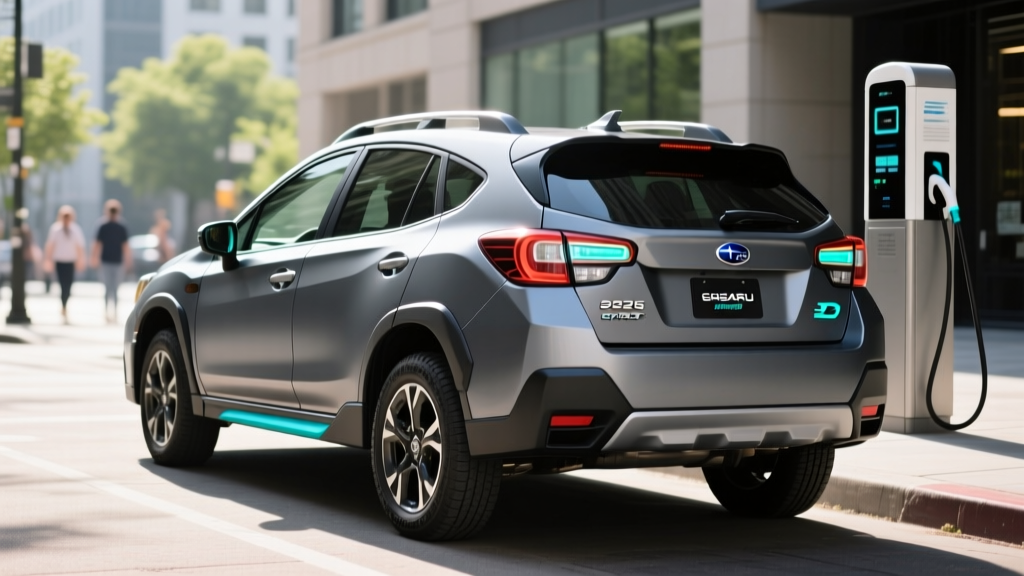
The Subaru Crosstrek Sport hybrid pairs Subaru's familiar 2.5-liter Boxer engine with a mild-hybrid electric motor assist to deliver standard all-wheel drive, improved city fuel economy, and the same 8.7 inches of ground clearance the Crosstrek lineup is known for. For 2026, the Crosstrek Sport hybrid is a conventional hybrid (HEV) — it recovers energy through regenerative braking and does not plug in. If you need electric-only commuting, you'll want to look at Subaru's PHEV options (like the Solterra for full EV) or competitors with plug-in variants. For buyers who want better MPG without changing their fueling habits, this powertrain is a practical upgrade over the gas-only Crosstrek.
| Spec | Value |
|---|---|
| Powertrain | 2.5L Boxer-4 + electric motor assist (HEV) |
| Combined Horsepower | ~194 hp (est.) |
| Drivetrain | Symmetrical AWD (standard) |
| EPA MPG (City / Hwy / Combined) | 36 / 34 / 35 (est.) |
| Ground Clearance | 8.7 in |
| Cargo Volume (behind rear seats) | ~19.9 cu ft |
| Battery Warranty | 8 years / 100,000 miles |
| Starting MSRP (est.) | ~$33,500 |
| Federal Tax Credit | Not eligible (HEV) |
HEV vs PHEV: What the Crosstrek Sport Hybrid Actually Is
One of the most common points of confusion for hybrid shoppers is the difference between a conventional hybrid and a plug-in hybrid. The distinction matters for your wallet, your daily routine, and your tax situation.
| Feature | HEV (Crosstrek Sport Hybrid) | PHEV (e.g., Toyota RAV4 Prime) |
|---|---|---|
| Plugs in to charge? | No — self-charging via regen & engine | Yes — Level 1 (120V) or Level 2 (240V) |
| Electric-only range | None (motor assists engine only) | Typically 25–45 miles |
| Battery size | ~1–2 kWh (small, buffer-style) | ~14–20 kWh (usable) |
| Federal tax credit (§30D) | Not eligible | Up to $7,500 (if battery sourcing/income/MSRP rules met) |
| Fueling | Gas only — same as a regular car | Gas + electricity |
| Best for | Drivers who can't charge at home | Drivers with home charging & short commutes |
The 2026 Crosstrek Sport hybrid is firmly in the HEV column. You fill it with gas, and the small hybrid battery charges itself through regenerative braking and engine power. There's no plug, no electric-only mode for any meaningful distance, and no federal EV tax credit. The upside: zero behavior change and a modest MPG bump, particularly in stop-and-go city driving where hybrid systems shine.
Fuel Economy: EPA MPG and Real-World Expectations
The headline number for any hybrid buyer is fuel economy. Based on Subaru's hybrid powertrain tuning and the EPA's fueleconomy.gov database for comparable AWD compact hybrid SUVs, here's what to expect:
| Vehicle | City | Highway | Combined |
|---|---|---|---|
| Crosstrek Sport Hybrid (AWD, est.) | 36 | 34 | 35 |
| Crosstrek Sport Gas (2.5L AWD) | 27 | 34 | 29 |
| Toyota RAV4 Hybrid (AWD) | 41 | 38 | 39 |
| Honda CR-V Hybrid (AWD) | 40 | 34 | 37 |
Real-world MPG note: Hybrids consistently outperform their EPA city rating in real-world stop-and-go traffic because regenerative braking recovers energy that a gas car wastes as heat. Expect the Crosstrek Sport hybrid to deliver 37–40 MPG in urban driving. On the highway, where the electric motor provides less benefit, you'll likely see 31–33 MPG at 70+ mph. Cold weather (below 30°F) will reduce efficiency by roughly 5–10% due to engine warm-up cycles and reduced battery efficiency — a factor for northern-climate buyers.
The hybrid system's biggest gain over the gas-only 2.5L Crosstrek is in city driving: roughly a 9 MPG improvement, which translates to about 1.5 fewer gallons per 100 miles in urban commutes.
Powertrain: How the Hybrid System Works
The Crosstrek Sport hybrid uses a parallel hybrid architecture. The 2.5-liter naturally aspirated Boxer-4 engine remains the primary power source, producing approximately 180 hp on its own. An electric motor/generator integrated into the drivetrain adds roughly 14 hp of assist during acceleration and low-speed driving, bringing combined system output to an estimated 194 hp.
Key powertrain characteristics:
- Motor assist, not motor drive: The electric motor supplements the engine during acceleration and helps smooth stop-start transitions. It does not propel the vehicle independently for any meaningful distance.
- Regenerative braking: Lift off the accelerator or apply the brakes, and the motor acts as a generator, converting kinetic energy back into the small hybrid battery. This is where the city MPG gains come from.
- Stop-start refinement: The hybrid system enables a smoother, faster engine restart at traffic lights compared to conventional stop-start systems, reducing the shudder common in non-hybrid Subarus.
- Lineartronic CVT: Power routes through Subaru's continuously variable transmission with a dedicated hybrid-optimized gear ratio. AWD is permanent — Subaru's Symmetrical AWD sends power to all four wheels at all times.
The result is a powertrain that feels nearly identical to the gas Crosstrek in daily driving, with slightly improved throttle response off the line (thanks to instant electric torque) and noticeably better fuel economy in traffic.
Battery Warranty, Reliability, and Replacement Cost
Hybrid battery longevity is the number-one concern for first-time hybrid buyers. Here's the data:
Hybrid Battery Warranty
Coverage: 8 years / 100,000 miles (10 years / 150,000 miles in CARB states including CA, NY, MA, and others)
What's covered: Battery capacity loss below a defined threshold, cell failure, and hybrid system component defects
Replacement cost (out of warranty): Estimated $2,500–$4,000 for a refurbished or new hybrid battery pack, plus ~$500–$800 labor. Significantly cheaper than a full EV battery replacement because the HEV battery is small (~1–2 kWh).
Subaru's hybrid battery packs are nickel-metal hydride (NiMH) or lithium-ion depending on the model year and market — both chemistries have proven durable in real-world use. Toyota's hybrid systems (which share engineering DNA with Subaru's through their partnership) routinely exceed 150,000 miles without battery replacement. The Crosstrek hybrid's smaller, less-stressed battery should follow a similar pattern.
For reliability ratings, IIHS historically rates the Crosstrek as a Top Safety Pick, and the hybrid powertrain adds minimal mechanical complexity. The electric motor has no brushes, no fluid changes, and fewer moving parts than a traditional alternator. Long-term maintenance costs should be comparable to or slightly lower than the gas-only model.
Pricing, Trims, and Tax Credit Eligibility
The Crosstrek Sport hybrid slots between the mid-tier and top trims in the 2026 Crosstrek lineup. Based on Subaru's pricing trajectory and competitor positioning:
- Crosstrek Sport Hybrid (est. MSRP): ~$33,500 (includes destination)
- Crosstrek Sport Gas (2.5L): ~$31,000
- Hybrid premium over gas: ~$2,500
At roughly $2,500 more than the gas Sport trim, the hybrid pays for itself in fuel savings within about 4–5 years for a driver covering 12,000 miles annually with a mix of city and highway driving (assuming $3.50/gallon regular unleaded). City-heavy drivers will break even faster.
Federal Tax Credit: Not Eligible
The IRS §30D Clean Vehicle Credit applies only to plug-in electric vehicles (BEVs and PHEVs) with batteries of at least 7 kWh. Because the Crosstrek Sport hybrid is a conventional HEV with a small self-charging battery, it does not qualify for any federal EV tax credit. There is no federal tax incentive for purchasing a conventional hybrid as of 2026.
Some states and utilities offer rebates or reduced registration fees for hybrids — check your state energy office or local utility for current programs.
Who Should Choose the Crosstrek Sport Hybrid?
Choose the Crosstrek Sport Hybrid If:
- You can't charge at home (apartment, street parking, no garage outlet)
- Your commute is city-heavy with frequent stop-and-go traffic
- You want AWD and 8.7" ground clearance for light trails, snow, or gravel
- You want better MPG without changing your fueling routine
- You value Subaru's safety tech (EyeSight) and resale value
Choose a PHEV Instead If:
- You have Level 2 home charging and a commute under 35 miles
- You want electric-only driving for daily errands
- You want to claim the federal §30D tax credit (up to $7,500)
- Consider: Toyota RAV4 Prime (PHEV, 42 mi electric, ~$7,500 credit eligible)
Choose a Full EV Instead If:
- You have reliable home charging and your trips rarely exceed 250 miles
- You want zero tailpipe emissions and minimal maintenance
- Consider: Subaru Solterra (AWD, ~220 mi EPA range, $7,500 credit eligible)
Pros and Cons at a Glance
Pros
- ~6 MPG combined improvement over gas Crosstrek (city gains even larger)
- Standard Symmetrical AWD — no FWD compromise
- No plug-in required — zero behavior change
- 8.7" ground clearance for snow and light off-road
- 8-year/100,000-mile hybrid battery warranty
- Smoother stop-start than non-hybrid models
Cons
- No electric-only range — motor only assists engine
- No federal tax credit (HEV not eligible under §30D)
- ~$2,500 premium over gas Sport trim
- Highway MPG only marginally better than gas model
- Cargo space may be slightly reduced vs gas model (battery placement)
- Less fuel-efficient than RAV4 Hybrid or CR-V Hybrid
Frequently Asked Questions
How many MPG does the Subaru Crosstrek Sport hybrid get?
The estimated EPA rating is 36 city / 34 highway / 35 combined MPG. Real-world city driving often yields 37–40 MPG thanks to regenerative braking. Highway driving at 70+ mph typically returns 31–33 MPG.
Does the Crosstrek Sport hybrid plug in?
No. It is a conventional hybrid (HEV), not a plug-in hybrid (PHEV). The battery charges itself through regenerative braking and the engine. You fuel it with gas like any other car.
How far can it go on electric only?
The Crosstrek Sport hybrid has no meaningful electric-only range. The electric motor assists the gas engine during acceleration and low-speed driving but cannot propel the vehicle independently. If you need electric-only commuting, look at a PHEV like the Toyota RAV4 Prime (42 miles electric-only) or a full EV.
Is the hybrid battery reliable and what does replacement cost?
Hybrid batteries in modern HEVs routinely last 150,000+ miles. Subaru covers the hybrid battery for 8 years / 100,000 miles (10 years / 150,000 miles in CARB states). Out-of-warranty replacement is estimated at $2,500–$4,000 for the battery plus $500–$800 in labor — far less than an EV battery because the pack is small (~1–2 kWh).
Does the Crosstrek hybrid qualify for a tax credit?
No. The federal §30D Clean Vehicle Credit requires a plug-in vehicle with at least 7 kWh of battery capacity. Conventional hybrids like the Crosstrek Sport hybrid are not eligible. Check your state energy office for any local hybrid incentives.
Hybrid vs PHEV vs EV — which fits me?
Hybrid (HEV): Best if you can't charge at home and want better MPG with zero routine change.
PHEV: Best if you have home charging, a short commute (under 35 mi), and want electric daily driving plus gas for road trips.
Full EV: Best if you have home charging, drive under 250 miles daily, and want the lowest running costs and maintenance.
Is the Crosstrek Sport hybrid worth the premium over the gas model?
If you drive 12,000+ miles per year with significant city driving, the ~$2,500 hybrid premium pays for itself in fuel savings within 4–5 years. City-heavy commuters break even faster. If you drive mostly highway miles, the MPG benefit is smaller and the payback period extends.