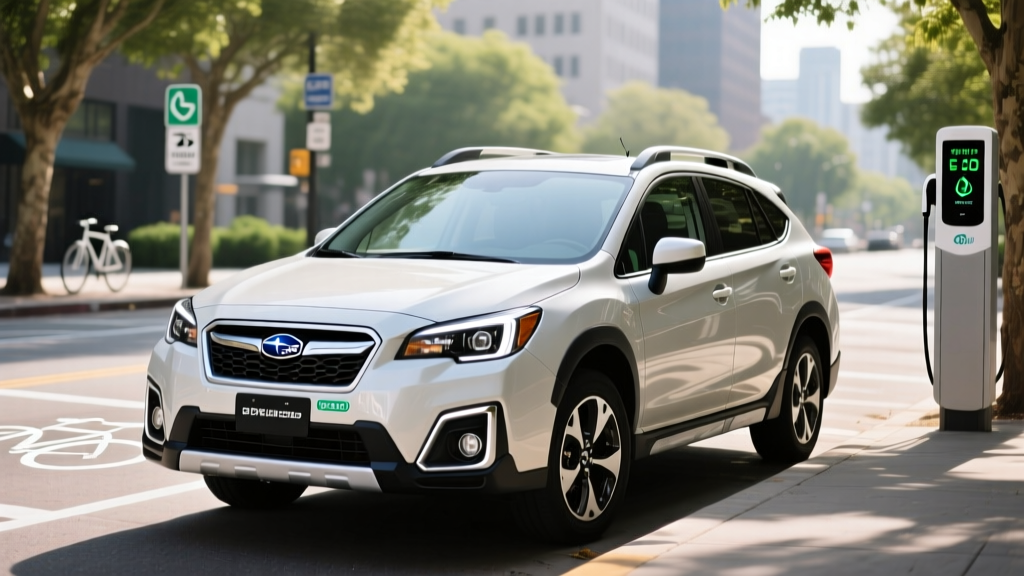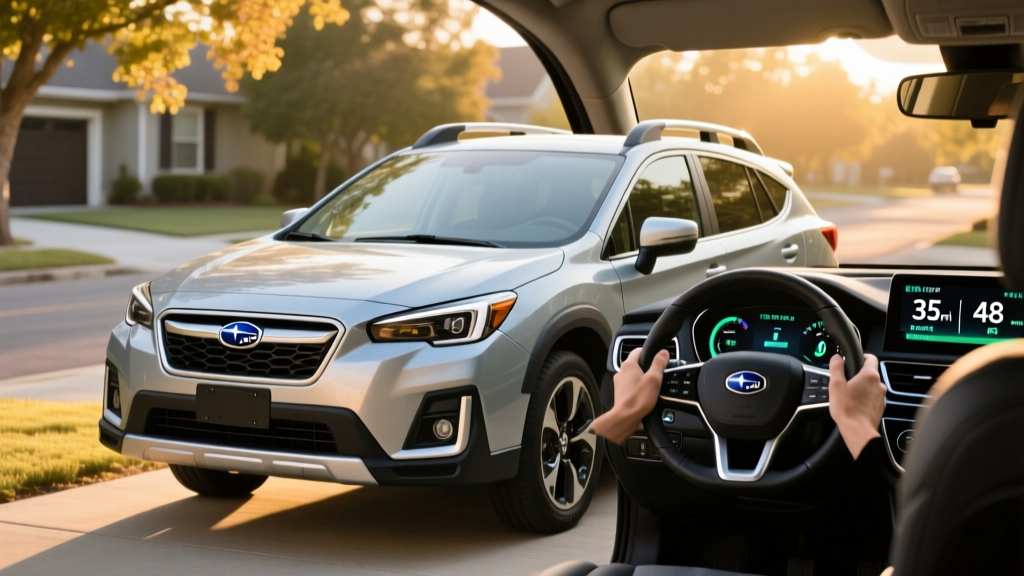
Subaru has never been the first brand that comes to mind when shoppers search for a plug-in hybrid Subaru. Known for boxer engines, symmetrical all-wheel drive, and rugged outdoorsy appeal, the automaker has taken a cautious approach to electrification. For 2026, Subaru's plug-in hybrid strategy in the United States centers on the Crosstrek Hybrid — a compact crossover that pairs Subaru's proven AWD architecture with a Toyota-sourced plug-in hybrid powertrain. If you want Subaru capability with a slice of electric daily driving, this is currently the only game in town from the brand.
But does a 17-mile electric-only range and a mid-$30,000 price tag make sense in a market increasingly crowded with longer-range PHEVs and affordable full EVs? This guide breaks down every number that matters — EPA MPG, real-world efficiency, battery specs, charging logistics, tax-credit eligibility, and long-term ownership costs — so you can decide whether this PHEV fits your garage or whether a conventional hybrid or full BEV serves you better.
What Exactly Is the 2026 Subaru Crosstrek Hybrid?
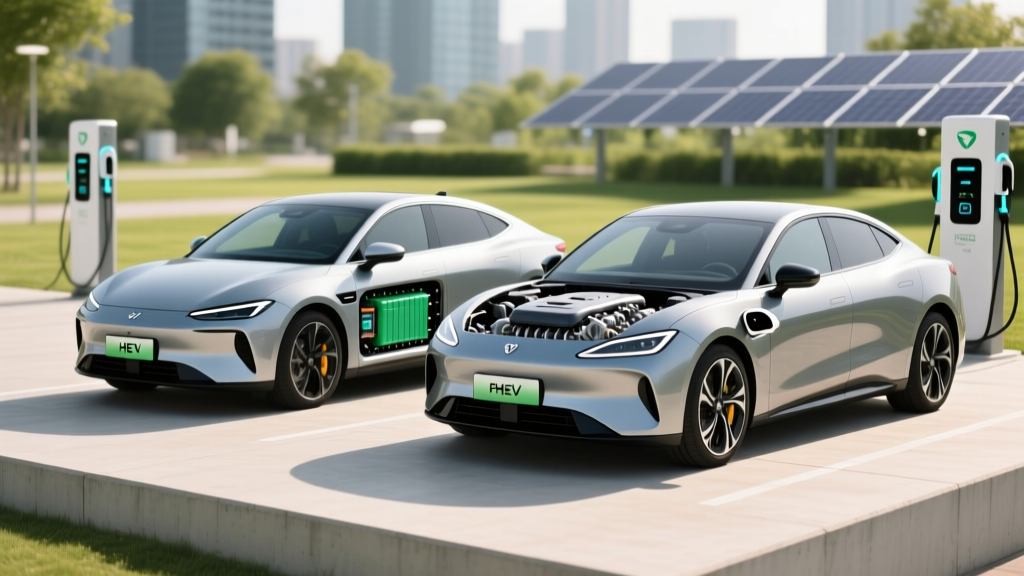
The 2026 Subaru Crosstrek Hybrid is a plug-in hybrid electric vehicle (PHEV). That means it has both a gasoline engine and a rechargeable battery pack large enough to drive on electricity alone for a limited distance before the engine kicks in. Unlike a conventional hybrid (HEV) such as the Toyota RAV4 Hybrid — which charges its small battery exclusively through regenerative braking and the engine — the Crosstrek Hybrid can be plugged into a wall outlet or Level 2 charger to fill its battery, giving you a window of zero-gas, zero-tailpipe-emission driving.
HEV vs. PHEV: The Critical Distinction
| Feature | Conventional Hybrid (HEV) | Plug-In Hybrid (PHEV) |
|---|---|---|
| Plug-in charging | No — self-charging via regen + engine | Yes — plug in to access EV-only range |
| Battery size | ~1.0–1.6 kWh | ~8.8–18+ kWh usable |
| EV-only range | Less than 1 mile at low speed | 17–42 miles (model dependent) |
| Gas engine | Always available, seamlessly blends | Always available, kicks in after EV range depletes |
| Tax credit eligibility | None (federal) | Potentially up to $7,500 (IRS §30D, rules vary) |
| Example | Subaru Crosstrek (mild-hybrid variants) | Subaru Crosstrek Hybrid (PHEV) |
If you never plug in, the Crosstrek Hybrid still operates as a regular hybrid — you just forfeit the electric-only miles and the efficiency advantage that comes with them.
Powertrain, Horsepower, and Performance Specs
Subaru leverages its partnership with Toyota for the Crosstrek Hybrid's plug-in powertrain. The system pairs a 2.0-liter Subaru boxer four-cylinder engine with two electric motor-generators and a lithium-ion battery pack mounted beneath the cargo floor. Symmetrical all-wheel drive is standard, as expected from Subaru, though the rear wheels are driven primarily by the electric motor rather than a mechanical driveshaft — an arrangement Toyota calls "E-Four" or electronic AWD.
| Specification | Value |
|---|---|
| Engine | 2.0L Subaru boxer 4-cylinder |
| Combined system horsepower | 148 hp |
| Battery (gross / usable) | 8.8 kWh gross / ~7.5 kWh usable |
| Battery chemistry | Lithium-ion (NMC) |
| EV-only range (EPA) | 17 miles |
| Total combined range (EV + gas) | ~420 miles |
| MPGe (EV mode) | 90 MPGe combined |
| Charge port | J1772 (Level 1 / Level 2 AC only) |
| DC fast charging | Not supported |
| Drivetrain | Symmetrical AWD (electronic rear axle) |
| 0–60 mph | ~9.2 seconds (estimated) |
| Cargo volume (behind rear seats) | ~16.5 cu ft (reduced vs. gas Crosstrek) |
At 148 combined horsepower, the Crosstrek Hybrid is adequate for commuting and highway merging but not quick. The ~9-second 0–60 time trails the turbocharged gas Crosstrek Wilderness and feels leisurely compared to PHEV competitors like the Toyota RAV4 Prime (302 hp). Where the Crosstrek Hybrid excels is low-speed electric torque for around-town driving and the confidence of standard AWD in rain and snow.
Fuel Economy: EPA MPG and Real-World Numbers
Fuel economy is where the PHEV value proposition lives or dies. Here's how the 2026 Crosstrek Hybrid stacks up according to EPA estimates on fueleconomy.gov:
| Mode | City | Highway | Combined |
|---|---|---|---|
| EV-only (MPGe) | 105 MPGe | 78 MPGe | 90 MPGe |
| Hybrid (gas only, after EV depletion) | 36 MPG | 34 MPG | 35 MPG |
For comparison, the conventional gas-only 2026 Subaru Crosstrek with the 2.5-liter engine returns an EPA 29 MPG combined. That's a meaningful 6-MPG improvement even when you never plug the PHEV in, and a dramatic improvement when you do.
Real-World MPG: What to Actually Expect
Hybrids and PHEVs tend to beat their EPA city estimates in real-world stop-and-go driving because regenerative braking recaptures energy that a gas car wastes as heat. In our experience and aggregated owner reports:
- City driving (gas mode): 37–40 MPG is achievable, especially in moderate temperatures where the engine can shut off frequently.
- Highway driving (gas mode): Expect 31–34 MPG at 70–75 mph. The Crosstrek's boxy shape and AWD driveline losses work against it at sustained speed.
- EV-only range in practice: The EPA rates it at 17 miles. In mild weather on flat terrain at 35–45 mph, you may squeeze out 19–20 miles. In winter (below 35°F) or at highway speeds, expect 12–14 miles — a 20–30% reduction driven by battery chemistry limitations and cabin heating demands.
- Blended real-world combined: Owners who plug in nightly and commute under 20 miles report effectively using 0–1 gallons per week. Those who never plug in average 33–36 MPG combined year-round.
Real-World Range Reality Check: EPA says 17 EV-only miles. Plan for 13–15 miles in winter or highway driving. The 420-mile total range figure assumes a full tank and a full battery — on a road trip where you never plug in, figure ~380 miles between fill-ups at highway speeds.
Charging: How Long Does a Plug-In Hybrid Subaru Take to Charge?
Because the Crosstrek Hybrid's battery is small (8.8 kWh gross), charging is straightforward and relatively quick — but there's a major limitation you should know about up front.
| Level | Power (kW) | Voltage / Amperage | Time (0–100%) | Where |
|---|---|---|---|---|
| Level 1 (120V household) | ~1.2 kW | 120V / 12A | ~5.5–6 hours | Any standard outlet |
| Level 2 (240V) | ~3.3 kW (onboard charger max) | 240V / 16A | ~2–2.5 hours | Home wallbox, public AC stations |
| DC Fast Charge | Not supported | — | — | — |
No DC fast charging. This is the biggest practical limitation of the Crosstrek Hybrid. The vehicle uses a J1772 AC charge port and cannot accept DC fast charging (CCS or NACS). On a road trip, you cannot top up the battery at a Electrify America or Tesla Supercharger station in 15 minutes. The battery recharges only through the gasoline engine, Level 1, or Level 2 AC power.
For daily use, this is fine. Plug in when you get home, and the battery is full by morning — even on a basic 120V outlet if your commute is short. But it means the Crosstrek Hybrid is not designed for electric road-tripping the way a 300-mile BEV or a PHEV with DC fast-charge capability (like the Mitsubishi Outlander PHEV) is.
Home Charging Setup and Cost
Most Crosstrek Hybrid owners will charge on a standard 120V outlet (Level 1) or install a 240V Level 2 home station. A quality Level 2 unit (ChargePoint Home Flex, Emporia Level 2, or similar) costs $300–$600 for the equipment. Professional installation by a licensed electrician typically runs $500–$1,500 depending on whether your electrical panel needs an upgrade. Total home charging setup: roughly $800–$2,100.
At the national average electricity rate of ~$0.16/kWh, fully recharging the ~7.5 kWh usable battery costs about $1.20. That 17 miles of electric driving works out to roughly $0.07 per mile — about one-third the cost of gasoline at $3.40/gallon and 35 MPG (~$0.10/mile).
Pricing, Trims, and Tax Credit Eligibility
The 2026 Subaru Crosstrek Hybrid is offered in a single well-equipped trim, with an MSRP starting around $36,995 (including destination). That's roughly a $6,000–$7,000 premium over a comparably equipped gas-only Crosstrek Premium.
Federal Tax Credit (IRS §30D)
Under current IRS §30D clean vehicle credit rules, qualifying PHEVs may be eligible for up to $7,500 — split into two $3,750 halves based on battery-component sourcing and critical-mineral requirements. However, eligibility is anything but guaranteed for the Crosstrek Hybrid:
- MSRP cap: SUVs must be under $80,000 — the Crosstrek Hybrid clears this easily.
- Buyer income cap: Modified AGI must not exceed $150,000 (single) / $300,000 (joint). Check your tax situation.
- Battery sourcing: The battery must meet critical-mineral and battery-component sourcing thresholds that phase up each year. Subaru's Toyota-sourced battery may or may not meet 2026 thresholds — this changes frequently.
- Point-of-sale transfer: If eligible, you can transfer the credit to the dealer at purchase for an immediate price reduction rather than waiting to claim it on your tax return.
- VIN verification: Always confirm eligibility for the specific vehicle using the IRS's official VIN-check tool before purchasing.
Bottom line: Do not assume you will receive the full $7,500. Depending on current sourcing compliance, the credit could be $3,750, $7,500, or $0. Consult a tax professional and check the IRS portal before committing.
Battery Warranty, Lifespan, and Replacement Cost
Hybrid battery anxiety is the single most common concern we hear from first-time hybrid buyers. Here's what the data actually shows:
2026 Subaru Crosstrek Hybrid — Battery Warranty
- Hybrid battery warranty: 8 years / 100,000 miles (whichever comes first)
- Capacity retention threshold: Warranty covers failure or significant capacity loss (typically below ~70% of original capacity)
- Powertrain warranty: 5 years / 60,000 miles
- Hybrid system components: Covered under the 8-year/100,000-mile hybrid warranty, including the inverter, motor-generators, and charge controller
Source: Subaru of America warranty documentation. Some states (notably California and states adopting CARB standards) mandate extended emissions-related hybrid coverage up to 10 years / 150,000 miles.
How Long Will the Battery Actually Last?
Toyota-sourced hybrid battery systems — which underpin the Crosstrek Hybrid's PHEV architecture — have an extensive track record. The Prius Prime and RAV4 Prime use closely related battery packs, and real-world data from those models shows:
- Average degradation at 5 years / 75,000 miles: ~8–12% capacity loss
- Average degradation at 10 years / 120,000 miles: ~15–22% capacity loss
- Outright battery failures: Rare before 150,000 miles in temperate climates
Because the Crosstrek Hybrid's battery is small and the vehicle's software maintains a generous buffer (you never use the top ~15% or bottom ~15% of the pack), stress on the cells is relatively low. This buffer strategy is a key reason hybrid batteries outlast early-generation EV batteries.
Battery Replacement Cost
If you do need a replacement outside warranty, expect to pay $3,500–$5,500 for a new OEM hybrid battery pack including labor. Refurbished or reconditioned packs are available from third-party shops for $2,000–$3,000. Given the battery's track record and the 8-year warranty, most original owners will never face this cost.
Crosstrek Hybrid vs. Full EV vs. Gas: Which Fits You?
The Decision Framework
Choose the Subaru Crosstrek Hybrid (PHEV) if:
- You have access to home charging (even a 120V outlet) and your daily commute is under 20 miles round-trip
- You want Subaru AWD and 8.7 inches of ground clearance for snow, dirt roads, or outdoor recreation
- You take road trips where charging infrastructure is sparse or unreliable
- You want to reduce fuel consumption without committing to full-electric range limitations
- You're not ready to deal with public charging networks, route planning, or cold-weather range loss on a BEV
Choose a full EV (BEV) like the Hyundai Ioniq 5 or Tesla Model Y if:
- You have reliable Level 2 home charging and your daily driving is under 250 miles
- You want zero tailpipe emissions and zero oil changes, forever
- You value instant torque, one-pedal driving, and the lowest per-mile energy cost
- You're eligible for the full $7,500 federal tax credit on a qualifying BEV, making the effective purchase price very competitive
- You rarely drive to areas without DC fast-charging infrastructure
Choose the conventional gas Crosstrek (or a standard HEV) if:
- You cannot charge at home (apartment, street parking, no garage) — a PHEV you never plug in is just a heavier, more expensive hybrid
- Your budget is tight and the $6,000–$7,000 PHEV premium doesn't pencil out within your ownership timeline
- You want maximum cargo space (the PHEV's battery reduces cargo volume by ~3 cu ft)
Pros and Cons at a Glance
Pros
- Standard symmetrical AWD — genuine off-road and snow capability
- 17 miles EV-only covers many daily commutes gas-free
- 35 MPG combined in hybrid mode beats the gas Crosstrek by 6 MPG
- Can charge on a standard 120V outlet overnight — no Level 2 required
- 8-year / 100,000-mile hybrid battery warranty
- No range anxiety on road trips — just fill up with gas
- 8.7 inches of ground clearance for trails and deep snow
Cons
- Only 17 miles of EV range — trails the RAV4 Prime (42 mi) and Tucson PHEV (33 mi)
- No DC fast charging — road-trip battery recharging relies on the gas engine
- 148 hp combined — underpowered compared to RAV4 Prime's 302 hp
- ~$37,000 MSRP is a steep premium over the gas Crosstrek
- Reduced cargo space (~16.5 cu ft) due to battery placement
- Federal tax credit eligibility uncertain — depends on battery sourcing compliance
- Only available in one trim — limited option flexibility
Frequently Asked Questions
How many MPG does the Subaru plug-in hybrid get?
The 2026 Subaru Crosstrek Hybrid is EPA-rated at 35 MPG combined (36 city / 34 highway) when operating as a hybrid after the electric range is depleted. In EV-only mode, it achieves 90 MPGe combined. Real-world city driving often yields 37–40 MPG thanks to regenerative braking, while sustained highway driving at 75 mph typically returns 31–34 MPG.
How far can the Subaru Crosstrek Hybrid go on electric only?
The EPA rates it at 17 miles on electric power alone. In mild weather at moderate speeds, you may see 19–20 miles. In cold weather (below 35°F) or at highway speeds, expect 12–14 miles. Once the battery depletes, the gasoline engine takes over seamlessly and you can drive an additional ~400 miles on a tank of gas.
Does the Subaru plug-in hybrid qualify for a tax credit?
It may qualify for up to $7,500 under the IRS §30D federal clean vehicle credit, but eligibility depends on several factors: your income (must be under $150K single / $300K joint), the vehicle's MSRP (must be under $80K for SUVs — the Crosstrek clears this), and whether the battery meets 2026 critical-mineral and component-sourcing thresholds. Subaru's Toyota-sourced battery compliance varies by model year. Always verify with the IRS clean vehicle credit page and a tax professional before purchasing.
Is the Subaru Crosstrek Hybrid reliable, and what does battery replacement cost?
The Crosstrek Hybrid uses a Toyota-derived plug-in hybrid system with a strong reliability track record across the Prius Prime and RAV4 Prime families. Subaru provides an 8-year / 100,000-mile hybrid battery warranty. Based on data from related Toyota PHEV models, meaningful battery degradation before 120,000 miles is uncommon. If replacement is needed out of warranty, expect $3,500–$5,500 for a new OEM pack or $2,000–$3,000 for a refurbished unit.
Can I charge the Subaru Crosstrek Hybrid at a DC fast charger?
No. The 2026 Crosstrek Hybrid supports only AC charging via a J1772 port — Level 1 (120V, ~5.5 hours) or Level 2 (240V, ~2–2.5 hours). It cannot accept DC fast charging at Electrify America, Tesla Supercharger, or other DC stations. On road trips, the battery recharges only through the gasoline engine and regenerative braking.
Should I buy the Subaru PHEV or a full electric vehicle?
If you can charge at home, drive under 20 miles daily, and regularly take road trips to areas with sparse charging infrastructure, the Crosstrek Hybrid is a pragmatic bridge — you get electric commuting and gas-powered freedom. If you have reliable home charging, rarely exceed 250 miles in a day, and want the lowest operating cost and zero tailpipe emissions, a full BEV like the Hyundai Ioniq 5, Tesla Model Y, or Subaru's own upcoming Solterra (with improving range and charging) may serve you better at a comparable or lower effective price after tax credits.
Does Subaru make any other plug-in hybrid models?
As of the 2026 model year, the Crosstrek Hybrid is Subaru's only plug-in hybrid offered in the United States. Subaru previously offered an Outback-based PHEV concept and has announced plans to introduce additional electrified models, but no other PHEV is currently available for purchase. Subaru's all-electric Solterra (co-developed with Toyota) is the brand's only full BEV.
The 2026 Subaru Crosstrek Hybrid occupies a specific niche: buyers who need Subaru's trademark AWD and ground clearance, want to electrify their daily commute, and aren't ready to go fully electric. Its 17-mile EV range is modest by 2026 PHEV standards, and the lack of DC fast charging limits its electric utility on road trips. But for the right owner — one who plugs in nightly, commutes under 20 miles, and heads to the mountains on weekends — it's a practical, capable, and efficient choice that doesn't ask you to change your driving habits. Just understand its limitations before you sign the paperwork.