Why Subaru's Plug-In Hybrid Strategy Matters in 2026
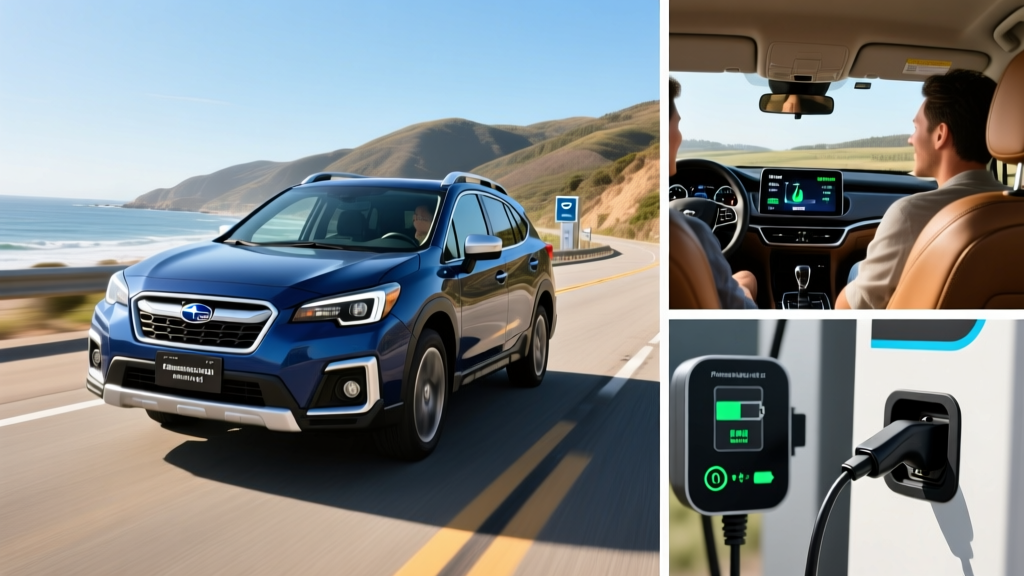
Subaru has never been the fastest automaker to electrify, but the brand's approach to plug-in hybrid technology reflects what its buyers actually need: all-wheel drive, real ground clearance, and the ability to run short commutes on electricity without range anxiety on weekend trips. If you've been searching for a Subaru plug-in hybrid, the 2026 Crosstrek Hybrid (badged as the Crosstrek PHEV in some markets) remains the brand's sole plug-in offering — and it occupies a narrow but practical niche.
Unlike Toyota or Hyundai, which offer PHEV variants across multiple models, Subaru has concentrated its plug-in engineering on the compact crossover segment. The result is a vehicle that pairs Subaru's trademark symmetrical all-wheel drive with a Toyota-sourced plug-in hybrid powertrain. Yes, the hybrid system is borrowed from the Prius Prime / RAV4 Prime lineage — and that's actually a strong reliability signal.
HEV vs. PHEV: What's the Difference?
Conventional Hybrid (HEV): Charges its small battery (~1-2 kWh) through regenerative braking and the engine. You never plug it in. It improves MPG but cannot drive on electricity alone beyond very low-speed creep. Example: Toyota Prius (non-Prime).
Plug-In Hybrid (PHEV): Has a larger battery (8-20+ kWh) that you charge by plugging in — at home via a standard outlet or Level 2 charger. It can drive 17-42+ miles on electricity alone before the gas engine kicks in. Example: 2026 Subaru Crosstrek Hybrid.
2026 Subaru Crosstrek Hybrid: Powertrain and Performance Specs
The 2026 Crosstrek Hybrid pairs a 2.0-liter horizontally opposed (Boxer) four-cylinder engine with two electric motor-generators and an 8.8 kWh lithium-ion battery pack. The system routes power through Subaru's symmetrical all-wheel-drive layout — a differentiator in the PHEV crossover segment, where most competitors are front-wheel drive only.
| Specification | Value |
|---|---|
| Combined System Horsepower | 148 hp |
| Engine | 2.0L Boxer 4-cylinder (137 hp) |
| Electric Motors | MG1 (starter/generator) + MG2 (drive motor, 118 hp) |
| Battery Capacity (usable) | 8.8 kWh (lithium-ion) |
| EPA Electric-Only Range | 17 miles |
| Total Combined Range | ~480 miles |
| Drivetrain | Symmetrical AWD |
| 0-60 mph (est.) | ~9.2 seconds |
| Ground Clearance | 8.7 inches |
| Cargo Volume (rear seats up) | ~20.1 cu ft |
| Base MSRP | $36,995 |
The 148 combined horsepower won't win drag races, but the electric motor's instant torque (149 lb-ft from MG2) makes the Crosstrek Hybrid feel more responsive around town than the number suggests. Where it falls short is highway passing at speed — the CVT drones noticeably under hard acceleration, a trait shared with the RAV4 Prime's less powerful siblings.
Fuel Economy: EPA MPG and Real-World Results
Fuel economy is where the plug-in hybrid proposition gets complicated — and where buyers need to understand the difference between charge-depleting (electric) mode and charge-sustaining (hybrid) mode.
| Mode | City | Highway | Combined |
|---|---|---|---|
| Charge-Depleting (EV+Gas blend) | 92 MPGe combined | ||
| Charge-Sustaining (Hybrid only) | 36 MPG | 34 MPG | 35 MPG |
Real-world note: The 35 MPG combined figure in hybrid mode is respectable but trails the FWD RAV4 Hybrid (~39 MPG combined) and Honda CR-V Hybrid (~37 MPG). In our experience, expect 33-37 MPG in mixed driving once the battery is depleted — the AWD system and Boxer engine's inherent friction costs add a small efficiency penalty versus transverse four-cylinder hybrids. On the plus side, Subaru hybrids tend to hold their MPG better in cold weather than some competitors, since the Boxer engine warms up relatively quickly.
If your daily commute is under 17 miles and you charge at home nightly, you could burn almost no gasoline during the work week. But once that battery depletes, you're driving a 35 MPG hybrid — good, but not class-leading.
Charging: What You Need to Know Before You Plug In
The Crosstrek Hybrid uses a standard J1772 connector for AC charging. Here is what charging looks like in practice:
| Level | Power | 0-100% Time | Notes |
|---|---|---|---|
| Level 1 (120V household outlet) | ~1.2 kW | ~5 hours | Included charging cable; adequate for overnight |
| Level 2 (240V home/public) | ~3.3 kW (onboard charger limit) | ~2.5 hours | Requires J1772 connector; max rate limited by vehicle |
| DC Fast Charging | Not supported | N/A | No CCS or CHAdeMO port |
Critical detail: The onboard charger is limited to 3.3 kW. Even if you plug into a 7.2 kW or 11.5 kW Level 2 station, the Crosstrek Hybrid will only draw 3.3 kW. This means Level 2 charging is roughly twice as fast as Level 1, but you won't see the dramatic speed-ups that full BEVs enjoy on higher-power chargers. For an 8.8 kWh battery, this is mostly a non-issue — even a standard 120V outlet will fully recharge the pack overnight.
One practical tip: set your charge schedule in the Subaru Starlink app to finish charging right before your departure. A fully charged battery at departure time means maximum electric-only driving and a preconditioned cabin if you're plugged in.
Who Qualifies for a Tax Credit on the Subaru Plug-In Hybrid?
Federal tax credit eligibility for PHEVs falls under IRS §30D Clean Vehicle Credit, and the rules are strict. Here's the 2026 eligibility checklist:
- MSRP cap: SUVs/crossovers must be under $80,000 — the Crosstrek Hybrid qualifies at ~$36,995 base.
- Buyer income cap: Modified AGI must not exceed $150,000 (single), $225,000 (head of household), or $300,000 (joint).
- Battery sourcing: Critical minerals and battery components must meet phased-in domestic/free-trade sourcing thresholds that tighten annually. Subaru's Toyota-sourced battery components have historically met partial requirements.
- Assembly: Final assembly must occur in North America. The Crosstrek Hybrid is assembled in Gunma, Japan — this disqualifies it from the federal §30D credit.
- Point-of-sale transfer: If eligible, the credit can be applied at the dealer to reduce the purchase price directly.
Battery Longevity, Warranty, and Replacement Costs
Hybrid battery anxiety is one of the top concerns we hear from buyers transitioning from conventional gas cars. Here's what the data actually shows:
| Component | Coverage |
|---|---|
| Hybrid Battery (8.8 kWh) | 8 years / 100,000 miles (10 yr/150,000 mi in CARB states) |
| Hybrid System Components | 8 years / 100,000 miles |
| Powertrain (engine, transmission) | 5 years / 60,000 miles |
| Bumper-to-Bumper | 3 years / 36,000 miles |
What the warranty actually covers: Subaru warrants the hybrid battery to retain a minimum capacity threshold (typically 60-70% of original capacity) for the warranty period. If the battery degrades below that threshold, Subaru will repair or replace it at no cost. In CARB states (California, New York, Massachusetts, and others adopting California emissions standards), the hybrid battery warranty extends to 10 years / 150,000 miles.
Replacement cost if out of warranty: Based on current parts pricing for the Toyota-derived hybrid system, a full 8.8 kWh battery replacement runs approximately $4,500-$6,500 including labor at a dealership. Independent hybrid specialists may offer refurbished packs for $2,500-$4,000. However, real-world failure rates for Toyota/Subaru hybrid batteries remain extremely low — Consumer Reports data and taxi-fleet evidence consistently show these packs lasting 150,000-200,000+ miles with gradual capacity loss rather than catastrophic failure.
Degradation reality: Expect roughly 1-2% capacity loss per year in moderate climates. After 8 years, most Toyota-sourced PHEV batteries retain 85-90% of original capacity — well above the warranty threshold. Extreme heat (Arizona, Texas summers) accelerates degradation slightly, but the Crosstrek Hybrid's thermal management system is adequate for the battery's modest size.
How the Crosstrek Hybrid Stacks Up Against Competitors
The Subaru plug-in hybrid doesn't exist in a vacuum. Here's how it compares to the PHEV crossovers it competes with most directly:
| Spec | Subaru Crosstrek Hybrid | Toyota RAV4 Prime | Hyundai Tucson PHEV |
|---|---|---|---|
| EPA EV Range | 17 mi | 42 mi | 33 mi |
| Battery (kWh) | 8.8 | 18.1 | 13.8 |
| Combined HP | 148 | 302 | 261 |
| Hybrid MPG (combined) | 35 | 38 | 35 |
| AWD | Standard (mechanical) | Standard (eAWD) | Standard (eAWD) |
| Ground Clearance | 8.7 in | 8.1 in | 7.6 in |
| DC Fast Charge | No | No | No |
| Base MSRP | ~$36,995 | ~$44,500 | ~$39,500 |
| Federal Tax Credit | No (Japan-built) | No (Japan-built) | Yes (up to $7,500)* |
*Hyundai Tucson PHEV tax credit eligibility depends on current-year battery sourcing rules and buyer income. Verify at fueleconomy.gov before purchasing.
The Crosstrek Hybrid's key advantage is ground clearance and Subaru's mechanical AWD system, which sends real torque to the rear wheels rather than relying on an electric rear motor. For buyers who drive on forest service roads, ski resort parking lots, or unplowed rural routes, this matters. The trade-off is a smaller battery, less electric range, and significantly less power than the RAV4 Prime.
Pros
- Class-leading 8.7 inches of ground clearance
- Proven Toyota-derived hybrid powertrain reliability
- True mechanical AWD — best-in-class traction in snow/mud
- Charges fully overnight on a standard 120V outlet
- Lower starting price than RAV4 Prime
- Strong resale value typical of Subaru models
Cons
- Only 17 miles EPA electric range — shortest in class
- Small 8.8 kWh battery limits daily EV driving
- No DC fast charging capability
- 148 hp feels underpowered for highway merging
- Japan assembly disqualifies from federal §30D credit
- Cargo space reduced vs. gas Crosstrek (~20.1 cu ft)
Hybrid vs. PHEV vs. Full EV: Which Is Right for You?
Choosing between a conventional hybrid, a plug-in hybrid like the Crosstrek, and a full battery-electric vehicle depends on your driving patterns and charging access. Here's a decision framework:
Choose the Subaru Crosstrek Hybrid (PHEV) if:
- Your daily commute is 15-20 miles round trip and you can charge at home
- You need AWD and ground clearance for dirt roads, snow, or outdoor recreation
- You take road trips where charging infrastructure is sparse
- You want EV-like commuting without range anxiety on long drives
Choose a full EV (like the Hyundai Ioniq 5 or Subaru Solterra) if:
- You have reliable home Level 2 charging
- Your daily driving is under 200 miles and you road-trip infrequently
- You want to eliminate gasoline entirely and minimize maintenance
- You qualify for the full $7,500 federal credit on an eligible model
Choose a conventional hybrid (HEV) like the Toyota RAV4 Hybrid if:
- You cannot charge at home (apartment, street parking, no garage)
- You want maximum MPG without ever thinking about plugging in
- Your budget is tighter and you don't need electric-only driving
Frequently Asked Questions
How many MPG does the Subaru plug-in hybrid get?
The 2026 Crosstrek Hybrid achieves an EPA-rated 35 MPG combined (36 city / 34 highway) when operating as a conventional hybrid after the battery is depleted. In charge-depleting mode with a full battery, it earns 92 MPGe combined. Real-world hybrid-mode MPG typically ranges from 33-37 depending on driving style and temperature.
How far can the Subaru Crosstrek Hybrid go on electric only?
The EPA rates the Crosstrek Hybrid at 17 miles of electric-only range. In practice, expect 12-14 miles in cold weather or at highway speeds, and up to 19-20 miles in warm city driving. Once the battery depletes, the gas engine engages seamlessly.
Does the Subaru plug-in hybrid qualify for a federal tax credit?
No. The 2026 Crosstrek Hybrid is assembled in Gunma, Japan, which disqualifies it from the federal §30D Clean Vehicle Credit regardless of buyer income or battery sourcing. Some state-level incentives may still apply — check your state's clean vehicle rebate program.
Is the Subaru hybrid system reliable?
Very reliable. The hybrid powertrain is derived from Toyota's proven system (shared architecture with the Prius Prime). IIHS and long-term owner data consistently show low failure rates for Toyota/Subaru hybrid components. The hybrid battery is warrantied for 8 years/100,000 miles (10 years/150,000 miles in CARB states).
What does it cost to replace the hybrid battery?
Out-of-warranty replacement for the 8.8 kWh battery pack costs approximately $4,500-$6,500 at a dealership, or $2,500-$4,000 through an independent hybrid specialist using refurbished cells. However, Toyota-derived hybrid batteries routinely last 150,000-200,000+ miles before significant degradation.
Can the Crosstrek Hybrid charge at a DC fast charger?
No. The Crosstrek Hybrid only supports AC charging via a J1772 connector at up to 3.3 kW. There is no CCS or CHAdeMO port. This is typical for PHEVs with smaller batteries — DC fast charging is generally reserved for full battery-electric vehicles.
Is the Subaru Solterra a better choice than the Crosstrek Hybrid?
It depends entirely on your needs. The Solterra is a full BEV with ~228 miles of EPA range, zero gasoline use, and DC fast charging up to 150 kW. But it costs significantly more (~$44,995 base), has less cargo space, and requires reliable home charging access. If you can charge at home and rarely drive more than 200 miles in a day, the Solterra is the lower-operating-cost choice. If you need go-anywhere capability without charging planning, the Crosstrek Hybrid is the pragmatic pick.