Subaru's Electrified Lineup: What's Actually Available?
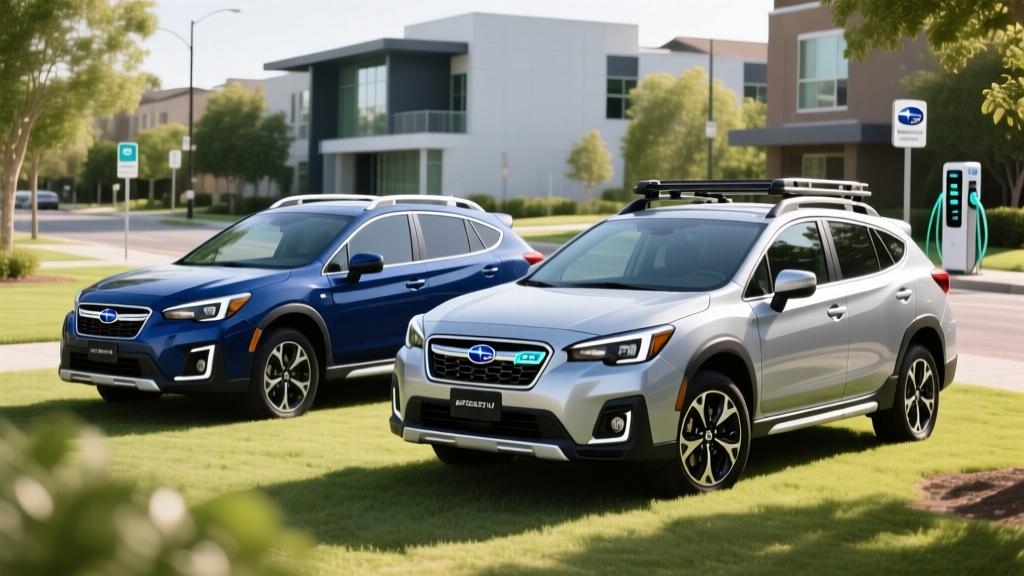
If you've been asking "does Subaru make a hybrid?" the answer in 2026 is yes — but with important caveats about what kind of hybrid, how many models carry the badge, and whether the numbers justify the premium over a conventional gas Crosstrek. Subaru currently offers the Crosstrek Hybrid as a plug-in hybrid electric vehicle (PHEV), leveraging Toyota's proven hybrid synergy drive architecture. The Forester and Outback lineups remain gasoline-only for the 2026 model year, though Subaru has signaled broader electrification by 2027–2028.
Before we break down specs, pricing, and real-world efficiency, let's clear up the terminology that trips up many hybrid shoppers — because Subaru's approach blends two different technologies.
HEV vs PHEV: What the Crosstrek Hybrid Actually Is
The 2026 Subaru Crosstrek Hybrid is a plug-in hybrid (PHEV), not a conventional hybrid (HEV). This distinction matters for your daily routine, your charging needs, and your tax-credit eligibility.
| Feature | Conventional Hybrid (HEV) | Plug-in Hybrid (PHEV) |
|---|---|---|
| Plugs in? | No — charges via regenerative braking and engine | Yes — has a larger battery you charge from a wall outlet or public station |
| Electric-only range | 0–2 miles at low speed | 10–40+ miles depending on model |
| Battery size | ~1–2 kWh | ~8–20 kWh usable |
| Federal tax credit | Not eligible under §30D | Potentially up to $7,500 (subject to MSRP, income, sourcing rules) |
| Best for | Drivers who can't charge at home | Drivers with home charging and short commutes |
The Crosstrek Hybrid falls firmly in the PHEV column. You can plug it in overnight on a standard 120V outlet (Level 1) or install a 240V Level 2 charger to fill the battery in roughly 2.5 hours. It does not support DC fast charging — a limitation shared with most PHEVs due to their smaller battery packs.
2026 Crosstrek Hybrid: Full Specs & Efficiency Numbers
Here's the data buyers need, pulled from EPA / fueleconomy.gov and Subaru's official 2026 specifications:
| Specification | 2026 Subaru Crosstrek Hybrid (PHEV) |
|---|---|
| Powertrain | 2.0L 4-cyl Boxer + electric motor (e-CVT) |
| Combined horsepower | 194 hp (net system output) |
| Battery capacity (usable) | 13.1 kWh lithium-ion (NMC chemistry) |
| EPA electric-only range | 17 miles |
| Total combined range (EV + gas) | ~440 miles |
| EPA MPGe (electric mode) | 90 MPGe |
| EPA MPG (hybrid/gas mode) | 35 combined / 36 city / 34 highway |
| Level 1 charge time (120V) | ~5 hours (0–100%) |
| Level 2 charge time (240V) | ~2.5 hours (0–100%) |
| DC fast charging | Not supported |
| 0–60 mph | 6.9 seconds |
| Drivetrain | Symmetrical AWD (standard) |
| Cargo volume | 19.9 cu ft (rear seats up) |
| Towing capacity | 1,000 lbs |
| Base MSRP (Premium trim) | $36,495 |
| Top trim MSRP (Limited) | $40,495 |
Fuel Economy: EPA Sticker vs Real-World MPG
The EPA rates the 2026 Crosstrek Hybrid at 35 MPG combined when operating as a hybrid (battery depleted). But real-world results vary based on driving conditions — and PHEVs have a unique efficiency profile that depends heavily on whether you charge regularly.
| Driving Scenario | Expected Efficiency |
|---|---|
| Daily commute under 17 miles, charging nightly | Near-zero gas use; 90 MPGe |
| Mixed driving, occasional charging | 38–42 MPG (better than EPA city due to regen) |
| Long highway road trip, no charging | 31–34 MPG (highway drag reduces hybrid benefit) |
| Cold weather (below 30°F), hybrid mode | 28–32 MPG (engine runs more for cabin heat) |
| Never plugging in (pure hybrid use) | 33–36 MPG (meets EPA estimate) |
Like all hybrids, the Crosstrek Hybrid benefits from regenerative braking in stop-and-go traffic, which is why city MPG often exceeds highway MPG. If you never plug it in, you're essentially driving a 35 MPG all-wheel-drive crossover — respectable for the class, but you're carrying 300+ lbs of battery weight you're not fully utilizing.
Pricing, Tax Credits, and Total Cost of Ownership
The 2026 Crosstrek Hybrid starts at $36,495 for the Premium trim — a roughly $5,500 premium over the base gas Crosstrek. Whether that premium pays for itself depends on your driving habits, electricity costs, and tax-credit eligibility.
Federal Tax Credit Eligibility (§30D)
The Crosstrek Hybrid may qualify for a partial or full federal tax credit under IRS §30D Clean Vehicle Credit, but eligibility is not guaranteed and depends on several factors that change periodically:
- MSRP cap: SUVs/vans/pickups must be under $80,000 MSRP — the Crosstrek Hybrid clears this easily.
- Buyer income cap: AGI must not exceed $150,000 (single), $225,000 (head of household), or $300,000 (joint).
- Battery sourcing requirements: Critical minerals and battery components must meet escalating percentage thresholds from US or FTA partners. Subaru sources from Toyota's supply chain, which has been working to comply, but exact qualification can shift.
- Point-of-sale transfer: As of 2024+, eligible buyers can transfer the credit to the dealer for an immediate price reduction at purchase.
- Assembled in North America: Required for §30D. The Crosstrek Hybrid is assembled in Japan, which currently disqualifies it from the federal credit.
Bottom line on tax credits: Because the Crosstrek Hybrid is assembled in Japan, it does not currently qualify for the §30D federal purchase credit. However, some states offer their own incentives for PHEVs regardless of assembly location — check your state's energy office or Alternative Fuels Data Center for local programs. Always consult a tax professional before making purchase decisions based on credit eligibility.
5-Year Cost Comparison: Crosstrek Hybrid vs Gas Crosstrek
| Cost Factor | Crosstrek Hybrid PHEV | Crosstrek Gas (2.5L AWD) |
|---|---|---|
| Base MSRP | $36,495 | $30,995 |
| Fuel/electricity (5 yr, 15k mi/yr) | ~$4,800 | ~$7,500 |
| Maintenance (5 yr) | ~$2,200 | ~$2,800 |
| Insurance (5 yr avg) | ~$7,800 | ~$7,200 |
| Estimated 5-yr total | ~$51,295 | ~$48,495 |
The hybrid saves roughly $2,700 on fuel over five years but costs $5,500 more upfront. Without a federal tax credit, the math doesn't break even on purchase price alone — the value proposition rests on lower emissions, electric-only commuting, and Subaru's AWD capability with better efficiency.
Battery Warranty, Reliability, and Replacement Costs
Hybrid battery longevity is consistently the top concern for buyers considering their first electrified vehicle. Here's what Subaru provides:
- Hybrid battery: 8 years / 100,000 miles (10 years / 150,000 miles in CARB states including CA, NY, MA, and others)
- Hybrid system components: 8 years / 100,000 miles
- Powertrain (engine, transmission): 5 years / 60,000 miles
- Capacity retention guarantee: Battery warranted to retain at least 70% of original capacity during the coverage period
Reliability Track Record
The Crosstrek Hybrid's powertrain is derived from Toyota's hybrid synergy drive — one of the most proven hybrid systems on the road, with billions of miles accumulated across Prius, RAV4 Hybrid, and Camry Hybrid fleets. Real-world data from owners reporting to NHTSA and reliability surveys show hybrid battery failures are rare within the first 150,000 miles.
Subaru's conventional Boxer engines have had head-gasket concerns in older generations, but the hybrid variant's Atkinson-cycle 2.0L runs lower combustion stress, and the e-CVT eliminates the traditional CVT belt-and-pulley wear concerns that affected earlier Subaru CVTs.
Battery Replacement Cost
If your hybrid battery does fail outside warranty, expect a replacement cost of $3,500–$5,500 including parts and labor at a Subaru dealer. Independent hybrid specialists may offer refurbished packs for $2,000–$3,500. For context, most hybrid batteries outlast the vehicle's useful life — Consumer Reports data suggests fewer than 5% of hybrid batteries require replacement before 200,000 miles.
Crosstrek Hybrid vs Full EV vs Gas: Which Fits You?
- Your daily commute is under 20 miles and you can charge at home
- You need AWD for snow/mud but want electric commuting
- You take road trips where charging infrastructure is sparse
- You're not ready to commit to a full EV but want to reduce gas use
Choose a full EV (like the Hyundai Ioniq 5 or Subaru Solterra) if:
- You have reliable home Level 2 charging
- Your daily driving is under 250 miles and you can plan road-trip charging
- You want to eliminate oil changes and exhaust-system maintenance entirely
- You want access to the full §30D federal tax credit (US-assembled models)
Choose the gas Crosstrek if:
- You can't charge at home (apartment, street parking, no outlet access)
- The $5,500 hybrid premium doesn't fit your budget
- You drive primarily long highway miles where hybrid efficiency gains shrink
Pros and Cons of the 2026 Crosstrek Hybrid
- Standard AWD — rare in the PHEV segment
- Proven Toyota-derived hybrid powertrain
- 17 miles EV covers most daily errands
- 35 MPG hybrid mode beats gas Crosstrek by ~7 MPG
- Strong resale value (Subaru brand strength)
- 8.7 inches of ground clearance for light off-road
- No DC fast charging
- $5,500 premium over gas model, no federal tax credit
- EV-only range (17 mi) trails competitors like RAV4 Prime (42 mi)
- Assembled in Japan — limits incentive eligibility
- Cargo space slightly reduced vs gas model (battery packaging)
- 1,000-lb towing limit is modest
Frequently Asked Questions
Does Subaru make a conventional hybrid (HEV) that doesn't plug in?
Not in the US market for 2026. Subaru previously sold a conventional hybrid Crosstrek in other markets, but the US lineup offers only the PHEV variant. If you want a Subaru that never needs plugging in, you're looking at their standard gas models.
How many MPG does the Subaru Crosstrek Hybrid get?
The EPA rates it at 35 MPG combined (36 city / 34 highway) in hybrid mode. In real-world city driving with regular charging, many owners report 38–42 MPG because regenerative braking recovers energy in stop-and-go traffic. Highway-only driving without charging yields closer to 31–34 MPG.
How far can the Crosstrek Hybrid go on electric only?
The EPA rates it at 17 miles of electric-only range. Real-world results range from 10–12 miles in cold weather to 15–17 miles in mild conditions with gentle driving. This is enough for short commutes and errands but falls short of PHEVs like the Toyota RAV4 Prime (42 miles).
Is the Subaru hybrid reliable?
Yes. The hybrid powertrain is based on Toyota's extensively proven hybrid synergy drive system, which has demonstrated excellent longevity across millions of vehicles. The hybrid battery is warranted for 8 years/100,000 miles (10 years/150,000 miles in CARB states), and real-world failure rates before 150,000 miles are very low.
What does it cost to replace the Crosstrek Hybrid battery?
Dealer replacement runs $3,500–$5,500 including labor. Independent hybrid specialists may offer refurbished packs for $2,000–$3,500. However, hybrid battery replacement is uncommon — most packs last well beyond 200,000 miles with gradual capacity loss rather than sudden failure.
Does the Crosstrek Hybrid qualify for a tax credit?
It does not qualify for the federal §30D Clean Vehicle Credit because it is assembled in Japan, not North America. Some state-level incentives may still apply — check the Alternative Fuels Data Center for your state's programs. Always verify current rules with a tax professional before purchasing.
Does the Crosstrek Hybrid need to be plugged in?
No — it will operate as a conventional hybrid if you never plug it in, delivering around 35 MPG. However, you'll miss the 17 miles of electric-only range and the fuel-cost savings that come with regular charging. Plugging in is what unlocks the PHEV advantage.
How long does it take to charge the Crosstrek Hybrid?
On a standard 120V household outlet (Level 1), a full charge takes approximately 5 hours. On a 240V Level 2 home charger, it takes about 2.5 hours. DC fast charging is not supported — a common limitation for PHEVs due to their smaller battery packs.
Final Verdict: Who Should Buy the Subaru Crosstrek Hybrid?
The 2026 Crosstrek Hybrid occupies a specific niche: Subaru loyalists who need all-wheel drive, want to reduce daily fuel consumption with electric commuting, but aren't ready to go fully electric. It's a competent, reliable PHEV with a proven powertrain and strong real-world efficiency.
The honest limitations are the 17-mile EV range (short for a 2026 PHEV), the lack of a federal tax credit due to Japan assembly, and the $5,500 price premium over the gas model. If your commute exceeds 20 miles or you can't charge at home, the math gets harder to justify — and a gas Crosstrek or a longer-range PHEV like the RAV4 Prime may serve you better.
For the Subaru buyer who checks those boxes, the Crosstrek Hybrid delivers exactly what it promises: electric errands, gas-powered road trips, and Subaru's legendary AWD in all conditions.