The Short Answer: Yes, Subaru Makes a Hybrid
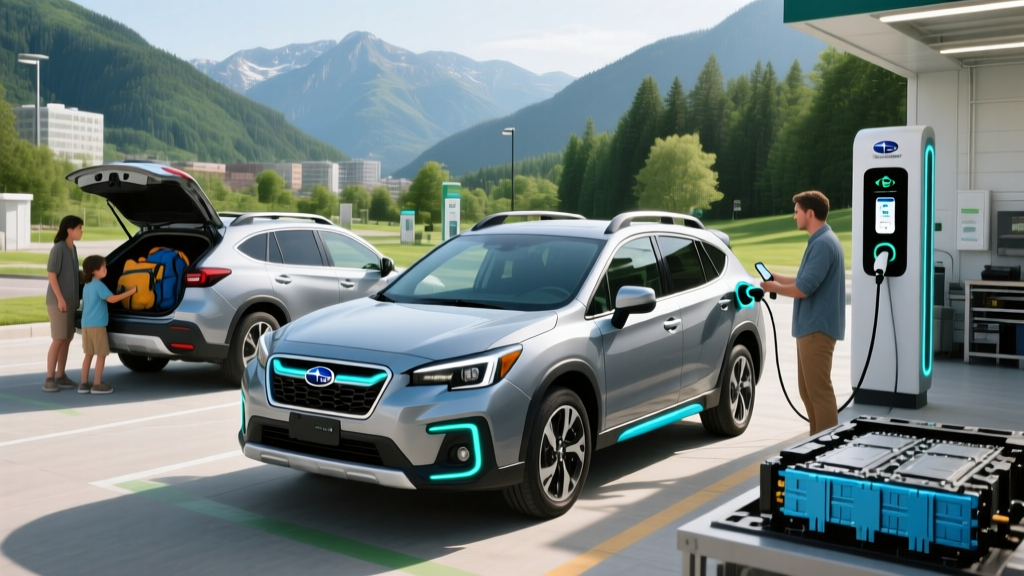
If you've been asking does Subaru make a hybrid vehicle, the answer is yes — but with important caveats that every buyer should understand before visiting a dealer. For the 2026 model year, Subaru offers the Crosstrek Hybrid, a plug-in hybrid electric vehicle (PHEV) that pairs a 2.0-liter boxer engine with electric motors and an 8.8 kWh lithium-ion battery pack. It's a fundamentally different animal from the full-electric Solterra, and it fills a specific niche for buyers who want electric commuting capability without range anxiety on longer trips.
Subaru's hybrid strategy has historically been cautious. The previous-generation Crosstrek PHEV (sold from 2019–2023 in limited states) was discontinued, and Subaru pivoted to the Solterra BEV. However, the 2026 Crosstrek Hybrid marks Subaru's return to the plug-in segment with updated powertrain tuning, revised EPA ratings, and improved electric-only range. Let's break down exactly what you get — and whether it fits your driving life.
HEV vs PHEV: What Subaru Actually Offers
Before diving into specs, it's critical to understand the distinction between the two hybrid categories, because Subaru's current lineup only includes one of them:
Conventional Hybrid (HEV)
A standard hybrid like the Toyota RAV4 Hybrid uses a small battery (typically 1–2 kWh) that charges exclusively through regenerative braking and the gas engine. You never plug it in. Electric-only driving is limited to brief low-speed moments. MPG improvement over a gas car is usually 20–35%.
Plug-In Hybrid (PHEV)
The 2026 Subaru Crosstrek Hybrid is a PHEV. It carries a larger 8.8 kWh battery that you can plug in to charge, enabling 17 miles of pure electric driving before the gas engine engages. After the battery depletes, it operates as a conventional hybrid. Think of it as a short-range EV with a built-in gas backup.
Key clarification: Subaru does not currently sell a conventional (non-plug-in) HEV in the US market for 2026. If you're looking for a Toyota-style hybrid that never needs a plug, you won't find one wearing a Subaru badge this year.
2026 Subaru Crosstrek Hybrid: Full Spec Breakdown
| Specification | 2026 Crosstrek Hybrid |
|---|---|
| Powertrain | 2.0L Boxer-4 + dual electric motors |
| Combined Horsepower | 220 hp (net system output) |
| Battery Capacity | 8.8 kWh usable (lithium-ion) |
| EPA Electric-Only Range | 17 miles |
| EPA Total Combined Range | ~480 miles (gas + electric) |
| EPA Combined MPG (hybrid mode) | 36 MPG combined (35 city / 37 highway) |
| MPGe (electric + gas combined) | 92 MPGe |
| Level 1 Charging (120V) | ~5 hours (0–100%) |
| Level 2 Charging (240V) | ~2 hours (0–100%) |
| DC Fast Charging | Not supported |
| Charge Port | J1772 (Level 1 & 2 only) |
| 0–60 mph | 6.8 seconds |
| Drivetrain | Standard AWD (e-AWD with rear motor) |
| Cargo Volume (rear seats up) | 20.8 cu ft |
| Base MSRP | $38,495 (includes destination) |
| Federal §30D Tax Credit | Up to $3,750 (see eligibility below) |
Fuel Economy: Real-World MPG vs EPA Estimates
| Driving Scenario | EPA Estimate | Real-World Expectation |
|---|---|---|
| City (hybrid mode) | 35 MPG | 33–38 MPG (regenerative braking favors stop-and-go) |
| Highway (hybrid mode) | 37 MPG | 32–35 MPG (boxer engine less efficient at sustained high RPM) |
| Combined | 36 MPG | 33–37 MPG depending on terrain and climate |
| Electric-only (first 17 mi) | 92 MPGe | 13–16 miles actual in cold weather (<40°F) |
The Crosstrek Hybrid's hybrid-mode efficiency is competitive with rivals like the Toyota RAV4 Prime and Ford Escape PHEV, though the RAV4 Prime edges it out with an EPA 38 MPG combined when its larger battery is depleted. One real-world advantage Subaru owners consistently report: in city driving with frequent stops, regenerative braking pushes actual MPG slightly above the EPA city estimate — sometimes into the high 30s.
However, highway fuel economy tends to fall below the sticker. The 2.0-liter boxer engine, while smooth, isn't as thermally efficient at sustained 70–80 mph cruising as Toyota's Dynamic Force engines. On a 200-mile highway trip in 90°F heat with A/C running, expect closer to 32–33 MPG after the battery is depleted.
EPA says 17 miles electric-only. In practice, expect 14–16 miles in mild weather with gentle driving. In winter conditions (below freezing, heater on), plan for 10–13 miles before the gas engine kicks in. The total combined range of ~480 miles is achievable on mixed driving but drops to ~400 miles on sustained highway trips in cold weather.
Powertrain & Driving Dynamics
The 2026 Crosstrek Hybrid uses Subaru's familiar 2.0-liter horizontally opposed (boxer) four-cylinder engine producing 152 hp on its own, augmented by a front electric motor integrated into the transmission and a rear-mounted electric motor that provides all-wheel drive. Combined system output is 220 hp — a meaningful bump over the non-hybrid Crosstrek's 169 hp.
The e-AWD system is worth highlighting. Unlike mechanical AWD systems with a driveshaft, the rear axle is powered exclusively by the electric motor. This means:
- Instant torque to the rear wheels when slip is detected — no lag from a mechanical coupling
- Regenerative braking on all four wheels, improving efficiency
- No traditional transmission hump, preserving interior floor space
The 0–60 mph time of 6.8 seconds makes the Crosstrek Hybrid genuinely quick for a compact crossover — roughly 2.5 seconds faster than the gas-only model. Off the line, the electric motor's instant torque gives it a satisfying punch that gas-only Crosstreks lack entirely.
Charging: What You Need to Know
The Crosstrek Hybrid uses a standard J1772 charge port and supports Level 1 (120V household outlet) and Level 2 (240V) charging. It does not support DC fast charging — a limitation shared with most PHEVs in this price class.
| Charging Level | Power | Time (0–100%) | Miles of Range Added per Hour |
|---|---|---|---|
| Level 1 (120V household) | ~1.4 kW | ~5 hours | ~3–4 miles of electric range/hr |
| Level 2 (240V home/public) | ~3.3 kW (onboard charger limited) | ~2 hours | ~8–9 miles of electric range/hr |
| DC Fast Charge | N/A | N/A | Not supported |
The onboard charger is limited to 3.3 kW, which means even if you plug into a 7.2 kW or 11.5 kW Level 2 station, the Crosstrek Hybrid will only accept 3.3 kW. For a small 8.8 kWh battery, this isn't a major limitation — a full charge in ~2 hours is practical for overnight or workplace top-ups. But it does mean you won't benefit from installing a higher-amperage home charger beyond a basic 16A/240V circuit.
Home charging cost: At the US average electricity rate of ~$0.16/kWh, fully charging the 8.8 kWh battery costs roughly $1.41. That's approximately $0.08–$0.10 per electric mile — dramatically cheaper than the $0.14–$0.17 per mile you'd spend on gasoline at $3.50/gallon and 36 MPG.
Pricing, Tax Credits & Total Cost of Ownership
The 2026 Subaru Crosstrek Hybrid starts at $38,495 (including $1,295 destination). This is a single-trim offering positioned between the Crosstrek Limited and the Wilderness in terms of equipment. Standard features include EyeSight driver assist, heated front seats, a 10.25-inch infotainment screen, and the full e-AWD system.
Federal Tax Credit Eligibility (§30D)
The Crosstrek Hybrid qualifies for the federal New Clean Vehicle Credit under IRS §30D, but the amount depends on battery sourcing and your personal tax situation. Based on current 2026 rules:
- Credit amount: Up to $3,750 (battery component requirement met; critical minerals requirement partially met for 2026)
- MSRP cap: $80,000 for SUVs — Crosstrek Hybrid qualifies at $38,495
- Buyer income caps: $150,000 single / $225,000 head of household / $300,000 joint (modified AGI)
- Point-of-sale transfer: Available — you can apply the credit as a down payment reduction at the dealer, rather than waiting to claim it on your tax return
- Battery sourcing: Subaru sources battery cells from Panasonic (Japan), which meets some but not all critical-mineral thresholds under 2026 phase-in rules
Important: Tax credit rules under §30D are subject to change. Verify your eligibility at IRS.gov or with a tax professional before purchasing. The credit is non-refundable if claimed on your return (you must have sufficient tax liability), but the point-of-sale transfer option avoids this limitation.
| Cost Factor (5-Year Estimate) | Crosstrek Hybrid (PHEV) | Crosstrek Gas (AWD) | Solterra (BEV) |
|---|---|---|---|
| Purchase Price (after credit) | ~$34,745 | ~$31,495 | ~$37,495 |
| Fuel/Energy (5 yr / 60,000 mi) | ~$4,200 | ~$7,000 | ~$3,600 |
| Maintenance (5 yr) | ~$2,800 | ~$3,500 | ~$1,800 |
| Insurance (5 yr avg) | ~$9,500 | ~$8,200 | ~$9,800 |
| Estimated Depreciation | ~$14,000 | ~$12,500 | ~$18,000 |
| 5-Year Total Cost | ~$65,245 | ~$62,695 | ~$70,695 |
The Crosstrek Hybrid sits between the gas model and the Solterra in five-year cost. You save significantly on fuel versus gas, but the higher purchase price and slightly elevated insurance premiums (common with PHEVs) offset some of those gains. The sweet spot for maximum savings: a commute under 17 miles each way where you can drive primarily on electricity, plus access to free or cheap workplace charging.
Battery Warranty, Reliability & Replacement Costs
The 2026 Crosstrek Hybrid's 8.8 kWh lithium-ion battery pack is covered by Subaru's hybrid system warranty: 8 years / 100,000 miles (whichever comes first), with a capacity retention threshold of 70%. In California and states adopting CARB standards (currently 17 states), the warranty extends to 10 years / 150,000 miles.
Subaru's hybrid battery reliability track record is limited compared to Toyota's decades of hybrid production. The previous-generation Crosstrek PHEV (2019–2023) showed minimal battery degradation complaints, and Subaru uses proven Panasonic cell chemistry similar to what Toyota deploys in its PHEVs.
Battery replacement cost: If the battery fails out of warranty, expect a replacement cost between $6,000 and $9,000 including parts and labor, based on current pricing for comparable PHEV battery packs. However, PHEV batteries experience far less cycling stress than full EV batteries (they're rarely drained below 15% or charged above 85% in normal operation), which generally translates to longer calendar life.
For the hybrid powertrain components beyond the battery — the electric motors, inverter, and e-AWD rear motor — Subaru provides coverage under the standard 5-year / 60,000-mile powertrain warranty.
According to NHTSA data and early reliability surveys, the 2026 Crosstrek Hybrid has no significant pattern failures reported as of early 2026. Subaru's EyeSight safety system carries a strong track record, and the e-AWD system has proven durable in the Solterra (which shares rear-motor architecture).
Who Should Buy the Crosstrek Hybrid vs Alternatives
- Your daily commute is under 20 miles round-trip (you'll run mostly on electricity)
- You need Subaru's AWD capability for snow, mud, or mountain roads
- You take road trips beyond charging infrastructure and don't want range anxiety
- You want lower fuel costs but can't install a Level 2 charger at home for a full EV
- You have reliable home Level 2 charging and a commute under 200 miles
- You want zero tailpipe emissions and minimal maintenance
- You qualify for the full $7,500 federal tax credit on a BEV
- You can't plug in at home or work and don't want to think about charging
- Your priority is maximum MPG without behavioral changes
- You want a lower purchase price (RAV4 Hybrid starts ~$5,000 less)
Pros
- 17 miles electric-only covers most short commutes
- 220 hp makes it the quickest Crosstrek in the lineup
- Standard e-AWD with no mechanical compromise
- ~480 miles total range eliminates road-trip anxiety
- Eligible for up to $3,750 federal tax credit
- Level 1 charging sufficient for overnight needs
Cons
- Only 17 miles of electric range — less than RAV4 Prime (42 mi)
- No DC fast charging capability
- 3.3 kW onboard charger limits Level 2 speed
- Single trim level limits option flexibility
- $38,495 MSRP is premium for a compact crossover
- Highway MPG falls below EPA estimate in real-world use
Frequently Asked Questions
How many MPG does the Subaru Crosstrek Hybrid get?
The EPA rates the 2026 Crosstrek Hybrid at 35 MPG city, 37 MPG highway, and 36 MPG combined when operating in hybrid mode (battery depleted). In real-world driving, city MPG often exceeds the estimate thanks to regenerative braking, while highway MPG tends to run 3–5 MPG below the sticker. When factoring in electric-only driving, the combined rating is 92 MPGe.
How far can the Crosstrek Hybrid go on electric only?
The EPA-rated electric-only range is 17 miles. In mild weather (60–80°F) with gentle acceleration, expect 14–16 real-world miles. In cold weather (below 40°F) with cabin heating, plan for 10–13 miles before the gas engine activates. This is adequate for short commutes and errands but significantly less than the Toyota RAV4 Prime's 42-mile electric range.
Does the Subaru Crosstrek Hybrid qualify for a tax credit?
Yes. Under current 2026 IRS §30D rules, the Crosstrek Hybrid qualifies for up to $3,750 in federal tax credits, subject to buyer income limits ($150K single / $300K joint) and battery sourcing requirements. The credit can be applied as a point-of-sale reduction at the dealership. State incentives vary — check IRS.gov and your state's energy office for details. Note: the credit is $3,750, not the full $7,500, because the battery meets only one of two sourcing thresholds.
Is the Subaru hybrid battery reliable, and what does replacement cost?
Subaru covers the hybrid battery for 8 years/100,000 miles (10 years/150,000 miles in CARB states) with a 70% capacity retention guarantee. Early reliability data is positive, with no pattern failures reported. Out-of-warranty replacement costs range from $6,000 to $9,000. PHEV batteries generally experience less stress than full EV batteries because they operate in a narrower state-of-charge window, which typically extends calendar life.
Do I need to plug in the Crosstrek Hybrid?
You don't have to, but you should. The Crosstrek Hybrid is a plug-in hybrid (PHEV), meaning it will operate as a conventional hybrid if you never charge it — you'll still get 36 MPG combined. However, to access the 17 miles of electric-only range and the 92 MPGe rating, you need to plug in regularly. Even a standard 120V household outlet will fully charge the battery overnight in about 5 hours, which is sufficient for most daily electric driving.
Does Subaru make any other hybrid or electric vehicles?
For 2026, Subaru offers the Crosstrek Hybrid (PHEV) and the Solterra (full battery-electric SUV). Subaru does not sell a conventional (non-plug-in) hybrid in the US market. The Solterra offers 228 miles of EPA range, DC fast charging, and qualifies for up to $7,500 in federal tax credits, making it the better choice for buyers ready to go fully electric. For more details, see the EPA's fueleconomy.gov comparison tool.