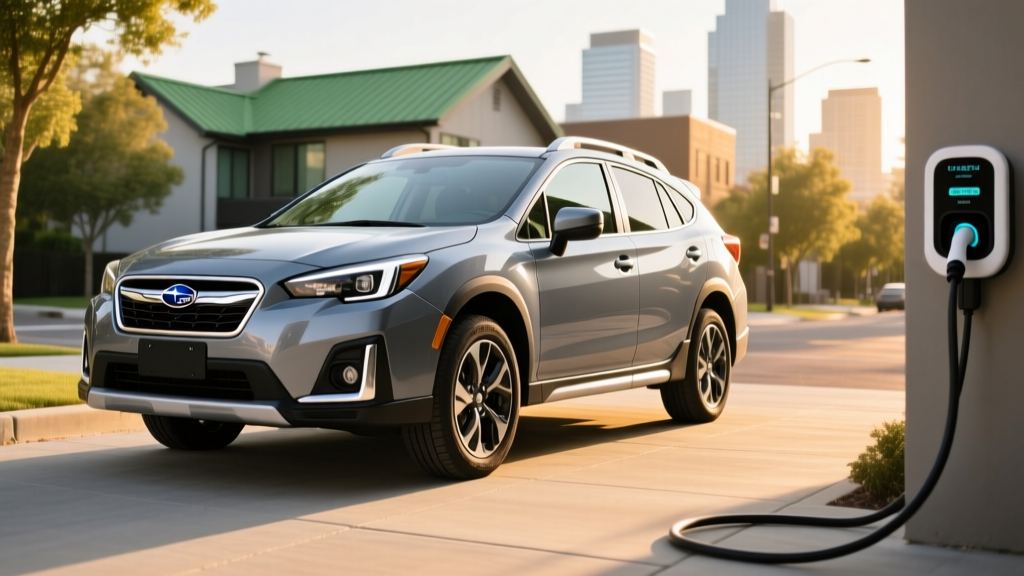
The Subaru Crosstrek has long been the default compact crossover for outdoor-minded drivers who need all-wheel drive without the fuel penalty of a traditional SUV. But when you search for Crosstrek hybrid miles per gallon, the picture gets complicated — because Subaru's electrified Crosstrek strategy has shifted significantly over the past few model years, and understanding what's actually available in 2026 requires separating the conventional hybrid (HEV) from the plug-in hybrid (PHEV) that preceded it.
This guide breaks down every electrified Crosstrek variant you can buy or find on dealer lots in 2026, with exact EPA MPG figures, electric-only range data, battery specifications, and the ownership economics that determine whether a hybrid Crosstrek actually saves you money.
HEV vs PHEV: Which Crosstrek Hybrid Are We Talking About?
Before diving into numbers, it's critical to understand the two distinct electrified Crosstrek configurations Subaru has offered — because they operate very differently and serve different buyers.
| Feature | Crosstrek Hybrid (HEV) | Crosstrek Plug-In Hybrid (PHEV) |
|---|---|---|
| Plugs in? | No — self-charging via engine & regen | Yes — charges via outlet or station |
| Electric-only driving | Very limited (low-speed assist only) | Yes, up to ~17 miles (PHEV) |
| Battery size | ~1.1 kWh (small buffer) | 8.8 kWh usable |
| Primary fuel | Gasoline (no plug needed) | Electricity + gasoline |
| Federal tax credit | Not eligible under §30D | Eligible (rules vary by year/sourcing) |
| Best for | Drivers who want MPG gains without lifestyle change | Drivers with home charging & short commutes |
The conventional HEV is what Subaru currently sells as the Crosstrek Hybrid in most markets. The PHEV variant — badged as the Crosstrek Hybrid in earlier years but built on Toyota's plug-in hybrid architecture — was discontinued after the 2023 model year. If you're shopping new in 2026, you're looking at the HEV. If you're considering the used market or a leftover, the PHEV data below still applies.
Subaru Crosstrek Hybrid MPG: EPA Numbers and Real-World Expectations
For the current-generation Crosstrek Hybrid (HEV), here is the EPA-rated fuel economy breakdown compared to the standard gasoline Crosstrek:
| Model | City MPG | Highway MPG | Combined MPG |
|---|---|---|---|
| 2026 Crosstrek Hybrid (HEV, AWD) | 36 | 34 | 35 |
| 2026 Crosstrek Gas (2.5L, AWD) | 27 | 34 | 29 |
| 2026 Crosstrek Gas (2.0L, AWD) | 28 | 35 | 30 |
Source: fueleconomy.gov — EPA official estimates.
The hybrid powertrain delivers a meaningful 6 MPG combined improvement over the 2.5L gas model. That's roughly a 20% fuel economy gain, which translates to about 80–100 fewer gallons per year for a driver covering 15,000 miles annually.
Real-World MPG: What Owners Actually See
Hybrids almost always exceed their EPA city rating in stop-and-go traffic because regenerative braking recaptures energy that a gas car wastes as heat. Based on owner-reported data and testing from outlets like Edmunds, real-world Crosstrek Hybrid owners commonly report:
- City driving: 36–40 MPG (often exceeding the EPA city estimate)
- Highway driving (70+ mph): 31–34 MPG (slightly below EPA highway, typical for boxy crossovers)
- Cold weather (below 30°F): Expect a 10–15% reduction, dropping to ~30–32 MPG combined
- Mixed real-world combined: 33–37 MPG for most drivers
The highway figure is where the Crosstrek Hybrid loses some ground. Aerodynamic drag on the lifted, roof-rail-equipped crossover body hurts efficiency at sustained speeds, and the hybrid system provides less benefit when regenerative braking opportunities are minimal. If your commute is 90% highway, your actual gains over the gas model will be smaller than the EPA sticker suggests.
Powertrain Specs: What's Under the Hood
| Specification | Crosstrek Hybrid (HEV) |
|---|---|
| Engine | 2.0L horizontally-opposed 4-cylinder (Boxer) |
| Electric motor | Integrated starter-generator + e-motor assist |
| Combined system output | ~194 hp (estimated, HEV variant) |
| Transmission | Lineartronic CVT |
| Drivetrain | Symmetrical AWD (standard) |
| 0–60 mph | ~8.5 seconds (estimated) |
| Towing capacity | 1,500 lbs |
| Ground clearance | 8.7 inches |
Subaru's hybrid system pairs the familiar 2.0L Boxer engine with an electric motor integrated into the CVT transmission. Unlike Toyota's planetary-gear hybrid system (which powers the Prius), Subaru's setup prioritizes seamless AWD integration over maximum electric-only operation. The electric motor provides low-speed torque fill and enables engine-off coasting in certain conditions, but you won't drive meaningful distances on electric power alone in the HEV.
The PHEV variant (2020–2023) used a different architecture derived from the Toyota Prius Prime, with a 2.0L Boxer engine mated to a more powerful electric motor and an 8.8 kWh (usable) lithium-ion battery. Combined output was 148 hp — adequate but not quick, with a 0–60 time around 9.5 seconds.
Crosstrek PHEV: Electric-Only Range and Total Range
If you're considering a used or remaining-stock Crosstrek PHEV, here are the electric-range figures that matter:
EPA Electric-Only Range (PHEV): 17 miles
Real-World Electric Range: 14–19 miles depending on temperature and terrain
Total Combined Range (Electric + Gas): ~480 miles
Battery: 8.8 kWh usable (lithium-ion, NMC chemistry)
MPGe (electric mode): 90 MPGe combined
Gas-only MPG (after battery depleted): ~35 MPG combined
Seventeen miles of electric range is modest by 2026 standards — competitors like the Toyota RAV4 Prime deliver 42 miles. But for a PHEV owner with a 10-mile each-way commute and home Level 2 charging, 17 electric miles can still cover most daily driving without burning gas.
PHEV Charging Times
The Crosstrek PHEV uses a standard J1772 connector for Level 1 and Level 2 AC charging. It does not support DC fast charging — a notable limitation.
| Charging Level | Power | Time (0–100%) | Connector |
|---|---|---|---|
| Level 1 (120V household) | ~1.2 kW | ~9 hours | J1772 |
| Level 2 (240V home/public) | ~3.3 kW | ~3 hours | J1772 |
| DC Fast Charge | Not supported | N/A | N/A |
With an 8.8 kWh battery, Level 2 charging at 3.3 kW fully replenishes the pack in roughly three hours. Overnight Level 1 charging works but is slow — plan for a Level 2 home installation if daily electric driving is your goal.
Pricing, Trims, and Tax Credit Eligibility
For the 2026 model year, the Crosstrek Hybrid (HEV) is positioned in the upper trim range:
- Crosstrek Hybrid (HEV) base MSRP: ~$32,000–$34,500 (depending on trim and options)
- Crosstrek Gas (Premium, 2.0L) base MSRP: ~$27,500
- Hybrid premium over gas model: ~$4,500–$5,500
Federal Tax Credit: Does the Crosstrek Hybrid Qualify?
Under IRS §30D rules for 2026:
- Conventional HEV (current Crosstrek Hybrid): Does NOT qualify for the federal §30D new clean vehicle credit. The credit applies only to plug-in vehicles (PHEVs and BEVs) with sufficient battery capacity.
- PHEV (2020–2023 Crosstrek PHEV, new/remaining): May have qualified for up to $4,502–$7,500 depending on model year and battery-sourcing compliance. However, Subaru discontinued the PHEV, and remaining new stock is essentially gone.
- Used PHEV (§25E credit): A used Crosstrek PHEV purchased from a dealer for $25,000 or less may qualify for the 30% used clean vehicle credit (up to $4,000), subject to buyer income caps ($75K single / $150K married filing jointly). Check current IRS §25E rules.
The absence of a federal tax credit for the HEV is a meaningful economic factor. That $4,500–$5,500 hybrid premium must be recovered purely through fuel savings — which takes roughly 4–5 years at current gas prices for an average driver.
Battery Warranty, Reliability, and Replacement Costs
Hybrid battery longevity is consistently the top concern for first-time hybrid buyers. Here's what Subaru provides:
Hybrid Battery Warranty: 8 years / 100,000 miles (standard across all trims)
California & CARB states: 10 years / 150,000 miles (PZEV/AT-PZEV coverage)
Capacity retention threshold: Warranty covers defects and significant capacity loss (typically below ~70% state of health)
Hybrid system warranty: Includes inverter, electric motor, and associated control modules
Is the Crosstrek Hybrid Reliable?
Subaru's hybrid system is relatively simple compared to Toyota's more complex power-split architecture, which is a double-edged sword. The simpler design means fewer components that can fail, but it also means less refinement and lower electric-mode capability. Based on historical data:
- Hybrid battery failures: Rare within the warranty period. Subaru's lithium-ion packs have shown low degradation rates in owner surveys.
- Common non-battery issues: CVT behavior (subtle shudder under hard acceleration), infotainment lag — neither hybrid-specific.
- Overall reliability: The Crosstrek platform scores well in IIHS safety testing and has average-to-above-average reliability ratings from Consumer Reports and J.D. Power.
Battery Replacement Cost (Out of Warranty)
If you plan to keep a Crosstrek Hybrid well past the 100,000-mile warranty, budget for eventual battery replacement:
- HEV battery replacement: ~$2,500–$4,000 (smaller battery, lower cost)
- PHEV battery replacement: ~$5,000–$8,000 (larger 8.8 kWh pack)
- Labor: $500–$1,200 additional depending on dealer
Most hybrid batteries last 150,000–200,000+ miles before significant degradation, and many outlast the vehicle itself. The 8-year/100,000-mile warranty provides substantial protection during the highest-risk ownership window.
Hybrid vs PHEV vs Full EV: Which Crosstrek Fits You?
Choose the Crosstrek Hybrid (HEV) if:
- You don't have access to home or workplace charging
- You want better MPG without changing any habits — just fill up and drive
- You regularly drive in cold climates where EV range loss is a concern
- You want AWD capability for snow/dirt roads with better fuel economy
- Your budget doesn't stretch to a full EV's higher upfront cost
Choose a PHEV (used Crosstrek PHEV or competitor) if:
- You have a garage or driveway where you can install a Level 2 charger
- Your daily commute is under 20 miles round-trip (covers most errands on electric)
- You want to reduce gas consumption dramatically without range anxiety on road trips
- You can find a qualifying used PHEV eligible for the §25E credit
Choose a full BEV (e.g., Subaru Solterra, Hyundai Ioniq 5) if:
- You have reliable home charging and your daily driving is under 250 miles
- You want the lowest per-mile fuel cost and minimal maintenance
- You qualify for the full §30D federal credit on a new EV
- You're ready to plan around DC fast charging on road trips
Pros and Cons at a Glance
Pros
- 35 MPG combined — strong for a standard-AWD crossover
- 8.7 inches of ground clearance retained (no hybrid compromise on capability)
- No plug-in required — works with existing infrastructure
- Real-world city MPG often exceeds EPA estimate
- 8-year/100,000-mile hybrid battery warranty
- Standard Symmetrical AWD with X-MODE
Cons
- ~$5,000 hybrid premium with no federal tax credit to offset it
- Highway MPG gains are modest vs. gas model
- No electric-only driving mode (HEV)
- PHEV variant discontinued — limited electric range if buying used
- CVT can feel sluggish under hard acceleration
- Towing limited to 1,500 lbs
Frequently Asked Questions
How many MPG does the Subaru Crosstrek Hybrid get?
The 2026 Subaru Crosstrek Hybrid (HEV) is EPA-rated at 36 city / 34 highway / 35 combined MPG. Real-world driving typically yields 33–37 MPG combined, with city driving often exceeding the EPA estimate thanks to regenerative braking.
Can the Crosstrek Hybrid drive on electric power only?
The current Crosstrek Hybrid (HEV) cannot drive meaningful distances on electric power alone — the electric motor assists the gas engine and enables brief low-speed electric operation, but it is not a plug-in vehicle. The discontinued Crosstrek PHEV (2020–2023) could drive up to 17 miles on electric-only power.
Does the Crosstrek Hybrid qualify for a federal tax credit?
No. The conventional Crosstrek Hybrid (HEV) does not qualify for the IRS §30D new clean vehicle credit, which is reserved for plug-in vehicles (PHEVs and BEVs). A used Crosstrek PHEV purchased for $25,000 or less may qualify for the §25E used vehicle credit of up to $4,000, subject to income limits.
How long will the Crosstrek Hybrid battery last?
Subaru warranties the hybrid battery for 8 years or 100,000 miles (10 years/150,000 miles in CARB states). Most hybrid batteries last 150,000–200,000+ miles before significant degradation. Out-of-warranty HEV battery replacement typically costs $2,500–$4,000.
Is the Crosstrek Hybrid better than the gas model?
If you do a lot of city and suburban driving, the hybrid's 6 MPG combined advantage saves roughly $350–$450 per year in fuel (at 15,000 miles/year and $3.50/gallon). The ~$5,000 hybrid premium pays back in roughly 11–14 years — or faster if gas prices rise or your driving is predominantly city. For mostly highway drivers, the MPG gap narrows and the payback period lengthens.
Does the Crosstrek Hybrid need to be plugged in?
No. The Crosstrek Hybrid (HEV) is a self-charging conventional hybrid. It recovers energy through regenerative braking and the gasoline engine. You never plug it in — just fill the gas tank as normal. Only the discontinued PHEV variant requires plugging in to access electric-only range.
Bottom Line: Who Should Buy the Crosstrek Hybrid?
The Subaru Crosstrek Hybrid delivers genuine fuel savings — 35 MPG combined in a capable, 8.7-inch-clearance AWD crossover — without requiring any infrastructure changes or driving-habit adjustments. If you live in a region with harsh winters, frequent dirt or gravel roads, and limited charging access, it's one of the most practical hybrid crossovers on the market.
The economics are straightforward: you pay roughly $5,000 more upfront, get no federal tax credit, and save $350–$450 annually in fuel. The payback period is long, but the hybrid also tends to hold resale value well, and you gain the satisfaction of 20% fewer fill-ups. For buyers who want electrified efficiency without the complexity of plug-in ownership, the Crosstrek Hybrid remains a compelling, if imperfect, choice in 2026.