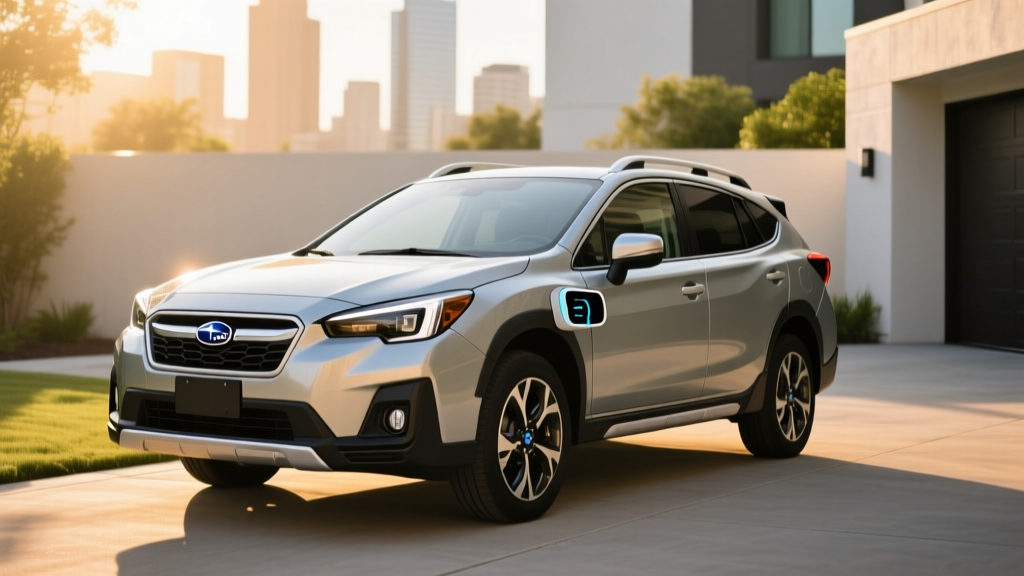
If you've been searching for the Subaru Crosstrek Hybrid's miles per gallon ratings, you've likely noticed something confusing: Subaru discontinued the plug-in hybrid (PHEV) Crosstrek after the 2023 model year. As of 2026, the Crosstrek lineup is offered exclusively with conventional gasoline and mild-hybrid powertrains — there is no longer a dedicated "Crosstrek Hybrid" in the traditional sense.
However, the 2026 Subaru Crosstrek does feature a revised powertrain with mild-hybrid assist technology on select trims, and understanding its real-world fuel economy requires unpacking the EPA data, comparing it to the discontinued PHEV variant, and weighing whether Subaru's current offering — or a competitor's plug-in hybrid — is the right fit for your driving needs.
This guide covers the 2026 Crosstrek's EPA MPG ratings, real-world fuel economy expectations, how it stacks up against the older Crosstrek PHEV, and whether a mild hybrid, a plug-in hybrid from another brand, or a full battery-electric vehicle (BEV) makes the most sense for your commute.
2026 Subaru Crosstrek MPG: EPA Ratings Explained
The 2026 Subaru Crosstrek is available with two primary powertrain options: a 2.0-liter flat-four engine (152 hp) and an upgraded 2.5-liter flat-four (182 hp). Both engines are paired with Subaru's Lineartronic CVT and standard symmetrical all-wheel drive. While these are not full hybrid systems, Subaru has incorporated mild-hybrid assist on the 2.5-liter variants to improve stop-start smoothness and marginally aid fuel economy.
| Powertrain | City MPG | Highway MPG | Combined MPG |
|---|---|---|---|
| 2.0L Boxer-4 (Base, Premium) | 27 | 34 | 29 |
| 2.5L Boxer-4 (Sport, Limited, Wilderness) | 26 | 33 | 29 |
Source: EPA Fuel Economy
These numbers are competitive within the subcompact crossover segment, especially given that every Crosstrek comes standard with all-wheel drive — a feature that typically costs 1–2 MPG compared to front-wheel-drive rivals.
Real-World MPG vs. EPA Sticker: What Owners Actually See
EPA estimates provide a standardized baseline, but real-world Subaru Crosstrek fuel economy varies based on driving style, terrain, climate, and route mix. Based on owner-reported data from Fuelly and independent testing, here's what to expect:
- City-heavy commuting (stop-and-go): 25–28 MPG for the 2.0L; 24–27 MPG for the 2.5L. The CVT and mild-hybrid assist help here, but the Crosstrek's boxy shape and AWD drivetrain add parasitic losses.
- Highway cruising (65–75 mph): 30–34 MPG for both engines. The Crosstrek is surprisingly efficient at steady speeds, though aerodynamic drag increases noticeably above 75 mph.
- Cold-weather driving (below 32°F): Expect a 5–10% reduction, bringing combined economy to roughly 26–27 MPG. Engine warm-up enrichment and cabin heating demands are the primary culprits.
- Mixed real-world average (owner-reported): Most drivers report 27–30 MPG combined, closely tracking the EPA's 29 MPG estimate.
The Discontinued Crosstrek PHEV: MPG and Electric Range Recap
For buyers specifically seeking a plug-in hybrid Crosstrek, it's important to understand what Subaru previously offered and why it was discontinued.
The 2020–2023 Subaru Crosstrek Hybrid (PHEV) used a 2.0-liter boxer engine paired with two electric motors and an 8.8 kWh lithium-ion battery pack. Here were its key specifications:
| Specification | Value |
|---|---|
| EPA Combined MPG (gas-only, charge-depleted) | 35 MPG |
| MPGe (gas + electric combined) | 90 MPGe |
| Electric-Only Range | 17 miles |
| Total Combined Range | ~480 miles |
| Battery Capacity | 8.8 kWh (lithium-ion) |
| Combined System Output | 148 hp |
| Level 2 Charging Time (240V) | ~2.5 hours |
| DC Fast Charging | Not supported |
| Base MSRP (when available) | $36,445 |
The Crosstrek PHEV's 17-mile electric range was widely criticized as inadequate — especially compared to rivals like the Toyota RAV4 Prime (42 miles electric) and the Hyundai Tucson PHEV (33 miles). Subaru's PHEV system, derived from the Toyota Prius Prime architecture, was also limited by the small battery and lack of DC fast charging. These factors, combined with Subaru's strategic pivot toward dedicated BEV platforms (like the Solterra), led to the model's discontinuation.
HEV vs. PHEV vs. BEV: Which Powertrain Fits Your Life?
Since Subaru no longer offers a Crosstrek PHEV, buyers cross-shopping the Crosstrek need to understand the fundamental differences between the three electrified powertrain types. This distinction matters enormously for daily costs and convenience.
Conventional Hybrid (HEV)
How it works: A small battery recharges via regenerative braking and the gas engine. No plug required.
Best for: Drivers who want better MPG with zero lifestyle change.
Example: Toyota RAV4 Hybrid (39 MPG combined).
Plug-In Hybrid (PHEV)
How it works: A larger battery (typically 10–20 kWh) provides 20–45 miles of electric-only driving. Plug in at home or a public charger; gas engine kicks in for longer trips.
Best for: Commuters with short daily drives and home charging access who also want road-trip flexibility.
Example: Toyota RAV4 Prime (42 mi electric, 38 MPG gas).
Battery Electric (BEV)
How it works: No gas engine at all. A large battery (60–100+ kWh) powers electric motors. Charge at home or via DC fast chargers.
Best for: Drivers with reliable home/work charging who want minimal operating costs and zero tailpipe emissions.
Example: Subaru Solterra (222 mi EPA range, 102 MPGe).
Competitor PHEVs: Better Electric Range Than the Old Crosstrek Hybrid
If the Crosstrek PHEV's limited electric range was a dealbreaker, several competitors offer substantially more capability in the same segment:
| Model | Electric Range | Gas MPG (depleted) | Combined HP | Base MSRP | Federal Credit Eligibility |
|---|---|---|---|---|---|
| Toyota RAV4 Prime | 42 miles | 35 MPG | 302 hp | $44,515 | Limited (§30D sourcing rules) |
| Hyundai Tucson PHEV | 33 miles | 33 MPG | 261 hp | $38,475 | Check current IRS eligibility |
| Kia Sportage PHEV | 34 miles | 35 MPG | 261 hp | $39,490 | Check current IRS eligibility |
| Ford Escape PHEV | 37 miles | 40 MPG | 210 hp | $40,400 | Check current IRS eligibility |
| Mitsubishi Outlander PHEV | 38 miles | 26 MPG | 248 hp | $41,440 | Check current IRS eligibility |
Note: Federal §30D tax credit eligibility for PHEVs depends on battery sourcing, critical mineral content, MSRP caps ($80,000 for SUVs), and buyer income limits ($300,000 joint / $150,000 single). Always verify current eligibility on IRS.gov before purchasing.
2026 Subaru Crosstrek Pricing and Tax Credit Reality
The 2026 Subaru Crosstrek (conventional gasoline/mild-hybrid) starts at $26,295 for the Base trim and ranges up to approximately $36,795 for the Limited trim. The Wilderness off-road variant starts around $33,295.
Because the 2026 Crosstrek is not a plug-in hybrid or battery-electric vehicle, it does not qualify for the federal §30D clean vehicle tax credit (up to $7,500). It also does not qualify for most state-level EV/PHEV incentives that specifically require plug-in capability.
However, the Crosstrek's lower base price compared to PHEV competitors means the upfront cost gap is meaningful. Consider this simplified 5-year comparison:
| Factor | 2026 Crosstrek 2.5L | Toyota RAV4 Prime PHEV |
|---|---|---|
| Base MSRP | $30,295 (Sport) | $44,515 |
| Federal Tax Credit | $0 | Up to $7,500 (if eligible) |
| Effective Purchase Price | $30,295 | $37,015 |
| 5-Year Fuel Cost (15k mi/yr) | ~$9,400 (gas) | ~$4,200 (gas + electricity)* |
| 5-Year Total (purchase + fuel) | ~$39,695 | ~$41,215 |
*Assumes 70% of RAV4 Prime driving on electricity at $0.14/kWh, 30% on gasoline at $3.50/gal. Crosstrek at 29 MPG combined, $3.50/gal. Actual costs vary by region and driving pattern.
The Crosstrek wins on upfront cost; the RAV4 Prime closes the gap over time through fuel savings — but only if you regularly charge and stay within electric range.
Reliability, Battery Warranty, and Long-Term Costs
Subaru's conventional powertrains have a strong reliability track record. The 2.0L and 2.5L boxer engines are well-proven, and the CVT, while historically a concern in older models, has improved significantly in the current generation.
- Powertrain Warranty: 5 years / 60,000 miles
- Hybrid/EV Component Warranty: 8 years / 100,000 miles (covers mild-hybrid battery and related components)
- Battery Replacement Cost (mild-hybrid system): Estimated $800–$1,500 — significantly less than a full PHEV or BEV battery pack because the mild-hybrid battery is small (~0.5 kWh)
For comparison, the discontinued Crosstrek PHEV's 8.8 kWh lithium-ion traction battery carried an 8-year/100,000-mile warranty. Replacement cost for that larger battery was estimated at $4,000–$6,000 out of warranty.
Subaru's standard warranty also includes 3 years / 36,000 miles bumper-to-bumper and 5 years of roadside assistance. According to IIHS, the 2026 Crosstrek continues to earn top safety ratings, which supports long-term ownership value and lower insurance premiums.
Pros and Cons: The 2026 Crosstrek as an Efficiency Choice
Pros
- Standard AWD with no MPG penalty vs. optional-AWD rivals
- Strong resale value — Subaru consistently leads the segment
- Proven reliability on boxer-4 engines and CVT
- 8.7 inches of ground clearance; genuine off-road capability
- Lower base price than any PHEV competitor
- No charging infrastructure required
Cons
- 29 MPG combined trails segment-leading hybrids (RAV4 Hybrid: 39 MPG)
- No PHEV or full-hybrid option available from Subaru
- No federal tax credit eligibility
- CVT can feel sluggish during hard acceleration
- 2.0L engine underpowered for highway merging (152 hp)
- Cabin noise above 70 mph
Who Should Buy the 2026 Crosstrek — And Who Should Look Elsewhere?
Choose the 2026 Subaru Crosstrek if:
- You need AWD and ground clearance for snow, dirt roads, or outdoor adventures
- You don't have access to home or workplace charging
- You want a simple, proven powertrain with no plug-in complexity
- You value Subaru's resale value and safety ratings over maximum MPG
- Your budget is under $35,000 and you can't stretch to a PHEV
Look at a PHEV or BEV instead if:
- Your daily commute is under 30 miles and you can charge at home (a PHEV will save $1,000+ annually in fuel)
- You want to maximize fuel economy — the Toyota RAV4 Hybrid (39 MPG) or RAV4 Prime (42 mi electric) significantly outperform the Crosstrek
- You want to reduce your carbon footprint beyond what a conventional gas car allows
- You qualify for the §30D federal tax credit, which can offset a PHEV's higher MSRP by up to $7,500
Frequently Asked Questions
How many MPG does the 2026 Subaru Crosstrek get?
The 2026 Crosstrek achieves an EPA-estimated 27 city / 34 highway / 29 combined MPG with the 2.0L engine, and 26 city / 33 highway / 29 combined with the 2.5L engine. Real-world owner averages typically fall between 27–30 MPG combined.
Does Subaru still make a Crosstrek Hybrid or PHEV?
No. Subaru discontinued the Crosstrek Hybrid (PHEV) after the 2023 model year. The 2026 Crosstrek lineup uses conventional gasoline engines with mild-hybrid assist on the 2.5L variants. Subaru's electrification strategy has shifted to dedicated BEVs like the Solterra.
How far could the old Crosstrek PHEV go on electric only?
The 2020–2023 Crosstrek Hybrid PHEV had an EPA-rated electric-only range of 17 miles. This was considered below average for the PHEV segment — the Toyota RAV4 Prime offers 42 miles of electric range for comparison.
Does the 2026 Crosstrek qualify for any tax credit?
No. The 2026 Crosstrek is a conventional gasoline vehicle with mild-hybrid assist. It does not meet the requirements for the federal §30D clean vehicle tax credit, which is limited to plug-in hybrids (PHEVs) and battery-electric vehicles (BEVs) meeting battery sourcing and critical mineral thresholds. Verify current rules at IRS.gov.
Is the Subaru Crosstrek reliable long-term?
Yes. Subaru's boxer engines and CVT have improved substantially in reliability over the past decade. The 2026 Crosstrek carries a 5-year/60,000-mile powertrain warranty and an 8-year/100,000-mile hybrid component warranty. Mild-hybrid battery replacement costs are estimated at $800–$1,500 — far less than a full PHEV or BEV battery.
What's the best hybrid alternative to the Crosstrek?
If you want hybrid efficiency with AWD in a similar size, the Toyota RAV4 Hybrid (39 MPG combined, ~$33,000) is the segment benchmark. For plug-in capability, the RAV4 Prime (42 miles electric, 302 hp) is the most capable — though it commands a premium starting at $44,515 before potential tax credits.