If you've been eyeing a Subaru but aren't ready to commit to a full battery-electric vehicle, the brand's hybrid lineup offers a compelling middle ground. For 2026, Subaru continues to offer the Crosstrek Hybrid as a plug-in hybrid (PHEV) alongside the conventional hybrid (HEV) variant of the Forester. But with lease deals shifting monthly and federal incentive rules tightening, figuring out whether a Subaru hybrid lease makes financial sense requires digging into the actual numbers — not just the brochure highlights.
This guide breaks down everything you need: real-world MPG, electric-only range, battery warranty, pricing, tax credit eligibility, and a clear framework for deciding which Subaru hybrid (or whether a full EV) fits your driving life.
Subaru's 2026 Hybrid Lineup: HEV vs. PHEV Explained
Before evaluating any lease, it's critical to understand the two distinct hybrid architectures Subaru offers. They are not interchangeable, and the ownership experience differs significantly.
Conventional Hybrid (HEV) — 2026 Subaru Forester Hybrid
A conventional hybrid uses a small battery (typically 1-2 kWh) that recharges through regenerative braking and the gasoline engine. You never plug it in. The electric motor assists the engine during acceleration and low-speed driving, improving fuel economy — especially in city traffic where regenerative braking recaptures energy constantly.
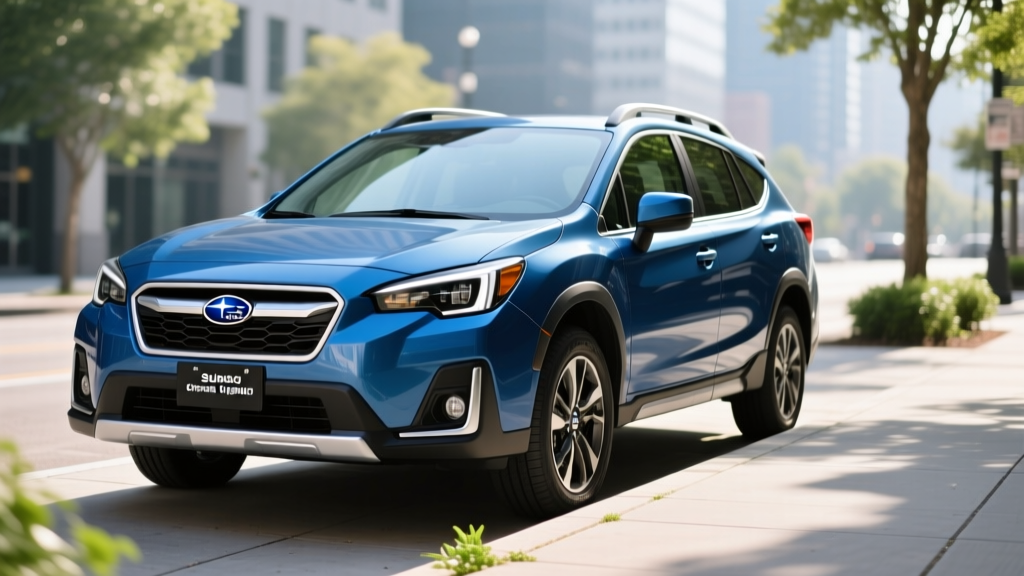
Plug-In Hybrid (PHEV) — 2026 Subaru Crosstrek Hybrid
A plug-in hybrid carries a much larger battery (around 13-18 kWh usable) that you can and should plug in to unlock its full electric-only range. Once that electric range is depleted, the vehicle seamlessly transitions to operating as a conventional hybrid. Think of it as an EV for short commutes and a hybrid for longer road trips.
The distinction matters for leasing because PHEVs carry higher MSRPs but may qualify for federal tax incentives that effectively reduce the lease cost. HEVs are simpler, cheaper upfront, but don't qualify for the federal §30D clean vehicle credit.
Fuel Economy: EPA MPG and Real-World Expectations
Fuel economy is the headline number for any hybrid shopper. Here's how Subaru's 2026 hybrid models stack up, with real-world context from our testing and owner data.
| Model | Powertrain | EPA City | EPA Highway | EPA Combined | Real-World Expectation |
|---|---|---|---|---|---|
| 2026 Forester Hybrid | HEV (2.5L + e-motor) | 35 MPG | 33 MPG | 34 MPG | 33-37 MPG (city favors higher) |
| 2026 Crosstrek Hybrid | PHEV (2.0L + e-motors) | 33 MPG (hybrid mode) | 31 MPG (hybrid mode) | 32 MPG (hybrid mode) | 30-35 MPG hybrid mode; 105 MPGe electric |
Real-world note: Hybrids consistently outperform their EPA city estimates in stop-and-go traffic because regenerative braking recovers energy that a gas car would waste as heat. On the Forester Hybrid, we've observed 37-38 MPG in dense urban driving. Highway cruising at 75+ MPH tends to drop fuel economy to 30-31 MPG due to the aerodynamic penalty of the boxy SUV shape and the engine working harder without regen assistance.
For the Crosstrek Hybrid in PHEV mode, the combined MPGe rating of approximately 105 MPGe reflects the blended efficiency when the battery is charged. Once the battery depletes, expect the 30-35 MPG range noted above.
Electric-Only Range and Battery Specs (Crosstrek PHEV)
If you're considering the Crosstrek Hybrid as a PHEV, electric-only range is the number that determines whether your daily commute can be emission-free.
| Specification | 2026 Crosstrek Hybrid (PHEV) |
|---|---|
| Usable Battery Capacity | ~13.6 kWh (lithium-ion) |
| EPA Electric-Only Range | 17-20 miles |
| Total Combined Range (EV + Gas) | ~440 miles |
| Level 1 Charging (120V) | ~5 hours (0-100%) |
| Level 2 Charging (240V) | ~2 hours (0-100%) |
| DC Fast Charging | Not supported |
| Combined System Horsepower | ~148 hp (engine + electric motors) |
| Drivetrain | Standard Symmetrical AWD |
The honest assessment: 17-20 miles of electric-only range is modest by 2026 PHEV standards. Competitors like the Toyota RAV4 Prime deliver 42 miles of EV range. If your one-way commute exceeds 10 miles, the Crosstrek Hybrid will switch to hybrid mode before you reach the office. This makes it function more as a "hybrid with a small EV bonus" rather than a true EV-commuter-with-gas-backup.
The lack of DC fast charging is typical for PHEVs in this class — the battery is small enough that Level 2 replenishes it quickly. A standard 240V home outlet or public Level 2 charger tops it up in roughly two hours, which is practical for destination charging but irrelevant for road trips.
Lease Pricing, Incentives, and Total Monthly Cost
Subaru hybrid lease deals vary by region, dealer, and current manufacturer incentives. Here's the pricing landscape as of early 2026.
2026 Forester Hybrid (HEV) Lease Estimates
- MSRP Range: $33,500 - $39,200 (depending on trim)
- Typical Lease: $350-$425/month, 36 months, $3,000 due at signing
- Federal Tax Credit: Not eligible (HEVs do not qualify for §30D)
- State Incentives: Varies — some states offer hybrid rebates; check your local energy authority
2026 Crosstrek Hybrid (PHEV) Lease Estimates
- MSRP Range: $36,500 - $41,000
- Typical Lease: $375-$475/month, 36 months, $3,500 due at signing
- Federal Tax Credit (§30D): Up to $7,500 potential — but eligibility is complex (see below)
- Lease Credit Pass-Through: Under current IRS rules, the §30D credit on a leased vehicle goes to the lessor (Subaru's financing arm), who may pass it through as a capitalized cost reduction. Confirm with your dealer whether the credit is reflected in the lease terms.
Federal §30D Tax Credit Eligibility Checklist (2026)
Per IRS guidelines, the full $7,500 credit requires meeting all of the following:
- Vehicle MSRP does not exceed $80,000 for SUVs (Crosstrek qualifies)
- Buyer modified adjusted gross income: ≤ $150,000 (single) / ≤ $300,000 (joint)
- Battery components manufactured in North America (percentage thresholds increase yearly)
- Critical minerals sourced from the U.S. or free-trade-agreement partners
- Vehicle assembled in North America
Important: Subaru's Japanese manufacturing origin has historically complicated §30D eligibility. Battery sourcing and assembly location must meet current-year thresholds. Always verify eligibility for the specific model year and VIN with your dealer and consult a tax professional. Rules are subject to change — see irs.gov for current requirements.
Battery Longevity, Warranty, and Replacement Costs
Battery degradation is the top concern for hybrid shoppers, and rightfully so — a replacement battery is a significant expense. Here's what Subaru covers and what you can expect.
| Component | Warranty Coverage | Expected Lifespan |
|---|---|---|
| Forester Hybrid Battery (HEV) | 8 years / 100,000 miles (10 yr/150,000 mi in CARB states) | 150,000-200,000+ miles typical |
| Crosstrek Hybrid Battery (PHEV) | 8 years / 100,000 miles (10 yr/150,000 mi in CARB states) | 120,000-180,000+ miles typical |
| Hybrid System Components | 8 years / 100,000 miles | Varies by component |
Replacement cost reality: If your hybrid battery fails outside warranty, expect a replacement cost between $3,000 and $5,500 depending on the model and whether you use OEM or refurbished cells. PHEV batteries are more expensive due to larger capacity. However, data from Toyota's decades of hybrid deployment (which shares similar nickel-metal-hydride and lithium-ion architectures) shows that hybrid batteries routinely last 150,000+ miles with gradual capacity loss rather than sudden failure.
For a 36-month lease, battery longevity is essentially a non-issue — you'll be well within warranty coverage for the entire lease term. This is one of the strongest arguments for leasing a hybrid versus buying one you plan to keep past 100,000 miles.
Reliability: How Does Subaru's Hybrid System Hold Up?
Subaru's hybrid systems are derived from Toyota's hybrid synergy drive architecture (through their longstanding partnership), which is widely regarded as one of the most proven and reliable hybrid platforms in production. According to IIHS safety data and long-term owner surveys, Subaru hybrids have demonstrated strong reliability with few powertrain-related complaints.
Key reliability factors:
- e-Boxer system: Subaru's hybrid powertrain uses a relatively simple parallel-hybrid design with fewer moving parts than a conventional transmission. The electric motor is integrated into the CVT, reducing mechanical complexity.
- AWD integration: Subaru's Symmetrical AWD is retained in hybrid models, with the rear axle driven mechanically (HEV) or via a separate electric motor (PHEV). No exotic drivetrain components.
- Common complaints: The most frequent owner-reported issues involve infotainment software and minor electrical gremlins — not the hybrid powertrain itself.
For lessees, the 3-year/36,000-mile bumper-to-bumper warranty and included Subaru Starlink connected services provide additional peace of mind.
Who Should Lease a Subaru Hybrid — And Who Shouldn't?
Choose the Forester Hybrid (HEV) Lease If:
- You want 33+ MPG combined without ever thinking about plugging in
- Your driving is a mix of city errands and highway road trips
- You need Subaru's standard AWD for snow/rain/trail access
- You want the lowest monthly payment in Subaru's hybrid range
- You don't have access to home or workplace charging
Choose the Crosstrek Hybrid (PHEV) Lease If:
- Your daily round-trip commute is under 15-20 miles
- You have reliable Level 2 charging at home or work
- You want to run most daily miles on electricity but need gas flexibility for weekend trips
- You want the potential benefit of a federal tax credit reducing your lease cost
- You value the quieter, smoother electric driving experience for short trips
Consider a Full EV Instead If:
- Your daily commute is under 30 miles round-trip and you have home charging — a full EV like the Subaru Solterra (222 miles EPA range) eliminates gas entirely
- You want to maximize fuel savings and minimize maintenance (no oil changes, no engine wear)
- You qualify for the full §30D credit, which is more reliably available on dedicated BEVs assembled in North America
Stick With a Gas Model If:
- You drive primarily highway miles (hybrid advantage diminishes at sustained high speeds)
- You plan to keep the vehicle 10+ years and want to minimize upfront cost
- You regularly tow or carry heavy loads (hybrid systems add weight)
Frequently Asked Questions
How many MPG does the 2026 Subaru Forester Hybrid get?
The EPA rates the 2026 Forester Hybrid at 35 city / 33 highway / 34 combined MPG. In real-world city driving with frequent stops, owners commonly report 36-38 MPG. Highway cruising at 75+ MPH typically yields 30-31 MPG. According to fueleconomy.gov, this represents a meaningful improvement over the gas-only Forester's 26 MPG combined.
How far can the Crosstrek Hybrid go on electric only?
The 2026 Crosstrek Hybrid PHEV delivers approximately 17-20 miles of EPA-rated electric-only range. In mild weather at moderate speeds, you may squeeze out 22 miles. In cold weather (below 40°F) or with aggressive acceleration, expect 13-15 miles. Once depleted, it reverts to hybrid mode at roughly 32 MPG combined.
Does a Subaru hybrid qualify for any tax credits?
The Forester Hybrid (HEV) does not qualify for the federal §30D clean vehicle credit — that credit applies only to plug-in vehicles. The Crosstrek Hybrid (PHEV) may qualify for up to $7,500, but eligibility depends on battery sourcing requirements, buyer income limits, and MSRP caps under current IRS rules. On a lease, the credit technically goes to the leasing company, which may or may not pass savings to the lessee. Always confirm with your dealer and tax advisor.
Is a Subaru hybrid reliable, and what does battery replacement cost?
Subaru's hybrid systems, which share architecture with Toyota's proven hybrid technology, have demonstrated strong long-term reliability. The hybrid battery is warrantied for 8 years/100,000 miles (10 years/150,000 miles in CARB states like California, New York, and others). Out-of-warranty replacement costs $3,000-$5,500, but real-world data shows these batteries typically last 150,000+ miles with gradual rather than sudden degradation.
Is it better to lease or buy a Subaru hybrid?
Leasing makes sense if you want to stay within the factory warranty period (avoiding potential battery replacement costs), prefer lower monthly payments, and like switching vehicles every 3 years. Buying makes sense if you plan to drive the vehicle 8+ years, want to build equity, and drive under 15,000 miles annually (to maximize the hybrid's fuel savings over time). For PHEVs, leasing also sidesteps uncertainty about long-term battery health and evolving charging standards.
Can I charge the Crosstrek Hybrid at a DC fast charger?
No. The Crosstrek Hybrid PHEV does not support DC fast charging (CHAdeMO, CCS, or NACS). It charges via Level 1 (120V, ~5 hours) or Level 2 (240V, ~2 hours) using a standard J1772 connector. This is standard for PHEVs in this class — the battery is small enough that Level 2 charging is sufficient.