Quick Verdict: A Competent PHEV With Modest Electric Range
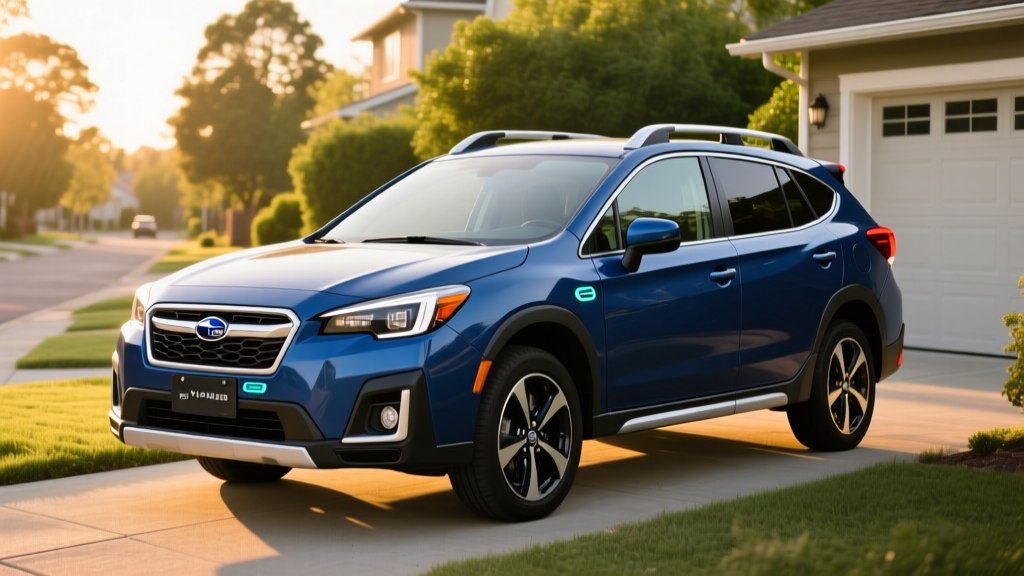
The 2019 Subaru Crosstrek Hybrid is a plug-in hybrid (PHEV), not a conventional hybrid. That distinction matters: it packs an 8.8 kWh lithium-ion battery paired with a 2.0-liter flat-four engine, delivering roughly 17 miles of electric-only driving before the gasoline engine takes over. For 2019, it was Subaru's first plug-in offering in the U.S., borrowing heavily from Toyota's PHEV powertrain architecture. If you're shopping the used market today, the Crosstrek Hybrid remains a practical AWD compact crossover — but its short EV range and limited DC charging capability mean it suits a very specific buyer.
| Specification | Value |
|---|---|
| Powertrain Type | Plug-in Hybrid (PHEV) |
| Engine | 2.0L Boxer-4 + electric motors |
| Combined System Horsepower | 148 hp |
| Battery Capacity | 8.8 kWh (lithium-ion) |
| EPA Electric-Only Range | 17 miles |
| Total Combined Range | ~480 miles |
| EPA MPG (gas mode, combined) | 35 MPG |
| MPGe (electric + gas combined) | 90 MPGe |
| Level 2 Charge Time (0–100%) | ~2 hours at 240V / 3.3 kW |
| DC Fast Charging | Not supported |
| Drivetrain | Symmetrical AWD |
| 0–60 mph | ~9.0 seconds |
| Original MSRP (2019) | ~$34,995 |
| Battery Warranty | 8 years / 100,000 miles |
Understanding the Powertrain: HEV vs PHEV
Before evaluating the Crosstrek Hybrid, it's essential to understand what kind of hybrid it is — and what it isn't.
| Feature | Conventional Hybrid (HEV) | Plug-in Hybrid (PHEV) |
|---|---|---|
| Plugs in? | No — charges via regenerative braking and engine | Yes — can be plugged into Level 1 or Level 2 charger |
| Battery Size | ~1–2 kWh | ~8–20 kWh (Crosstrek: 8.8 kWh) |
| Electric-Only Range | 0–2 miles at low speed | 17 miles (Crosstrek EPA) |
| Example | Toyota Prius (non-prime), Honda CR-V Hybrid | 2019 Crosstrek Hybrid, Toyota RAV4 Prime |
The 2019 Crosstrek Hybrid is firmly in the PHEV category. You plug it in, charge the 8.8 kWh pack, and drive up to 17 miles on electricity alone. Once the battery is depleted, it operates like a conventional hybrid using the 2.0L gasoline engine.
The powertrain itself is a collaboration with Toyota, sharing core architecture with the Prius Prime. The 2.0-liter Subaru Boxer engine contributes 137 hp on its own, while two electric motor-generators supplement power for a combined system output of 148 hp. A continuously variable transmission (CVT) routes power to all four wheels through Subaru's Symmetrical AWD system — a major differentiator versus most FWD-only PHEV competitors.
Fuel Economy: EPA MPG and Real-World Expectations
The EPA rates the 2019 Crosstrek Hybrid at 35 MPG combined when operating in gasoline-hybrid mode (after the battery is depleted). In electric mode, it achieves 90 MPGe. Here's the official breakdown from fueleconomy.gov:
| Mode | City | Highway | Combined |
|---|---|---|---|
| Gasoline (hybrid mode) | N/A (combined only) | N/A | 35 MPG |
| Electric + Gas (MPGe) | — | — | 90 MPGe |
| Electric-only range | 17 miles EPA | ||
Real-World MPG: What to Actually Expect
Hybrids and PHEVs often exceed their EPA city ratings in stop-and-go traffic, where regenerative braking recaptures energy. On the highway, the advantage diminishes. Based on owner reports and aggregated data:
- City driving (hybrid mode): Expect 36–40 MPG. The regenerative braking and low-speed electric assist shine here.
- Highway driving (hybrid mode): Expect 30–33 MPG. The Boxer engine works harder at sustained speed, and AWD adds drivetrain losses.
- Electric-only mode: The 17-mile EPA figure holds fairly well in moderate temperatures. In freezing weather, expect 12–14 miles as the battery's usable capacity shrinks and cabin heating draws power.
- Overall (mixed, with daily charging): Owners who charge nightly and drive under 20 miles per day may use almost no gasoline for weeks. Without regular charging, you're effectively driving a 35 MPG hybrid.
Range Reality Check: The 17-mile electric-only EPA estimate assumes moderate temperatures and mixed driving. In winter conditions (below 32°F), expect a 20–30% reduction, bringing real EV range to roughly 12–14 miles. Highway-speed electric-only driving also reduces range versus the EPA's mixed cycle.
Charging: Level 1, Level 2, and the DC Fast-Charging Gap
The 2019 Crosstrek Hybrid supports two charging methods — and that's it. There is no DC fast-charging capability, which is a significant limitation compared to newer PHEVs and all BEVs.
| Charging Level | Voltage / Power | 0–100% Time | Connector |
|---|---|---|---|
| Level 1 (standard outlet) | 120V / ~1.4 kW | ~5 hours | |
| J1772 (standard) | |||
| Level 2 (home/public) | 240V / 3.3 kW | ~2 hours | |
| J1772 (standard) | |||
| DC Fast Charge | Not supported | N/A | N/A |
The onboard charger is limited to 3.3 kW, which means even on a Level 2 circuit, you won't fill the 8.8 kWh battery any faster than about two hours. For overnight home charging, this is perfectly adequate — plug in when you get home, and the battery is full by morning. But on a road trip, you won't find a DC fast charger that works with this vehicle. You're limited to Level 2 public stations, and a two-hour wait for 17 miles of EV range isn't practical for en-route top-ups.
kW vs kWh refresher: kW (kilowatts) is the rate of power flow — think of it as how fast water flows through a hose. kWh (kilowatt-hours) is the total energy stored — the size of the bucket. The Crosstrek's 8.8 kWh battery holds 8.8 kWh of energy, and it can accept that energy at a maximum rate of 3.3 kW.
Pricing, Tax Credits, and Used Market Value
When new, the 2019 Crosstrek Hybrid carried an MSRP of approximately $34,995 (before destination). It was offered in a single, well-equipped trim. Today on the used market, examples typically list between $18,000 and $24,000 depending on mileage, condition, and region.
Federal Tax Credit — Original and Current Rules
When purchased new in 2019, the Crosstrek Hybrid qualified for a $4,502 federal tax credit under the pre-2023 IRS §30D rules, based on its battery capacity. That credit is no longer available for used purchases in the same form.
Under current IRS §30D rules (2026), the federal clean vehicle credit for new vehicles is up to $7,500 but comes with strict requirements: MSRP caps ($55,000 for SUVs, $80,000 for trucks/vans), buyer income limits ($150K single / $300K joint), and battery critical-mineral and component sourcing thresholds. Since the 2019 Crosstrek Hybrid is no longer sold new, these rules don't apply to it directly.
For used buyers, the Used Clean Vehicle Credit (also under IRS rules) may offer up to $4,000 or 30% of the sale price (whichever is less) if you buy from a licensed dealer, the vehicle is at least two model years old, the sale price is under $25,000, and you meet income limits ($75K single / $150K joint). The Crosstrek Hybrid's used pricing may fall right at or below that $25,000 threshold, making some examples potentially eligible. Always verify current eligibility with a tax professional and the IRS guidelines.
Used Clean Vehicle Credit checklist (2026):
- Vehicle must be at least 2 model years old ✓ (2019 qualifies)
- Purchase price must be under $25,000 (varies by listing)
- Buy from a licensed dealer (private sales don't qualify)
- Buyer AGI under $75,000 (single) or $150,000 (joint)
- Credit = 30% of sale price, max $4,000
- Can be applied at point of sale (dealer must be registered with IRS)
Battery Warranty, Reliability, and Replacement Cost
Hybrid Battery Warranty: Subaru covers the 2019 Crosstrek Hybrid's high-voltage battery for 8 years or 100,000 miles (whichever comes first), with a capacity retention threshold of approximately 70%. In California Air Resources Board (CARB) states, hybrid battery warranty extends to 10 years or 150,000 miles.
Reliability Track Record
The 2019 Crosstrek Hybrid's powertrain is derived from Toyota's proven hybrid synergy drive, adapted for Subaru's Boxer engine and AWD layout. Toyota's hybrid components have demonstrated exceptional longevity across millions of vehicles. Subaru's own hybrid integration has a shorter track record, but owner forums and reliability surveys suggest no systemic battery or powertrain failures.
The conventional 12V auxiliary battery (separate from the high-voltage traction battery) may need replacement every 4–6 years as in any vehicle. The high-voltage 8.8 kWh lithium-ion pack is designed for the life of the vehicle, but degradation is normal:
- Expected degradation at 5 years / 60,000 miles: ~8–12% capacity loss
- Expected degradation at 8 years / 100,000 miles: ~15–20% capacity loss
- Effect on EV range: A 15% degraded battery might deliver ~14 miles instead of 17 miles electric-only
Battery Replacement Cost
If the high-voltage battery fails outside of warranty, replacement cost for a Crosstrek Hybrid battery pack typically ranges from $4,000 to $7,000 including parts and labor at a Subaru dealer. Independent hybrid shops may offer refurbished packs for $2,500–$4,000. Given the warranty coverage and Toyota-derived architecture, outright battery failure before 150,000 miles is uncommon.
Who Should Buy the 2019 Crosstrek Hybrid?
Choose the 2019 Crosstrek Hybrid if:
- Your daily commute is under 20 miles round-trip and you can charge at home
- You need AWD for snow, rain, or light off-road use
- You want a compact crossover that can handle roof racks, bikes, and weekend trips
- You want to reduce gasoline use without committing to a full EV
- You live in a region with limited public charging infrastructure
Choose a full BEV (battery electric vehicle) instead if:
- Your commute is longer than 17 miles and you want zero gasoline use
- You have reliable home charging and access to DC fast chargers for road trips
- You want lower long-term maintenance (no oil changes, no gasoline engine)
- You want 200+ miles of range and fast charging for road trips
Choose the gas-only Crosstrek instead if:
- You can't charge at home or at work
- You primarily drive highway miles (where the hybrid advantage is smallest)
- You want a lower purchase price — gas Crosstreks run $3,000–$5,000 less on the used market
Pros
- Standard AWD — rare among compact PHEVs
- Toyota-derived hybrid powertrain with strong reliability pedigree
- 17 miles of EV range covers many short commutes
- Good visibility, practical cargo area, raised ride height
- Eligible for used EV credit (if priced under $25K from dealer)
Cons
- Only 17 miles of electric-only range (short by today's PHEV standards)
- No DC fast charging — Level 2 only at 3.3 kW
- Modest 148 hp; 0–60 in ~9 seconds feels leisurely
- Cargo space reduced vs gas Crosstrek due to battery placement
- Single trim, limited color choices when new
2019 Crosstrek Hybrid vs Competitors
The 2019 Crosstrek Hybrid competed in a small field. Here's how it stacks up against alternatives you might cross-shop on the used market:
| Vehicle | EV Range | Combined MPG (gas) | AWD? | Battery kWh | Typical Used Price |
|---|---|---|---|---|---|
| 2019 Subaru Crosstrek Hybrid | 17 mi | 35 MPG | Yes | 8.8 kWh | $18K–$24K |
| 2019 Toyota Prius Prime | 25 mi | 54 MPG | No (FWD) | 8.8 kWh | $17K–$22K |
| 2019 Mitsubishi Outlander PHEV | 22 mi | 25 MPG | Yes | 12.0 kWh | $16K–$21K |
| 2019 Chrysler Pacifica Hybrid | 32 mi | 30 MPG | No (FWD) | 16.0 kWh | $18K–$25K |
The Crosstrek Hybrid's key advantage is standard AWD in a compact package. The Prius Prime offers better electric range and fuel economy but is FWD-only. The Outlander PHEV is larger and less efficient. The Pacifica Hybrid is a minivan — different use case entirely.
Frequently Asked Questions
How many MPG does the 2019 Subaru Crosstrek Hybrid get?
The EPA rates it at 35 MPG combined in hybrid (gasoline) mode and 90 MPGe when factoring in electric-only driving. In real-world city driving, expect 36–40 MPG. On the highway, expect 30–33 MPG.
How far can the 2019 Crosstrek Hybrid go on electric only?
The EPA rates it at 17 miles of electric-only range. In cold weather, expect 12–14 miles. Once the battery is depleted, the gasoline engine engages and the vehicle operates as a conventional hybrid.
Is the 2019 Crosstrek Hybrid a plug-in hybrid or a regular hybrid?
It is a plug-in hybrid (PHEV). You can — and should — plug it in to charge the 8.8 kWh battery. It uses a standard J1772 connector for Level 1 (120V) and Level 2 (240V) charging. It does not support DC fast charging.
Does the 2019 Crosstrek Hybrid qualify for any tax credit?
The original new-vehicle federal tax credit is no longer available. However, if you purchase a used 2019 Crosstrek Hybrid from a licensed dealer for under $25,000 and meet income requirements ($75K single / $150K joint AGI), you may qualify for the Used Clean Vehicle Credit of up to $4,000 (30% of sale price). Consult IRS guidelines and a tax professional to confirm eligibility.
Is the hybrid battery reliable and what does replacement cost?
The 8.8 kWh battery is covered by an 8-year / 100,000-mile warranty (10 years / 150,000 miles in CARB states). The powertrain is Toyota-derived and has a strong reliability record. If replacement is needed outside warranty, expect $4,000–$7,000 at a dealer or $2,500–$4,000 for a refurbished pack from an independent hybrid specialist.
Can I charge the 2019 Crosstrek Hybrid at a DC fast charger?
No. The 2019 Crosstrek Hybrid does not have a DC fast-charging port. It can only charge via Level 1 (120V household outlet, ~5 hours) or Level 2 (240V, ~2 hours at 3.3 kW max).
How does the 2019 Crosstrek Hybrid compare to a full EV?
A full BEV like the Chevrolet Bolt EV or Nissan Leaf offers 200+ miles of range and DC fast charging, but lacks AWD (in the Bolt's case) or requires a larger upfront investment. The Crosstrek Hybrid is a bridge vehicle: it reduces gasoline use for short commutes while eliminating range anxiety for long trips. If you can charge at home and drive under 17 miles daily, you'll rarely use gas. If your commute is longer, a full EV or a PHEV with greater EV range (like the RAV4 Prime at 42 miles) may serve you better.