Why Lexus Dominates the Used Hybrid Market
Lexus has built more hybrid vehicles than almost any other luxury brand, with over two decades of Toyota Hybrid Synergy Drive engineering under the hood. If you're searching for a second hand Lexus hybrid for sale, you're entering one of the most reliable segments of the used-car market. Lexus hybrids consistently rank at the top of J.D. Power dependability studies, and their hybrid battery packs regularly exceed 150,000 miles with minimal degradation.
But the Lexus hybrid lineup spans two very different technologies: conventional hybrids (HEVs) that never need a plug, and plug-in hybrids (PHEVs) that offer electric-only driving before the gas engine kicks in. Understanding the difference is the single most important step before you buy.
HEV vs PHEV: The Critical Distinction
Conventional Hybrid (HEV): Uses a small battery (typically 1.0–1.6 kWh) recharged entirely by regenerative braking and the gas engine. You never plug it in. The electric motor assists the engine and enables brief low-speed electric driving. Think Lexus ES 300h, RX 350h, LC 500h.
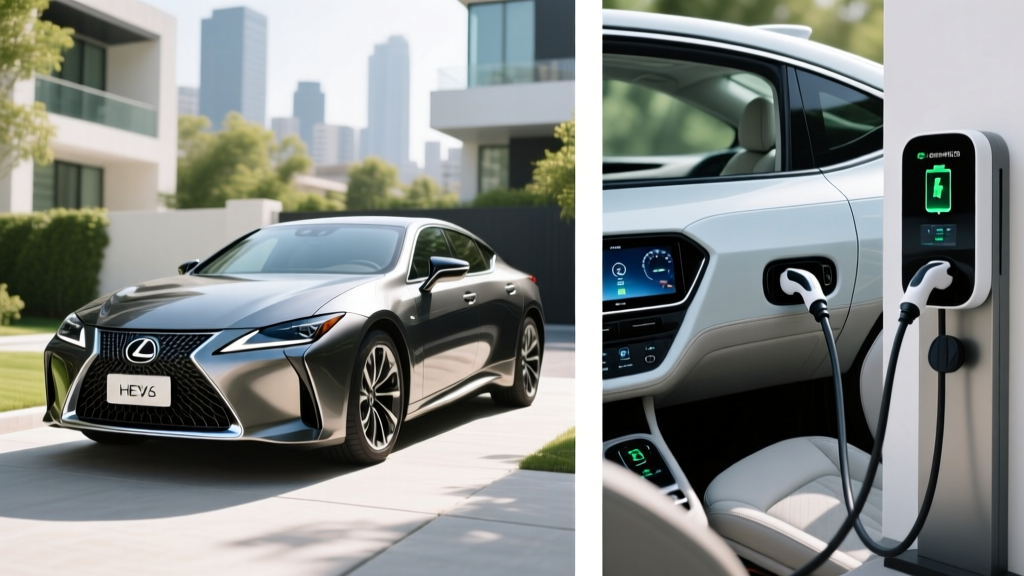
Plug-In Hybrid (PHEV): Carries a larger battery (18–22 kWh usable) that you charge via a wall outlet or Level 2 charger. It delivers 20–37 miles of pure electric range before the gasoline engine takes over as a conventional hybrid. Think Lexus NX 450h+ and RX 450h+.
Top Lexus Hybrid Models on the Used Market
The second-hand Lexus hybrid inventory in 2026 is deep. Here are the models you'll encounter most often, from compact crossovers to full-size sedans, with the exact EPA figures buyers need.
| Model (Recent Years) | Type | Combined HP | EPA MPG (City/Hwy/Combined) | EV Range (PHEV) | Used Price Range (2026) |
|---|---|---|---|---|---|
| ES 300h (2019–2025) | HEV | 215 hp | 43 / 44 / 44 | N/A | $28,000–$44,000 |
| RX 350h (2023–2025) | HEV | 246 hp | 37 / 34 / 36 | N/A | $42,000–$56,000 |
| NX 450h+ (2022–2025) | PHEV | 302 hp | 84 MPGe combined / 36 MPG gas-only | 37 mi | $39,000–$52,000 |
| RX 450h+ (2024–2025) | PHEV | 302 hp | 83 MPGe combined / 35 MPG gas-only | 37 mi | $50,000–$62,000 |
| UX 250h (2019–2024) | HEV | 181 hp | 42 / 39 / 41 | N/A | $24,000–$34,000 |
| LC 500h (2018–2024) | HEV | 354 hp | 26 / 32 / 28 | N/A | $48,000–$68,000 |
Sources: EPA fuel economy data via fueleconomy.gov; used pricing reflects typical 2026 market listings for models with 20,000–60,000 miles.
How Many MPG Does a Lexus Hybrid Actually Get?
The EPA numbers above tell part of the story, but Lexus HEVs have a well-documented real-world advantage: they frequently exceed their EPA city ratings in stop-and-go traffic. This is because city driving maximizes regenerative braking and low-speed electric motor use — exactly what the Toyota Hybrid System is engineered to exploit.
| Model | EPA Combined | Real-World City (Owner Reports) | Real-World Highway | Cold-Weather Impact |
|---|---|---|---|---|
| ES 300h | 44 MPG | 45–48 MPG | 40–43 MPG | -3 to -5 MPG |
| RX 350h | 36 MPG | 34–37 MPG | 31–34 MPG | -2 to -4 MPG |
| UX 250h | 41 MPG | 42–46 MPG | 37–40 MPG | -3 to -5 MPG |
| NX 450h+ (gas-only mode) | 36 MPG | 34–37 MPG | 33–35 MPG | -2 to -4 MPG |
Key takeaway: If your commute is mostly urban, a Lexus HEV like the ES 300h or UX 250h will likely return 2–4 MPG better than the EPA sticker. Highway-heavy drivers will see numbers 2–4 MPG below the combined rating. In sub-freezing weather, expect a modest drop as the engine runs more frequently to provide cabin heat.
PHEV Deep Dive: Electric Range, Charging, and Battery Specs
If you're considering a Lexus PHEV — specifically the NX 450h+ or RX 450h+ — you're getting Toyota's proven 2.5-liter four-cylinder paired with front and rear electric motors and an 18.1 kWh lithium-ion battery pack. Here's what the numbers look like in practice.
| Spec | NX 450h+ / RX 450h+ |
|---|---|
| Battery Capacity (usable) | 18.1 kWh |
| EPA Electric-Only Range | 37 miles |
| Real-World EV Range (65–75°F) | 32–38 miles |
| Real-World EV Range (below 32°F) | 24–30 miles |
| Total Combined Range (EV + Gas) | ~460 miles |
| Level 1 Charging (120V, 12A) | ~12 hours (0–100%) |
| Level 2 Charging (240V, 16A / 3.3 kW) | ~5.5 hours (0–100%) |
| DC Fast Charging | Not supported |
| Combined System Horsepower | 302 hp |
| 0–60 mph | 6.0 seconds |
| Charge Port | J1772 (Level 1/2 only) |
Battery Warranty, Lifespan, and Replacement Costs
Battery longevity is the number-one concern for used-hybrid buyers. Here's the reality: Lexus hybrid batteries are among the most durable in the industry, and replacement is far less common — and far less expensive — than most shoppers assume.
Lexus Hybrid Battery Warranty Coverage
- 2019 and earlier models: 8 years / 100,000 miles (10 years / 150,000 miles in CARB states including CA, NY, MA, and others)
- 2020 and newer models: 10 years / 150,000 miles nationwide — Toyota extended coverage across the entire US lineup
- PHEV battery warranty: 10 years / 150,000 miles, covering capacity below 70% of original
- Transferability: The hybrid battery warranty transfers to subsequent owners — a critical advantage when buying second hand
Source: Lexus Hybrid Electric Vehicles
What Does a Lexus Hybrid Battery Replacement Cost?
If you're buying a 2016–2018 model approaching the end of its warranty window, budget planning matters. Here are current 2026 replacement costs:
- ES 300h / RX 350h / NX 350h (NiMH or Li-ion HEV pack): $2,500–$4,500 for a new OEM battery from a Lexus dealer. Refurbished packs from independent hybrid specialists run $1,500–$2,800.
- NX 450h+ / RX 450h+ (18.1 kWh PHEV pack): $6,000–$9,000 OEM. These larger lithium-ion packs are more expensive but are still under warranty on any 2022+ model through at least 2032.
- UX 250h: $2,200–$3,800 new OEM; $1,400–$2,500 refurbished.
Real-world context: According to fleet data and owner reports, Lexus HEV batteries routinely last 180,000–250,000 miles before needing replacement. Many first-generation RX 400h and GS 450h models from 2006–2010 are still running on their original packs. The risk of a premature battery failure on a well-maintained Lexus hybrid is statistically low.
Tax Credits and Incentives for Used Lexus Hybrids
Federal tax incentives for hybrid vehicles are narrower than for full EVs, but one credit can apply to PHEV buyers in the used market.
Used Clean Vehicle Credit (IRS §25E)
If you purchase a used Lexus PHEV (NX 450h+ or RX 450h+) from a dealer, you may qualify for the Used Clean Vehicle Credit under IRS §25E:
- Credit amount: 30% of the sale price, up to a maximum of $4,000
- Vehicle requirements: Must be at least 2 model years old, sold for $25,000 or less, and purchased from a licensed dealer
- Buyer income caps: Adjusted gross income ≤ $75,000 (single) / $112,500 (head of household) / $150,000 (joint)
- Frequency limit: Once per buyer every 3 years
Note: As of 2026, the used credit price cap of $25,000 makes it difficult to apply to most Lexus PHEVs, which typically sell for $35,000+ on the used market. However, older NX 450h+ models (2022) with higher mileage may occasionally dip below the threshold. Always verify current rules at IRS.gov §25E.
Conventional Hybrids (HEVs): No Federal Tax Credit
Lexus HEVs like the ES 300h, RX 350h, and UX 250h do not qualify for any federal tax credit — new or used. The §30D Clean Vehicle Credit applies only to plug-in vehicles with at least 7 kWh of battery capacity. Some states and municipalities offer their own rebates for HEVs, but these vary widely. Check your state's energy office or AFDC incentive database for local programs.
Pre-Purchase Checklist: What to Inspect on a Used Lexus Hybrid
Before signing paperwork on any second hand Lexus hybrid for sale, run through this inspection framework. Hybrids have unique wear items that differ from conventional cars.
- Hybrid battery State of Health (SoH): Ask the dealer or seller for a hybrid battery health report. Lexus dealerships can pull this via Techstream diagnostics. Look for a capacity retention above 85%. Below 75% on a high-mileage car signals a future replacement cost.
- Inverter coolant level and condition: The hybrid inverter has its own coolant loop. Low or dirty coolant can lead to inverter failure — a $2,000–$4,000 repair.
- Brake pad thickness: Lexus hybrids use regenerative braking heavily, so friction brake pads often last 80,000–120,000 miles. But if the car was driven aggressively or in mountainous terrain, check for uneven wear.
- 12V auxiliary battery age: Like all modern cars, Lexus hybrids have a 12V battery that powers electronics. If it's over 4 years old, budget $150–$250 for a replacement. A weak 12V battery can prevent the hybrid system from starting.
- Service records: Lexus hybrids require regular engine oil changes (the gas engine still runs frequently), transaxle fluid checks, and inverter coolant service every 100,000 miles.
- Warranty transfer confirmation: Get written confirmation that the hybrid battery warranty transfers. Call Lexus customer service (1-800-255-3987) with the VIN to verify remaining coverage.
Hybrid vs PHEV vs Full EV: Which Lexus Fits Your Life?
Choosing between a used Lexus HEV, a used Lexus PHEV, and a full battery-electric vehicle (BEV) comes down to three variables: your daily mileage, your charging access, and your willingness to adapt your routine.
Choose a Lexus HEV (ES 300h, RX 350h, UX 250h) if:
- You have no access to home or workplace charging — an HEV never needs a plug
- Your priority is maximum fuel savings with zero lifestyle change
- You drive 15,000+ miles per year and want proven 40+ MPG without range planning
- You want the lowest total cost of ownership with minimal maintenance complexity
Choose a Lexus PHEV (NX 450h+, RX 450h+) if:
- You can charge at home (even a standard 120V outlet works overnight for 37 miles)
- Your daily commute is under 35 miles round-trip, so most driving is electric
- You want electric daily driving but need gas flexibility for road trips without charging stops
- You value the 302 hp combined powertrain and standard AWD
Choose a Full EV (Tesla Model Y, Hyundai Ioniq 5, etc.) if:
- You have reliable Level 2 home charging and access to DC fast-charging corridors
- You want zero tailpipe emissions and the lowest per-mile energy cost
- You're comfortable planning charging stops on road trips
- You want eligibility for the full $7,500 §30D federal tax credit (new) or up to $4,000 (used, income-eligible)
✓ Pros of a Used Lexus Hybrid
- Industry-leading reliability and resale value
- 40+ MPG real-world in city driving (HEV models)
- 10-year/150,000-mile battery warranty (2020+ models)
- No charging infrastructure needed (HEV)
- Luxury ride quality with low fuel cost
- Proven powertrain with abundant used inventory
✗ Cons to Consider
- No DC fast charging on PHEV models
- PHEV electric range (37 mi) is modest vs competitors (RAV4 Prime: 42 mi)
- HEV models receive no federal tax credit
- Infotainment on 2019–2022 models uses a frustrating touchpad interface
- Higher used prices than comparable non-luxury hybrids
- Battery replacement cost on out-of-warranty PHEVs ($6,000–$9,000)
Frequently Asked Questions
How many MPG does a Lexus hybrid get in real-world driving?
The Lexus ES 300h is rated at 44 MPG combined by the EPA, and real-world city driving often returns 45–48 MPG thanks to heavy regenerative braking. Highway driving typically yields 40–43 MPG. The RX 350h averages 36 MPG combined, with real-world figures of 34–37 MPG in mixed driving. In cold weather (below 32°F), expect a 3–5 MPG reduction as the gas engine runs more to heat the cabin.
How far can a Lexus PHEV go on electric-only power?
The NX 450h+ and RX 450h+ are EPA-rated at 37 miles of electric-only range from their 18.1 kWh battery. In mild weather (65–75°F), owners report 32–38 miles depending on driving style and terrain. In freezing temperatures, that drops to 24–30 miles as battery efficiency decreases and cabin heating draws additional power. Once the battery depletes, the vehicle operates as a conventional hybrid at 35–36 MPG.
Is a used Lexus hybrid reliable, and what does battery replacement cost?
Lexus hybrids are among the most reliable vehicles on the road. The hybrid battery in HEV models (ES 300h, RX 350h, UX 250h) typically lasts 180,000–250,000 miles. Replacement costs range from $2,200–$4,500 for a new OEM pack, or $1,400–$2,800 refurbished. PHEV battery replacement is more expensive at $6,000–$9,000, but all 2022+ PHEV models remain under the 10-year/150,000-mile warranty through at least 2032. The warranty transfers to second owners.
Does a used Lexus hybrid qualify for any tax credit?
Conventional Lexus HEVs do not qualify for any federal tax credit. Used Lexus PHEVs (NX 450h+, RX 450h+) may qualify for the IRS §25E Used Clean Vehicle Credit — up to $4,000 — but only if the sale price is $25,000 or less and the buyer's income falls below IRS thresholds ($75K single / $150K joint). Given current used PHEV pricing, few listings meet the price cap. Always verify eligibility at IRS.gov before purchasing.
Should I buy a Lexus hybrid or a full EV?
If you can install a Level 2 home charger and your daily driving is under 250 miles, a full EV like the Tesla Model Y or Hyundai Ioniq 5 offers lower per-mile energy costs, zero tailpipe emissions, and access to the $7,500 federal tax credit (new). But if you lack home charging, frequently drive long distances through areas with sparse charging infrastructure, or simply want zero lifestyle disruption, a Lexus HEV is the pragmatic choice. The PHEV splits the difference — electric commuting with gas road-trip freedom — but only if you can charge at home.
Do Lexus hybrids require special maintenance?
Beyond the standard oil changes, tire rotations, and brake inspections, Lexus hybrids require inverter coolant service every 100,000 miles and occasional transaxle fluid checks. The regenerative braking system means brake pads last significantly longer than on gas-only vehicles — often 80,000–120,000 miles. There is no traditional starter motor or alternator to replace. Overall, hybrid maintenance costs are comparable to or slightly lower than conventional vehicles.