Quick Verdict: The RAV4 Prime's Efficiency Promise, Tested
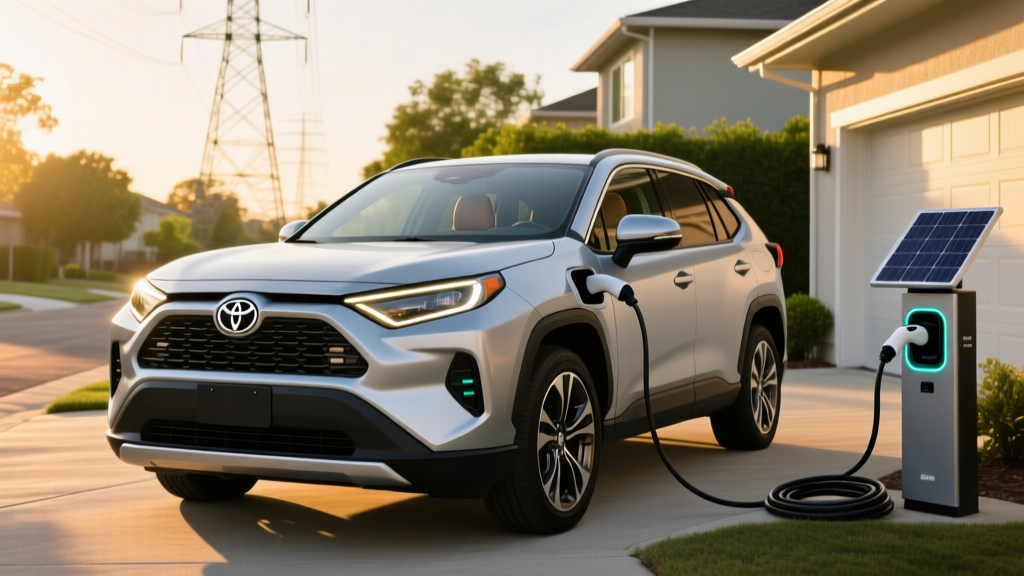
The Toyota RAV4 Prime (the plug-in hybrid variant of the RAV4) remains one of the most sought-after PHEVs on the market, and for good reason. When you search for RAV4 plug-in hybrid MPG, you'll find two very different numbers depending on how you drive it: 94 MPGe when running on its battery, and 38 MPG combined once that battery is depleted. That dual personality is exactly what makes the RAV4 Prime compelling — and confusing — for buyers comparing it against the standard RAV4 Hybrid or a full battery-electric vehicle.
This guide breaks down every efficiency figure, the real-world caveats the EPA sticker doesn't show, charging logistics, tax credit eligibility under current IRS §30D rules, and whether this PHEV actually fits your daily driving pattern.
RAV4 Plug-In Hybrid MPG: The Full EPA Breakdown
The 2026 Toyota RAV4 Prime carries forward the powertrain architecture that has defined this model since its refresh: a 2.5-liter four-cylinder engine paired with front and rear electric motors and an 18.1 kWh lithium-ion battery pack. Here is how the EPA rates it across both operating modes.
| Mode | City | Highway | Combined |
|---|---|---|---|
| Charge-depleting (EV mode) — MPGe | 94 MPGe | 94 MPGe | 94 MPGe |
| Charge-sustaining (gas hybrid mode) — MPG | 40 MPG | 36 MPG | 38 MPG |
What these numbers mean in practice: MPGe (miles per gallon equivalent) measures how far the vehicle travels on the electrical energy stored in its battery, converted to the energy equivalent of one gallon of gasoline. When the battery is depleted, the RAV4 Prime operates as a conventional hybrid, and the 38 MPG combined figure applies. According to fueleconomy.gov, the RAV4 Prime's combined MPGe places it among the most efficient PHEVs in the compact SUV segment.
The RAV4 Prime's 38 MPG combined (charge-sustaining) is a realistic daily figure. In city-heavy driving with a depleted battery, owners frequently report 40–42 MPG thanks to aggressive regenerative braking recapturing energy at low speeds. Highway-only driving at 75+ mph typically drops to 33–35 MPG. In cold weather (below 30°F), expect the gas-mode MPG to dip 3–5 MPG as the engine runs more frequently for cabin heat and battery thermal management. The EV-mode range is the figure most affected by conditions — see the next section.
Electric-Only Range and Total Driving Range
The RAV4 Prime's 18.1 kWh battery pack (approximately 14.9 kWh usable) delivers an EPA-rated 42 miles of electric-only range. That figure assumes moderate temperatures, flat terrain, and speeds under 60 mph.
- Ideal conditions (55–70°F, city/suburban): 40–44 miles
- Highway at 70 mph: 32–36 miles
- Cold weather (below 30°F, cabin heat on): 25–30 miles
- Hot weather (above 95°F, A/C max): 35–38 miles
Once the battery is depleted, the RAV4 Prime's 14.5-gallon fuel tank provides an additional ~540 miles of gas-hybrid range, giving a total combined range of approximately 580 miles from a full charge and full tank. That total range is a key selling point for road-trip-capable PHEV buyers who don't want to plan around charging stops.
HEV vs. PHEV: What's the Difference, and Which RAV4 Is Which?
Toyota sells two electrified RAV4 variants, and confusing them is one of the most common buyer mistakes. Here is how they differ fundamentally.
| Feature | RAV4 Hybrid (HEV) | RAV4 Prime (PHEV) |
|---|---|---|
| Plug-in charging required? | No — self-charging via regenerative braking and engine | Yes — plug in to access EV range and MPGe |
| Battery size | ~1.6 kWh (small buffer) | 18.1 kWh total / ~14.9 kWh usable |
| Electric-only range | Less than 1 mile at low speed | 42 miles EPA |
| Combined horsepower | 219 hp | 302 hp |
| 0–60 mph | ~7.4 seconds | ~5.7 seconds |
| Combined MPG (gas mode) | 39 MPG | 38 MPG |
| DC fast charging? | N/A | No — Level 2 AC only |
| Starting MSRP (2026) | ~$33,000 | ~$44,500 |
The critical distinction: The standard RAV4 Hybrid never plugs in. Its small battery charges exclusively through regenerative braking and the gasoline engine. The RAV4 Prime (PHEV) has a much larger battery and a charge port, enabling 42 miles of gas-free driving — but only if you actually plug it in. A PHEV that is never charged is simply a heavier, more expensive hybrid getting slightly worse MPG than the HEV variant.
Powertrain Specs: 302 Horsepower and All-Wheel Drive
The RAV4 Prime's powertrain pairs a 2.5-liter Atkinson-cycle four-cylinder engine (177 hp, 165 lb-ft torque) with two electric motors:
- Front motor: 134 kW (180 hp)
- Rear motor: 40 kW (54 hp) — providing electronic on-demand AWD
- Net combined system output: 302 hp
That 302 hp makes the RAV4 Prime the quickest RAV4 variant Toyota sells, with a 0–60 mph time of approximately 5.7 seconds. The electronic AWD system (Toyota calls it AWD-i) engages the rear motor automatically when slip is detected or during hard acceleration — there is no mechanical driveshaft connecting the front and rear axles.
Charging the RAV4 Prime: Level 1, Level 2, and the No-DC-Fast-Charge Limitation
The RAV4 Prime charges exclusively via AC power. It cannot DC fast charge — there is no CCS or NACS connector on this vehicle. Here is the charging speed breakdown:
| Charging Level | Power (kW) | Time (0–100%) | Typical Use Case |
|---|---|---|---|
| Level 1 (120V household outlet) | ~1.4 kW | ~12 hours | Overnight top-up; slow but universal |
| Level 2 (240V, 3.3 kW onboard charger) | 3.3 kW | ~4.5 hours | Home wall charger; standard trim |
| Level 2 (240V, 6.6 kW onboard charger) | 6.6 kW | ~2.5 hours | Premium trim or option; faster home/public Level 2 |
Key ownership insight: The RAV4 Prime's relatively small battery means Level 2 home charging easily replenishes it overnight — even on the slower 3.3 kW onboard charger. Most PHEV owners charge at home and rarely, if ever, use public charging infrastructure. The absence of DC fast charging is irrelevant for daily commuting but means you cannot quickly top up on a road trip. Once the battery is depleted on the highway, you simply drive in hybrid mode on gasoline.
Pricing, Trims, and Federal Tax Credit Eligibility
The 2026 RAV4 Prime starts at approximately $44,500 MSRP (SE trim) and climbs to roughly $49,000 for the XSE trim with Premium package. Pricing includes destination charge.
Under current IRS rules, the RAV4 Prime's eligibility for the up-to-$7,500 federal tax credit depends on several requirements that change periodically. As of the 2026 tax year, key criteria include:
- MSRP cap: SUVs must be under $80,000 — the RAV4 Prime qualifies.
- Buyer income cap: Modified AGI must not exceed $150,000 (single) / $300,000 (joint).
- Battery component sourcing: A percentage of battery components must be manufactured or assembled in North America, and critical minerals must meet sourcing thresholds. These thresholds tighten annually.
- Point-of-sale transfer: Eligible buyers can transfer the credit to the dealer at purchase, reducing the upfront price rather than waiting for a tax refund.
Important: Toyota's battery supply chain sourcing determines whether the RAV4 Prime qualifies for the full $7,500, a partial $3,750, or no credit in a given model year. Always verify current eligibility on IRS.gov or with a qualified tax professional before purchasing. Do not assume eligibility based on prior model years.
Battery Warranty, Reliability, and Replacement Cost
- Hybrid battery: 10 years / 150,000 miles (whichever comes first)
- Hybrid system components: 8 years / 100,000 miles
- Basic vehicle warranty: 3 years / 36,000 miles
- Powertrain warranty: 5 years / 60,000 miles
Toyota's hybrid battery warranty is among the longest in the industry, and the company's track record with hybrid reliability — dating back to the original Prius in 1997 — is well documented. The RAV4 Prime's larger PHEV battery operates within a conservative state-of-charge window (Toyota never fully charges or fully depletes it), which reduces degradation stress.
Battery replacement cost: If the hybrid battery requires replacement out of warranty, expect a cost between $4,000 and $7,000 depending on the source (OEM vs. refurbished) and labor. However, data from long-term Toyota hybrid owners suggests that catastrophic battery failure within the first 15 years is uncommon. Individual cell-module replacement (rather than the full pack) is sometimes possible, reducing cost further.
For reliability ratings, the RAV4 consistently earns strong marks from IIHS and owner surveys. Toyota's hybrid powertrain has one of the lowest long-term failure rates in the compact SUV segment.
Who Should Choose the RAV4 Prime vs. a Full EV or Gas Car?
| Choose the RAV4 Prime (PHEV) if… | Choose a full EV (BEV) if… | Choose the RAV4 Hybrid (HEV) if… |
|---|---|---|
| You can charge at home every night and your commute is under 42 miles round-trip | You have reliable home charging AND access to public fast chargers for road trips | You cannot charge at home or at work and want zero behavior change from a gas car |
| You want to drive electric daily but need gas flexibility for 300+ mile road trips without planning | Your daily driving is predictable and you're comfortable with 250–350 mile range and route planning | Your budget is tighter (~$10K less than the Prime) and you want strong MPG without plug-in logistics |
| You live in a cold climate where EV range loss is a concern but still want some electric driving | You live in a mild climate and want the lowest per-mile fuel cost and zero tailpipe emissions | You want Toyota reliability and AWD with minimal complexity |
| You want 302 hp and quick acceleration in a practical SUV | You prioritize the lowest long-term maintenance cost and access to HOV lanes (varies by state) | You drive mostly highway miles where the PHEV's electric range offers little benefit |
Pros and Cons at a Glance
Pros
- 42-mile EV range covers most daily commutes gas-free
- 302 hp makes it the quickest RAV4 — genuinely quick for a compact SUV
- 580+ mile total range eliminates road-trip range anxiety
- Standard electronic AWD with no fuel-economy penalty vs. FWD
- 10-year/150,000-mile hybrid battery warranty
- Strong resale value and Toyota reliability reputation
- Charges fully overnight on a standard 120V outlet (small battery advantage)
Cons
- ~$11,000 price premium over the RAV4 Hybrid (HEV) — long payback period on fuel savings alone
- No DC fast charging — irrelevant for commuting but limits road-trip electric driving
- 42-mile EV range drops significantly in cold weather (25–30 mi)
- Smaller cargo area than the RAV4 Hybrid due to the larger battery pack
- Federal tax credit eligibility is uncertain year-to-year due to battery sourcing rules
- Long dealer waitlists and frequent markup above MSRP in many markets
Frequently Asked Questions
How many MPG does the RAV4 plug-in hybrid get?
The RAV4 Prime gets 94 MPGe combined when running on battery power (EV mode) and 38 MPG combined (40 city / 36 highway) when operating as a conventional hybrid after the battery is depleted. Real-world gas-mode MPG often exceeds the EPA city figure in stop-and-go traffic but drops to 33–35 MPG on sustained highway drives.
How far can the RAV4 Prime go on electric only?
The EPA rates the RAV4 Prime at 42 miles of electric-only range. In real-world conditions, expect 40–44 miles in mild city driving, 32–36 miles at highway speed, and 25–30 miles in freezing temperatures with cabin heat active. Once depleted, the gasoline engine takes over seamlessly.
Do I have to plug in the RAV4 Prime?
You are not required to plug it in — the RAV4 Prime will operate as a conventional hybrid indefinitely without ever being charged. However, if you never plug it in, you are paying a ~$11,000 premium for a battery you never use, and you will get slightly worse MPG (38 combined) than the cheaper RAV4 Hybrid (39 combined). The PHEV only makes financial sense if you charge regularly.
Does the RAV4 Prime qualify for the $7,500 federal tax credit?
Eligibility depends on current-year IRS §30D rules, including battery component sourcing, critical mineral requirements, buyer income caps, and MSRP limits. The RAV4 Prime's MSRP is well under the $80,000 SUV cap. However, battery sourcing compliance changes annually. Verify current eligibility at fueleconomy.gov or irs.gov before purchasing, and consult a tax professional for your specific situation.
Is the RAV4 Prime reliable, and what does a battery replacement cost?
Toyota's hybrid powertrains have a two-decade reliability track record. The RAV4 Prime's hybrid battery is warrantied for 10 years or 150,000 miles. Out-of-warranty replacement costs range from approximately $4,000 to $7,000, though full-pack failure within the first 15 years is uncommon based on historical Toyota hybrid data.
How does the RAV4 Prime compare to a full EV like the Tesla Model Y or Hyundai Ioniq 5?
A full EV offers lower per-mile fuel costs, zero tailpipe emissions, and less maintenance, but requires reliable charging access and route planning for long trips. The RAV4 Prime offers a compromise: electric commuting with gas-powered road-trip freedom. If you have home charging and rarely drive over 300 miles in a day, a full EV may save more long-term. If road-trip flexibility or cold-climate range loss is a concern, the PHEV is the safer choice.