The Silent Budget Killer: Why Depreciation Matters More Than MPG
When buyers shop for a hybrid vehicle, the conversation almost immediately gravitates toward miles per gallon (MPG), electric-only range, and battery efficiency. While these metrics are crucial for day-to-day operating costs, they ignore the single largest expense in vehicle ownership: depreciation. According to automotive analysts, a vehicle's loss in value over the first five years often eclipses the total cost of fuel, insurance, and maintenance combined. For hybrid buyers, understanding resale value is not just a financial exercise; it is the cornerstone of a smart purchase.
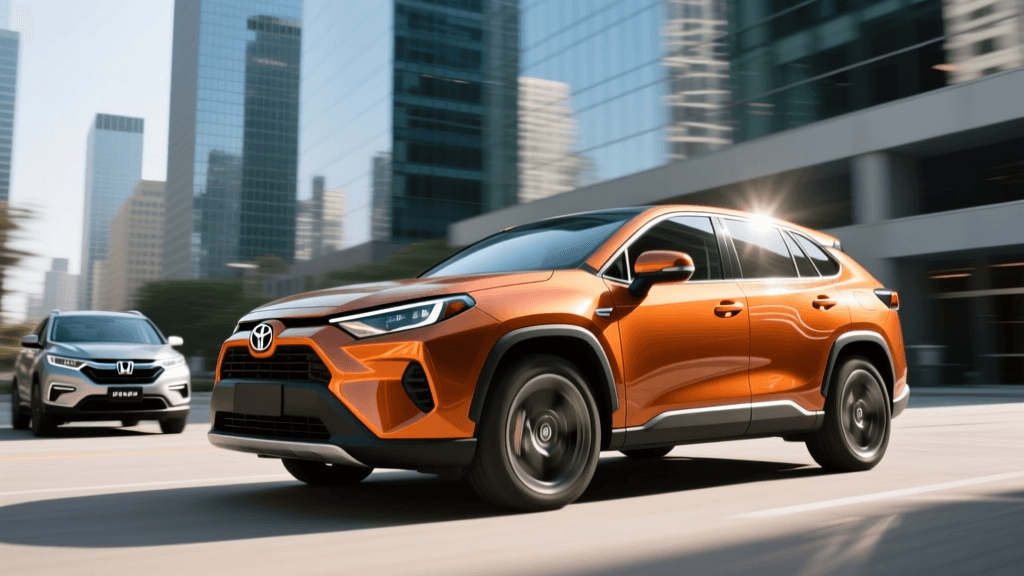
In the fiercely competitive compact hybrid SUV segment, two titans dominate the sales charts and the used car lots: the Toyota RAV4 Hybrid and the Honda CR-V Hybrid. Both offer exceptional fuel economy, practical cargo space, and advanced safety features. But when it comes time to sell or trade in your vehicle after five years, which one puts more money back in your pocket? In this head-to-head product showdown, we analyze the 5-year depreciation forecasts, historical resale trends, and total cost of ownership (TCO) to crown the ultimate resale value champion.
Tale of the Tape: The Contenders
Before diving into the financial forecasts, it is essential to understand the baseline of our contenders. Both vehicles represent the pinnacle of non-plug-in hybrid technology, utilizing regenerative braking and sophisticated power-split devices to maximize efficiency without requiring a charging plug.
- Toyota RAV4 Hybrid: Powered by a 2.5-liter 4-cylinder engine paired with electronic on-demand all-wheel drive (AWD), the RAV4 Hybrid delivers 219 horsepower and an EPA-estimated 41 MPG city / 38 MPG highway. It has long been the default choice for hybrid SUV buyers, benefiting from Toyota's legendary hybrid synergy drive reputation.
- Honda CR-V Hybrid: Honda utilizes a two-motor hybrid system paired with a 2.0-liter Atkinson-cycle engine, producing 204 horsepower. The CR-V Hybrid boasts an EPA-estimated 43 MPG city / 36 MPG highway (for FWD models) and is celebrated for its refined driving dynamics, premium interior feel, and generous rear-seat legroom.
Head-to-Head Depreciation Data: The 5-Year Forecast
To understand the financial trajectory of these vehicles, we must look at projected residual values. The table below outlines the approximate Manufacturer's Suggested Retail Price (MSRP) for a mid-tier AWD trim and the projected depreciation curve over a 5-year/60,000-mile ownership period.
| Metric | Toyota RAV4 Hybrid (XLE AWD) | Honda CR-V Hybrid (Sport AWD) |
|---|---|---|
| Starting MSRP (Approx.) | $34,500 | $36,500 |
| 1-Year Retained Value | 88% | 82% |
| 3-Year Retained Value | 74% | 65% |
| 5-Year Retained Value | 63% | 56% |
| 5-Year Depreciation Cost | $12,765 | $16,060 |
Note: Depreciation figures are estimates based on historical segment data, current market demand, and industry forecasting models. Actual values will vary based on local market conditions, vehicle condition, and mileage.
Toyota RAV4 Hybrid: The Resale King's Armor
Toyota has cultivated a near-monopoly on hybrid resale value, and the RAV4 Hybrid is the crown jewel of that empire. Year after year, Toyota dominates the Kelley Blue Book Best Resale Value Awards, and the RAV4 lineup is a primary reason why. But what exactly gives the RAV4 Hybrid its armor against depreciation?
The 'Toyota Tax' and Brand Perception
Consumer perception plays a massive role in residual values. The Toyota Prius spent two decades proving to the world that hybrid batteries do not inherently fail after a few years. This generational trust transfers directly to the RAV4 Hybrid. Used car buyers are willing to pay a premium—often dubbed the 'Toyota Tax'—because they perceive the vehicle as a low-risk, high-longevity investment. This brand equity acts as a shock absorber against market fluctuations.
Battery Warranty and Longevity
Toyota backs its hybrid batteries with a 10-year/150,000-mile limited warranty. This extensive coverage alleviates the primary anxiety of second-hand hybrid buyers: the fear of a $3,000+ battery replacement bill. Because the warranty is tied to the vehicle's VIN and transfers to subsequent owners, a 4-year-old RAV4 Hybrid still carries 6 years of battery peace of mind, artificially propping up its resale value on the used market.
Honda CR-V Hybrid: The Challenger's Ascent
While Toyota holds the historical advantage, Honda is not resting on its laurels. The latest generation CR-V Hybrid has significantly closed the gap in both refinement and market desirability. Honda's two-motor hybrid system operates more like a series hybrid at lower speeds, providing an EV-like smoothness that many reviewers and consumers prefer over Toyota's planetary gearset drone.
Improving Residuals Through Redesign
Honda's recent redesign of the CR-V elevated its interior materials and technology, allowing it to command a higher initial transaction price. While a higher MSRP means a steeper initial depreciation drop in pure dollar amounts, the percentage retention is improving as Honda builds its own hybrid credibility. Furthermore, Honda's hybrid system has proven exceptionally reliable in real-world fleet testing, slowly eroding Toyota's exclusive hold on hybrid trust.
The Fleet and Rental Market Factor
One factor that occasionally suppresses the CR-V's resale value is its heavier penetration into the daily rental and corporate fleet markets compared to the RAV4 Hybrid. When fleet companies cycle out their vehicles at the 2-year mark, it floods the used market with off-lease CR-Vs, slightly softening the retail price for private sellers. Toyota has historically been more conservative with fleet allocations for its high-demand hybrid models.
Total Cost of Ownership (TCO): Where the Math Meets the Road
Depreciation does not exist in a vacuum. To truly evaluate these vehicles, we must calculate the Total Cost of Ownership (TCO), which combines depreciation, fuel, insurance, and maintenance. As outlined by Edmunds Total Cost of Ownership methodologies, a vehicle with a higher purchase price but lower depreciation and fuel costs can ultimately be cheaper to own.
Let's look at a 5-year/60,000 mile TCO snapshot:
- Fuel Costs: The RAV4 Hybrid (39 MPG combined) and CR-V Hybrid AWD (40 MPG combined) are incredibly close. At $3.50/gallon for 60,000 miles, the fuel cost difference is negligible (roughly $5,384 for Toyota vs. $5,250 for Honda).
- Maintenance: Both utilize naturally aspirated engines without complex turbochargers, and regenerative braking saves wear on physical brake pads. Maintenance costs are nearly identical and significantly lower than turbocharged gas-only rivals.
- The Deciding Factor: The $3,295 gap in 5-year depreciation cost makes the RAV4 Hybrid the undisputed TCO champion, despite the CR-V's slight edge in combined fuel economy and interior refinement.
Trim Level Strategy: Maximizing Your Residual Value
If you have decided on your brand, the next step in protecting your resale value is choosing the right trim level. Not all trims depreciate equally. The highest-tier luxury trims often suffer the steepest percentage drops, while mid-tier and sport-oriented trims hold their value best.
RAV4 Hybrid Trim Advice
Avoid the base LE trim if you care about resale; the lack of premium features makes it less desirable on the used lot. The sweet spot is the XLE Premium or the rugged Woodland Edition. The Woodland Edition, with its TRD-tuned suspension and all-terrain tires, has achieved cult status and commands massive premiums on the used market, often depreciating less than 40% over five years.
CR-V Hybrid Trim Advice
Honda simplifies its hybrid lineup, generally offering the Sport and Sport Touring trims. The Sport Touring holds its value exceptionally well because it includes the premium Bose audio system, wireless Apple CarPlay/Android Auto, and heated rear seats—features that used-car buyers actively filter for when searching online listings.
The Final Verdict: Which Hybrid Should You Buy?
If your primary objective is to minimize financial loss and maximize resale value, the Toyota RAV4 Hybrid wins this head-to-head showdown. Its unparalleled brand reputation, conservative fleet allocation, and industry-leading hybrid battery warranty create a perfect storm for residual value retention. You will pay a premium upfront, and you may face long dealership waitlists, but the financial payoff at trade-in time is undeniable.
However, if you prioritize driving refinement, interior space, and a more EV-like driving experience, the Honda CR-V Hybrid is a phenomenal vehicle. While it will cost you roughly $3,000 more in depreciation over five years, many owners find that the day-to-day comfort and superior cargo dimensions are well worth the financial trade-off. Ultimately, both vehicles represent the gold standard of hybrid ownership, but Toyota remains the undisputed king of the resale value mountain.