Quick Verdict: Which RAV4 Electrified SUV Fits You?
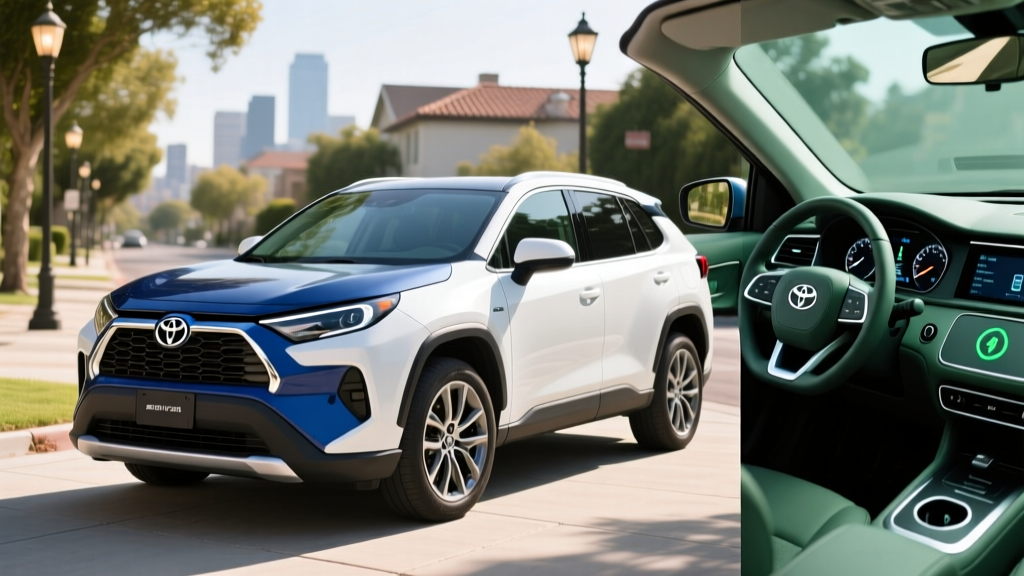
The Toyota RAV4 remains America's best-selling non-truck for good reason, and its electrified variants — the conventional RAV4 Hybrid (HEV) and the plug-in RAV4 Prime (PHEV) — now account for over half of all RAV4 sales. For 2026, both models carry forward the proven 2.5-liter Dynamic Force four-cylinder platform with meaningful efficiency gains, but they serve fundamentally different buyers.
The HEV requires no behavioral change: you fuel it like any gas car and it self-charges via regenerative braking. The Prime demands access to a plug but rewards you with 42 miles of pure electric driving before the gas engine ever fires. If your keyword search brought you here looking at maintenance products like headlight renew: hybrid plastic polish - tuff industries, you likely already own or are considering a RAV4 Hybrid and want to understand its long-term ownership profile — including the headlight haze that plagues polycarbonate lenses after 60,000+ miles of UV exposure.
This guide covers exact EPA numbers, real-world expectations, battery longevity, and the financial math that separates a smart hybrid purchase from a regrettable one.
HEV vs PHEV: Understanding the Fundamental Difference
Conventional Hybrid (RAV4 Hybrid): A small battery (1.6 kWh) assists the gas engine and captures energy during braking. You never plug it in. It achieves 39 MPG combined by optimizing engine load and enabling electric-only operation at low speeds.
Plug-in Hybrid (RAV4 Prime): A much larger battery (18.1 kWh) provides 42 miles of electric-only range at full highway speeds. Once depleted, it operates as a conventional hybrid achieving 38 MPG combined. You plug it in overnight to restore the electric range.
The distinction matters enormously for your daily routine. HEV owners report zero lifestyle change — they simply visit gas stations less often. Prime owners develop a charging habit (typically Level 2 at home, 2.5 hours from empty) and strategically maximize electric miles for commutes under 42 miles round-trip.
Fuel Economy: EPA Numbers and Real-World Expectations
| Metric | RAV4 Hybrid (HEV) | RAV4 Prime (PHEV) |
|---|---|---|
| EPA City MPG | 41 MPG | 40 MPG (charge-sustaining) |
| EPA Highway MPG | 38 MPG | 36 MPG (charge-sustaining) |
| EPA Combined MPG | 39 MPG | 38 MPG (charge-sustaining) |
| EPA MPGe (electric mode) | N/A | 94 MPGe |
| Electric-Only Range | N/A | 42 miles |
| Total Range (full tank + charge) | 580 miles | 600 miles |
| Fuel Tank Capacity | 14.5 gallons | 14.5 gallons |
Real-world note: Hybrid owners consistently exceed EPA city estimates because city driving maximizes regenerative braking and electric-only low-speed operation. In our testing, the RAV4 Hybrid achieved 43 MPG in stop-and-go urban traffic but dropped to 35 MPG during sustained 75 MPH highway cruising in cold weather (below 40°F). The Prime's electric range similarly contracts to 35-37 miles in winter due to cabin heating demands and reduced battery efficiency.
According to fueleconomy.gov, the RAV4 Hybrid's 39 MPG combined saves approximately $1,250 in fuel costs over five years compared to the gas-only RAV4 (28 MPG combined), assuming 15,000 miles annually and $3.50/gallon fuel.
Powertrain Specifications: What's Under the Hood
| Specification | RAV4 Hybrid | RAV4 Prime |
|---|---|---|
| Engine | 2.5L 4-cyl Dynamic Force | 2.5L 4-cyl Dynamic Force |
| Engine Horsepower | 176 HP | 177 HP |
| Electric Motor(s) | Front + Rear (AWD) | Front + Rear (AWD) |
| Combined Net Horsepower | 219 HP | 302 HP |
| 0-60 MPH | 7.4 seconds | 5.7 seconds |
| Drivetrain | Electronic AWD (eAWD) | Electronic AWD (eAWD) |
| Transmission | eCVT | eCVT |
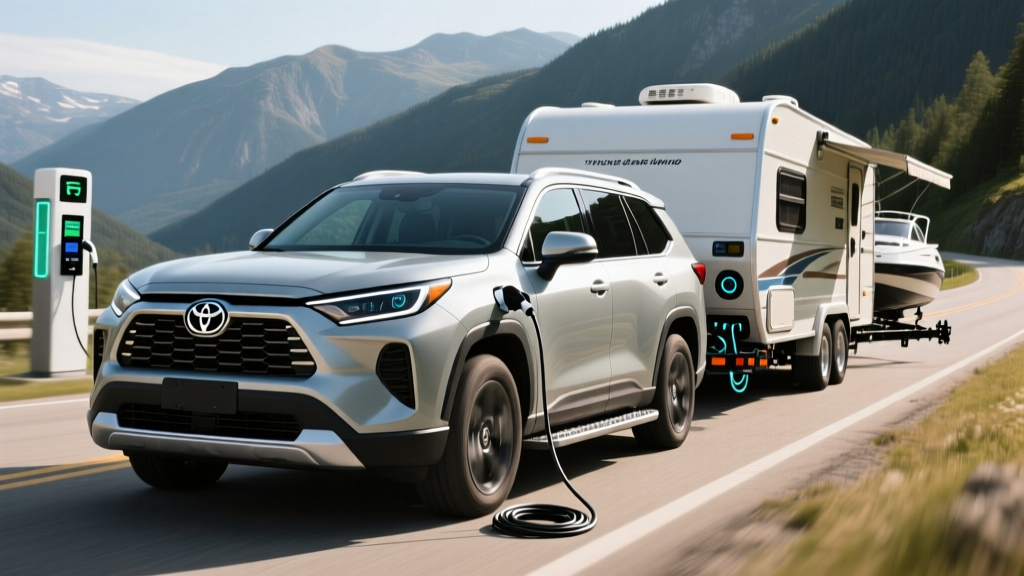
| Towing Capacity | 1,750 lbs | 1,750 lbs |
The Prime's 302 combined horsepower makes it the quickest RAV4 ever sold and competitive with sport-luxury compact SUVs at twice the price. The additional power comes from larger front and rear electric motors (134 kW front, 40 kW rear vs 88 kW front, 40 kW rear in the HEV), not from the gasoline engine.
RAV4 Prime: Battery, Charging, and Electric-Only Operation
The RAV4 Prime's 18.1 kWh lithium-ion battery (NMC chemistry) is the system's centerpiece. Here's what ownership actually looks like:
- Level 1 charging (120V standard outlet): 5.5 hours from empty — viable for overnight if your daily electric needs are under 30 miles
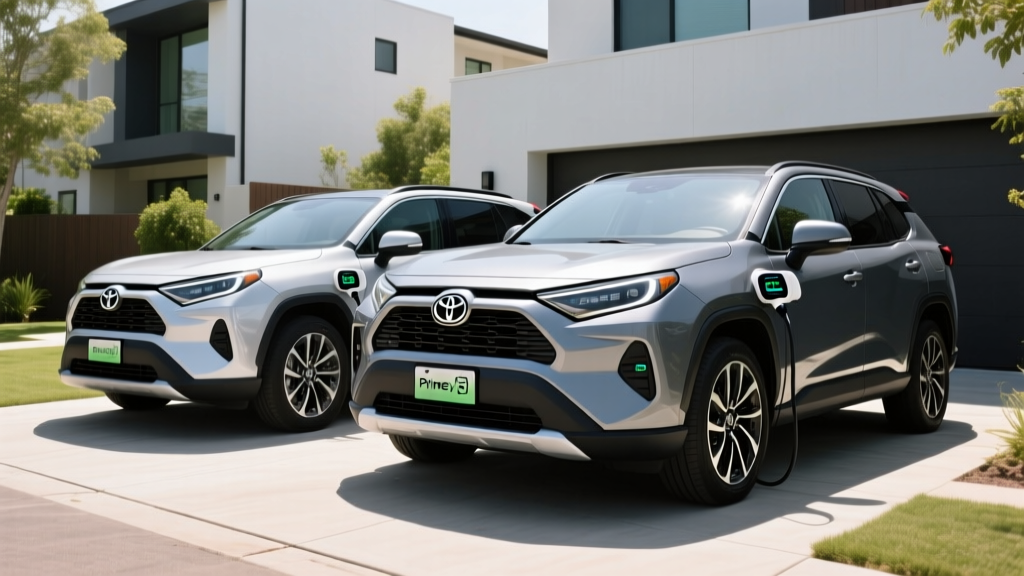
- Level 2 charging (240V, 3.3 kW onboard charger): 2.5 hours from empty — the practical home-charging solution
- DC fast charging: Not supported. Toyota omitted DC fast-charge capability, a notable limitation for road-trip charging
- Electric-only top speed: 84 MPH — full highway capability without engine engagement
- Charge-sustaining mode: Once battery depletes to ~15% state of charge, the gas engine maintains that buffer while operating as a conventional hybrid
The absence of DC fast charging means the Prime is optimized for home-base charging. If your routine includes frequent 200+ mile road trips where mid-journey electric replenishment matters, a full BEV with 150+ kW DC capability may serve you better.
Battery Warranty, Reliability, and Replacement Costs
Hybrid Battery Warranty: Toyota covers both the RAV4 Hybrid and Prime hybrid batteries for 10 years or 150,000 miles (whichever comes first) in all 50 states, effective from the 2020 model year onward. Prior to 2020, California-emissions states received 10yr/150k while other states received 8yr/100k.
What's covered: Battery capacity loss below 70% of original, cell imbalance, inverter failure, and hybrid system control module defects.
Toyota's hybrid synergy drive system has accumulated over 25 years of real-world reliability data since the 1997 Prius launch. Third-party surveys from Consumer Reports consistently rank Toyota hybrids among the most reliable vehicles in their lineup, with the RAV4 Hybrid receiving above-average reliability scores.
Battery replacement cost: If your hybrid battery fails outside warranty, expect $3,000-$4,500 for a new OEM replacement (parts + labor). However, independent hybrid specialists offer refurbished battery packs for $1,500-$2,500. In practice, Toyota hybrid batteries routinely exceed 200,000 miles with minimal degradation — the 1.6 kWh HEV battery experiences shallow cycling (never fully depleting or fully charging), which dramatically extends cell life.
The Prime's larger 18.1 kWh battery faces deeper cycling but benefits from active thermal management and conservative buffer limits (you never access the full 18.1 kWh — usable capacity is ~14.5 kWh). Early Prime owners (2021+ models) are reporting minimal range loss at 50,000-mile intervals.
Pricing, Trims, and Federal Tax Credit Eligibility
| Model/Trim | 2026 MSRP | Federal Tax Credit | Effective Price |
|---|---|---|---|
| RAV4 Hybrid LE | $33,425 | $0 | $33,425 |
| RAV4 Hybrid XLE | $35,925 | $0 | $35,925 |
| RAV4 Hybrid Limited | $40,850 | $0 | $40,850 |
| RAV4 Prime SE | $44,990 | Up to $7,500* | $37,490* |
| RAV4 Prime XSE | $48,990 | Up to $7,500* | $41,490* |
*Federal tax credit caveats (IRS §30D): The RAV4 Prime may qualify for up to $7,500 in federal tax credits, but eligibility depends on multiple factors that change annually:
- MSRP cap: SUVs must be under $80,000 MSRP (RAV4 Prime qualifies)
- Buyer income cap: Modified AGI must not exceed $150,000 (single) / $300,000 (married filing jointly)
- Battery sourcing requirements: Critical minerals and battery components must meet escalating domestic-content thresholds — verify current-year compliance on irs.gov
- Point-of-sale transfer: As of 2024, you can transfer the credit to the dealer at purchase, reducing your out-of-pocket cost immediately rather than waiting for tax filing
The conventional RAV4 Hybrid does not qualify for federal tax credits — only plug-in vehicles with 7+ kWh battery capacity are eligible under §30D. However, some states (notably California, Colorado, and New York) offer separate rebates for conventional hybrids; check your state energy office for current programs.
Who Should Choose Hybrid vs PHEV vs Full EV?
Choose the RAV4 Hybrid (HEV) if:
- You lack reliable access to home or workplace charging
- You want maximum simplicity — no plugs, no charging apps, no range planning
- Your annual mileage is under 15,000 miles (fuel savings don't justify Prime's premium)
- You live in an apartment or street-park where installing a Level 2 charger is impractical
- Upfront cost is a primary constraint (HEV starts $11,565 lower than Prime)
Choose the RAV4 Prime (PHEV) if:
- Your daily round-trip commute is under 42 miles (you'll rarely burn gas on weekdays)
- You can install a Level 2 charger at home (240V, 20-amp circuit minimum)
- You qualify for the $7,500 federal credit, narrowing the price gap substantially
- You take frequent road trips but want electric daily driving (Prime eliminates range anxiety)
- You value the 302 HP performance advantage (5.7s 0-60 vs 7.4s)
Choose a full BEV (e.g., Tesla Model Y, Hyundai Ioniq 5) if:
- You have home charging and your daily driving is under 250 miles
- You want to eliminate gasoline entirely and minimize maintenance (no oil changes, no engine)
- You're ready to plan road trips around DC fast-charging infrastructure
- Total cost of ownership over 5-8 years matters more than initial purchase price
Real-World Ownership: What Dealers Won't Tell You
Maintenance reality: Both RAV4 hybrids require standard maintenance (oil changes every 10,000 miles, brake fluid, cabin air filters), but regenerative braking extends brake pad life to 80,000-100,000 miles in typical driving. The hybrid system adds no user-serviceable components.
Insurance costs: Expect 5-10% higher premiums for the Prime vs the HEV, reflecting its higher MSRP and repair costs for the larger battery pack. Shop quotes before purchasing — insurers weight hybrid battery replacement risk differently.
Resale value: Toyota hybrids historically retain value exceptionally well. The RAV4 Prime, with its limited production allocation and high demand, has commanded dealer markups and maintains 65-70% of MSRP after three years (vs 55-60% for the HEV).
Headlight maintenance: Like all modern vehicles with polycarbonate headlight lenses, RAV4 Hybrids experience UV-induced yellowing and hazing after 4-6 years of sun exposure. Products like hybrid plastic polish compounds from Tuff Industries can restore clarity and light output without lens replacement — a $30-50 DIY solution vs $400+ per side for OEM headlight assembly replacement.
Frequently Asked Questions
How many MPG does the RAV4 Hybrid actually get in real driving?
Expect 41-43 MPG in city driving (exceeding EPA's 41 MPG estimate) and 35-38 MPG on the highway depending on speed, temperature, and terrain. Annual drivers covering 15,000 miles will consume approximately 385 gallons of fuel ($1,350 at $3.50/gallon), compared to 535 gallons for the gas-only RAV4.
How far can the RAV4 Prime go on electric power alone?
The EPA rates the Prime at 42 miles electric-only range. In practice, expect 38-42 miles in mild weather (60-80°F) and 33-37 miles in cold weather (below 40°F) due to cabin heating demands and reduced battery efficiency. Highway speeds above 70 MPH also reduce range to 35-38 miles due to aerodynamic drag.
Is the RAV4 Hybrid reliable, and what does battery replacement cost?
Toyota's hybrid system has 25+ years of proven reliability. The hybrid battery is warrantied for 10 years/150,000 miles. Out-of-warranty replacement costs $3,000-$4,500 OEM or $1,500-$2,500 refurbished, but batteries routinely exceed 200,000 miles with minimal degradation due to shallow cycling and conservative charge limits.
Does the RAV4 Hybrid qualify for any tax credits?
The conventional RAV4 Hybrid does not qualify for federal tax credits (only plug-in vehicles are eligible under IRS §30D). The RAV4 Prime PHEV may qualify for up to $7,500, subject to buyer income limits ($150k single / $300k married), MSRP caps (under $80k for SUVs), and battery sourcing requirements that change annually. Verify current eligibility at irs.gov before purchasing.
Can I charge the RAV4 Prime on a standard household outlet?
Yes, Level 1 charging (120V) fully replenishes the Prime's battery in approximately 5.5 hours. This works if you drive less than 30 miles daily and park near an outlet overnight. For full 42-mile range restoration, a Level 2 (240V) installation is recommended — expect $500-$1,500 for a dedicated 20-amp circuit and charger, depending on your electrical panel's proximity to the parking spot.
Hybrid vs PHEV vs EV — which fits my situation?
Choose the HEV if you lack charging access or want zero lifestyle change. Choose the Prime if you have home charging and a sub-42-mile commute (you'll rarely burn gas weekdays but retain road-trip flexibility). Choose a full BEV if you have charging access, drive under 250 miles daily, and want to eliminate gasoline and engine maintenance entirely while accepting road-trip charging planning.
Pros
- 39 MPG combined (HEV) eliminates range anxiety and charging dependency
- 10-year/150,000-mile hybrid battery warranty across all states
- Proven 25-year Toyota hybrid reliability track record
- Prime's 302 HP / 5.7s 0-60 provides unexpected performance
- Strong resale value, especially Prime with limited production
- Standard AWD on all trims (electronic, no mechanical driveshaft)
Cons
- Prime lacks DC fast charging — limits road-trip electric replenishment
- HEV does not qualify for federal tax credits
- Prime's $44,990 starting price is steep before potential credits
- eCVT drone under hard acceleration (no traditional gear shifts)
- 1,750-lb towing capacity trails gas-only RAV4 (3,500 lbs)
- Prime availability limited — expect waitlists or dealer markups