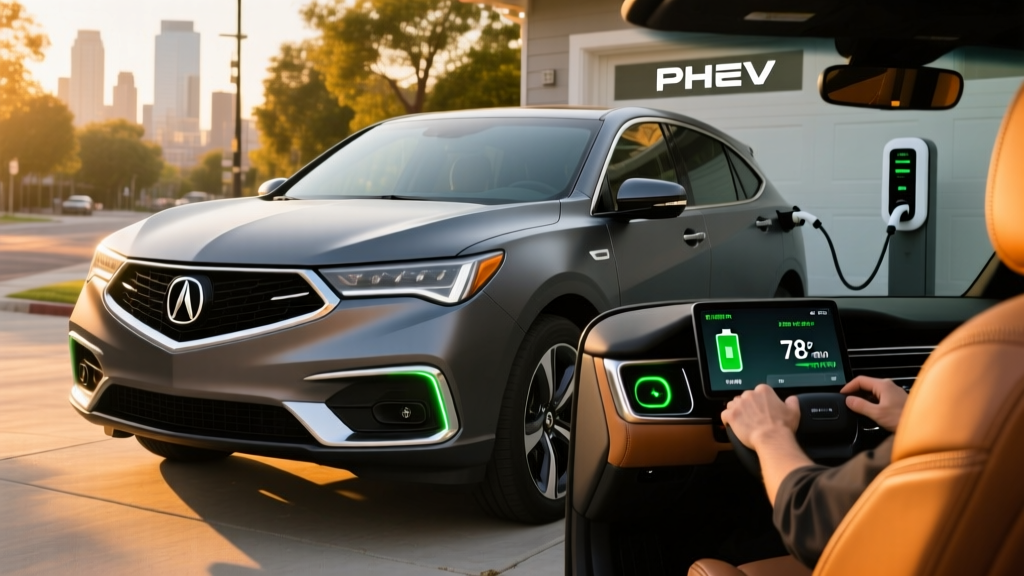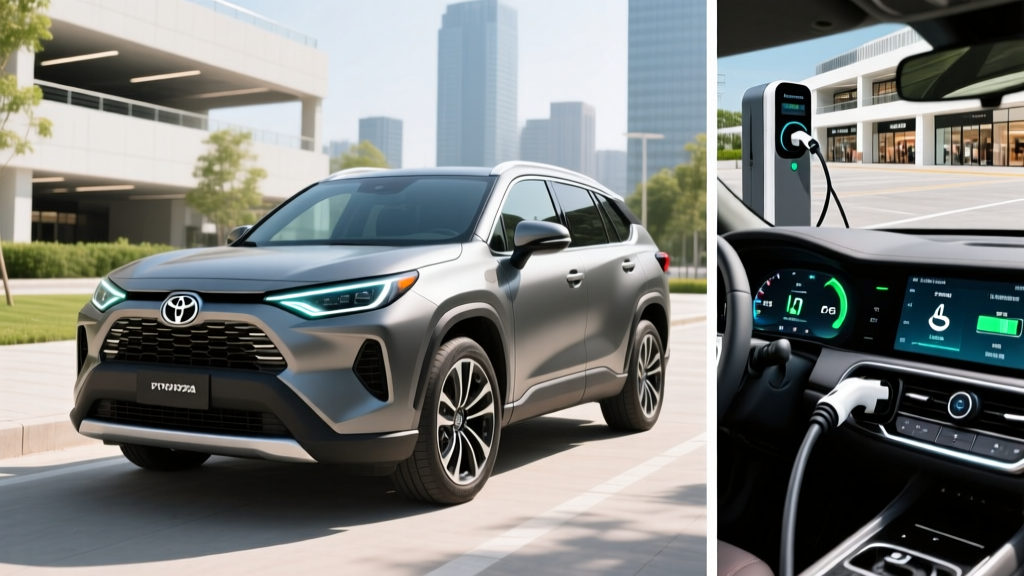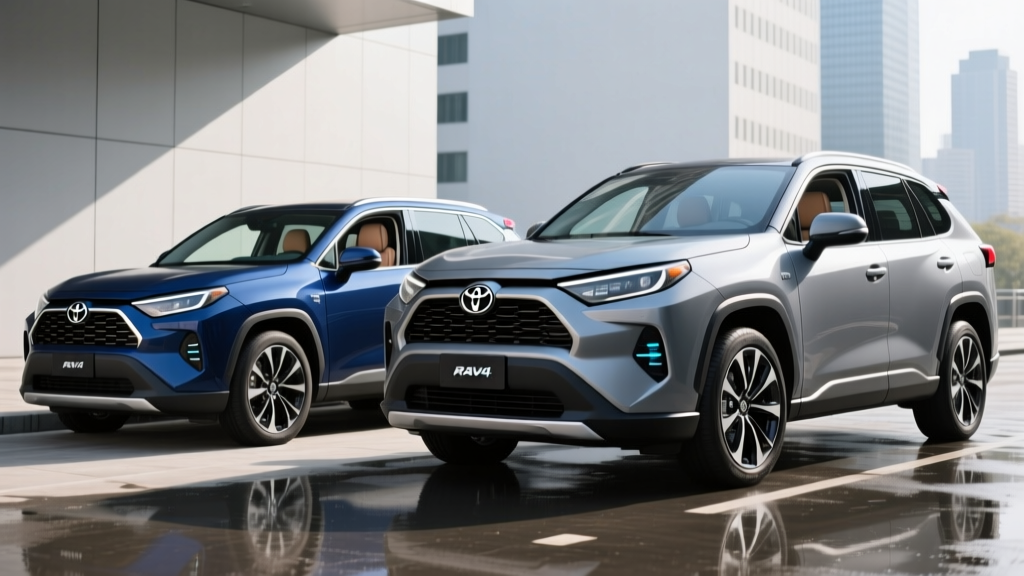
The 2026 Toyota RAV4 Hybrid and its plug-in sibling, the RAV4 Prime, remain the benchmark compact SUVs for buyers weighing electric or hybrid cars against a full battery-electric vehicle. One needs no plug and sips fuel in stop-and-go traffic; the other delivers 42 miles of electric-only driving before seamlessly switching to hybrid mode. Both share Toyota's AWD hybrid powertrain architecture, but their economics, charging requirements, and ideal buyer profiles diverge sharply.
This guide breaks down exact EPA figures, real-world MPG and range data, battery longevity, tax-credit eligibility under current IRS §30D rules, and a decision framework to help you choose between the HEV, the PHEV, or a full BEV.
HEV vs PHEV: What the RAV4 Hybrid and Prime Actually Are
Before comparing trims, it is critical to understand the mechanical difference between a conventional hybrid (HEV) and a plug-in hybrid (PHEV). Conflating the two leads to incorrect expectations about plugging in, range, and incentives.
Conventional Hybrid (HEV) — RAV4 Hybrid
- How it charges: Regenerative braking and the gasoline engine recharge a small 1.6 kWh battery. You never plug it in.
- Electric-only driving: Minimal — typically under 1 mile at very low speeds.
- Fuel source: 100% gasoline, but the electric motor assists heavily in city driving, cutting fuel use by 35–50% versus a comparable gas-only SUV.
- Tax credit: Does not qualify for the federal §30D EV tax credit.
Plug-In Hybrid (PHEV) — RAV4 Prime
- How it charges: Plug into a Level 1 (120V) or Level 2 (240V) outlet to charge an 18.1 kWh usable lithium-ion battery. You can also drive it without ever plugging in — it simply operates as a very efficient HEV once the battery is depleted.
- Electric-only driving: EPA-rated 42 miles on battery alone — enough for most daily commutes without burning a drop of gas.
- Fuel source: Electricity for short trips, gasoline for longer ones. Total combined range exceeds 600 miles.
- Tax credit: May qualify for a partial or full §30D credit depending on battery sourcing and your income — details below.
EPA Fuel Economy: How Many MPG Does the RAV4 Hybrid Get?
Fuel economy is the headline metric for hybrid shoppers. Here are the official EPA estimates for the 2026 models, alongside real-world observations from owner data and long-term testing.
| Metric | RAV4 Hybrid (HEV) | RAV4 Prime (PHEV — EV Mode) | RAV4 Prime (PHEV — Hybrid Mode) |
|---|---|---|---|
| City MPG / MPGe | 41 MPG | 94 MPGe (combined city/hwy) | 40 MPG |
| Highway MPG | 38 MPG | N/A (electric) | 36 MPG |
| Combined MPG / MPGe | 39 MPG | 94 MPGe | 38 MPG |
| Electric-Only Range | ~1 mi (negligible) | 42 miles | 42 miles |
| Total Combined Range | ~570 miles | ~600 miles (EV + gas) | ~600 miles (EV + gas) |
Real-World MPG vs EPA Sticker
Toyota's hybrid system excels in city traffic, where regenerative braking and low-speed electric assist dominate. Many owners report 42–45 MPG in city driving, exceeding the EPA city estimate. Highway driving is a different story: at sustained 70–80 mph, the gasoline engine does most of the work, and real-world figures often land between 34–37 MPG.
For the RAV4 Prime in hybrid mode (battery depleted), expect similar real-world results: roughly 36–38 MPG combined, with better city numbers and slightly lower highway figures. In cold weather (below 30°F), both models lose 5–10% efficiency due to engine warm-up cycles and cabin heating demands.
Powertrain Specs: Horsepower, Battery, and Charging
| Specification | RAV4 Hybrid (HEV) | RAV4 Prime (PHEV) |
|---|---|---|
| Engine | 2.5L 4-cylinder + 2 electric motors | 2.5L 4-cylinder + 2 electric motors (higher output) |
| Combined Horsepower | 219 hp | 302 hp |
| 0–60 mph | 7.4 seconds | 5.7 seconds |
| Drivetrain | AWD (electronic rear motor) | AWD (electronic rear motor, more torque) |
| Traction Battery (usable) | 1.6 kWh (NiMH) | 18.1 kWh (Lithium-ion) |
| Level 1 Charge (120V) | N/A (no plug) | ~8.5 hours (0–100%) |
| Level 2 Charge (240V) | N/A (no plug) | ~2.5 hours (0–100%) at 3.3 kW; ~1.5 hours on XSE with 6.6 kW onboard charger |
| DC Fast Charge | N/A | Not available (no DC fast-charge port) |
| Cargo Volume | 37.6 cu ft (rear seats up) | 33.5 cu ft (battery encroaches slightly) |
| Towing Capacity | 1,750 lbs | 2,500 lbs |
Charging the RAV4 Prime at Home
The RAV4 Prime does not support DC fast charging — a notable limitation for road-trippers who want quick top-ups. However, for a PHEV with a 42-mile battery, DC fast charging is less critical than it is for a full BEV. A standard 120V household outlet (Level 1) fully replenishes the battery overnight in about 8.5 hours. Installing a Level 2 home charger at 240V cuts that to 2.5 hours on the SE trim or just 1.5 hours on the XSE trim, which includes a 6.6 kW onboard charger (versus 3.3 kW on the SE).
Level 2 installation typically costs $800–$2,000 depending on your electrical panel's capacity and the run distance from panel to garage. The RAV4 Prime uses a standard J1772 connector for Level 2 charging — the same connector used by virtually all non-Tesla EVs in North America (note: the industry is transitioning to NACS, but the 2026 Prime retains J1772).
Pricing, Tax Credits, and Incentives
Here is the 2026 MSRP breakdown by trim, before any incentives:
| Model / Trim | MSRP |
|---|---|
| RAV4 Hybrid LE | $33,575 |
| RAV4 Hybrid XLE | $35,075 |
| RAV4 Hybrid Woodland Edition | $36,425 |
| RAV4 Hybrid Limited | $39,575 |
| RAV4 Prime SE | $44,975 |
| RAV4 Prime XSE | $48,375 |
Federal Tax Credit: Does the RAV4 Prime Qualify?
Under current IRS §30D rules, the RAV4 Prime may qualify for up to $3,750 of the federal clean vehicle tax credit, depending on battery-component and critical-mineral sourcing requirements that shift annually. The standard RAV4 Hybrid (HEV) does not qualify for §30D, as it is not a plug-in vehicle with sufficient battery capacity.
- Vehicle must be a plug-in with ≥ 7 kWh battery (Prime qualifies at 18.1 kWh)
- MSRP cap: SUVs must be ≤ $80,000 (Prime qualifies at ~$45K–$48K)
- Buyer income cap: ≤ $150,000 single / ≤ $300,000 joint (modified AGI)
- Battery sourcing: critical-mineral and battery-component thresholds determine whether you receive $3,750, $7,500, or $0 — verify current-year sourcing rules on IRS.gov before purchase
- Credit is non-refundable: you must have sufficient federal tax liability to benefit
- Point-of-sale transfer available: you can apply the credit at the dealership to reduce your purchase price directly
Several states offer additional rebates for PHEVs (e.g., California, Colorado, Massachusetts), but amounts and eligibility vary by jurisdiction. Check your state energy office or DMV for current programs.
Battery Longevity, Warranty, and Replacement Cost
Battery lifespan is the single most common concern among hybrid buyers — and it is the area where Toyota's track record is strongest. The RAV4 Hybrid's nickel-metal hydride (NiMH) pack and the Prime's lithium-ion pack are both engineered for longevity with conservative charge-discharge windows managed by Toyota's battery management system.
- Coverage: 10 years / 150,000 miles (whichever comes first) on the hybrid battery in all 50 states
- What's covered: Defects and capacity loss below a defined threshold (typically ~60–70% of original capacity)
- Hybrid system warranty: 8 years / 100,000 miles on hybrid-specific components (inverter, electric motors, control module)
Real-World Battery Degradation
Toyota's hybrid batteries have demonstrated exceptional longevity in fleet and owner data. Prius taxis routinely surpass 300,000 miles on original hybrid batteries. For the RAV4 Hybrid (NiMH), degradation is minimal because the battery is small and the system never deeply cycles it — it operates in a narrow state-of-charge window (roughly 40–80%).
The RAV4 Prime's larger lithium-ion pack sees deeper cycles (you can drain it to near-zero in EV mode), but Toyota's thermal management and conservative buffer design keep degradation in check. Most Prime owners report losing 1–3 miles of EV range after 3–4 years of daily use — a minor reduction from the original 42 miles.
Battery Replacement Cost
If a hybrid battery does fail out of warranty, replacement costs for the RAV4 Hybrid range from $3,000 to $4,500 (parts and labor, depending on dealership vs. independent shop). The RAV4 Prime's larger lithium-ion pack is more expensive: $6,000 to $9,000 at a dealership. However, out-of-warranty failures before 200,000 miles are statistically rare based on Toyota's historical data. Third-party refurbishers offer remanufactured packs at 30–50% below OEM pricing for out-of-warranty vehicles.
Reliability and Safety Ratings
Toyota consistently ranks at or near the top of long-term reliability studies, and the RAV4 platform is one of the brand's most proven. The hybrid powertrain adds complexity (two electric motors, power-split device, inverter) but eliminates the conventional automatic transmission — a common failure point in gas-only vehicles. Toyota's e-CVT (planetary gearset) has no clutch packs, bands, or torque converter to wear out.
Safety ratings for the 2026 RAV4 are strong. The vehicle earns top marks from the IIHS as a Top Safety Pick when equipped with the optional front crash-prevention system and acceptable headlights. Standard Toyota Safety Sense 2.5+ includes pre-collision braking with pedestrian detection, lane-departure alert with steering assist, full-speed adaptive cruise control, and lane-tracing assist — a robust Level 2 (SAE) driver-assistance suite. Note: this is a driver-support system, not autonomous driving. You must keep your hands on the wheel and eyes on the road.
Decision Framework: Hybrid, PHEV, or Full EV?
- You cannot charge at home or work (no garage, no outlet access)
- Your budget is $33K–$40K and you want maximum fuel savings with zero lifestyle change
- You drive 12,000+ miles per year, mostly in mixed city/highway conditions
- You want proven reliability with no plug-in learning curve
- You can install a Level 2 charger at home (240V, ~$1,000–$2,000 install)
- Your daily driving is under 40 miles round-trip, with occasional long road trips
- You want to drive on electricity most days but refuse to plan around charging stations
- You value the 302-hp performance upgrade and can stretch to the $45K+ MSRP
- You may qualify for the §30D tax credit, effectively reducing the price gap with the HEV
- You can charge at home AND have reliable public DC fast charging along your common routes
- You want zero gasoline expenses, zero oil changes, and the lowest per-mile fuel cost
- Your household has a second gas or hybrid vehicle for very long trips, or you rarely exceed 250 miles in a day
5-Year Cost Snapshot
Assuming 15,000 miles/year, $3.50/gallon gas, and $0.15/kWh electricity:
| Cost Factor (5 Years) | RAV4 Hybrid (HEV) | RAV4 Prime (PHEV) | Gas-Only RAV4 (Baseline) |
|---|---|---|---|
| Fuel Cost | ~$6,730 | ~$3,800 (assuming 70% EV driving) | ~$9,460 |
| Maintenance | ~$2,800 | ~$2,400 (less engine runtime) | ~$3,600 |
| Purchase Price (base) | $33,575 | $44,975 | $30,075 |
| Fed. Tax Credit | $0 | Up to $3,750 (varies) | $0 |
| Est. 5-Year Total | ~$43,105 | ~$47,425 | ~$43,135 |
The Prime's higher MSRP is partially offset by dramatically lower fuel costs and a potential tax credit. Over 5 years, the Prime costs roughly $4,300 more than the HEV at the base trim — but you gain 302 hp, 42 miles of electric range, and the ability to drive gasoline-free on most daily trips. If gas prices rise or your electricity rate is below $0.12/kWh, the Prime's economics improve further.
RAV4 Hybrid — Pros
- No plug-in required — zero infrastructure cost
- 39 MPG combined, often exceeded in city driving
- Strong reliability record and 10-yr/150K battery warranty
- Lower MSRP than Prime; accessible to more budgets
- Standard AWD across all trims
RAV4 Hybrid — Cons
- No electric-only driving to speak of
- No federal tax credit
- 219 hp is adequate but not quick
- Road-trip fuel economy drops to mid-30s
RAV4 Prime — Pros
- 42 miles EV range covers most commutes gas-free
- 302 hp and 5.7-second 0–60 — quickest RAV4 ever
- 600+ mile total range eliminates range anxiety
- Potential §30D tax credit up to $3,750
- 2,500-lb towing capacity (highest in RAV4 lineup)
RAV4 Prime — Cons
- $45K+ MSRP is a significant premium over the HEV
- No DC fast charging — Level 2 only
- Reduced cargo space (33.5 vs 37.6 cu ft)
- High demand leads to dealer markups in many markets
- Tax credit amount depends on evolving sourcing rules
Frequently Asked Questions
How many MPG does the RAV4 Hybrid get in real-world driving?
The EPA rates the RAV4 Hybrid at 39 MPG combined (41 city / 38 highway). In real-world use, city drivers frequently see 42–45 MPG thanks to aggressive regenerative braking. Highway-only driving at 75+ mph typically yields 34–37 MPG. Cold weather reduces efficiency by roughly 5–10% due to engine warm-up and cabin heating demands.
How far can the RAV4 Prime go on electric only?
The EPA rates the RAV4 Prime at 42 miles of all-electric range. In moderate temperatures with city-speed driving, some owners see 44–46 miles. At sustained highway speeds or in freezing weather, expect 32–36 miles. Once the battery depletes, the Prime seamlessly transitions to hybrid mode and delivers roughly 38 MPG combined for the remainder of your trip.
Do I have to plug in the RAV4 Hybrid?
No. The conventional RAV4 Hybrid (HEV) has no plug and no electric-only range worth mentioning. It charges its small 1.6 kWh battery entirely through regenerative braking and the gasoline engine. You fuel it like any other car at a gas station. Only the RAV4 Prime (PHEV) has a plug and meaningful electric range.
Is the hybrid battery reliable, and what does replacement cost?
Toyota's hybrid batteries are among the most reliable in the industry. The hybrid battery is covered for 10 years / 150,000 miles in all states. Out-of-warranty replacement runs $3,000–$4,500 for the HEV and $6,000–$9,000 for the Prime, though statistically, failures before 200,000 miles are uncommon. Toyota's conservative charge-window management (never fully charging or fully depleting the HEV pack) is a key factor in this longevity.
Does the RAV4 Prime qualify for the federal EV tax credit?
The RAV4 Prime may qualify for up to $3,750 under IRS §30D, depending on current-year battery sourcing requirements, your modified adjusted gross income (≤$150K single / ≤$300K joint), and the vehicle's MSRP (≤$80K for SUVs — the Prime qualifies). The credit can be applied at the point of sale to reduce your purchase price. The standard RAV4 Hybrid (HEV) does not qualify for §30D. Always verify current rules at IRS.gov before purchasing, as sourcing thresholds change annually.
Should I buy the RAV4 Hybrid, the Prime, or a full electric vehicle?
If you cannot charge at home, the RAV4 Hybrid is the clear choice — it requires no infrastructure changes and delivers excellent MPG. If you can charge at home and your daily driving is under 40 miles, the RAV4 Prime lets you commute on electricity while keeping a gas engine for road trips — the best of both worlds. If you can charge at home, have DC fast-charging access along your routes, and want zero gasoline costs, a full BEV like the Hyundai Ioniq 5 or Tesla Model Y is worth considering, though you will need to plan longer road trips around charging stops.