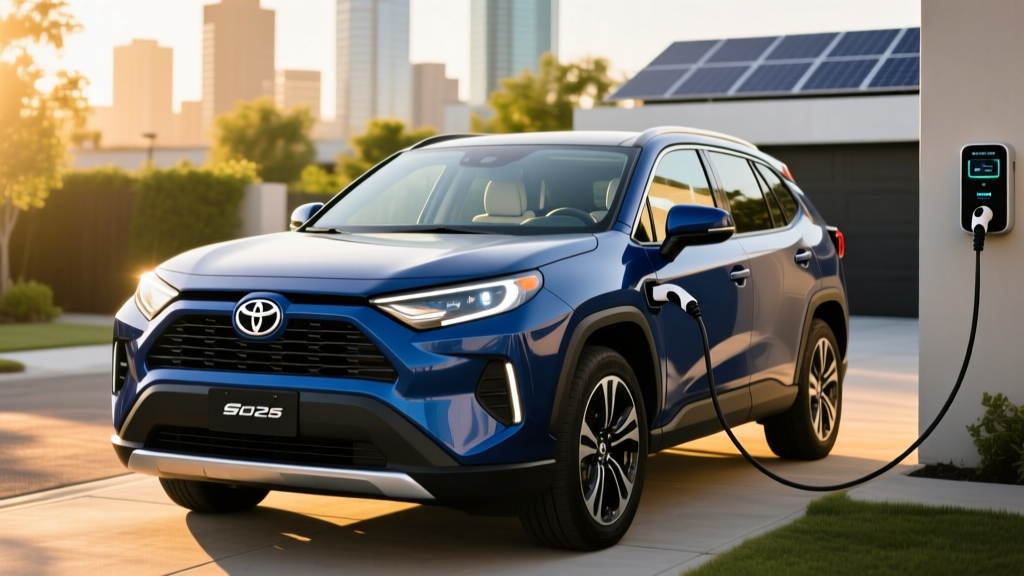
If you've been searching how much is a RAV4 hybrid, the short answer is that the 2026 Toyota RAV4 Hybrid starts at approximately $33,450 (including destination) for the LE trim and climbs to roughly $44,500 for the fully loaded Limited. But pricing is only half the story. The RAV4 Hybrid pairs a 2.5-liter four-cylinder engine with two electric motors for a combined 219 horsepower, delivers an EPA-estimated 39 MPG combined, and never needs to be plugged in. Below, we break down every trim's cost, real-world fuel economy, battery longevity, and whether the plug-in RAV4 Prime makes more sense for your situation.
2026 RAV4 Hybrid Pricing by Trim
Toyota offers the RAV4 Hybrid across five core trims. Prices below include the mandatory destination charge and reflect 2026 model-year MSRP figures. Note that dealer markups and regional variations can shift transaction prices.
| Trim | MSRP (incl. destination) | Key Additions Over Base |
|---|---|---|
| LE | $33,450 | Toyota Safety Sense 3.0, 8-inch touchscreen, wireless Apple CarPlay/Android Auto |
| XLE | $35,150 | Blind-spot monitoring, dual-zone climate, alloy wheels, smart key |
| XLE Premium | $37,300 | SofTex seats, moonroof, power liftgate |
| Woodland Edition | $38,000 | All-terrain tires, TRD-tuned suspension, roof rack |
| Limited | $44,500 | 12.3-inch display, JBL audio, heated/ventilated front seats, 360° camera |
Key pricing context: The conventional gas-only 2026 RAV4 LE starts around $30,450, making the hybrid a roughly $3,000 premium. Based on current fuel prices and the hybrid's 11 MPG combined advantage, most drivers recoup that premium within 3–4 years at 12,000 miles annually.
Fuel Economy: EPA Estimates vs Real-World MPG
The 2026 RAV4 Hybrid carries the same EPA ratings across all trims thanks to its standardized powertrain:
| Driving Condition | EPA Estimate | Real-World Expectation |
|---|---|---|
| City | 41 MPG | 40–45 MPG (hybrids excel in stop-and-go) |
| Highway | 38 MPG | 34–37 MPG (aero drag at 70+ mph reduces regen benefit) |
| Combined | 39 MPG | 37–41 MPG |
RAV4 Hybrid (HEV) vs RAV4 Prime (PHEV): Which Do You Need?
Toyota sells two electrified RAV4s, and confusing them is a common buyer mistake. Here's the fundamental difference:
RAV4 Hybrid (HEV)
- Never plugs in — generates electricity from the gas engine and regenerative braking
- 1.6 kWh battery (not usable as standalone range)
- 219 combined HP
- 39 MPG combined, no electric-only driving beyond low-speed creep
- Starts at $33,450
RAV4 Prime (PHEV)
- Plugs in — 18.1 kWh battery provides 42 miles of electric-only range
- 302 combined HP (significantly more powerful)
- 94 MPGe on electric, 38 MPG after battery depletes
- Starts at ~$44,500
- Eligible for up to $7,500 federal tax credit (with caveats)
The bottom line: If you have home charging and a commute under 40 miles, the RAV4 Prime effectively functions as a daily EV with a gas backup. If you lack charging access or want a simpler, more affordable purchase, the standard RAV4 Hybrid is the pragmatic choice.
Powertrain and Battery Specifications
The 2026 RAV4 Hybrid uses Toyota's proven series-parallel hybrid system:
| Specification | Detail |
|---|---|
| Engine | 2.5L inline-4 (176 HP, 163 lb-ft) |
| Electric Motors | Front motor (118 HP) + rear motor (54 HP) |
| Combined Output | 219 HP |
| Transmission | eCVT (planetary gearset, no fixed gears) |
| Drivetrain | Electronic AWD (eAWD) standard on all trims |
| Hybrid Battery | 1.6 kWh, lithium-ion (sealed NiMH on older models) |
| 0–60 MPH | 7.4 seconds |
| Towing Capacity | 1,750 lbs |
The rear electric motor gives the RAV4 Hybrid its all-wheel-drive capability without a mechanical driveshaft — it engages automatically when the front wheels slip or during hard acceleration. This system is lighter and more efficient than traditional AWD setups.
Battery Warranty, Lifespan, and Replacement Cost
How long do RAV4 Hybrid batteries actually last? Toyota's hybrid battery packs are engineered for the life of the vehicle. Data from fleet operators and long-term owners shows most Gen 4 and Gen 5 Toyota hybrid batteries (used in the RAV4, Camry, and Prius) retain above 80% capacity well past 150,000 miles. The lithium-ion pack in the current-generation RAV4 Hybrid is less stressed than an EV battery because it operates in a narrow state-of-charge window (roughly 40–80%), avoiding the deep cycles that accelerate degradation.
Replacement cost if out of warranty: A new OEM hybrid battery for the RAV4 Hybrid runs approximately $2,500–$4,000 including labor at a dealership. Third-party refurbished packs are available for $1,500–$2,500. For context, this is roughly the cost of a single major transmission repair on a conventional vehicle — and far less than an EV traction battery replacement.
Tax Credits and Incentives
Here's where the HEV vs PHEV distinction matters for your wallet:
- RAV4 Hybrid (HEV): Does NOT qualify for the federal §30D clean vehicle credit. This credit is reserved for plug-in vehicles with battery capacity ≥7 kWh. No federal purchase incentive applies.
- RAV4 Prime (PHEV): May qualify for up to $7,500 under IRS §30D, but eligibility depends on multiple conditions:
- Buyer AGI must not exceed $150K (single) / $300K (joint)
- Vehicle MSRP must not exceed $80,000 (SUVs — the Prime qualifies)
- Battery components and critical minerals must meet phased sourcing requirements per IRS guidelines
- Credit can be transferred to the dealer at point of sale for an instant price reduction
- State incentives: Some states (CA, CO, NY, others) offer additional rebates for PHEVs. Check your state energy office or the AFDC state incentives database for current programs. HEVs rarely qualify for state incentives.
Tax credit rules are subject to change. Consult a tax professional and verify current IRS sourcing requirements before relying on credit eligibility.
Who Should Choose the RAV4 Hybrid vs a Full EV or Gas Car?
Decision Framework
Choose the RAV4 Hybrid if:
- You lack access to home or workplace charging
- You regularly drive 300+ miles between fuel stops (no charging stops needed)
- You want lower fuel costs without changing your refueling habits
- You live in an area with sparse DC fast-charging infrastructure
- Your budget is under $40,000
Choose the RAV4 Prime (PHEV) if:
- You can install a Level 2 charger at home
- Your daily round-trip commute is under 42 miles
- You qualify for the $7,500 federal credit (effectively lowering the Prime's price close to the Hybrid Limited)
- You want near-silent electric driving for most trips with gas-engine backup for road trips
Choose a full EV (e.g., Tesla Model Y, Hyundai Ioniq 5) if:
- You have reliable home Level 2 charging
- You want zero tailpipe emissions and minimal maintenance (no oil changes, no gas engine)
- Your typical trips fall within 250–300 miles, or you're comfortable with DC fast-charging on road trips
Stick with the gas-only RAV4 if:
- Your annual mileage is under 8,000 miles (fuel savings won't offset the hybrid premium quickly)
- You're on the tightest possible budget and the $3,000 hybrid premium matters
Reliability and Ownership Costs
The RAV4 Hybrid benefits from Toyota's long track record with hybrid systems — the company has sold over 25 million hybrids globally since 1997. The eCVT transmission has no clutch packs, belts, or traditional gears to wear out, and the regenerative braking system extends the life of the friction brake pads (many owners report original brake pads past 80,000 miles).
| Ownership Factor | RAV4 Hybrid | Gas RAV4 |
|---|---|---|
| Annual Fuel Cost (12K mi/yr, $3.40/gal) | ~$1,045 | ~$1,430 |
| Oil Changes | Every 10,000 mi (~$50 each) | Every 10,000 mi (~$50 each) |
| Brake Pad Life | 70,000–100,000+ mi | 40,000–60,000 mi |
| Estimated 5-Year Fuel Savings vs Gas | ~$1,925 (hybrid saves) | |
| Insurance (national avg) | ~$1,650/yr | ~$1,500/yr |
According to fueleconomy.gov, the 2026 RAV4 Hybrid AWD saves approximately $1,250 in fuel costs over five years compared to the average new vehicle, and about $385 compared to the gas-only RAV4 AWD.
Frequently Asked Questions
How many MPG does the RAV4 Hybrid actually get?
The EPA rates the 2026 RAV4 Hybrid at 41 city / 38 highway / 39 combined MPG. In real-world mixed driving, most owners report 38–42 MPG. City driving often yields higher numbers (42–45 MPG) because regenerative braking and electric-motor assist are most effective at low speeds. Highway cruising above 70 MPH tends to pull the average down to 34–37 MPG.
Does the RAV4 Hybrid need to be plugged in?
No. The RAV4 Hybrid is a conventional (self-charging) hybrid. Its small 1.6 kWh battery charges through regenerative braking and the gasoline engine. You simply fill up at a gas station as normal. Only the RAV4 Prime (the PHEV variant) requires plugging in to access its 42 miles of electric-only range.
Is the RAV4 Hybrid reliable?
Toyota's hybrid system is among the most proven in the industry. The RAV4 Hybrid earns strong reliability scores from major evaluators, and the hybrid components (battery, eCVT, electric motors) carry a 10-year/150,000-mile warranty. The eCVT has fewer moving parts than a conventional automatic transmission, and regenerative braking reduces wear on the friction brakes. Per NHTSA and IIHS data, the RAV4 platform also performs well in crash testing.
What does a RAV4 Hybrid battery replacement cost?
If your hybrid battery fails outside the 10-year/150,000-mile warranty window, expect to pay approximately $2,500–$4,000 for a new OEM replacement at a Toyota dealership, or $1,500–$2,500 for a refurbished unit. In practice, Toyota hybrid batteries rarely require replacement before 150,000+ miles due to their conservative charge-window management.
Does the RAV4 Hybrid qualify for a tax credit?
The standard RAV4 Hybrid (HEV) does not qualify for any federal tax credit — the §30D Clean Vehicle Credit applies only to plug-in vehicles. The RAV4 Prime PHEV may qualify for up to $7,500, subject to buyer income limits, MSRP caps, and battery-sourcing requirements outlined by the IRS. Always verify current eligibility before purchasing.
How much is a RAV4 Hybrid compared to the gas version?
The 2026 RAV4 Hybrid starts at $33,450 (LE trim), roughly $3,000 more than the gas-only RAV4 LE at $30,450. At 12,000 miles per year and $3.40/gallon fuel, the hybrid's 11 MPG combined advantage saves approximately $385 per year in fuel — recouping the premium in about 7.8 years. However, the hybrid also offers standard AWD (a $1,400 option on the gas model), which narrows the effective price gap to roughly $1,600, bringing payback to approximately 4 years.