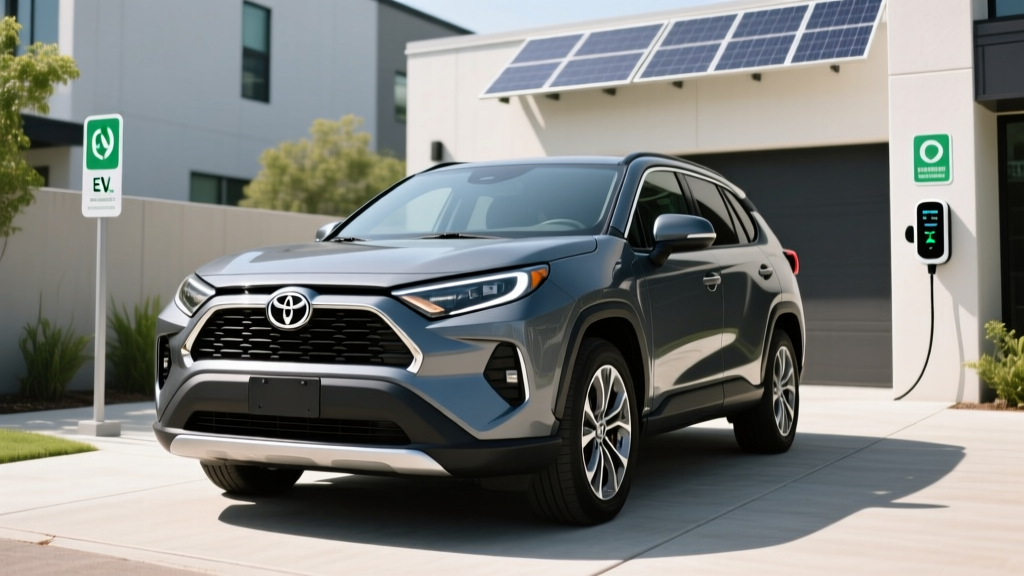
The Toyota RAV4 Hybrid remains one of the most leased compact SUVs in America, and for good reason: it delivers over 40 MPG combined without ever needing a plug. If you're researching a RAV4 Hybrid lease for 2026, this guide covers every number that matters — EPA fuel economy by trim, powertrain output, real-world efficiency, battery warranty, and how the standard hybrid (HEV) stacks up against the plug-in RAV4 Prime (PHEV) and a full battery-electric vehicle.
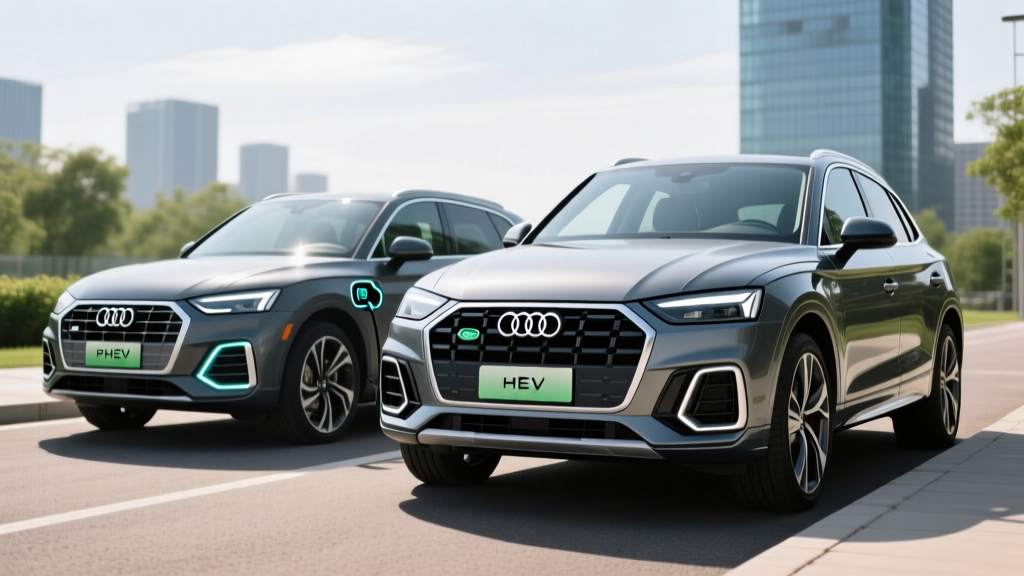
HEV vs PHEV: Which RAV4 Is Which?
RAV4 Hybrid (HEV): A conventional self-charging hybrid. The gasoline engine and electric motor work together; the small battery recharges via regenerative braking and the engine. You never plug it in.
RAV4 Prime (PHEV): A plug-in hybrid with a larger 18.1 kWh battery. It delivers 42 miles of electric-only driving before the gasoline engine kicks in. You can plug it in to recharge, and it qualifies for federal tax incentives.
This article focuses on the RAV4 Hybrid (HEV) for lease shoppers, with RAV4 Prime comparisons where relevant.
2026 RAV4 Hybrid Fuel Economy: EPA MPG by Trim
The 2026 RAV4 Hybrid pairs a 2.5-liter four-cylinder engine with Toyota's fourth-generation hybrid system and an electronic on-demand all-wheel-drive (AWD) setup across all trims. Here's the official EPA data from fueleconomy.gov:
| Trim | City MPG | Highway MPG | Combined MPG |
|---|---|---|---|
| LE | 41 | 38 | 40 |
| XLE | 41 | 38 | 40 |
| XLE Premium | 41 | 38 | 40 |
| SE | 40 | 36 | 39 |
| Woodland Edition | 38 | 35 | 37 |
| XSE | 40 | 36 | 39 |
| Limited | 41 | 38 | 40 |
Real-world MPG note: Toyota hybrids consistently exceed their EPA city estimates in stop-and-go driving because regenerative braking recovers energy that a gas car wastes as heat. Owners regularly report 42–45 MPG in urban commuting. Highway driving is the opposite story — at sustained 75+ MPH speeds, expect 34–36 MPG due to aerodynamic drag. In cold weather (below 30°F), the engine runs more often for cabin heat, dropping city MPG to roughly 36–38 until the powertrain warms up.
Powertrain Specs: What's Under the Hood
| Specification | 2026 RAV4 Hybrid |
|---|---|
| Engine | 2.5L Dynamic Force 4-cylinder + 3 electric motors |
| Combined System Horsepower | 219 hp |
| Drivetrain | Electronic AWD (standard all trims) |
| Transmission | eCVT (electronically controlled continuously variable) |
| 0–60 MPH | ~7.4 seconds |
| Hybrid Battery | ~1.6 kWh lithium-ion (self-charging, no plug) |
| Towing Capacity | 1,750 lbs |
| Cargo Volume (behind rear seats) | 37.5 cu ft |
The rear axle is driven by a dedicated 54 hp electric motor, giving the RAV4 Hybrid true all-wheel-drive traction without a mechanical driveshaft. This setup adds minimal weight and preserves interior space — a key packaging advantage over traditional AWD systems.
RAV4 Hybrid vs RAV4 Prime: Lease Comparison
Many lease shoppers cross-shop the standard RAV4 Hybrid with the plug-in RAV4 Prime. Here's how they compare on the numbers that matter:
| Metric | RAV4 Hybrid (HEV) | RAV4 Prime (PHEV) |
|---|---|---|
| Combined MPG / MPGe | 40 MPG | 94 MPGe (elec) / 38 MPG (gas) |
| Electric-Only Range | N/A (no plug) | 42 miles |
| Total Range | ~580 miles | ~600 miles |
| Combined HP | 219 hp | 302 hp |
| Battery Capacity | ~1.6 kWh | 18.1 kWh (lithium-ion) |
| Level 2 Charge Time | N/A | ~2.5 hrs (240V/16A) |
| DC Fast Charge | N/A | Not available |
| Base MSRP (2026) | ~$33,575 | ~$44,965 |
| Federal Tax Credit (§30D) | Not eligible | Up to $7,500* |
*RAV4 Prime §30D eligibility depends on battery-sourcing and critical-mineral requirements. Verify current-year rules at irs.gov.
The Lease Math: HEV vs PHEV
The RAV4 Prime's higher MSRP (~$11,400 more) is partially offset by the potential $7,500 federal credit — but on a lease, the credit typically goes to the leasing company (Toyota Financial Services), not the lessee. Some lessors pass it through as a capitalized-cost reduction, which lowers your monthly payment, but this is not guaranteed. The standard RAV4 Hybrid has a lower MSRP and no credit, but its lower starting price often results in a cheaper monthly lease regardless. Always ask the dealer how the lessor treats any applicable credits.
2026 RAV4 Hybrid Lease Pricing by Trim
Lease payments depend on trim, money factor, residual value, lease term, and your down payment. Based on 2026 MSRP figures and typical 36-month/12,000-mile lease residuals for the RAV4 Hybrid (which holds value exceptionally well — roughly 58–62% residual at 36 months), here are estimated monthly payments with $2,500 due at signing:
| Trim | MSRP (approx.) | Est. Monthly Lease |
|---|---|---|
| LE | $33,575 | $340–$380 |
| XLE | $35,075 | $365–$405 |
| XLE Premium | $37,475 | $390–$430 |
| SE | $37,075 | $385–$425 |
| XSE | $39,075 | $410–$450 |
| Limited | $41,075 | $430–$475 |
Key lease variables: Toyota Financial Services typically sets the money factor between 0.00175 and 0.00225 (equivalent to roughly 4.2–5.4% APR) for well-qualified lessees. The RAV4 Hybrid's strong resale value keeps residuals high, which is the single biggest factor in keeping lease payments competitive against rivals like the Honda CR-V Hybrid or Hyundai Tucson Hybrid. Dealer markups on leases (called "lease cash" adjustments) can add $500–$1,500 to the capitalized cost in high-demand markets — negotiate the selling price before discussing the lease terms.
Reliability and Hybrid Battery Warranty
Toyota Hybrid Battery Coverage
- Hybrid Battery Warranty: 10 years / 150,000 miles (whichever comes first), transferable to subsequent owners
- Hybrid System Components: 8 years / 100,000 miles (inverter, control module, battery ECU)
- Bumper-to-Bumper: 3 years / 36,000 miles
- Powertrain (engine/transmission): 5 years / 60,000 miles
Toyota's hybrid system is among the most proven in the industry, with over 25 years of continuous production since the original Prius. The RAV4 Hybrid's nickel-metal-hydride and lithium-ion battery packs (chemistry varies by trim and model year) are designed for longevity, not maximum energy density — they operate within a narrow state-of-charge window (roughly 40–80%) to minimize degradation.
Battery replacement cost: If the hybrid battery does fail outside of warranty, a new OEM replacement runs approximately $3,000–$4,500 including labor at a Toyota dealer. Third-party refurbished batteries are available for $1,500–$2,500. In practice, failures before 150,000 miles are uncommon — Consumer Reports consistently rates the RAV4 Hybrid as above-average for predicted reliability.
Lease-specific note: On a standard 36-month lease, you'll accumulate roughly 36,000–45,000 miles — well within both the hybrid battery warranty and the bumper-to-bumper coverage. Battery replacement is effectively a non-issue for lessees.
Tax Credits and Incentives: What Applies to the RAV4 Hybrid?
Here's where many shoppers get confused. The conventional RAV4 Hybrid (HEV) does not qualify for the federal §30D Clean Vehicle Credit. That credit — up to $7,500 — is reserved for battery-electric vehicles (BEVs) and plug-in hybrids (PHEVs) that meet battery-sourcing and critical-mineral requirements.
- RAV4 Hybrid (HEV): No federal tax credit. No state EV rebates in most jurisdictions (a few states offer small hybrid incentives — check your state energy office).
- RAV4 Prime (PHEV): Potentially eligible for up to $7,500 under §30D, subject to MSRP caps ($80,000 for SUVs — the Prime qualifies), buyer income limits ($300K joint / $150K single), and battery-component sourcing rules that tighten annually. The point-of-sale transfer option allows you to apply the credit as a down-payment reduction at the dealer.
For a lease, the §30D credit technically belongs to the lessor (the entity that owns the vehicle). Toyota Financial Services has historically passed this benefit through as a cap-cost reduction on Prime leases, but this is at the lessor's discretion. Always confirm with your dealer before signing.
Who Should Lease the RAV4 Hybrid — and Who Shouldn't?
Lease the RAV4 Hybrid If…
- You want 40+ MPG without changing your fueling habits
- You don't have access to home or workplace charging
- You prefer the lowest monthly payment in the compact hybrid SUV segment
- You drive 10,000–15,000 miles/year and want predictable fuel costs
- You value AWD for snow or rain without the fuel penalty of a gas AWD SUV
Look Elsewhere If…
- You want electric-only commuting — consider the RAV4 Prime (PHEV) or a full BEV like the Hyundai Ioniq 5
- You want federal tax credit savings — the HEV doesn't qualify
- You regularly tow more than 1,750 lbs — look at a body-on-frame SUV or a PHEV with higher tow rating
- You drive more than 15,000 miles/year — a lease mileage overage penalty (~$0.15–$0.25/mile) may outweigh fuel savings
RAV4 Hybrid vs Full EV vs Gas: Decision Framework
Choose the RAV4 Hybrid (HEV) if you want maximum simplicity — no plugs, no range planning, just fill up at any gas station and get 40 MPG. Ideal for apartment dwellers without charging access.
Choose the RAV4 Prime (PHEV) if you have home Level 2 charging and a commute under 42 miles — you'll drive electric most days and use gas only for road trips. The $7,500 credit (if eligible) narrows the price gap significantly.
Choose a full EV (like the Tesla Model Y or Hyundai Ioniq 5) if you have reliable home charging, want zero tailpipe emissions, and are comfortable with DC fast-charging on road trips. Total cost of ownership is lowest if electricity rates are favorable and you qualify for the full federal credit.
Frequently Asked Questions
How many MPG does the 2026 RAV4 Hybrid actually get?
The EPA rates most trims at 41 city / 38 highway / 40 combined. In real-world city driving, many owners report 42–45 MPG thanks to aggressive regenerative braking. Highway driving at 75+ MPH typically yields 34–36 MPG. Cold weather can reduce city MPG by 5–8% until the engine and cabin reach operating temperature.
Does the RAV4 Hybrid need to be plugged in?
No. The RAV4 Hybrid is a conventional (self-charging) hybrid. Its small ~1.6 kWh battery recharges through regenerative braking and the gasoline engine. You fuel it exactly like a regular gas car — at any gas station.
How far can the RAV4 Prime go on electric only?
The RAV4 Prime (PHEV) delivers an EPA-rated 42 miles of electric-only range on a full charge. That covers most daily commutes without using any gasoline. Once the battery is depleted, it operates as a conventional hybrid at 38 MPG combined. Total combined range (electric + gas) is approximately 600 miles.
Is the RAV4 Hybrid reliable, and what does a battery replacement cost?
Toyota's hybrid system has a 25+ year track record. The RAV4 Hybrid consistently earns above-average reliability ratings from Consumer Reports and J.D. Power. The hybrid battery is warranted for 10 years / 150,000 miles. Out-of-warranty replacement costs $3,000–$4,500 OEM or $1,500–$2,500 refurbished — but failures before 150K miles are rare.
Does the RAV4 Hybrid qualify for any tax credit?
The conventional RAV4 Hybrid (HEV) does not qualify for the federal §30D Clean Vehicle Credit. That credit applies only to plug-in vehicles (BEVs and PHEVs). The RAV4 Prime (PHEV) may qualify for up to $7,500, subject to current-year battery-sourcing rules and buyer income limits. Check irs.gov for the latest eligibility criteria. Some states offer small hybrid incentives — check your state energy office or afdc.energy.gov.
What's a realistic monthly lease payment for the 2026 RAV4 Hybrid?
For a 36-month/12,000-mile lease with $2,500 due at signing and well-qualified credit, expect roughly $340–$380/month for the LE trim and $430–$475/month for the Limited. Money factors typically range from 0.00175–0.00225. Residuals are strong (58–62% at 36 months) due to the RAV4's segment-leading resale value.
Should I lease or buy the RAV4 Hybrid?
Leasing makes sense if you want the lowest monthly payment, plan to stay under 12,000–15,000 miles/year, and prefer a new vehicle every 3 years. Buying makes more sense if you drive high annual mileage, want to keep the vehicle past the warranty period (where the hybrid system's longevity pays dividends), or want to build equity. The RAV4 Hybrid's strong resale value benefits both paths — lessees get high residuals (lower payments), and buyers get strong trade-in value.