Quick Verdict: The RAV4 Hybrid Delivers Where It Counts
If you're researching RAV4 Hybrid gas mileage before heading to a Toyota dealer, the short answer is this: the 2026 RAV4 Hybrid returns an EPA-estimated 41 MPG combined (41 city / 38 highway) across most trims, and in real-world city driving, owners routinely exceed that sticker number. For buyers who can plug in at home, the RAV4 Prime plug-in hybrid variant pushes the envelope further with 42 miles of electric-only range and a combined 94 MPGe when the battery is charged.
Both versions share Toyota's proven hybrid synergy drive architecture, all-wheel-drive capability, and a reputation for bulletproof reliability. But choosing between the standard hybrid (HEV), the plug-in hybrid (PHEV/Prime), or stepping into a full battery-electric vehicle depends on your driving pattern, charging access, and budget. This guide breaks down every number that matters.
RAV4 Hybrid MPG: EPA Estimates vs. Real-World Results
The 2026 Toyota RAV4 Hybrid pairs a 2.5-liter four-cylinder engine with front and rear electric motors for a combined system output of 219 horsepower. Unlike a conventional gas SUV, the hybrid system recovers energy during braking and uses electric motors at low speeds, which is why city MPG often beats highway MPG — the opposite of a gas-only vehicle.
| Metric | EPA Estimate | Real-World Expectation |
|---|---|---|
| City MPG | 41 MPG | 42–46 MPG (stop-and-go favors regen) |
| Highway MPG | 38 MPG | 34–37 MPG (sustained 70+ mph reduces hybrid advantage) |
| Combined MPG | 41 MPG | 38–43 MPG (depends on commute mix) |
| Fuel Tank | 14.5 gallons | ~550–590 miles total range |
Why city driving beats highway in a hybrid: The electric motors handle low-speed acceleration, the engine shuts off at stops, and regenerative braking recaptures energy that a gas car would waste as heat. On the highway, the gasoline engine does most of the work at a steady load, so the hybrid advantage narrows. Expect roughly a 3–5 MPG drop from the EPA combined figure if your commute is 90%+ interstate at 75 mph.
Cold-weather note: In sub-40°F conditions, expect a 5–10% fuel economy reduction. The engine runs more frequently to provide cabin heat and maintain battery temperature. This is a smaller penalty than full EVs experience (which can lose 20–30% range in cold), but it's real.
RAV4 Prime (PHEV): Electric-Only Range and Total Range
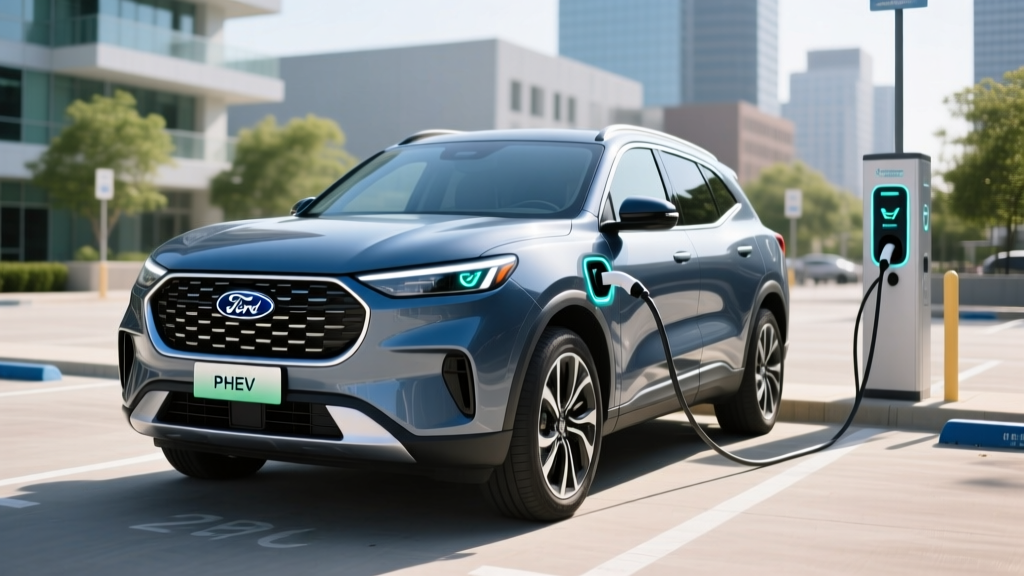
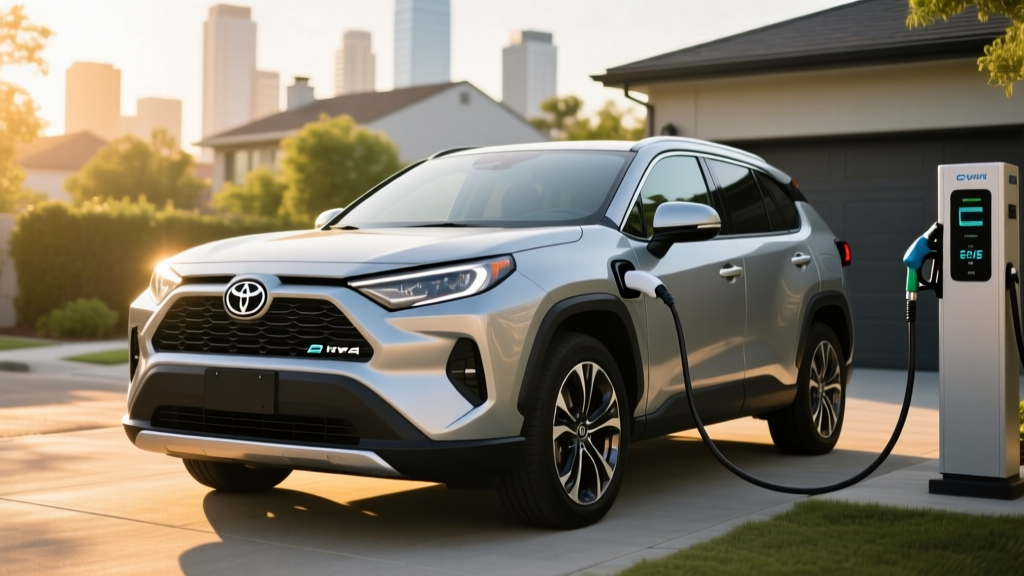
The RAV4 Prime is the plug-in hybrid variant — it has a larger battery that you can charge from a wall outlet or charger, enabling genuine electric-only commuting before the gasoline engine kicks in. For 2026, the RAV4 Prime carries an 18.1 kWh lithium-ion battery pack (usable capacity approximately 14.5 kWh) and delivers:
| Metric | Specification |
|---|---|
| Electric-Only Range | 42 miles (EPA) |
| Combined MPGe (EV mode) | 94 MPGe |
| Gas-Only MPG (after battery depletes) | 38 MPG combined |
| Total Combined Range | ~600 miles (EV + gas) |
| Battery Capacity | 18.1 kWh (gross) / ~14.5 kWh usable |
| Level 1 Charging (120V) | ~12 hours (0–100%) |
| Level 2 Charging (240V, 3.3 kW onboard) | ~4.5 hours (0–100%) |
| DC Fast Charging | Not supported |
| Combined System Horsepower | 302 HP |
| 0–60 mph | 5.7 seconds |
The 42-mile electric range is enough to cover the average American commute (roughly 35–40 miles round-trip, per fueleconomy.gov and FHWA data) entirely on electricity. When the battery depletes, the Prime seamlessly transitions to standard hybrid operation — there is no range anxiety because the gas tank provides the same ~440+ mile backup range as the regular RAV4 Hybrid.
Important charging caveat: The RAV4 Prime does not support DC fast charging. Its onboard charger maxes out at 3.3 kW (some earlier model years offered a 6.6 kW option on higher trims; verify with your dealer for 2026 availability). This means public fast-charging networks like Electrify America or Tesla Superchargers are irrelevant for the Prime — it's designed for overnight home charging on Level 2.
HEV vs. PHEV vs. Full EV: Which Powertrain Fits You?
The RAV4 lineup spans three electrification levels. Here's how to decide:
HEV vs. PHEV — Key Distinction
Conventional Hybrid (HEV — RAV4 Hybrid): Never plugs in. The battery charges through regenerative braking and the gasoline engine. You fuel it exactly like a gas car and simply get much better MPG. No charging infrastructure needed.
Plug-In Hybrid (PHEV — RAV4 Prime): Has a larger battery you charge by plugging in. Provides 42 miles of electric-only driving before switching to hybrid mode. Requires access to a 120V or 240V outlet to capture the EV benefit — if you never plug it in, you're just carrying extra battery weight and getting ~38 MPG instead of 41.
| Factor | RAV4 Hybrid (HEV) | RAV4 Prime (PHEV) | Full EV (BEV) |
|---|---|---|---|
| Plugs In? | No | Yes (optional but recommended) | Yes (required) |
| Electric-Only Range | 0 miles | 42 miles | 260–330+ miles |
| Total Range | ~570 miles | ~600 miles | 260–330+ miles |
| Home Charging Needed? | No | Recommended (120V minimum) | Yes (240V strongly recommended) |
| Road-Trip Convenience | Excellent (gas stations) | Excellent (gas backup) | Requires DC fast-charging planning |
| Federal Tax Credit | Not eligible | Not eligible (§30D is BEV/FCEV only) | Up to $7,500 (subject to §30D rules) |
| Starting MSRP (2026) | ~$33,575 | ~$44,500 | Varies ($39,990–$52,990 typical) |
| Best For | No home charging; simplicity | Home charging + short commute | Home charging + lower operating cost |
Choose the RAV4 Hybrid (HEV) if:
- You don't have access to home or workplace charging
- You want maximum simplicity — no cables, no apps, no charging routines
- Your budget is under $38,000 and you want AWD with great MPG
- You take frequent long road trips and don't want to plan around chargers
Choose the RAV4 Prime (PHEV) if:
- You can install a Level 2 charger at home or have reliable workplace charging
- Your daily commute is under 40 miles round-trip (you'll rarely use gas)
- You want EV-like daily driving with gas-engine freedom for road trips
- You value the 302 HP performance upgrade (5.7s 0–60 is quick for an SUV)
Choose a Full EV if:
- You have reliable Level 2 home charging and your daily driving is under 250 miles
- You want the lowest per-mile fuel cost (~$0.04–$0.06/mile vs. $0.10–$0.14/mile in the hybrid)
- You want to minimize maintenance (no oil changes, no engine, fewer moving parts)
2026 RAV4 Hybrid & Prime Pricing and Tax Credits
| Model / Trim | MSRP (est.) | Federal Tax Credit |
|---|---|---|
| RAV4 Hybrid LE | $33,575 | None |
| RAV4 Hybrid XLE | $35,075 | None |
| RAV4 Hybrid XLE Premium | $37,575 | None |
| RAV4 Hybrid Woodland Edition | $36,425 | None |
| RAV4 Hybrid Limited | $40,075 | None |
| RAV4 Prime SE | $44,500 | None |
| RAV4 Prime XSE | $47,900 | None |
Tax Credit Reality Check
The federal §30D Clean Vehicle Credit (up to $7,500) applies only to new battery-electric vehicles (BEVs) and fuel-cell vehicles (FCEVs). Neither the RAV4 Hybrid nor the RAV4 Prime qualifies for the federal EV tax credit as of current IRS rules. Toyota's hybrid and plug-in hybrid models are classified differently under the tax code.
Some states offer their own incentives for PHEVs — for example, certain utility companies provide rebates for Level 2 charger installation, and a handful of states offer point-of-sale rebates for plug-in hybrids. Check your state energy office or utility provider for current programs. Always consult IRS.gov §30D guidance or a tax professional for personal eligibility.
Battery Warranty, Reliability, and Replacement Cost
Hybrid battery longevity is consistently one of the top concerns for buyers moving from a conventional gas vehicle. Here's what the data shows for the RAV4 Hybrid and Prime:
Hybrid Battery Warranty — Toyota's Coverage
Hybrid Battery: 10 years / 150,000 miles (whichever comes first) — applies to both the RAV4 Hybrid and RAV4 Prime.
Hybrid System Components (inverter, control module, etc.): 8 years / 100,000 miles.
Standard Powertrain Warranty: 5 years / 60,000 miles.
Toyota extended its hybrid battery warranty from 8 years/100,000 miles to 10 years/150,000 miles for model years 2020 and later. This is one of the strongest hybrid battery warranties in the industry. Source: Toyota's official warranty guide.
Real-world battery lifespan: Toyota's hybrid battery packs use nickel-metal hydride (HEV) and lithium-ion (PHEV) chemistries that have proven exceptionally durable. Taxi fleets and high-mileage owners have reported RAV4 Hybrids exceeding 200,000 miles on the original hybrid battery. The battery management system keeps the pack in a conservative state-of-charge window (never fully charging or fully depleting), which dramatically extends cycle life.
Replacement cost if out of warranty: A RAV4 Hybrid battery replacement runs approximately $3,000–$5,000 (parts and labor) at a Toyota dealer. The RAV4 Prime's larger lithium-ion pack is more expensive — estimated at $8,000–$12,000. However, given the 10-year/150,000-mile warranty and Toyota's track record, most owners will never face this expense. Third-party refurbishment shops offer hybrid battery reconditioning for $1,500–$2,500 as a lower-cost alternative for out-of-warranty vehicles.
Overall reliability: The RAV4 Hybrid consistently earns top marks from Consumer Reports and J.D. Power for predicted reliability. Toyota's hybrid system has been in production since 1997 (Prius), giving the company nearly three decades of refinement. The Insurance Institute for Highway Safety (IIHS) has historically rated the RAV4 as a Top Safety Pick, though always verify the current model year's crash-test results.
RAV4 Hybrid vs. the Competition: MPG Compared
| Vehicle | City MPG | Highway MPG | Combined MPG | HP | Starting MSRP |
|---|---|---|---|---|---|
| Toyota RAV4 Hybrid | 41 | 38 | 41 | 219 | $33,575 |
| Honda CR-V Hybrid | 43 | 36 | 40 | 204 | $35,395 |
| Ford Escape Hybrid | 42 | 36 | 39 | 198 | $34,750 |
| Hyundai Tucson Hybrid | 38 | 38 | 38 | 226 | $33,925 |
| Kia Sportage Hybrid | 38 | 38 | 38 | 227 | $33,090 |
The RAV4 Hybrid sits at or near the top of its segment in combined MPG while offering standard electronic on-demand AWD across all trims. The Honda CR-V Hybrid edges it out slightly in city driving, but the RAV4's highway efficiency and overall package — including Toyota Safety Sense 2.5+ standard on all trims — keep it competitive. The RAV4 Prime's 302 HP and 42-mile EV range have no direct competitor at its price point; the closest rival is the Ford Escape PHEV (37 miles EV range, lower combined HP).
Ownership Costs: What You'll Actually Spend Per Mile
Beyond the sticker price, the RAV4 Hybrid's fuel savings compound over time. Here's a practical cost breakdown based on 15,000 miles/year and a national average gas price of $3.40/gallon:
| Scenario | Annual Fuel Cost | Cost Per Mile |
|---|---|---|
| RAV4 Gas (28 MPG combined) | $1,821 | $0.121 |
| RAV4 Hybrid (41 MPG combined) | $1,244 | $0.083 |
| RAV4 Prime (80% EV / 20% gas commute) | $520–$750 | $0.035–$0.050 |
5-year fuel savings vs. gas-only RAV4: Approximately $2,885 for the Hybrid and $5,350–$6,500 for the Prime (assuming home charging at $0.14/kWh). The Hybrid's fuel savings alone won't fully offset its higher MSRP compared to a base gas RAV4 within 5 years, but the hybrid's stronger resale value and lower brake wear (regenerative braking extends pad life) narrow the gap.
Frequently Asked Questions
How many MPG does the RAV4 Hybrid get?
The 2026 RAV4 Hybrid is EPA-rated at 41 city / 38 highway / 41 combined MPG. In real-world city driving with frequent stops, many owners report 42–46 MPG thanks to aggressive regenerative braking. Highway-only driving at 75+ mph typically yields 34–37 MPG.
How far can the RAV4 Prime go on electric only?
The RAV4 Prime delivers an EPA-estimated 42 miles of electric-only range on a full charge. This covers most daily commutes entirely on electricity. Once the battery depletes, the vehicle operates as a standard hybrid with 38 MPG combined — no range anxiety.
Does the RAV4 Hybrid need to be plugged in?
No. The standard RAV4 Hybrid (HEV) never plugs in. Its small battery charges through regenerative braking and the gasoline engine. You simply fill it with gas like any other vehicle. Only the RAV4 Prime (PHEV) benefits from plugging in.
Is the RAV4 Hybrid reliable and what does battery replacement cost?
Yes — Toyota's hybrid system is among the most proven in the industry with nearly 30 years of production history. The hybrid battery is warrantied for 10 years / 150,000 miles. Out-of-warranty replacement costs approximately $3,000–$5,000 for the HEV and $8,000–$12,000 for the Prime, though most owners never need a replacement.
Does the RAV4 Hybrid or Prime qualify for any federal tax credit?
No. The federal §30D Clean Vehicle Credit applies only to battery-electric and fuel-cell vehicles. Neither the RAV4 Hybrid nor the RAV4 Prime qualifies. Some state or utility-level incentives may apply for the PHEV variant — check your local programs and consult IRS guidance for current rules.
How does the RAV4 Hybrid compare to a full EV like the Tesla Model Y?
The RAV4 Hybrid requires no charging infrastructure, has a lower purchase price (~$33,575 vs. $44,990+), and unlimited range via gas stations. A full EV like the Model Y offers dramatically lower per-mile fuel costs (~$0.04–$0.06/mile), near-zero routine maintenance, and eligibility for the $7,500 federal tax credit (subject to income and sourcing rules). If you have Level 2 home charging and drive under 250 miles daily, a full EV saves more long-term. If you lack charging access or regularly exceed 300 miles between stops, the RAV4 Hybrid is the pragmatic choice.