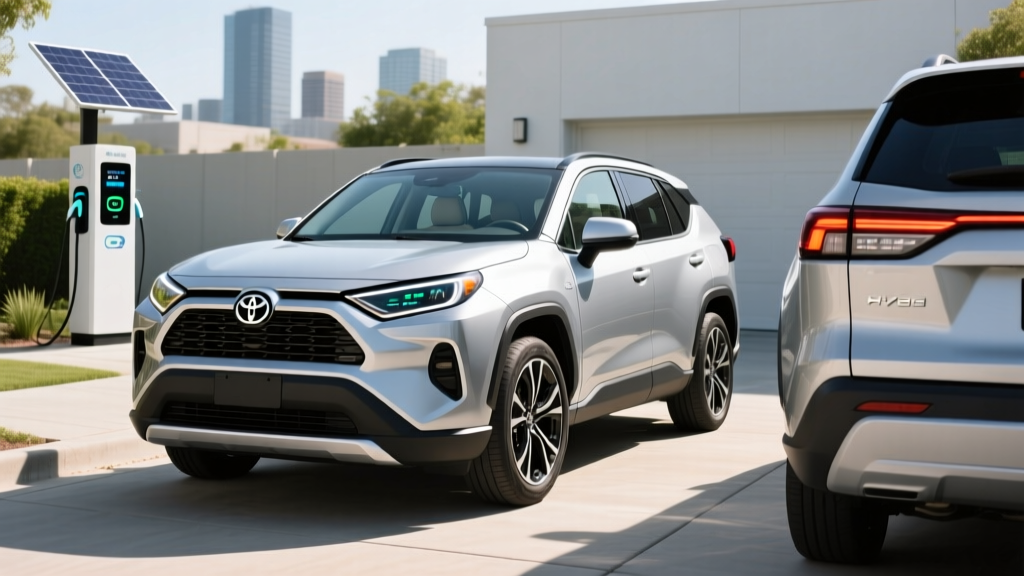
If you've been searching for whether the RAV4 Hybrid is available at your local Toyota dealer, you're not alone. The RAV4 Hybrid has consistently been one of the most sought-after vehicles in America, and high demand has made inventory unpredictable. This guide breaks down exactly what's on offer for the 2026 model year, the real-world MPG you can expect, and whether the conventional hybrid (HEV) or the plug-in RAV4 Prime (PHEV) is the right fit for your driveway.
RAV4 Hybrid Availability: What You Need to Know Right Now
As of early 2026, Toyota has ramped up production of the RAV4 Hybrid at its Georgetown, Kentucky, and Ontario, Canada plants. While the acute shortages of 2023–2024 have largely eased, specific trims — particularly the XSE and Woodland Edition — still carry wait times of 2–6 weeks at many dealerships. The LE and XLE trims tend to have the widest availability.
The plug-in variant, the RAV4 Prime, remains allocated in much smaller numbers. Many dealers receive only a handful of Prime units per month, so if you're targeting the PHEV, expect to either place a factory order or join a dealer waitlist. Checking Toyota's national inventory locator and setting up alerts on third-party sites like Autotrader or Cars.com is the most practical approach.
HEV vs. PHEV: Understanding the Two RAV4 Hybrid Flavors
Toyota sells two distinct hybrid RAV4s. The distinction matters enormously for your budget, daily commute, and charging setup.
| Attribute | RAV4 Hybrid (HEV) | RAV4 Prime (PHEV) |
|---|---|---|
| Powertrain | 2.5L 4-cyl + 3 electric motors | 2.5L 4-cyl + 2 high-output electric motors |
| Combined Horsepower | 219 hp | 302 hp |
| Battery | 1.6 kWh NiMH (sealed) | 18.1 kWh lithium-ion |
| Needs Plug-In Charging? | No — charges via regen & engine | Yes — plug in for EV range |
| EPA Combined MPG / MPGe | 39 MPG | 94 MPGe (EV mode) / 38 MPG (hybrid) |
| Electric-Only Range | N/A (EV mode under ~1 mi at low speed) | 42 miles EPA |
| Total Combined Range | ~580 miles | ~600 miles (EV + gas) |
| Drivetrain | AWD (electronic rear motor) | AWD (electronic rear motor) |
| 0–60 mph | 7.4 seconds | 5.7 seconds |
| DC Fast Charge? | N/A | No — Level 2 AC only |
| Level 2 Charge Time | N/A | ~2.5 hrs (240V, 32A) |
The conventional RAV4 Hybrid is a self-charging system: the gasoline engine and regenerative braking replenish the small battery. You never plug it in. The RAV4 Prime has a much larger battery you charge from a wall outlet or public Level 2 station, giving you a 42-mile electric-only commute before the gasoline engine ever starts.
Fuel Economy: EPA Ratings vs. Real-World MPG
Hybrids often outperform their EPA stickers in city driving, where regenerative braking and low-speed electric propulsion shine. The RAV4 Hybrid is a textbook example.
| Model | City | Highway | Combined |
|---|---|---|---|
| RAV4 Hybrid (HEV) — EPA | 41 MPG | 38 MPG | 39 MPG |
| RAV4 Hybrid (HEV) — Real-World Avg | 42–45 MPG | 34–37 MPG | 38–41 MPG |
| RAV4 Prime (PHEV) — Hybrid Mode EPA | 40 MPG | 36 MPG | 38 MPG |
Why the split? In stop-and-go city traffic, the RAV4 Hybrid leans heavily on its electric motors, frequently shutting off the gas engine. On sustained highway runs above 70 mph, aerodynamic drag forces the 2.5-liter engine to do most of the work, and real-world highway MPG drops to the mid-30s. If your commute is mostly urban, expect to beat the EPA combined figure. If you're a highway-dominant driver, plan for the lower end.
For the RAV4 Prime in EV mode, the EPA rates it at 94 MPGe with 42 miles of electric range. In cold weather (below 30°F), expect that EV range to contract by 15–25%, landing around 32–36 miles — still enough for most commutes.
Powertrain, Performance, and Driving Impressions
The RAV4 Hybrid pairs a 2.5-liter Atkinson-cycle four-cylinder engine with three electric motors (one integrated into the transaxle, one for the rear axle, and one starter-generator). Total system output is 219 horsepower, delivered through an electronically controlled CVT. The 0–60 mph time of 7.4 seconds is adequate for merging and passing, and the transition between electric and gas power is seamless — most drivers won't notice the engine firing up.
The RAV4 Prime is a different animal. With 302 combined horsepower and a larger, more powerful electric motor, it hits 60 mph in 5.7 seconds — quicker than many turbocharged gas crossovers. In EV mode, acceleration is instant and silent, making it feel more like a full EV around town.
Both models come standard with electronic AWD (the rear wheels are driven by a dedicated electric motor, not a mechanical driveshaft). This system engages automatically in slippery conditions, but it's not designed for serious off-roading. The Woodland Edition trim on the HEV adds a slightly more aggressive AWD tune and all-terrain tires.
Pricing, Trims, and Tax Credit Eligibility
Here's what the 2026 lineup looks like at the base MSRP level (destination charges add approximately $1,395):
| Trim | Powertrain | Starting MSRP | Key Features |
|---|---|---|---|
| LE | HEV | $33,425 | TSS 3.0, 8" touchscreen, wireless CarPlay/Android Auto |
| XLE | HEV | $35,055 | Dual-zone climate, blind-spot monitor, power liftgate |
| XLE Premium | HEV | $37,605 | SofTex seats, moonroof, 10-way power driver seat |
| SE | HEV | $37,555 | Sport-tuned suspension, 19" wheels |
| XSE | HEV | $39,355 | Two-tone paint, heated front seats, 12.3" display |
| Woodland Edition | HEV | $38,975 | All-terrain tires, TRD-tuned suspension, roof rails |
| Limited | HEV | $42,325 | Panoramic roof, premium audio, digital rearview mirror |
| SE | Prime (PHEV) | $45,675 | 302 hp, 42-mi EV range, sport appearance |
| XSE | Prime (PHEV) | $48,875 | 19" wheels, premium interior, head-up display |
Does the RAV4 Hybrid Qualify for a Federal Tax Credit?
The conventional RAV4 Hybrid (HEV) does not qualify for the federal §30D tax credit. Under current IRS rules, only plug-in electric vehicles with a battery capacity of at least 7 kWh are eligible. The HEV's 1.6 kWh battery falls far short of this threshold.
The RAV4 Prime (PHEV) has historically qualified for a partial or full credit, but eligibility for the 2026 model year depends on battery component and critical mineral sourcing requirements that have tightened annually. As of 2026, the Prime may qualify for up to $3,750 (the critical minerals portion) or potentially the full $7,500 if Toyota's supply chain has met both thresholds. Key §30D requirements:
- MSRP must not exceed $80,000 for SUVs (both Prime trims qualify)
- Buyer AGI must not exceed $150,000 (single) / $300,000 (joint)
- Battery components must meet escalating North American manufacturing thresholds
- Critical minerals must meet escalating US/FTA-sourced percentages
- Credit can be transferred to the dealer at point of sale for an upfront price reduction
Always confirm eligibility with your tax professional and check the fueleconomy.gov tax credit lookup tool before purchasing, as sourcing certifications can change mid-year.
Battery Longevity, Warranty, and Replacement Cost
RAV4 Hybrid Battery Warranty
HEV: 10 years / 150,000 miles (whichever comes first) on the hybrid battery and all hybrid system components, per Toyota's standard hybrid warranty.
Prime (PHEV): 10 years / 150,000 miles on the lithium-ion traction battery, with a guaranteed minimum capacity retention of 70% during the warranty period.
Toyota's hybrid battery track record is among the best in the industry. The HEV's nickel-metal hydride (NiMH) battery is a mature, well-understood chemistry with exceptional cycle life. Data from fleet and taxi use of Toyota's Hybrid Synergy Drive platform shows many hybrid batteries lasting 200,000+ miles with minimal capacity loss, since the system keeps the battery in a narrow state-of-charge window (roughly 40–80%) to reduce stress.
The Prime's larger lithium-ion battery faces more cycles if you charge and deplete it daily, but Toyota's thermal management and charge-buffer strategy protect it. Real-world reports from 2020–2024 Prime owners show negligible range degradation within the first 60,000 miles.
What Does a Replacement Cost?
If the hybrid battery fails out of warranty:
- HEV NiMH battery replacement: Approximately $2,500–$3,500 (parts + labor at a dealer). Independent hybrid specialists can often perform the job for $1,800–$2,500 using refurbished or aftermarket modules.
- Prime lithium-ion battery replacement: Approximately $6,000–$8,500 at a dealer. This cost is higher due to the larger capacity and more complex pack architecture.
Given the 10-year/150,000-mile warranty, most original owners will never face this expense. If you're buying used, check the remaining warranty coverage — it's transferable to subsequent owners.
RAV4 Hybrid vs. RAV4 Prime vs. Full EV: Which Fits You?
Choose the RAV4 Hybrid (HEV) If:
- You don't have access to home or workplace charging
- You want maximum fuel savings with zero behavior change
- Your budget is under $40,000
- You drive a mix of city and highway and want 39+ MPG combined
- You plan to keep the vehicle 10+ years and value proven reliability
Choose the RAV4 Prime (PHEV) If:
- You can install a Level 2 charger at home (240V)
- Your daily commute is under 42 miles round-trip (you'll rarely use gas)
- You want 302 hp and near-EV acceleration without range anxiety
- You want to reduce (but not eliminate) gasoline dependence
- You may qualify for the §30D tax credit, narrowing the price gap
Choose a Full EV (e.g., Tesla Model Y, Hyundai Ioniq 5) If:
- You have reliable home Level 2 charging
- Your typical trips fall within 250–320 miles, or you're comfortable with DC fast charging on road trips
- You want zero tailpipe emissions and minimal maintenance (no oil changes, no gas engine)
- You qualify for the full $7,500 federal credit, making the effective price competitive
Real-World Ownership: What Buyers Actually Report
Beyond the spec sheet, here's what matters in daily life with a RAV4 Hybrid:
Insurance costs: The HEV typically costs $1,400–$1,800/year to insure (national average for a clean-record driver). The Prime runs 5–10% higher due to its greater MSRP and repair complexity.
Maintenance: Toyota recommends oil changes every 10,000 miles on the 2.5L engine. The hybrid system requires no scheduled maintenance beyond the standard cabin air filter, brake fluid, and coolant checks. Brake pad life is extended significantly (often 80,000+ miles) because regenerative braking handles most deceleration.
Cargo space: The HEV offers 37.6 cu ft behind the rear seats and 69.8 cu ft with them folded — nearly identical to the gas-only RAV4. The Prime sacrifices about 2 cu ft due to the larger battery pack beneath the floor, landing at 33.5 / 63.2 cu ft.
Towing: The HEV is rated for 1,750 lbs — enough for a small utility trailer or a pair of dirt bikes. The Prime shares this rating. Neither is suitable for boat or camper towing.
Frequently Asked Questions
How many MPG does the RAV4 Hybrid get?
The EPA rates the 2026 RAV4 Hybrid at 41 city / 38 highway / 39 combined MPG. In real-world city-heavy driving, many owners report 42–45 MPG. Highway-dominant driving at 75+ mph typically yields 34–37 MPG.
How far can the RAV4 Prime go on electric only?
The EPA rates the RAV4 Prime at 42 miles of electric-only range. In cold weather (below 30°F), expect 32–36 miles. Once the battery depletes, the Prime operates as a conventional hybrid at 38 MPG combined.
Do I need to plug in the RAV4 Hybrid?
No. The conventional RAV4 Hybrid (HEV) charges its own small battery through regenerative braking and the gasoline engine. You never plug it in. Only the RAV4 Prime (PHEV) requires plug-in charging to access its 42-mile EV range.
Is the RAV4 Hybrid reliable?
Toyota's Hybrid Synergy Drive has been in production since 1997 (Prius) and is among the most proven hybrid systems globally. The hybrid battery is covered for 10 years / 150,000 miles. Out-of-warranty replacement runs $2,500–$3,500 for the HEV, though many batteries last 200,000+ miles.
Does the RAV4 Hybrid qualify for any tax credit?
The conventional HEV does not qualify for the federal §30D clean vehicle credit. The RAV4 Prime (PHEV) may qualify for up to $7,500 depending on 2026 battery sourcing rules, buyer income limits ($150K single / $300K joint), and MSRP caps ($80K for SUVs). Some states offer additional rebates for PHEVs — check your state energy office.
How long does it take to charge the RAV4 Prime?
On a 240V Level 2 charger at 32 amps, the Prime charges from empty to full in approximately 2.5 hours. On a standard 120V household outlet (Level 1), a full charge takes about 12 hours. The Prime does not support DC fast charging — this is a deliberate design choice to reduce cost and weight.
Is the RAV4 Hybrid available at dealers now?
As of 2026, the RAV4 Hybrid (HEV) is broadly available at most Toyota dealers, though high-demand trims like the XSE and Woodland Edition may require a 2–6 week wait. The RAV4 Prime (PHEV) has tighter allocation — expect longer waits or a factory order. Use Toyota's online inventory search and set alerts on listing sites to track availability in your region.
Whether the RAV4 Hybrid is available in your preferred trim and configuration depends on your local market, but the overall supply picture has improved significantly. If you prioritize simplicity and low running costs without changing your fueling habits, the HEV is the pragmatic choice. If you can charge at home and want EV-like daily commuting with a gas-engine safety net, the Prime is one of the best PHEVs on the market — if you can find one.