Range Rover Hybrid Overview: Luxury Meets Electrification
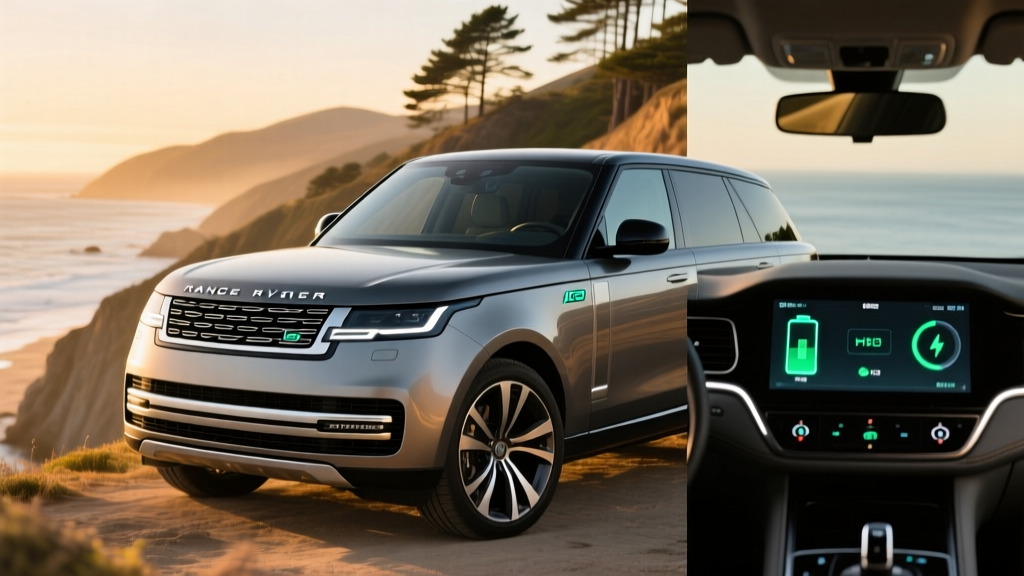
The 2026 Range Rover plug-in hybrid (PHEV) represents Land Rover's commitment to electrifying its flagship SUV without sacrificing the off-road capability and luxury that define the brand. Unlike conventional hybrids that rely solely on regenerative braking to charge a small battery, the Range Rover PHEV plugs in like an EV and offers substantial electric-only driving range before the gasoline engine engages.
For buyers searching for a "Range Rover hybrid," it's critical to understand that Land Rover currently offers only a plug-in hybrid variant in the U.S. market — not a conventional hybrid (HEV). This distinction matters for your daily driving, charging needs, and potential tax incentives.
HEV vs PHEV: Understanding Range Rover's Hybrid Approach
Conventional Hybrid (HEV)
- No plug-in charging required
- Small battery (typically 1-2 kWh)
- Electric-only range: 0-2 miles at low speeds
- Battery charges via regenerative braking and engine
- Example: Toyota RAV4 Hybrid
Plug-in Hybrid (PHEV) — Range Rover's Approach
- Plugs into Level 1 or Level 2 charger
- Large battery: 31.8 kWh usable (2026 model)
- Electric-only range: 51 miles EPA
- Can DC fast charge (rare for PHEVs)
- Functions as EV for daily driving, hybrid for long trips
The 2026 Range Rover PHEV uses a 31.8 kWh lithium-ion battery paired with a 3.0-liter inline-six gasoline engine. This combination delivers 434 horsepower and allows the vehicle to operate as a pure EV for most daily commutes, then seamlessly transition to hybrid mode for longer journeys.
Fuel Economy: EPA MPG and Real-World Expectations
| Mode | City | Highway | Combined |
|---|---|---|---|
| Hybrid Mode (after battery depleted) | 20 MPG | 22 MPG | 21 MPG |
| Electric-Only Mode | 51 MPGe | 53 MPGe | 52 MPGe |
| Combined Range (Electric + Gas) | 434 miles total | ||
Real-World MPG Reality Check: The 21 MPG combined figure applies once the battery is depleted and you're operating in hybrid mode. However, if your daily driving stays within the 51-mile electric range and you charge nightly, you may use minimal gasoline for weeks at a time. In city driving with a charged battery, many owners report using no fuel for commutes under 40 miles. Highway driving at 75+ mph will reduce electric range to approximately 38-42 miles due to aerodynamic drag and higher energy consumption.
According to fueleconomy.gov, the Range Rover PHEV achieves 52 MPGe combined when operating on electricity, making it significantly more efficient than the gasoline-only Range Rover (18-20 MPG combined depending on engine choice).
Electric-Only Range and Charging Specifications
| Specification | Value |
|---|---|
| Battery Capacity (usable) | 31.8 kWh |
| EPA Electric Range | 51 miles |
| Real-World Electric Range (highway/cold) | 38-45 miles |
| Level 1 Charging (120V) | ~18 hours (0-100%) |
| Level 2 Charging (240V, 7.2 kW) | ~5 hours (0-100%) |
| DC Fast Charging | Not available |
| Charge Port Location | Rear quarter panel (driver side) |
Charging Reality: Unlike some competitors (BMW X5 xDrive50e, Chrysler Pacifica PHEV), the 2026 Range Rover PHEV does not support DC fast charging. This is typical for luxury PHEVs, which prioritize battery longevity and cost over rapid charging capability. For most owners, overnight Level 2 charging at home provides a full battery each morning. If you lack home charging access, the 5-hour Level 2 charge time at public stations may be impractical for mid-day top-ups.
The 31.8 kWh battery uses NMC (nickel-manganese-cobalt) chemistry, which offers higher energy density than LFP but requires more careful thermal management. Land Rover's battery management system limits usable capacity to protect long-term health, meaning actual battery capacity is slightly higher than the 31.8 kWh usable figure.
Powertrain and Performance
The 2026 Range Rover PHEV combines a 3.0-liter turbocharged inline-six engine with an electric motor integrated into the 8-speed automatic transmission. Total system output reaches 434 horsepower and 461 lb-ft of torque, delivering a 0-60 mph time of 6.4 seconds according to Land Rover specifications.
The electric motor alone produces 141 horsepower, sufficient for highway merging and city driving without engaging the gasoline engine. When you demand full acceleration, both power sources work together seamlessly. The transition between electric and hybrid modes is nearly imperceptible unless you're monitoring the powertrain display.
All-wheel drive is standard, and the PHEV retains Land Rover's legendary off-road capability with adjustable air suspension, terrain response modes, and wading depth of 35.4 inches. The battery placement under the floor preserves cargo space and maintains a low center of gravity.
Pricing and Tax Credit Eligibility
The 2026 Range Rover PHEV starts at $109,975 (SE trim) and reaches $125,975 for the Autobiography variant. These prices include destination charges but exclude potential tax incentives.
Federal Tax Credit Status: The Range Rover PHEV does NOT qualify for the federal §30D clean vehicle credit. According to IRS guidelines, eligible vehicles must have an MSRP under $80,000 for SUVs, and the battery must meet critical mineral and component sourcing requirements. The Range Rover PHEV exceeds the price cap and is manufactured in the UK, disqualifying it from federal incentives.
State and Local Incentives: Some states offer separate PHEV incentives that may apply. California's Clean Vehicle Rebate Project (CVRP) and New York's Drive Clean Rebate have historically included PHEVs, though program availability and amounts vary by year and funding. Check your state's environmental or energy department website for current offerings.
Total Cost Consideration: Without federal incentives, the Range Rover PHEV commands a $15,000-$20,000 premium over the gasoline-only Range Rover SE. However, if you drive primarily on electricity and charge at home (average U.S. electricity cost: $0.16/kWh), you'll save approximately $2,500-$3,500 annually on fuel compared to the gasoline model, depending on local rates and driving patterns.
Battery Warranty and Long-Term Reliability
Range Rover PHEV Battery Warranty
- Coverage Period: 8 years or 100,000 miles (whichever comes first)
- Capacity Retention Guarantee: Battery will maintain at least 70% of original capacity
- What's Covered: Defects, excessive degradation below 70% threshold
- Replacement Cost (out of warranty): Estimated $12,000-$18,000 based on similar luxury PHEV batteries
Land Rover's 8-year/100,000-mile battery warranty exceeds the federal minimum requirement (8 years/100,000 miles for emissions-related components in PZEV states, 8 years/80,000 miles federally). The 70% capacity retention threshold is industry-standard, though some competitors guarantee 70-80%.
Real-World Degradation: Based on data from similar JLR PHEV systems and owner reports, expect 8-12% capacity loss over the first 5 years with normal use. Factors accelerating degradation include frequent DC fast charging (not applicable here), regular charging to 100% in hot climates, and deep discharges. The Range Rover's thermal management system and conservative usable capacity buffer help mitigate these effects.
Reliability Concerns: Land Rover's overall reliability ratings remain below average in J.D. Power and Consumer Reports surveys. However, the PHEV powertrain has proven more reliable than earlier mild-hybrid systems. Common issues involve software glitches in the infotainment system and air suspension components rather than the hybrid system itself. The inline-six engine and electric motor combination is mechanically simpler than the previous supercharged V8, potentially improving long-term durability.
Who Should Choose the Range Rover Hybrid?
Choose the Range Rover PHEV If:
- You want luxury SUV comfort with daily electric driving
- Your commute is under 45 miles round-trip with home charging
- You need off-road capability and towing (7,716 lb capacity)
- You take occasional long road trips where EV charging infrastructure is sparse
- You value brand prestige and interior craftsmanship
- You want to reduce fuel costs without range anxiety
Look Elsewhere If:
- You lack home or workplace Level 2 charging access
- You prioritize fuel efficiency over luxury (consider Volvo XC90 Recharge at similar price)
- You want federal tax credit eligibility (BMW X5 xDrive50e qualifies in some configurations)
- You're concerned about Land Rover's historical reliability ratings
- You primarily drive in urban areas where a full EV (Tesla Model X, BMW iX) would suffice
- Budget is a primary concern (gasoline Range Rover saves $15,000+ upfront)
Range Rover Hybrid vs Full EV vs Gas: Decision Framework
Choose the PHEV over a full EV if: You regularly drive beyond 250 miles in a day, live in an area with limited DC fast charging infrastructure, or need the flexibility to tow long distances without careful route planning around chargers. The PHEV eliminates range anxiety while still providing daily electric driving.
Choose a full EV (Tesla Model X, BMW iX, Rivian R1S) if: You have reliable home charging, your daily driving stays under 200 miles, you want minimal maintenance (no oil changes, fewer moving parts), and you prioritize acceleration and instant torque. Full EVs also qualify for the $7,500 federal tax credit if they meet sourcing requirements.
Choose the gasoline Range Rover if: You lack charging access, drive primarily on highways where PHEV efficiency advantages diminish, or want to minimize upfront cost. The gasoline model's 18-20 MPG combined is competitive with the PHEV's 21 MPG in hybrid mode, making the $15,000+ premium difficult to justify without daily electric driving.
Frequently Asked Questions
How many MPG does the Range Rover hybrid get?
The 2026 Range Rover PHEV achieves 21 MPG combined (20 city/22 highway) in hybrid mode after the battery is depleted. When operating on electricity, it achieves 52 MPGe combined. Real-world MPG in hybrid mode may range from 19-23 MPG depending on driving style, terrain, and climate control usage.
How far can the Range Rover PHEV go on electric only?
The EPA-rated electric range is 51 miles. In real-world conditions — highway speeds, cold weather, or aggressive acceleration — expect 38-45 miles. This covers most daily commutes and errands, allowing many owners to use gasoline only for weekend trips or long journeys.
Does the Range Rover hybrid qualify for a tax credit?
No. The 2026 Range Rover PHEV does not qualify for the federal §30D clean vehicle credit due to its MSRP exceeding the $80,000 SUV cap and battery sourcing requirements. Some state incentives may apply, but federal incentives are not available. Check your state's environmental agency website for local programs.
Is the Range Rover PHEV reliable and what does battery replacement cost?
Land Rover's overall reliability ratings are below average, though the PHEV powertrain has proven more dependable than earlier mild-hybrid systems. The battery carries an 8-year/100,000-mile warranty guaranteeing 70% capacity retention. Out-of-warranty battery replacement is estimated at $12,000-$18,000, though most owners will not need this within the vehicle's typical ownership period.
Can I charge the Range Rover PHEV at a DC fast charger?
No. The 2026 Range Rover PHEV supports only Level 1 (120V) and Level 2 (240V) AC charging. DC fast charging is not available, which is typical for luxury PHEVs. A full Level 2 charge takes approximately 5 hours using a 7.2 kW home charger.
What's the difference between the Range Rover PHEV and a conventional hybrid?
A conventional hybrid (HEV) like the Toyota RAV4 Hybrid cannot plug in and offers only 1-2 miles of electric-only range at low speeds. The Range Rover PHEV plugs into a charger, has a 31.8 kWh battery, and provides 51 miles of electric-only driving. The PHEV functions as an EV for daily driving and a hybrid for longer trips, while a conventional hybrid always uses some gasoline.
For more information on PHEV ownership costs and charging setup, consult fueleconomy.gov's alternative fuel vehicle resources and your local utility's EV charging programs.