Hybrid vehicles occupy a practical middle ground between conventional gasoline cars and full battery-electric vehicles (BEVs). They promise better fuel economy, lower emissions, and zero range anxiety — but they also carry trade-offs in complexity, upfront cost, and, for plug-in hybrids, charging requirements. If you're weighing the pros and cons of hybrid vehicles in 2026, the first decision is understanding that "hybrid" actually describes two very different powertrain architectures: the conventional hybrid (HEV) and the plug-in hybrid (PHEV).
This guide breaks down both types with real numbers — EPA MPG, battery kWh, electric-only range, warranty coverage, pricing, and tax-credit eligibility — so you can decide whether a hybrid, a PHEV, or a full EV fits your driving pattern.
HEV vs PHEV: What's the Difference?
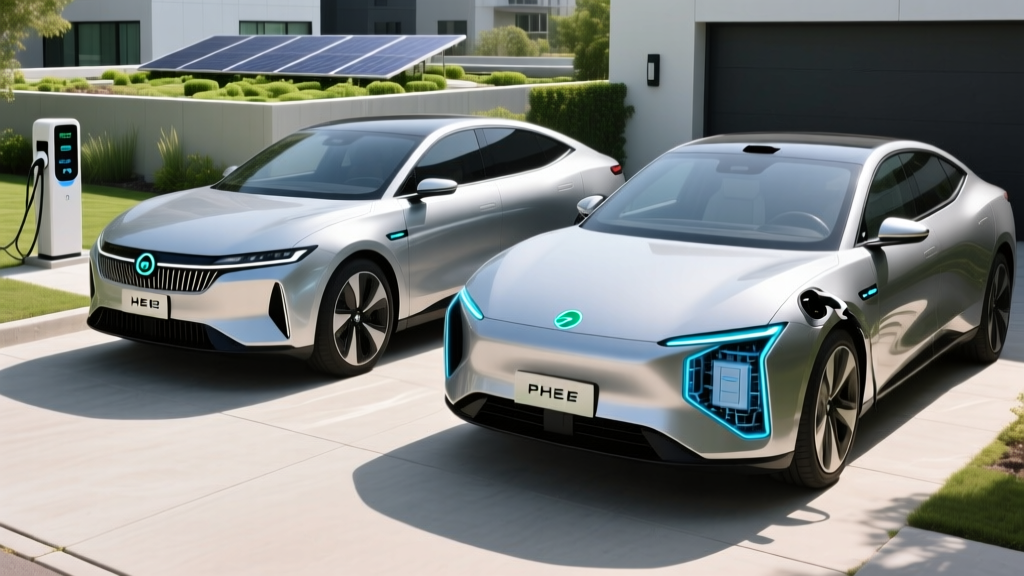
Before evaluating pros and cons, you need to know which hybrid type you're considering. Conventional hybrids (HEVs) and plug-in hybrids (PHEVs) share a gas engine and electric motor, but they operate very differently in daily use.
| Feature | Conventional Hybrid (HEV) | Plug-In Hybrid (PHEV) |
|---|---|---|
| Plugs in to charge? | No — charges via regenerative braking and engine | Yes — has a larger battery you charge externally |
| Battery size | 0.6–1.6 kWh (small, assists engine) | 11–25+ kWh (enables electric-only driving) |
| Electric-only range | None (motor assists at low speeds only) | 25–50+ miles EPA |
| DC fast charging? | No | Mostly no; a few models (e.g., Mitsubishi Outlander PHEV) support CHAdeMO DC |
| Level 2 charging time | N/A | 2–5 hours (120V Level 1: 8–14 hours) |
| Federal tax credit (§30D)? | No | Up to $7,500 if eligible (see rules below) |
| Typical MSRP premium over gas equivalent | $1,000–$2,500 | $4,000–$10,000 |
The key takeaway: an HEV never needs a plug and works exactly like a gas car at the pump. A PHEV gives you a short electric-only commute range and then operates as a hybrid once the battery is depleted. That distinction drives almost every pro and con below.
Fuel Economy: Real EPA MPG and What to Expect
Fuel efficiency is the primary reason buyers choose hybrids. Here's how current popular models stack up according to EPA estimates at fueleconomy.gov.
| Vehicle (2025/2026) | Type | City MPG | Highway MPG | Combined MPG | PHEV Electric Range |
|---|---|---|---|---|---|
| Toyota Prius | HEV | 57 | 56 | 57 | N/A |
| Toyota Prius Prime | PHEV | 52 (hybrid mode) | 48 (hybrid mode) | 52 / 127 MPGe | 44 mi |
| Honda Accord Hybrid | HEV | 51 | 44 | 48 | N/A |
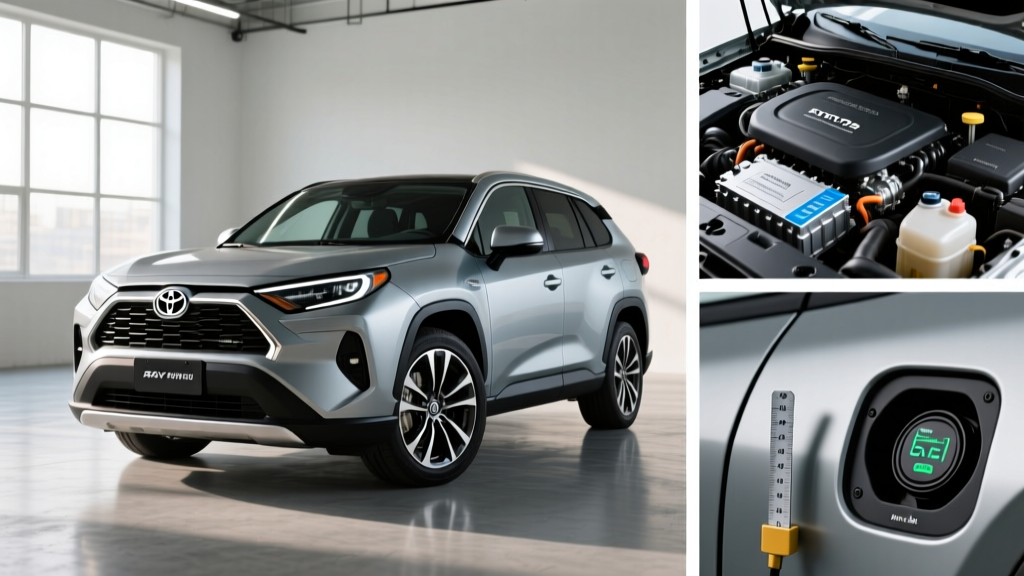
| Toyota RAV4 Hybrid | HEV | 41 | 38 | 39 | N/A |
| Toyota RAV4 Prime | PHEV | 40 (hybrid mode) | 36 (hybrid mode) | 38 / 94 MPGe | 42 mi |
| Hyundai Tucson PHEV | PHEV | 37 (hybrid mode) | 36 (hybrid mode) | 35 / 80 MPGe | 33 mi |
| Ford Escape PHEV | PHEV | 42 (hybrid mode) | 36 (hybrid mode) | 39 / 105 MPGe | 37 mi |
Real-World MPG vs. EPA Stickers
One of the biggest advantages of conventional hybrids is that real-world city driving often exceeds the EPA city estimate. Because hybrids rely heavily on regenerative braking and electric-motor assist in stop-and-go traffic, owners who drive predominantly in the city frequently report 2–5 MPG above the EPA city figure. Highway driving is a different story: at sustained 70+ mph speeds, the electric motor provides minimal benefit, and some hybrids fall 3–6 MPG below their EPA highway number.
For PHEVs, real-world electric-only range is sensitive to temperature and speed. Expect 15–25% less electric range in winter (below 40°F) and at sustained highway speeds above 65 mph. A PHEV rated at 42 miles of electric range may deliver 32–36 miles in cold weather or highway-heavy commutes.
Powertrain Performance: Horsepower and Drivability
Modern hybrids are no longer slow, underpowered econoboxes. The combined output of the gasoline engine and electric motor(s) in today's models is genuinely competitive with turbocharged gas counterparts.
| Vehicle | Combined HP | Engine | Electric Motor | 0–60 mph | Drivetrain |
|---|---|---|---|---|---|
| Toyota Prius | 194 hp | 2.0L 4-cyl | 2x permanent magnet | 7.2 sec | FWD (AWD avail.) |
| Toyota Prius Prime | 220 hp | 2.0L 4-cyl | 2x permanent magnet | 6.6 sec | FWD |
| Toyota RAV4 Prime | 302 hp | 2.5L 4-cyl | Front + rear motors | 5.7 sec | AWD (eAWD) |
| Honda Accord Hybrid | 204 hp | 2.0L 4-cyl | 2-motor system | 7.0 sec | FWD |
| Hyundai Tucson PHEV | 261 hp | 1.6L turbo 4-cyl | Single motor | 7.0 sec | AWD |
The RAV4 Prime's 302 hp and 5.7-second 0–60 time make it one of the quickest vehicles in Toyota's lineup — a far cry from the first-generation Prius. Even the standard Prius now hits 60 mph in the low 7-second range, which is perfectly adequate for merging and passing.
Pricing, Tax Credits, and Total Cost
Hybrids carry a price premium over their gas-only counterparts, but the payback period depends on your mileage, local fuel prices, and whether you qualify for incentives.
Conventional Hybrids (HEV)
HEVs do not qualify for the federal §30D Clean Vehicle Credit. The premium over a gas model typically runs $1,000–$2,500. At 50 MPG combined vs. 30 MPG for a comparable gas car, and with gas at $3.40/gallon, an HEV driver covering 15,000 miles/year saves roughly $750 annually in fuel — meaning the premium pays for itself in 2–3 years.
Plug-In Hybrids (PHEV) and the §30D Tax Credit
PHEVs may qualify for up to $7,500 under the IRS §30D Clean Vehicle Credit, but eligibility is strict and model-dependent in 2026. Requirements include:
- MSRP caps: Vans, SUVs, and pickups must be under $80,000; sedans under $55,000
- Buyer income limits: Modified AGI must not exceed $150,000 (single), $225,000 (head of household), or $300,000 (joint)
- Battery sourcing: Increasing percentages of critical minerals and battery components must be sourced from the U.S. or FTA-partner countries — this disqualifies some PHEVs entirely
- Point-of-sale transfer: Since 2024, buyers can transfer the credit to the dealer at purchase, reducing the out-of-pocket price immediately
- Battery capacity: Must be at least 7 kWh (all current PHEVs meet this)
As of early 2026, PHEVs like the Chrysler Pacifica Hybrid and certain configurations of the Jeep Wrangler 4xe have qualified, while others have lost eligibility due to battery-sourcing rule tightening. Always verify a specific VIN's eligibility at the fueleconomy.gov tax credit lookup tool before purchasing. Consult a tax professional for your specific situation.
Battery Longevity, Warranty, and Replacement Cost
Battery lifespan is consistently the top concern for hybrid buyers. The good news: hybrid battery packs have proven remarkably durable, and federal law mandates substantial warranty coverage.
Hybrid Battery Warranty Requirements
Federal emissions warranty rules require that hybrid battery packs on PZEV-certified vehicles be covered for 10 years or 150,000 miles in CARB-adopting states (California, New York, Massachusetts, and others). In non-CARB states, the minimum is typically 8 years or 100,000 miles. Most manufacturers match or exceed these minimums nationwide.
| Manufacturer | Hybrid Battery Warranty | Estimated Replacement Cost (Out of Warranty) |
|---|---|---|
| Toyota | 10 yr / 150,000 mi | $2,000–$4,000 (Prius); $3,000–$6,000 (RAV4) |
| Honda | 8 yr / 100,000 mi (10/150k in CARB states) | $2,000–$4,500 |
| Hyundai / Kia | 10 yr / 100,000 mi | $3,000–$7,000 (PHEV models) |
| Ford | 8 yr / 100,000 mi | $4,000–$8,000 (Escape PHEV) |
Real-World Hybrid Battery Longevity
HEV batteries are small (typically 0.6–1.6 kWh) and are never deeply discharged — the system maintains a state-of-charge buffer between roughly 40% and 80%. This shallow-cycling strategy is why Toyota Prius taxis routinely surpass 300,000 miles on the original battery pack. PHEV batteries are larger (11–25 kWh) and cycle more deeply, but they still benefit from thermal management systems and conservative charge buffers.
For context, a full EV battery replacement runs $10,000–$20,000+, making hybrid battery replacement comparatively affordable if it's ever needed out of warranty.
Pros and Cons of Hybrid Vehicles: The Full Picture
Pros of Hybrids
- Superior fuel economy — 39–57 MPG combined depending on model, cutting fuel costs 30–55% vs. gas equivalents
- No charging required (HEV) — operates identically to a gas car at the pump; no home charging setup needed
- No range anxiety — total range of 500–650+ miles; PHEVs add 25–50 electric miles on top of a full gas tank
- Lower emissions — especially PHEVs on electric-only commutes
- Strong reliability record — Toyota's hybrid system is among the most proven powertrains on the road
- Regenerative braking extends brake life — many hybrid owners report 80,000–100,000+ miles on original brake pads
- PHEV tax credit potential — up to $7,500 for qualifying models under §30D
- Competitive performance — modern hybrids deliver 194–302 hp with quick acceleration
Cons of Hybrids
- Higher upfront cost — $1,000–$10,000 premium over gas-only equivalents
- Two systems to maintain — engine (oil, filters, spark plugs) plus electric motor/inverter/battery system
- HEVs don't qualify for federal tax credits — only PHEVs are eligible under §30D
- PHEV charging logistics — to capture the electric-range benefit, you need access to Level 2 or at least 120V charging at home or work
- Reduced cargo space (some models) — battery placement can cut into trunk or under-floor storage
- Highway MPG can disappoint — hybrid advantage diminishes at sustained high speeds
- Added weight — hybrid components add 150–400 lbs, affecting tire wear and handling
- PHEV complexity — owning both an engine and a meaningful battery means more potential failure points long-term
- Depreciation uncertainty — as BEV prices drop and charging infrastructure expands, PHEV resale values may soften
Hybrid vs PHEV vs Full EV: Which Fits You?
The right choice depends on your daily mileage, charging access, budget, and risk tolerance. Here's a practical decision framework:
Choose a Conventional Hybrid (HEV) If:
- You drive 10,000–20,000+ miles/year and want maximum fuel savings with zero lifestyle change
- You don't have access to home or workplace charging
- You frequently take long road trips through areas with sparse EV charging infrastructure
- You want the lowest-complexity path to better fuel economy
- Your budget is tight and you want a $1,000–$2,500 premium (not $5,000+)
Choose a Plug-In Hybrid (PHEV) If:
- Your daily commute is under 30–45 miles round-trip and you can charge at home overnight
- You want electric-only daily driving but still need gas-engine range for weekend trips
- You qualify for the §30D tax credit, which can offset the higher purchase price significantly
- You're not ready to commit to a full EV but want to reduce gasoline consumption by 60–80%
- You live in a cold climate where EV range loss is a concern — the gas engine is your backup
Choose a Full EV (BEV) If:
- You have reliable Level 2 home charging and your daily driving is under 200 miles
- You want the lowest per-mile fuel cost (electricity at $0.04–$0.14/mile vs. gas at $0.10–$0.18/mile)
- You want minimal maintenance — no oil changes, no spark plugs, no exhaust system
- You qualify for the full $7,500 federal credit and any state incentives
- You're comfortable planning road-trip charging stops using networks like Tesla Supercharger or Electrify America
Reliability Ratings and Long-Term Ownership
Hybrid powertrains from Toyota, Honda, and Hyundai/Kia have accumulated two decades of real-world reliability data. According to Consumer Reports reliability surveys, the Toyota Prius and RAV4 Hybrid consistently rank among the most reliable vehicles in their respective classes. The hybrid system itself — the planetary gearset in Toyota's e-CVT, the motor-generator units, the power electronics — has proven more durable than many conventional automatic transmissions.
PHEVs carry slightly more risk because they combine a full internal-combustion powertrain with a larger, more complex battery system. Models like the RAV4 Prime and Pacifica Hybrid have generally performed well, but the sample sizes are smaller and the systems newer.
From a maintenance perspective, HEVs still require oil changes (every 10,000 miles for most Toyota hybrids), coolant flushes, and air-filter replacements. The cost savings come from fuel and brake wear, not from eliminating engine maintenance entirely.
Frequently Asked Questions
How many MPG does a hybrid vehicle get?
It varies by model. The 2025 Toyota Prius achieves 57 MPG combined (57 city / 56 highway) per the EPA. The RAV4 Hybrid gets 39 combined (41 city / 38 highway). The Honda Accord Hybrid delivers 48 combined (51 city / 44 highway). In real-world city driving, many owners report exceeding EPA city estimates by 2–5 MPG due to regenerative braking. Highway driving at 70+ mph can reduce fuel economy by 3–6 MPG below the EPA highway figure.
How far can a PHEV go on electric only?
Current PHEVs offer 25–50 miles of EPA-rated electric-only range. The Toyota Prius Prime delivers 44 miles, the RAV4 Prime provides 42 miles, the Ford Escape PHEV offers 37 miles, and the Hyundai Tucson PHEV gives 33 miles. In cold weather (below 40°F) or at sustained highway speeds, expect 15–25% less electric range. Once the battery is depleted, the vehicle operates as a conventional hybrid using gasoline.
Do conventional hybrids need to be plugged in?
No. Conventional hybrids (HEVs) charge their small battery pack entirely through regenerative braking and the gasoline engine. You never plug them in. You simply fill up at a gas station as you would with any other car. Only plug-in hybrids (PHEVs) require external charging to take advantage of their electric-only range.
Is a hybrid reliable, and what does battery replacement cost?
Yes — hybrid systems from Toyota, Honda, and Hyundai have proven highly reliable over 20+ years of production. Hybrid batteries are warrantied for 8–10 years / 100,000–150,000 miles depending on the manufacturer and state. Out-of-warranty replacement costs range from $2,000 to $8,000 depending on the model — significantly less than a full EV battery replacement. Many hybrid batteries last 150,000–200,000+ miles with no issues due to shallow-cycling charge management.
Does a hybrid qualify for a federal tax credit?
Conventional hybrids (HEVs) do not qualify for the federal §30D Clean Vehicle Credit. Plug-in hybrids (PHEVs) may qualify for up to $7,500, but eligibility depends on the vehicle's MSRP (under $55,000 for sedans, $80,000 for SUVs/vans/pickups), the buyer's income (AGI caps of $150K/$225K/$300K by filing status), and battery-component and critical-mineral sourcing requirements that have tightened annually. Check the specific VIN at fueleconomy.gov and consult a tax professional before relying on the credit.
Is a PHEV worth it if I can't charge at home?
Generally, no. If you can't plug in regularly, a PHEV operates as a heavier, more expensive conventional hybrid once the battery depletes. You'll pay a $4,000–$10,000 premium but only capture a fraction of the electric-range benefit. In that scenario, a conventional hybrid (HEV) is almost always the smarter financial choice — same fuel economy in hybrid mode, lower purchase price, and no unused charging capability.
How do hybrids perform in cold weather?
HEVs lose less efficiency in cold weather than full EVs because the gasoline engine generates waste heat that warms the cabin — no battery energy is diverted to heating. Expect a 5–10% fuel-economy reduction in winter for HEVs. PHEVs see a larger hit: electric-only range drops 15–25% in freezing temperatures, and the engine may start automatically to provide cabin heat, further reducing electric operation.
The pros and cons of hybrid vehicles ultimately come down to your specific driving pattern, charging access, and budget. For drivers who want maximum efficiency with zero lifestyle change, a conventional hybrid like the Prius or RAV4 Hybrid is the lowest-friction upgrade available. For those with short commutes and home charging, a PHEV offers the best of both worlds — electric daily driving and gasoline road-trip freedom — especially when the §30D tax credit applies. And for buyers ready to go all-in on electric with reliable home charging, a full BEV delivers the lowest operating cost. The numbers above should help you decide which path makes financial and practical sense for your next vehicle.