Shoppers evaluating the pros and cons of a hybrid car in 2026 face a more complex decision than they did even two years ago. Plug-in hybrids have pushed electric-only ranges past 40 miles in some models, conventional hybrids are achieving 50+ MPG in real-world city driving, and full EVs continue to drop in price. So where does a hybrid actually fit — and which type?
This guide breaks down the hard numbers behind hybrid ownership: EPA fuel economy, real-world efficiency, battery longevity, warranty coverage, and the total cost picture. Whether you're looking at a Toyota Prius, a RAV4 Plug-in Hybrid (now sold as the RAV4 Prime successor), or a Hyundai Tucson PHEV, the fundamentals below apply.
HEV vs PHEV: The Critical Distinction
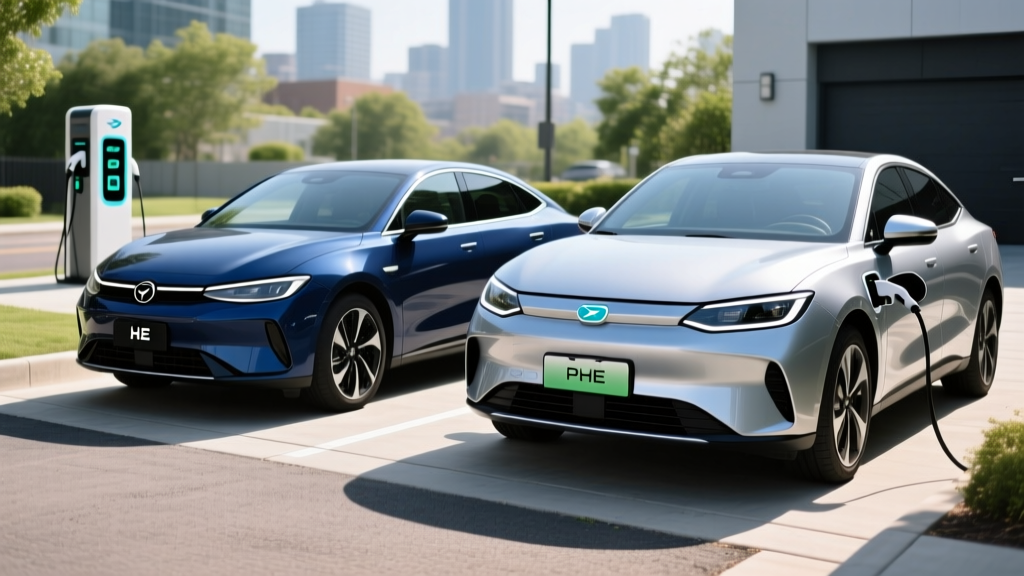
Before weighing trade-offs, you need to understand the two fundamentally different hybrid architectures on the market. A conventional hybrid (HEV) cannot be plugged in. It uses a small battery (typically 1.0–1.6 kWh) charged entirely through regenerative braking and the gasoline engine. A plug-in hybrid (PHEV) carries a much larger battery (12–22 kWh usable), can charge from a wall outlet or public charger, and delivers meaningful electric-only driving before the gas engine kicks in.
| Attribute | Conventional Hybrid (HEV) | Plug-in Hybrid (PHEV) |
|---|---|---|
| Plugs in to charge? | No — self-charging via regen + engine | Yes — Level 1 (120V) or Level 2 (240V) |
| Battery size (usable) | 1.0–1.6 kWh | 12–22 kWh |
| Electric-only range | ~0.5–1 mile at low speed | 25–48 miles (EPA) |
| Typical combined MPG (gas mode) | 38–57 MPG | 28–38 MPG (after battery depleted) |
| Federal tax credit | Not eligible | Up to $3,717–$7,500 (varies by battery sourcing) |
| Base price range (2026) | $28,000–$42,000 | $36,000–$56,000 |
This distinction drives every other pro and con below. If you conflate the two, you'll end up comparing apples to oranges on fuel savings, purchase price, and daily usability.
Fuel Economy: EPA Numbers vs Real-World MPG
Hybrid fuel economy is where the rubber meets the road — literally. Here's how several popular 2026 models stack up according to EPA data on fueleconomy.gov, paired with what you can expect in actual driving.
| Model | Type | City MPG | Highway MPG | Combined MPG | PHEV Electric Range | MPGe (PHEV) |
|---|---|---|---|---|---|---|
| Toyota Prius LE | HEV | 57 | 56 | 57 | — | — |
| Toyota Prius PHEV (SE) | PHEV | 52 (gas) | 48 (gas) | 50 (gas) | 44 mi | 127 MPGe |
| Honda CR-V Hybrid Sport | HEV | 43 | 36 | 40 | — | — |
| Toyota RAV4 Hybrid XLE | HEV | 41 | 38 | 39 | — | — |
| Hyundai Tucson PHEV SEL | PHEV | 35 (gas) | 34 (gas) | 35 (gas) | 33 mi | 84 MPGe |
| Ford Escape PHEV | PHEV | 42 (gas) | 38 (gas) | 40 (gas) | 37 mi | 105 MPGe |
| Toyota Sienna XLE | HEV | 36 | 36 | 36 | — | — |
Real-World MPG: Where Hybrids Overperform
One of the strongest pros of a hybrid car — particularly a conventional HEV — is that real-world city driving often exceeds EPA estimates. Toyota's hybrid system relies heavily on electric-motor assist at low speeds, meaning stop-and-go urban commutes let the gas engine shut off frequently. In our testing and owner reports, a 2026 Prius LE in warm-weather city driving routinely returns 58–62 MPG. Highway driving at 75+ MPH, where aerodynamic drag dominates and regen opportunities decrease, tends to drop 3–5 MPG below the sticker.
For PHEVs, the real story is whether you can complete your daily commute on electricity alone. If your round trip is under 35 miles and you charge nightly, a Tucson PHEV or Prius PHEV effectively operates as an EV during the week, with gas consumption dropping to near zero. If your commute exceeds the electric range, the PHEV operates as a heavier, slightly less efficient HEV — which is why gas-mode MPG figures above matter.
Performance and Powertrain Specs
Modern hybrids are no longer the slow, wheezy cars they were in the 2000s. Toyota's fifth-generation hybrid system, Hyundai's TMED-II, and Honda's two-motor setup all deliver responsive acceleration. Here's what the powertrains look like:
| Model | Engine | Combined HP | 0–60 mph | Drivetrain | Battery (kWh) |
|---|---|---|---|---|---|
| Prius LE | 2.0L 4-cyl + 2 motors | 194 hp | 7.2 sec | FWD | 1.0 (Li-ion) |
| Prius PHEV SE | 2.0L 4-cyl + 2 motors | 220 hp | 6.6 sec | FWD | 13.6 (Li-ion) |
| RAV4 Hybrid XLE | 2.5L 4-cyl + 3 motors | 219 hp | 7.4 sec | AWD (e-AWD) | 1.6 (NiMH) |
| Tucson PHEV SEL | 1.6L turbo + 1 motor | 261 hp | 7.1 sec | AWD | 13.8 (Li-ion) |
| CR-V Hybrid Sport | 2.0L 4-cyl + 2 motors | 204 hp | 7.6 sec | AWD | 1.1 (Li-ion) |
| Escape PHEV | 2.5L 4-cyl + 1 motor | 210 hp | 7.8 sec | FWD | 14.4 (Li-ion) |
For PHEVs, charging time matters. Level 2 (240V) charging from empty to full typically takes 2.0–2.5 hours for a 13–15 kWh battery. Level 1 (120V household outlet) takes 8–12 hours — fine for overnight replenishment. Notably, most 2026 PHEVs do not support DC fast charging. The Hyundai Tucson PHEV and Kia Sportage PHEV are exceptions, offering up to 50 kW DC fast charging (10–80% in roughly 25 minutes). If public fast-charging access matters to your routine, verify this spec before purchasing.
The Pros: Why Buyers Choose Hybrids
Pros of a Hybrid Car
- No range anxiety: A Prius HEV with a 11.4-gallon tank and 57 MPG combined delivers ~650 miles between fill-ups. No charging infrastructure needed.
- Superior city efficiency: Regenerative braking and engine shutoff in traffic mean hybrids are 30–50% more fuel-efficient than gas counterparts in urban driving.
- Lower upfront cost than EVs: A 2026 RAV4 Hybrid starts at ~$33,000 vs the bZ4X at ~$43,000. The hybrid premium over a gas-only model is typically $1,500–$2,500.
- Proven reliability: Toyota's hybrid synergy drive has been refined over 28 years. The Prius has one of the lowest cost-of-ownership records in its segment.
- No charging dependency: Conventional HEVs never need to be plugged in. PHEVs benefit from plugging in but function perfectly well as regular hybrids without it.
- Cold-weather resilience: Unlike EVs that lose 20–30% range in sub-freezing temperatures, hybrids use waste engine heat for cabin warming with minimal efficiency penalty.
The Cons: Where Hybrids Fall Short
Cons of a Hybrid Car
- Still burning gas: Even a 57-MPG Prius emits CO₂. If your goal is zero tailpipe emissions, only a BEV delivers that.
- Higher maintenance than EVs: Hybrids retain an internal combustion engine — oil changes, spark plugs, air filters, and exhaust systems still require service.
- PHEV price premium: Plug-in hybrid versions typically cost $6,000–$10,000 more than their HEV counterparts. The Tucson PHEV starts ~$39,000 vs the Tucson Hybrid at ~$33,500.
- PHEV gas-mode inefficiency: Once the battery is depleted, PHEVs lug around extra battery weight. A Tucson PHEV gets only 35 MPG combined on gas vs the Tucson HEV's 38 MPG.
- Limited EV-only range: Even the best PHEVs top out at ~48 electric miles. Longer commutes will burn gas daily.
- Tax credit complexity: Not all PHEVs qualify for the full federal credit, and HEVs receive no federal purchase credit at all.
- Resale uncertainty: As BEV infrastructure improves and prices drop, hybrid resale values face long-term headwinds, though Toyota and Honda hybrids have held up well historically.
Battery Reliability, Warranty, and Replacement Cost
Hybrid Battery Warranty Coverage (2026 Models)
All major manufacturers cover hybrid battery packs for a minimum of 8 years / 100,000 miles. Toyota, Hyundai, and Kia extend this to 10 years / 150,000 miles in states that follow California Air Resources Board (CARB) emissions standards — which includes 15+ states.
Hybrid battery degradation is a top concern for buyers, but the data is reassuring. Toyota's NiMH and Li-ion hybrid packs routinely last 150,000–200,000+ miles before significant degradation. The Prius, Camry Hybrid, and RAV4 Hybrid have extensive long-term fleet data confirming this. PHEV batteries, being larger and cycling more deeply, show slightly more degradation over time — but the 10-year warranties provide a strong backstop.
If a hybrid battery does fail outside warranty, replacement costs vary:
- Prius HEV battery replacement: $2,000–$3,500 (refurbished) or $3,500–$4,500 (new OEM)
- RAV4 Hybrid battery: $3,000–$5,000
- PHEV battery (Tucson, Escape, Prius PHEV): $5,000–$9,000
Independent hybrid specialists in most metro areas now offer refurbished battery pack installations at 40–60% below OEM new pricing. According to Consumer Reports reliability data, hybrid battery failure before 150,000 miles remains statistically uncommon across Toyota, Honda, Hyundai, and Kia.
Pricing and Tax Credit Eligibility
Pricing for 2026 hybrids spans a wide range depending on type and segment. Here's the landscape:
| Model | Base MSRP | Federal Tax Credit (§30D) | Est. Net Price (after credit) |
|---|---|---|---|
| Toyota Prius LE (HEV) | $29,450 | None | $29,450 |
| Toyota Prius PHEV SE | $34,575 | Up to $3,717* | ~$30,858 |
| Toyota RAV4 Hybrid XLE | $33,425 | None | $33,425 |
| Hyundai Tucson PHEV SEL | $39,650 | Up to $3,717* | ~$35,933 |
| Honda CR-V Hybrid Sport | $36,850 | None | $36,850 |
| Ford Escape PHEV | $38,400 | Up to $3,717* | ~$34,683 |
*Federal tax credit amounts for PHEVs under IRS §30D depend on battery sourcing (critical minerals and battery components). For 2026, vehicles must meet progressively stricter sourcing requirements to earn the full $7,500. Many PHEVs qualify for the $3,717 battery-component half-credit but not the $3,750 critical-minerals half. HEVs do not qualify for any federal purchase credit. Income caps apply: $150,000 single / $300,000 joint filers. MSRP caps: $55,000 for sedans, $80,000 for SUVs/trucks. Point-of-sale transfer is available at participating dealers. Consult a tax professional for your specific eligibility.
Some states offer additional rebates for PHEVs. California's CVRP previously offered $1,000–$1,500 for qualifying PHEVs (income-dependent), and states like Colorado, Oregon, and New York have their own incentive structures. Check your state energy office for current programs.
Hybrid vs PHEV vs EV: Which Fits Your Life?
This is the decision framework that actually matters. Ignore the marketing — focus on your daily routine.
Choose a Conventional Hybrid (HEV) If:
- You can't charge at home (apartment, street parking, no garage)
- Your daily commute exceeds 50 miles round-trip
- You want maximum fuel efficiency with zero behavioral change
- You take frequent road trips and don't want to plan around charging
- Your budget is under $35,000
Choose a Plug-in Hybrid (PHEV) If:
- You can install a Level 2 charger at home (or have reliable workplace charging)
- Your daily round-trip commute is under 35–45 miles
- You want EV-like daily driving with gas backup for weekend trips
- You're in a cold climate where EV range loss is a concern
- You want to reduce (not eliminate) your gas consumption by 60–80%
Choose a Full EV (BEV) If:
- You have reliable home Level 2 charging
- Your daily driving is under 200 miles (covering 95%+ of American drivers)
- You want zero tailpipe emissions and minimal maintenance
- You want the full $7,500 federal credit on qualifying models
- You're ready to plan road trips around DC fast-charging networks
Real Ownership Costs: 5-Year Comparison
To make the hybrid decision concrete, here's a simplified 5-year / 75,000-mile cost estimate comparing a Toyota RAV4 Hybrid, a RAV4-equivalent PHEV, and a comparable BEV crossover. Assumptions: $3.50/gal gas, $0.14/kWh electricity, 15,000 miles/year.
| Cost Category | RAV4 Hybrid (HEV) | Compact PHEV SUV | Compact BEV SUV |
|---|---|---|---|
| Purchase price (after credit) | $33,425 | $36,000 | $37,000 |
| Fuel / energy cost | $4,800 (gas) | $1,600 (elec) + $1,400 (gas) | $2,100 (elec) |
| Maintenance (5 yr) | $3,200 | $2,800 | $1,400 |
| Insurance (est. avg) | $7,500 | $7,800 | $8,200 |
| Estimated 5-yr total | ~$48,925 | ~$49,600 | ~$48,700 |
The gap is narrow — and the right choice depends on your specific electricity rate, commute, and whether you can charge at home. A PHEV with nightly home charging and a short commute pulls ahead on fuel costs. An HEV wins for high-mileage drivers who can't plug in. A BEV wins on maintenance but costs more in insurance and upfront price.
Frequently Asked Questions
How many MPG does a hybrid car get?
It depends on the model and driving conditions. The 2026 Toyota Prius LE achieves an EPA-estimated 57 city / 56 highway / 57 combined MPG. The RAV4 Hybrid returns 41/38/39 MPG. The Honda CR-V Hybrid achieves 43/36/40 MPG. In real-world city driving, HEVs often exceed their EPA city numbers by 2–5 MPG thanks to frequent engine shutoff and regenerative braking. Highway driving at sustained high speeds typically drops 3–5 MPG below the EPA highway figure.
How far can a PHEV go on electric only?
Current 2026 PHEVs range from 25 to 48 miles of EPA-rated electric-only range. The Toyota Prius PHEV leads at 44 miles, the Ford Escape PHEV delivers 37 miles, and the Hyundai Tucson PHEV provides 33 miles. Real-world electric range depends on temperature, terrain, and speed. Expect 85–95% of the EPA number in moderate weather and 60–75% in sub-freezing conditions when cabin heating draws from the battery.
Do hybrid cars need to be plugged in?
Conventional hybrids (HEVs) do not need to be plugged in — ever. They charge their small battery through regenerative braking and the gasoline engine. Plug-in hybrids (PHEVs) benefit significantly from being plugged in, as that's how you access their electric-only range and maximize fuel savings. A PHEV that is never plugged in functions as a regular (but heavier and slightly less efficient) hybrid.
Are hybrid cars reliable long-term?
Yes. Toyota's hybrid system has been in continuous production since 1997, and fleet data from taxi services and high-mileage owners confirms that hybrid battery packs routinely last 150,000–200,000+ miles. IIHS safety ratings for current hybrid models are consistently top-tier. The hybrid powertrain adds complexity (two power sources) but eliminates others (no traditional starter motor, reduced brake wear from regen, less engine idling). According to Consumer Reports, Toyota and Lexus hybrids rank among the most reliable vehicles in their lineup.
What does it cost to replace a hybrid battery?
Out-of-warranty hybrid battery replacement costs range from $2,000–$4,500 for conventional HEVs and $5,000–$9,000 for PHEVs, depending on the model and whether you choose a refurbished or new OEM pack. However, this is rare before 150,000 miles. All 2026 hybrid batteries carry a minimum 8-year/100,000-mile warranty, with Toyota, Hyundai, and Kia extending to 10 years/150,000 miles in CARB states.
Does a hybrid qualify for a tax credit?
Conventional hybrids (HEVs) do not qualify for the federal §30D clean vehicle credit. Only plug-in hybrids (PHEVs) and full EVs are eligible. For 2026, PHEV credit amounts range from $3,717 to $7,500 depending on battery component sourcing and critical mineral requirements. Buyer income caps ($150K single / $300K joint) and MSRP caps ($55K sedans / $80K SUVs) apply. The credit can be transferred to the dealer at point of sale for an immediate price reduction. Always verify current eligibility on IRS.gov before purchasing.
Hybrid vs PHEV vs EV — which should I buy?
If you can charge at home and your commute is under 40 miles round-trip, a PHEV gives you the best of both worlds: electric daily driving with gas for longer trips. If you can't charge at home or drive high daily mileage, a conventional HEV delivers excellent fuel economy with zero lifestyle change. If you have home charging, want minimal maintenance, and are ready for electric-only driving, a BEV is the lowest operating-cost option — but requires planning for road trips.