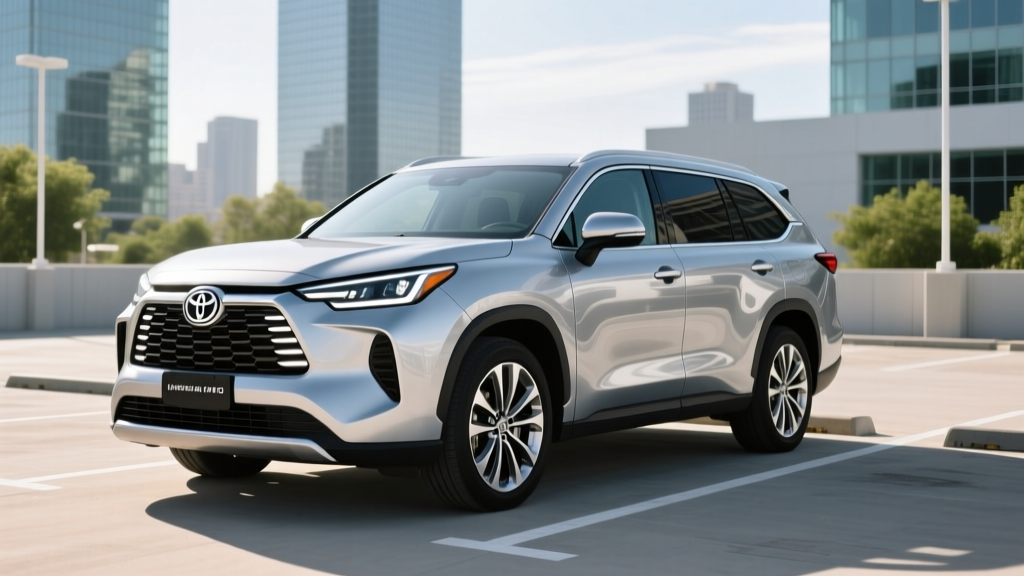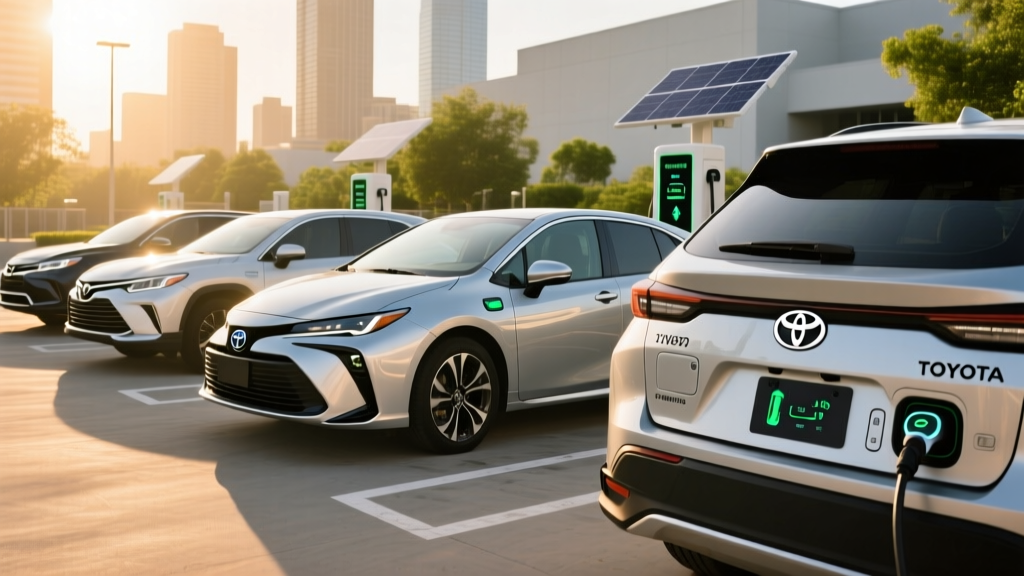
Toyota has sold more hybrid vehicles than any other automaker — over 25 million globally since the original Prius debuted in 1997. That track record is precisely why shoppers researching problems with Toyota hybrids often come up short: compared to most electrified powertrains, Toyota's hybrid systems are remarkably well-proven. But "remarkably reliable" doesn't mean "immune to failure." With millions of units on the road spanning two decades of hardware revisions, specific failure patterns have emerged that every current or prospective Toyota hybrid owner should understand.
This guide covers the most documented issues across Toyota's current 2026 hybrid (HEV) and plug-in hybrid (PHEV) lineup — from the RAV4 Hybrid and Camry Hybrid to the Prius, Prius Prime, and the newly expanded Highlander and Grand Highlander Hybrid platforms. We'll separate internet rumor from verified mechanical reality, put exact numbers on repair costs, and help you decide whether a Toyota hybrid is the right bridge to full electrification for your driving pattern.
Toyota's 2026 Hybrid and PHEV Lineup: HEV vs. PHEV Explained
Before diagnosing problems, it's critical to understand which Toyota you're looking at. Toyota sells two fundamentally different hybrid architectures in 2026, and their failure modes, maintenance needs, and cost profiles diverge significantly.
Conventional Hybrid (HEV) — No Plug Required
Models: Camry Hybrid, RAV4 Hybrid, Highlander Hybrid, Grand Highlander Hybrid, Corolla Hybrid, Crown, Venza, Sienna, Tacoma i-FORCE MAX. These use a small battery (typically 1.0–1.6 kWh nickel-metal hydride or lithium-ion) charged entirely by regenerative braking and the gasoline engine. You never plug them in. The electric motor assists the engine and enables brief low-speed EV driving, but the system is designed for fuel-economy optimization, not electric-only commuting.
Plug-In Hybrid (PHEV) — Plug-In Required for Full Benefit
Models: Prius Prime, RAV4 Prime. These carry a much larger battery (13.6–18.1 kWh usable, lithium-ion) with an external charge port. You plug in to a Level 1 (120V) or Level 2 (240V) charger to unlock 30–42 miles of electric-only driving before the gasoline engine engages. Once the battery is depleted, they operate as conventional hybrids. DC fast charging is not supported on Toyota PHEVs — a deliberate engineering choice to reduce cost and weight.
This distinction matters for reliability analysis: PHEVs carry higher-voltage, higher-capacity battery packs with more complex thermal management, which changes the failure profile and replacement economics compared to the smaller HEV batteries Toyota has refined for 25+ years.
Documented Problems With Toyota Hybrids: What the Data Shows
Toyota's hybrid synergy drive (HSD) system is among the most reliable powertrain technologies in the automotive industry. Consumer Reports and J.D. Power consistently rank Toyota hybrids at or near the top for long-term dependability. That said, several specific issues have appeared with enough frequency across owner forums, NHTSA complaint databases, and independent repair networks to warrant attention.
1. Hybrid Battery Degradation and Cell Imbalance
The highest-voltage, highest-cost component in any hybrid is the traction battery. In Toyota HEVs, the battery is relatively small and operates within a narrow state-of-charge window (roughly 40–80% SoC) to maximize longevity. Even so, gradual capacity loss occurs over time, particularly in hot climates where battery temperatures routinely exceed 100°F.
What to expect: Most Toyota HEV batteries retain 85–92% of original capacity at the 10-year/150,000-mile mark. Complete failure before 150,000 miles is uncommon but not unheard of — approximately 3–5% of Prius batteries from the 2010–2015 generation required replacement before the warranty expired, per aggregated repair-shop data. The most common failure mode isn't total death but cell imbalance, where one or two modules in the battery pack degrade faster than the rest, triggering a check-engine light and reduced fuel economy.
Repair cost: A new OEM Toyota HEV battery pack costs between $2,000 and $4,500 depending on the model (Prius on the low end, Highlander Hybrid on the high end). Refurbished or reconditioned packs are available for $800–$1,800, and individual module replacement (for cell-imbalance issues) can be done for $300–$600 at hybrid-specialist shops. The EPA fueleconomy.gov database confirms that even with moderate degradation, Toyota hybrids maintain strong real-world MPG — the system compensates by running the engine slightly more often.
2. Inverter and Power Control Unit Failures
The inverter converts DC power from the battery to AC power for the electric motor(s) and vice versa during regenerative braking. Toyota issued recalls on certain 2001–2003 and 2004–2009 Prius models for inverter-related issues, and sporadic failures have appeared in later generations — though at a rate well below 1% of vehicles in service.
Symptoms: Sudden loss of power, dashboard warning lights ("Check Hybrid System"), vehicle entering limp mode. The inverter is liquid-cooled; failures are often linked to coolant leaks or pump failures that allow the inverter to overheat.
Repair cost: Inverter replacement runs $1,500–$3,000 at a dealership. Independent hybrid specialists can sometimes repair rather than replace the unit for $600–$1,200. Toyota extended the hybrid-system warranty on certain model years specifically to cover inverter issues — check your vehicle's warranty status through Toyota's owner portal.
3. Brake Actuator and Regenerative Braking System Issues
Toyota hybrids use an electro-hydraulic brake actuator that blends regenerative braking (capturing energy back into the battery) with conventional friction braking. This system is more complex than a standard brake master cylinder, and certain model years — particularly 2010–2014 Prius and some 2013–2018 RAV4 Hybrid units — experienced premature brake actuator failure.
What to watch for: A firm or unresponsive brake pedal, unusual brake noise, ABS warning light illumination, or a noticeable change in how regenerative braking feels (less deceleration when lifting off the accelerator). NHTSA has logged complaints across these model years, and Toyota issued technical service bulletins (TSBs) addressing the issue.
Repair cost: Brake actuator replacement typically costs $1,200–$2,200 at a dealer. This is a safety-critical component — do not defer repair if symptoms appear.
4. 12-Volt Auxiliary Battery Discharge
Every Toyota hybrid still uses a conventional 12V lead-acill or AGM auxiliary battery to power the vehicle's computers, lights, and accessories when the high-voltage system is off. Because hybrids shut the engine off frequently (at stops, during EV-mode driving), the 12V battery gets less consistent charging than in a conventional car.
The problem: If a Toyota hybrid sits undriven for 2–3 weeks, the 12V battery can discharge enough to prevent the vehicle from starting — even though the high-voltage traction battery may be fully charged. This is the single most common "my Toyota hybrid won't start" complaint on owner forums and is almost always a 12V issue, not a hybrid-system failure.
Prevention: Drive the vehicle at least once every 10–14 days. If long storage is expected, use a 12V battery maintainer (trickle charger). Replacement cost: $150–$280 for an AGM-spec battery.
5. EGR Valve and Intake Manifold Carbon Buildup (Older Generations)
On third-generation Prius models (2010–2015) and some contemporaneous Camry Hybrid units, exhaust gas recirculation (EGR) valve clogging and carbon buildup in the intake manifold became a known issue around 80,000–120,000 miles. This can cause rough idle, head-gasket stress (a secondary, more serious concern), and reduced efficiency.
Toyota addressed this in later generations with revised EGR designs and the shift to D-4S dual injection (port + direct) on the 2.5-liter Dynamic Force engines used in the 2025–2026 Camry, RAV4, and Highlander Hybrids. If you're buying a newer model, this is largely a solved problem. If you own a 2010–2015-generation vehicle, periodic EGR cleaning ($200–$400) is recommended preventive maintenance.
Fuel Economy Reality: EPA Stickers vs. Real-World MPG
One area where Toyota hybrids consistently outperform expectations is real-world fuel economy — particularly in city driving, where regenerative braking and electric-motor assistance are most effective. Here's how the 2026 lineup stacks up, per fueleconomy.gov EPA data:
| Model (2026) | Powertrain | City MPG | Highway MPG | Combined MPG | Real-World Note |
|---|---|---|---|---|---|
| Prius (LE AWD) | HEV | 57 | 56 | 57 | Owners report 52–60 MPG combined; city driving often exceeds EPA |
| Prius Prime (SE) | PHEV | 127 MPGe (EV+gas) | — | 52 MPG (gas-only) | 44 mi EV range; 52 MPG after depletion |
| Camry Hybrid (LE) | HEV | 53 | 50 | 51 | Real-world: 47–54 MPG; highway-heavy commutes trend lower |
| RAV4 Hybrid (LE AWD) | HEV | 41 | 38 | 39 | Real-world: 35–42 MPG; cold weather drops to ~33–35 MPG |
| RAV4 Prime (SE) | PHEV | 94 MPGe (EV+gas) | — | 38 MPG (gas-only) | 42 mi EV range; 38 MPG after depletion |
| Highlander Hybrid (LE AWD) | HEV | 36 | 35 | 36 | Real-world: 32–37 MPG; loaded/towing drops to ~28–30 MPG |
| Sienna (LE FWD) | HEV | 36 | 36 | 36 | Minivan efficiency leader; real-world matches EPA closely |
Real-World Insight: Toyota hybrids tend to beat their EPA city ratings because stop-and-go driving maximizes regenerative braking. Highway-heavy drivers will see numbers 3–6 MPG below the combined rating. Cold weather (below 30°F) reduces efficiency by roughly 8–12% due to increased engine runtime for cabin heating and reduced battery efficiency — a pattern consistent across all hybrid brands, not unique to Toyota.
Battery Warranty, Lifespan, and Replacement Costs
Battery longevity is the number-one concern for hybrid shoppers, and it's where Toyota's track record provides genuine reassurance. Here are the facts for 2026 models:
| Specification | Toyota HEV (e.g., RAV4 Hybrid) | Toyota PHEV (e.g., Prius Prime) |
|---|---|---|
| Battery Type | NiMH or Li-ion (model dependent) | Lithium-ion |
| Battery Capacity | 1.0–1.6 kWh | 13.6 kWh (Prius Prime) / 18.1 kWh (RAV4 Prime) |
| EV-Only Range (PHEV) | N/A (HEV) | 44 mi (Prius Prime) / 42 mi (RAV4 Prime) |
| Hybrid Battery Warranty | 10 years / 150,000 miles | 10 years / 150,000 miles |
| Warranty Capacity Threshold | Below ~60–70% capacity | Below ~60–70% capacity |
| OEM Replacement Cost | $2,000–$4,500 | $5,500–$8,500 |
| Refurbished Replacement Cost | $800–$1,800 | Limited availability |
| Level 2 Charge Time (PHEV) | N/A | ~4 hours (Prius Prime) / ~2.5 hours (RAV4 Prime at 6.6 kW) |
| DC Fast Charge | N/A | Not supported |
The 10-year/150,000-mile hybrid battery warranty applies in all 50 states and is among the longest in the industry. Toyota defines a warranty claim as the battery falling below a specified capacity threshold (typically around 60–70% of original capacity, though exact thresholds vary by model year). In practice, most Toyota hybrid batteries outlast their warranties with meaningful capacity remaining.
The PHEV batteries are larger and more expensive to replace, but they also operate within a carefully managed SoC window and include active thermal management. No widespread premature-failure pattern has emerged for the current-generation Prius Prime or RAV4 Prime batteries as of early 2026.
Powertrain Specs and What Drives the Wheels
Toyota's hybrid powertrains pair an Atkinson-cycle gasoline engine with one or more electric motor-generators through a planetary gearset (Toyota's e-CVT). There are no traditional gear shifts, no clutch, no torque converter — which eliminates several common failure points found in conventional automatic transmissions.
| Model | Engine | Combined HP | 0–60 mph | Drivetrain |
|---|---|---|---|---|
| Prius | 2.0L 4-cyl + 2 motors | 194 hp (FWD) / 196 hp (AWD) | 7.0 sec | FWD or AWD-e |
| Prius Prime | 2.0L 4-cyl + 2 motors | 220 hp | 6.6 sec | FWD |
| Camry Hybrid | 2.5L 4-cyl + 2 motors | 225 hp (FWD) / 232 hp (AWD) | 7.1 sec | FWD or AWD-e |
| RAV4 Hybrid | 2.5L 4-cyl + 3 motors | 219 hp | 7.4 sec | AWD-i (standard) |
| RAV4 Prime | 2.5L 4-cyl + 3 motors | 302 hp | 5.7 sec | AWD-i (standard) |
| Highlander Hybrid | 2.5L 4-cyl + 3 motors | 243 hp | 7.8 sec | FWD or AWD-i |
The e-CVT design is a reliability strength: there are no belts, bands, or friction clutches to wear out. The planetary gearset is essentially bulletproof under normal use. Electric motor-generators have no brushes or wearing contacts. If there's a powertrain weak link in a Toyota hybrid, it's typically the inverter or the 12V system — not the mechanical drivetrain itself.
Pricing and Tax Credit Eligibility for 2026
Toyota hybrids carry a modest price premium over their gas-only counterparts (where gas-only variants still exist), but that gap has narrowed significantly as Toyota made hybrid the standard or near-standard powertrain across much of its lineup.
| Model | Starting MSRP (2026) | Federal Tax Credit (§30D) | Notes |
|---|---|---|---|
| Prius LE | ~$29,500 | Not eligible (HEV) | Conventional hybrids do not qualify for §30D |
| Prius Prime SE | ~$34,500 | Up to $3,750* | Qualifies for partial credit; battery sourcing rules apply |
| Camry Hybrid LE | ~$30,000 | Not eligible (HEV) | — |
| RAV4 Hybrid LE | ~$33,500 | Not eligible (HEV) | — |
| RAV4 Prime SE | ~$45,500 | Up to $3,750* | MSRP cap, income cap, and sourcing rules apply |
| Highlander Hybrid LE | ~$42,000 | Not eligible (HEV) | — |
*Federal tax credit details for PHEVs: Under IRS §30D rules, plug-in hybrids with battery capacities below 16 kWh may qualify for a partial credit (typically $3,750 rather than the full $7,500) depending on critical-mineral and battery-component sourcing requirements. Eligibility is also subject to buyer income caps ($150,000 single / $300,000 joint modified AGI) and MSRP caps ($55,000 for sedans, $80,000 for SUVs/vans/pickups). The credit can be transferred to the dealer as a point-of-sale discount. Always verify current eligibility at IRS.gov before purchasing — rules change frequently.
Conventional hybrids (HEVs) do not qualify for the federal §30D clean vehicle credit. Some states offer separate incentives for hybrids, but these vary widely — check your state energy office or the Alternative Fuels Data Center for state-specific programs.
Toyota Hybrid vs. Full EV vs. Gas Car: Which Fits You?
Choose a Toyota HEV (conventional hybrid) if:
- You lack access to home or workplace charging (apartment, street parking, no garage)
- You want maximum fuel savings with zero behavior change — just fill up less often
- You drive 10,000–15,000 miles/year and want proven 40–57 MPG without plug-in hassle
- You plan to keep the vehicle 8–12 years and want minimal depreciation risk
- You live in an area with limited public charging infrastructure
Choose a Toyota PHEV (Prius Prime or RAV4 Prime) if:
- You can install a Level 2 charger at home and have a commute under 40 miles
- You want EV-mode daily driving but need gas-engine flexibility for road trips
- You want to reduce (not eliminate) gasoline consumption by 60–80% on typical weeks
- You want partial federal tax credit eligibility without full-EV range anxiety
Choose a full battery-electric vehicle (BEV) if:
- You have reliable home Level 2 charging and your daily driving is under 250 miles
- You want zero tailpipe emissions and the lowest per-mile energy cost
- You're eligible for the full $7,500 federal credit on a qualifying BEV
- You're comfortable planning longer road trips around DC fast-charging stops
Should Toyota Hybrid Problems Deter You? The Bottom Line
Pros
- Industry-leading hybrid reliability track record over 25+ years
- Real-world MPG often exceeds EPA estimates, especially in city driving
- e-CVT design eliminates traditional transmission failure points
- 10-year/150,000-mile hybrid battery warranty across all models
- Strong resale value — Toyota hybrids depreciate slower than most competitors
- Refurbished battery replacement market keeps long-term costs manageable
- No plug-in required for HEVs — zero infrastructure dependency
Cons
- PHEV battery replacement is expensive ($5,500–$8,500 OEM)
- No DC fast charging on PHEVs — Level 2 only
- Brake actuator repairs are costly ($1,200–$2,200) on affected model years
- 12V battery discharge can strand the vehicle if left sitting for weeks
- HEVs do not qualify for the federal §30D tax credit
- Highway MPG falls 3–6 MPG below combined EPA rating on most models
- Cold-weather efficiency loss of 8–12% is inherent to the hybrid architecture
The documented problems with Toyota hybrids are real but statistically uncommon relative to the millions of vehicles in service. The most expensive potential failure — the hybrid battery — is covered by a decade-long warranty and, even out of warranty, can be addressed through refurbished replacements at a fraction of OEM cost. The most common issue (12V battery discharge) is trivially preventable and inexpensive to fix.
For buyers seeking the lowest-risk path to significantly improved fuel economy without committing to a full EV, Toyota's 2026 hybrid lineup remains the most proven option on the market. The problems that exist are well-understood, well-documented, and — in most cases — well-covered by warranty or aftermarket support.
Frequently Asked Questions
How many MPG does a Toyota hybrid really get?
EPA combined ratings range from 36 MPG (Highlander Hybrid, Sienna) to 57 MPG (Prius LE). In real-world driving, city-heavy commuters often exceed EPA numbers by 2–5 MPG thanks to regenerative braking, while highway-dominant drivers typically see 3–6 MPG below the combined rating. Cold weather reduces efficiency by roughly 8–12%.
How far can the Toyota Prius Prime and RAV4 Prime go on electric only?
The 2026 Prius Prime achieves 44 miles of EPA-rated electric-only range. The RAV4 Prime delivers 42 miles. Both operate at full highway speeds in EV mode. After the battery is depleted, they revert to hybrid operation at 52 MPG (Prius Prime) or 38 MPG (RAV4 Prime).
Is a Toyota hybrid reliable, and what does battery replacement cost?
Toyota hybrids are among the most reliable electrified vehicles sold. The hybrid battery is warranted for 10 years/150,000 miles, and most outlast that period. OEM battery replacement costs $2,000–$4,500 for HEVs and $5,500–$8,500 for PHEVs. Refurbished HEV batteries are available for $800–$1,800, significantly reducing long-term ownership cost.
Do Toyota hybrids qualify for any tax credit?
Conventional Toyota hybrids (HEVs) do not qualify for the federal §30D clean vehicle credit. Toyota PHEVs (Prius Prime, RAV4 Prime) may qualify for a partial credit of up to $3,750, subject to buyer income limits, MSRP caps, and battery-sourcing requirements. Always verify eligibility at IRS.gov before purchasing.
What is the most common problem with Toyota hybrids?
The most frequently reported issue is 12V auxiliary battery discharge when the vehicle sits undriven for 2–3 weeks. This prevents the vehicle from starting even when the high-voltage hybrid battery is fully charged. The fix is simple: drive the vehicle regularly or use a 12V battery maintainer during storage. More serious issues (hybrid battery cell imbalance, inverter failure, brake actuator failure) occur at rates well below 5% across the fleet.
Do I need to plug in a Toyota hybrid?
No — conventional Toyota hybrids (HEVs like the Camry Hybrid, RAV4 Hybrid, Highlander Hybrid) never need to be plugged in. They charge their battery through regenerative braking and the gasoline engine. Only Toyota PHEVs (Prius Prime, RAV4 Prime) benefit from plug-in charging, which unlocks their electric-only driving range.
How long do Toyota hybrid batteries last?
Most Toyota HEV batteries retain 85–92% of original capacity at 10 years / 150,000 miles. Many continue operating beyond 200,000 miles with moderate degradation. PHEV batteries carry the same 10-year/150,000-mile warranty and, given their active thermal management and managed SoC windows, are expected to show similar longevity — though the current-generation packs are newer and have less long-term field data.