Porsche's Electrified Strategy: Why Plug-In Hybrids Matter
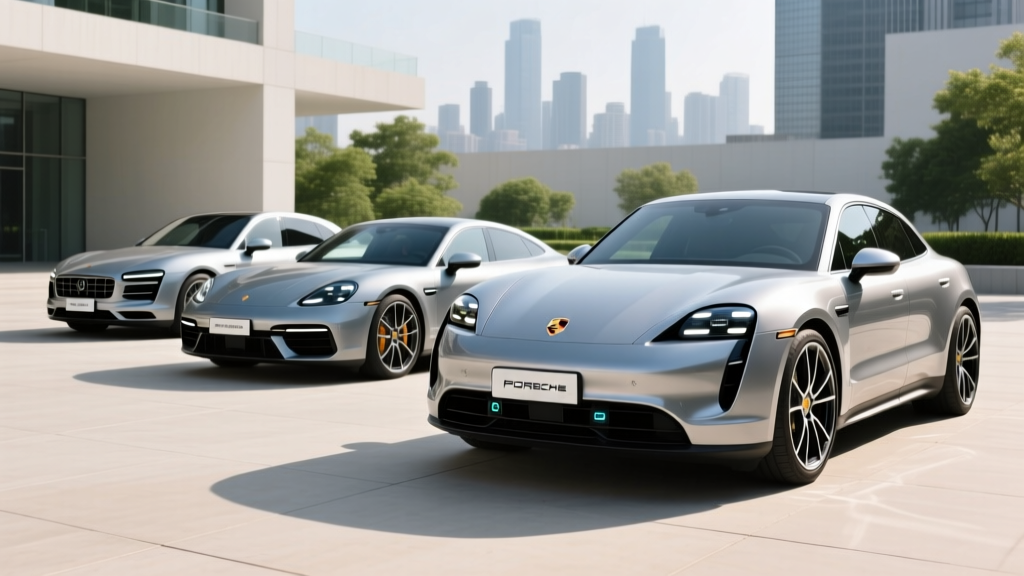
Porsche occupies a unique position in the electrification conversation. While the Taycan and Macan Electric represent the brand's full-EV ambitions, Porsche's plug-in hybrid (PHEV) lineup — spanning the Cayenne, Panamera, and the groundbreaking 911 Carrera GPT E-Hybrid — serves a buyer who wants electrified performance without surrendering the flexibility of a combustion engine. For 2026, Porsche has expanded electric-only range, increased battery capacity, and sharpened the performance envelope across its E-Hybrid portfolio.
This guide breaks down every current Porsche plug in hybrid model with exact EPA figures, battery specs, charging data, pricing, and the ownership realities that spec sheets don't always reveal.
Quick Refresher: HEV vs. PHEV — What Porsche Actually Sells
Conventional Hybrid (HEV): A small battery recharged by regenerative braking and the engine. You never plug it in. Porsche does not currently sell an HEV in the U.S. market.
Plug-In Hybrid (PHEV): A larger battery you charge via a plug (Level 1 or Level 2). It delivers meaningful electric-only range — typically 25–45 miles in Porsche's lineup — before the gas engine engages. All Porsche "E-Hybrid" models are PHEVs.
2026 Porsche Cayenne E-Hybrid: Specs, Range, and Efficiency
The Cayenne E-Hybrid remains Porsche's best-selling electrified model in the U.S. For 2026, it pairs a 3.0-liter turbocharged V6 with an electric motor integrated into the 8-speed Tiptronic transmission. The revised battery pack offers more usable capacity and extended electric-only driving.
| Spec | Cayenne E-Hybrid | Cayenne S E-Hybrid |
|---|---|---|
| Combined Horsepower | 398 hp | 518 hp |
| Engine | 3.0L Turbo V6 + E-Motor | 3.0L Turbo V6 + E-Motor |
| Battery (usable) | ~20.8 kWh (NMC) | ~20.8 kWh (NMC) |
| EPA Electric-Only Range | 32 miles | 30 miles |
| EPA Combined MPGe | 46 MPGe | 44 MPGe |
| EPA MPG (gas-only, combined) | 21 MPG | 20 MPG |
| 0–60 mph | 5.2 sec | 4.5 sec |
| Total Combined Range | ~430 miles | ~410 miles |
| Max AC Charge Rate | 7.2 kW (Level 2) | 7.2 kW (Level 2) |
| DC Fast Charging | No | No |
| Level 2 Charge Time (0–100%) | ~3.5 hours | ~3.5 hours |
| Base MSRP | $89,600 | $104,100 |
2026 Porsche Panamera E-Hybrid: The Executive PHEV
The Panamera E-Hybrid targets the luxury-sport sedan buyer who commutes on electricity during the week and wants autobahn-ready performance on weekends. For 2026, the Panamera E-Hybrid lineup includes the base E-Hybrid and the more powerful S E-Hybrid, both using a revised 2.9-liter twin-turbo V6 paired with an uprated electric motor.
| Spec | Panamera E-Hybrid | Panamera S E-Hybrid |
|---|---|---|
| Combined Horsepower | 463 hp | 537 hp |
| Engine | 2.9L Twin-Turbo V6 + E-Motor | 2.9L Twin-Turbo V6 + E-Motor |
| Battery (usable) | ~21.5 kWh (NMC) | ~21.5 kWh (NMC) |
| EPA Electric-Only Range | 35 miles | 33 miles |
| EPA Combined MPGe | 48 MPGe | 46 MPGe |
| EPA MPG (gas-only, combined) | 22 MPG | 21 MPG |
| 0–60 mph | 4.7 sec | 4.1 sec |
| Total Combined Range | ~450 miles | ~430 miles |
| Max AC Charge Rate | 7.2 kW (Level 2) | 7.2 kW (Level 2) |
| DC Fast Charging | No | No |
| Level 2 Charge Time (0–100%) | ~3.7 hours | ~3.7 hours |
| Base MSRP | $107,200 | $122,600 |
The Panamera's lower, more aerodynamic profile translates to slightly better electric range than the Cayenne despite a similar battery size. On a Level 2 home charger at 7.2 kW, a full overnight charge is easily achievable — most owners will plug in around 10 PM and wake to a full battery by 6 AM.
2026 Porsche 911 Carrera GPT E-Hybrid: The Icon Goes Plug-In
The 911 E-Hybrid is the most talked-about Porsche plug in hybrid in the brand's history. Rather than prioritizing electric-only commuting, Porsche engineered this T-Hybrid system primarily for performance augmentation — with electric range as a useful secondary benefit.
| Spec | Value |
|---|---|
| Combined Horsepower | 532 hp |
| Engine | 3.6L Turbo Flat-6 + E-Motor (integrated in 8-speed PDK) |
| Battery (usable) | ~3.7 kWh (NMC, high-discharge) |
| EPA Electric-Only Range | ~2–3 miles (limited, performance-focused) |
| EPA MPG (combined) | 22 MPG |
| 0–60 mph | 2.9 sec |
| Max AC Charge Rate | 7.2 kW (Level 2) |
| DC Fast Charging | No |
| Base MSRP | $164,900 |
The 911's small, high-power-density battery is not designed for long electric commutes. Instead, the electric motor fills torque gaps during acceleration and enables brief low-speed electric maneuvering. Think of it as a performance hybrid first — the plug-in capability lets you replenish the small pack from a wall outlet rather than relying solely on regen and the engine.
Charging Your Porsche PHEV: What You Need at Home
No Porsche plug in hybrid currently offers DC fast charging. All charging is AC-only, capped at 7.2 kW via Level 2. Here is what that means practically:
| Level | Power | Approx. Miles of Range Added/Hour | 0–100% Time (Cayenne) |
|---|---|---|---|
| Level 1 (120V household) | ~1.4 kW | ~4–5 mi/hr | ~16–18 hours |
| Level 2 (240V, 32A) | 7.2 kW | ~20–22 mi/hr | ~3.5 hours |
| DC Fast Charge | N/A | N/A | Not supported |
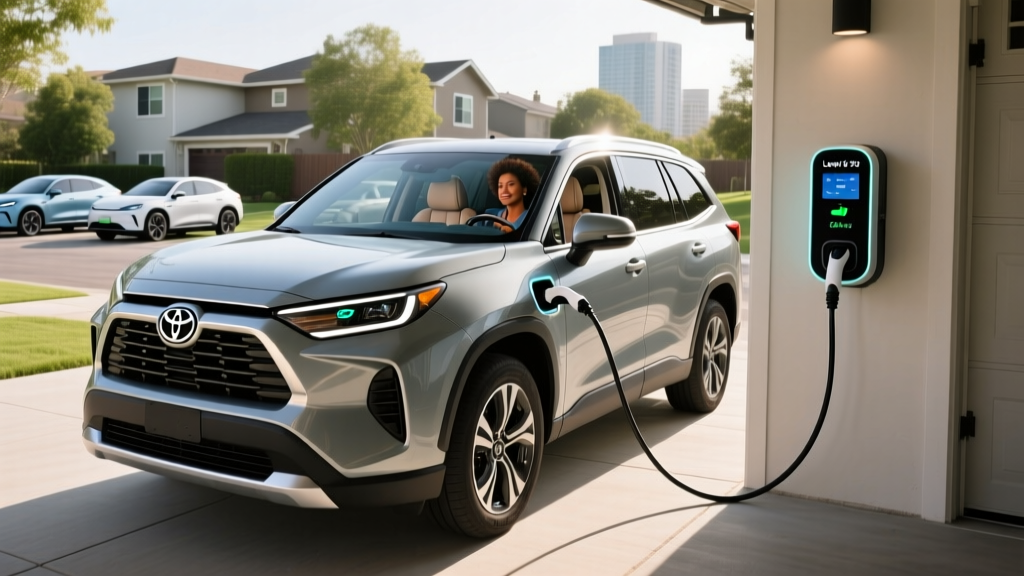
Home setup recommendation: A 240V / 40-amp circuit with a quality Level 2 EVSE (such as a ChargePoint Home Flex or Porsche's own Mobile Charger Connect) will fully replenish any Cayenne or Panamera E-Hybrid overnight. Installation typically runs $800–$2,000 depending on panel proximity and local permitting, according to U.S. Department of Energy guidance. If your electrical panel is at capacity, a panel upgrade can add $1,500–$3,000.
One nuance: because Porsche PHEV batteries are relatively small (20–22 kWh usable), the charging curve stays fairly flat through most of the session. You won't see the dramatic taper that full-EV batteries exhibit above 80% SoC. This means the quoted 3.5-hour Level 2 time is reasonably consistent, not just a peak-rate marketing figure.
Federal Tax Credit and Incentives: Does a Porsche PHEV Qualify?
Under the current IRS §30D Clean Vehicle Credit rules, plug-in hybrids with battery capacities of at least 7 kWh can qualify — but eligibility hinges on multiple requirements that make it challenging for Porsche models:
- Battery capacity: All Porsche E-Hybrids exceed the 7 kWh minimum ✓
- MSRP cap: SUVs/vans (Cayenne) capped at $80,000; sedans (Panamera) capped at $55,000. The Cayenne E-Hybrid base MSRP of $89,600 exceeds the SUV cap. The Panamera E-Hybrid at $107,200 exceeds the sedan cap. ✗
- Buyer income limits: $300K joint / $225K head of household / $150K individual MAGI caps apply
- Battery component and critical mineral sourcing: Must meet phased-in domestic-content thresholds per IRS §30D guidelines
- Final assembly: Must occur in North America — Porsche assembles in Europe ✗
Bottom line: As of 2026, no Porsche plug in hybrid qualifies for the federal §30D credit due to MSRP caps and European assembly. However, some states offer their own incentives for PHEVs regardless of assembly location. Check your state's energy office or AFDC state incentive database for local programs. The federal used EV credit (up to $4,000 under §25E) may apply to pre-owned Porsche PHEVs that meet price and income thresholds.
Battery Longevity, Warranty, and Replacement Costs
Porsche uses NMC (nickel-manganese-cobalt) chemistry across its PHEV lineup, chosen for its high energy density and power-delivery characteristics. NMC batteries generally show 10–15% degradation over 100,000 miles under normal use, based on industry-wide data from sources like Geotab's large-scale fleet analysis.
Replacement cost: Out of warranty, a Cayenne or Panamera E-Hybrid battery replacement runs approximately $12,000–$18,000 including labor, based on current Porsche dealer parts pricing. The 911's smaller battery is less expensive to replace but is also a more specialized unit.
Practical longevity tips: Avoid routinely charging to 100% and letting the pack sit at full capacity in extreme heat. Porsche's battery management system includes a buffer (the difference between gross and usable kWh) that protects against deep degradation. For daily use, setting charge limit to 80–90% extends long-term battery health.
Who Should Buy a Porsche Plug In Hybrid?
Choose a Porsche PHEV if:
- You want 25–35 miles of electric commuting for daily errands and school runs, but also need 400+ mile total range for road trips
- You value Porsche driving dynamics and don't want to compromise for efficiency
- You have home charging access (Level 2) and can plug in nightly
- You're not ready to commit to a full EV due to apartment living, unreliable public charging, or frequent long-distance travel in charging-desert regions
Choose a full EV (e.g., Taycan, Macan Electric) if:
- You want zero tailpipe emissions and lower per-mile "fuel" costs
- You have reliable home and/or workplace charging
- Your daily driving is under 250 miles and you road-trip infrequently
- You want to minimize maintenance (no oil changes, fewer moving parts)
Choose a conventional gas vehicle if:
- You have no access to any form of plug-in charging
- Your budget doesn't accommodate the PHEV premium (typically $8,000–$15,000 over a gas equivalent)
- You drive predominantly long highway miles where the PHEV's electric range provides minimal benefit
Real-World MPG: What Owners Actually See
EPA ratings are a starting point, not a guarantee. Here is what Porsche PHEV owners typically report:
| Model | EPA Combined (gas) | Real-World Observed | Notes |
|---|---|---|---|
| Cayenne E-Hybrid | 21 MPG | 19–23 MPG | City driving with regular charging can push higher; aggressive highway driving drops to ~18 MPG |
| Panamera E-Hybrid | 22 MPG | 20–25 MPG | Aerodynamic sedan benefits highway efficiency; regular charging dramatically reduces gas use |
| 911 Carrera GPT E-Hybrid | 22 MPG | 18–22 MPG | Performance-oriented tuning and wide tires reduce efficiency; electric assist helps in stop-and-go |
The critical variable for PHEV efficiency is charging discipline. An owner who plugs in every night and commutes 20 miles each way may use almost no gasoline Monday through Friday. An owner who never plugs in is simply driving a heavy conventional hybrid — and will see MPG figures at or slightly below the gas-only estimates.
Porsche PHEV Lineup: Pros, Cons, and Verdict
Pros
- 25–35 miles of genuine electric commuting range (Cayenne/Panamera)
- Combined output significantly exceeds gas-only siblings
- No range anxiety — gas engine provides 400+ mile total range
- Porsche build quality, driving dynamics, and resale value
- 8-year/100,000-mile battery warranty
- Overnight Level 2 charging is sufficient for daily needs
Cons
- No DC fast charging — limits road-trip electric replenishment
- Base MSRPs exceed federal tax credit caps — no §30D eligibility
- $8,000–$15,000 price premium over non-hybrid Porsche trims
- Battery replacement cost ($12K–$18K) after warranty expires
- Added weight from battery/motor affects handling vs. gas-only models
- 7.2 kW max charge rate is slow compared to EVs charging at 150–350 kW
Frequently Asked Questions
How many MPG does a Porsche plug in hybrid get?
On gasoline alone (after the battery depletes), the 2026 Cayenne E-Hybrid returns an EPA-estimated 21 MPG combined (roughly 19 city / 23 highway). The Panamera E-Hybrid achieves 22 MPG combined. When factoring in electric-only driving, MPGe ratings reach 46–48 MPGe, but this figure only reflects the first portion of driving when the battery is charged.
How far can a Porsche PHEV go on electric only?
The Cayenne E-Hybrid delivers an EPA-estimated 32 miles of electric-only range; the Panamera E-Hybrid manages 35 miles. Real-world figures vary: expect 25–28 miles in warm highway driving and 20–22 miles in cold weather. The 911 Carrera GPT E-Hybrid offers only 2–3 miles of electric range — its system prioritizes performance over electric commuting.
Hybrid vs. PHEV vs. EV — which Porsche is right for me?
If you have home charging and a commute under 35 miles, a Porsche PHEV lets you drive electrically most weekdays while retaining gas-engine freedom for road trips. If you want zero emissions and have reliable charging, consider the Taycan or Macan Electric. Porsche does not sell conventional (non-plug-in) hybrids in the U.S., so the choice is PHEV or full EV.
Is the Porsche PHEV battery reliable, and what does replacement cost?
Porsche's NMC battery packs are engineered for longevity with robust thermal management and a protective capacity buffer. The battery is warranted for 8 years/100,000 miles at 70% capacity retention. Out-of-warranty replacement runs $12,000–$18,000. Industry data suggests 10–15% degradation over 100,000 miles is typical for well-maintained NMC packs.
Does a Porsche plug in hybrid qualify for any tax credit?
Under current IRS §30D rules, no new Porsche PHEV qualifies for the federal tax credit because MSRPs exceed the statutory caps and final assembly occurs in Europe, not North America. Some state-level incentives may apply — check your state's clean vehicle program. The federal used-EV credit (§25E, up to $4,000) may apply to qualifying pre-owned Porsche PHEVs.
Can I DC fast charge a Porsche PHEV?
No. All current Porsche E-Hybrid models support AC charging only, at a maximum rate of 7.2 kW on Level 2. This is sufficient for overnight home charging but means you cannot top up the battery at DC fast-charging stations during road trips.
How long does it take to charge a Porsche PHEV at home?
On a 240V Level 2 charger at 7.2 kW, expect approximately 3.5 hours for a full 0–100% charge on the Cayenne or Panamera E-Hybrid. On a standard 120V household outlet (Level 1), a full charge takes 16–18 hours — functional for overnight replenishment but slower than ideal.