Quick Verdict: A Sports Sedan That Plugs In
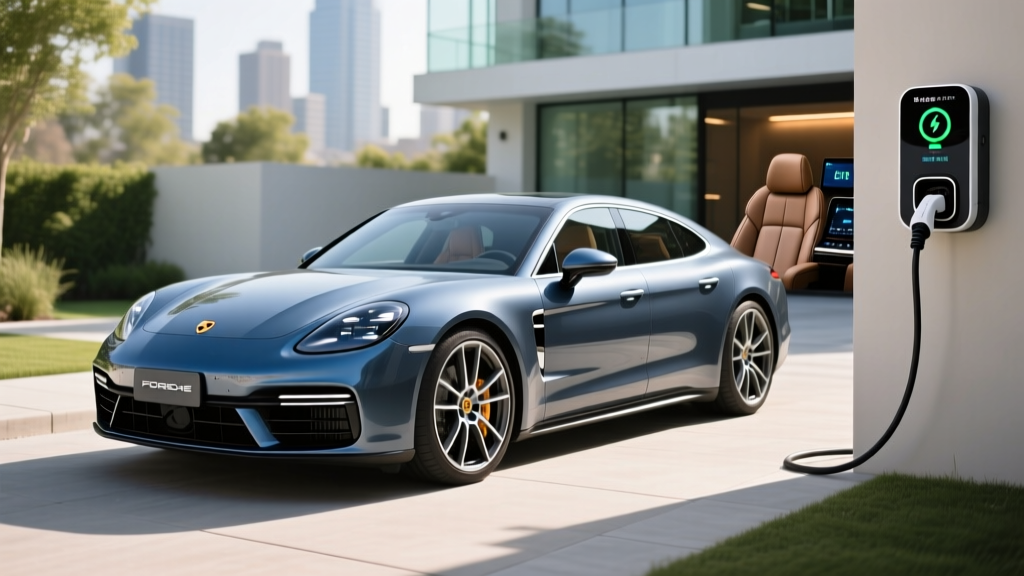
The 2026 Porsche Panamera 4S E-Hybrid occupies a narrow but compelling lane: a 536-horsepower luxury sport sedan that can silently commute on electric power for roughly 28 miles before its twin-turbo V6 wakes up. This is a plug-in hybrid (PHEV), meaning it pairs a meaningful traction battery and electric motor with a conventional engine — and yes, you plug it in to unlock its electric-only capability. For buyers who want Porsche dynamics, daily EV commuting, and zero range anxiety on road trips, the Panamera 4S E-Hybrid makes a strong case. But at a starting MSRP above $120,000, it demands scrutiny on the numbers that matter: real-world MPG, electric range, charging practicality, and whether any federal tax credits apply.
| Spec | Value |
|---|---|
| Combined Horsepower | 536 hp (463 lb-ft combined torque) |
| Engine | 2.9L twin-turbo V6 (348 hp) + electric motor (188 hp) |
| Battery Capacity | 25.9 kWh (gross) / ~20.8 kWh usable |
| EPA Electric-Only Range | ~28 miles (est., final EPA TBD at launch) |
| EPA MPG (combined, hybrid mode) | ~48 MPGe combined / ~25 MPG gas-only combined (est.) |
| 0–60 mph | 4.1 seconds |
| Top Speed | 174 mph |
| AC Charging (Level 2) | 7.2 kW onboard charger (~3.5 hours 0–100%) |
| DC Fast Charging | Not supported |
| Transmission | 8-speed PDK dual-clutch automatic |
| Drivetrain | All-wheel drive (AWD) |
| Starting MSRP | $121,500 (base, before options/destination) |
| Federal §30D Tax Credit | Not eligible (MSRP cap exceeded; see details below) |
| Battery Warranty | 8 years / 100,000 miles (hybrid components) |
HEV vs PHEV: What the Panamera 4S E-Hybrid Actually Is
Before evaluating this car, it is essential to understand the distinction between conventional hybrids and plug-in hybrids — they serve different use cases and have different hardware.
| Feature | Conventional Hybrid (HEV) | Plug-In Hybrid (PHEV) |
|---|---|---|
| Battery Size | ~1–2 kWh | ~10–30 kWh |
| Electric-Only Range | 0–2 miles (assist only) | 15–50+ miles |
| Plug In to Charge? | No — charges via regen/engine | Yes — plug in for full EV range |
| Gas Engine | Always available | Always available |
| Example | Toyota Prius | Porsche Panamera 4S E-Hybrid |
The Panamera 4S E-Hybrid is firmly a PHEV. Its 25.9 kWh gross battery pack is large enough to propel the car on electric power alone for short-to-medium commutes. Once the battery depletes, the 2.9L twin-turbo V6 takes over seamlessly, and the car operates as a hybrid — using regenerative braking and engine power to maintain charge and optimize fuel consumption. You never need to worry about being stranded; the gas engine provides total combined range exceeding 450 miles.
Electric-Only Range and Real-World Efficiency
The EPA has not published final figures for the 2026 model year at time of writing, but based on the updated powertrain and larger battery introduced for the 2024+ generation, Porsche targets approximately 28 miles of electric-only range. This is a meaningful improvement over the prior-generation Panamera E-Hybrid's ~17-mile EPA rating, thanks to the larger 25.9 kWh pack.
EPA electric range: ~28 miles. In practice, expect 22–26 miles on a full charge during mixed driving. Highway speeds above 70 mph, cold weather below 40°F, and aggressive acceleration will push that toward the low end (18–22 miles). Gentle city driving in mild weather may yield 28–30 miles. The gasoline engine provides an additional ~430 miles of range for a total combined range of approximately 460 miles.
When the battery is depleted and the car operates in hybrid mode, expect fuel economy in the neighborhood of 25 MPG combined — roughly 22 MPG highway and 28 MPG city. City MPG tends to be higher because regenerative braking recaptures energy in stop-and-go traffic, and the electric motor handles low-speed propulsion where gasoline engines are least efficient.
| Mode | City | Highway | Combined |
|---|---|---|---|
| Electric-Only (MPGe) | ~52 MPGe | ~44 MPGe | ~48 MPGe |
| Hybrid (gas, battery depleted) | ~28 MPG | ~22 MPG | ~25 MPG |
Figures are estimates based on Porsche data and comparable PHEV testing. Confirm with fueleconomy.gov when EPA publishes final 2026 ratings.
Charging: Level 2 Only, No DC Fast Charging
The Panamera 4S E-Hybrid comes equipped with a 7.2 kW onboard AC charger. This means:
- Level 1 (120V household outlet, ~1.4 kW): Approximately 14–16 hours for a full 0–100% charge. Practical only for overnight top-ups if you drive short distances.
- Level 2 (240V, 7.2 kW): Approximately 3.5 hours from 0–100%. This is the intended daily charging method — plug in when you get home, and the battery is full by morning.
- DC Fast Charging: Not available. The Panamera 4S E-Hybrid does not support CCS or any DC fast-charging standard. This is typical for PHEVs; the battery is small enough that Level 2 replenishes it overnight.
For context, a kW (kilowatt) measures charging power — how fast energy flows into the battery. A kWh (kilowatt-hour) measures battery capacity — how much energy the battery stores. The Panamera's ~20.8 kWh usable battery divided by the 7.2 kW charge rate yields roughly 2.9 hours at peak rate, plus taper time near full charge, for the ~3.5-hour total.
Home charging recommendation: A Level 2 wallbox (such as a ChargePoint Home Flex or Porsche Mobile Charger Connect) on a 40-amp or 48-amp circuit is strongly recommended. Installation typically costs $500–$1,500 depending on electrical panel proximity, and this is the only practical way to use the car's electric range daily. Consult a licensed electrician for your specific setup.
Powertrain: 536 Horsepower, Seamlessly Blended
The Panamera 4S E-Hybrid's powertrain is a masterclass in integration:
- Internal combustion engine: 2.9-liter twin-turbocharged V6 producing 348 hp and 369 lb-ft of torque.
- Electric motor: Integrated into the 8-speed PDK transmission housing, producing 188 hp and 295 lb-ft.
- Combined system output: 536 hp and 553 lb-ft of torque (Porsche rates combined output conservatively; peak outputs of engine and motor don't occur at identical RPMs).
- Transmission: 8-speed PDK dual-clutch automatic — no torque-converter slushbox here. Shifts are crisp and near-instantaneous.
- Drivetrain: All-wheel drive with an electronically controlled limited-slip rear differential.
The result is a 0–60 mph time of 4.1 seconds — genuinely quick for a 5,100-pound luxury sedan. The electric motor fills in torque at low RPM before the turbos spool, eliminating lag and providing immediate thrust from a stop. In E-Power mode, the car is whisper-quiet and smooth; in Sport Plus, it deploys the full powertrain with a purposeful V6 snarl.
Driving modes include E-Power (electric-first), Hybrid Auto (system decides), E-Hold (preserves battery for later), E-Charge (engine charges battery while driving), Sport, and Sport Plus. The E-Hold mode is particularly useful: save your battery charge for city driving at your destination after a highway road trip.
Pricing, Tax Credits, and Ownership Costs
The 2026 Porsche Panamera 4S E-Hybrid starts at approximately $121,500 MSRP (including destination). Well-optioned examples with the Premium Package, adaptive cruise control, rear-axle steering, and sport exhaust can reach $140,000–$150,000.
The Panamera 4S E-Hybrid does not qualify for the $7,500 federal EV tax credit under IRS §30D rules. Two factors disqualify it:
- MSRP cap: The §30D credit caps eligible sedans at $55,000 MSRP. The Panamera 4S E-Hybrid starts at $121,500 — far above the threshold.
- Battery sourcing: Even if MSRP were within limits, the critical minerals and battery component sourcing requirements under current IRS rules are stringent and many European-built PHEVs do not meet them.
Some states offer their own incentives for PHEVs (California's CVRP, for example, has had income-limited rebates). Check your state's energy office or DMV for current programs. Always consult a tax professional regarding credit eligibility.
| Category | Estimated Cost |
|---|---|
| Purchase Price (base) | $121,500 |
| Fuel/Energy (5 yrs, mixed EV/gas) | $8,500–$11,000 |
| Insurance (5 yrs) | $15,000–$20,000 |
| Maintenance (5 yrs) | $4,500–$6,500 |
| Estimated Depreciation (5 yrs) | $48,000–$55,000 |
| Estimated 5-Year Total | $~197,000–$214,000 |
Depreciation is the largest cost factor for luxury PHEVs. Fuel savings vs. a gas-only Panamera 4S are meaningful (~$2,000–$3,000 over 5 years if you charge daily) but modest relative to the purchase price.
Battery Warranty, Reliability, and Replacement Cost
- High-voltage battery: 8 years / 100,000 miles (whichever comes first)
- Hybrid components (motor, inverter, charger): 8 years / 100,000 miles
- Limited vehicle warranty: 4 years / 50,000 miles
- Capacity retention threshold: Porsche warrants the battery against defects and excessive capacity loss; specific degradation thresholds are defined in the warranty booklet (typically below 70% capacity triggers a claim)
Porsche's hybrid system has proven reliable across the Cayenne E-Hybrid and Panamera E-Hybrid lineages. The high-voltage battery uses lithium-ion NMC (nickel manganese cobalt) cells, which offer high energy density suited to the performance demands of a Porsche. NMC chemistry is well-understood and has been used in PHEVs and EVs for over a decade.
Battery replacement cost: If the high-voltage battery requires replacement out of warranty, expect a cost in the range of $12,000–$18,000 for the battery pack itself, plus $1,500–$3,000 in labor. This is a significant sum, but PHEV batteries are smaller and less expensive to replace than full EV batteries. Many owners never need a replacement — the 8-year/100,000-mile warranty covers the most critical period, and modern lithium-ion packs are designed for 150,000+ miles of service life with proper care.
Care tips for longevity: Avoid routinely charging to 100% and letting the car sit in extreme heat at full charge. Porsche's battery management system includes thermal management and buffer zones to protect the cells, but moderate habits extend life further.
Who Should Choose the Panamera 4S E-Hybrid vs. a Full EV or Gas Car
Choose the Panamera 4S E-Hybrid if:
- Your daily commute is under 30 miles round-trip and you have home Level 2 charging — you'll drive electric most weekdays
- You take regular road trips exceeding 200 miles and don't want to plan around DC fast-charging stops
- You value Porsche driving dynamics, build quality, and brand prestige
- You want a luxury sedan that can be silent and efficient in the city but visceral on a canyon road
Choose a full EV (e.g., Porsche Taycan, Tesla Model S, Lucid Air) if:
- You have reliable home charging and access to DC fast charging for road trips
- You want zero tailpipe emissions and the lowest per-mile energy cost
- Your daily driving exceeds 30 miles and you want to avoid burning gas entirely
- You prefer minimal maintenance (no oil changes, no spark plugs, no exhaust system)
Choose the gas-only Panamera 4S if:
- You cannot install a Level 2 charger at home or work — a PHEV's electric range is wasted without regular plug-in charging
- You want a lower purchase price (gas Panamera 4S starts ~$15,000 less)
- Your driving is predominantly long highway trips where the electric range adds minimal benefit
Pros
- 536 hp with seamless electric torque fill — genuinely fast
- ~28 miles electric range covers most commutes
- No range anxiety — 460+ mile total range
- 8-speed PDK is one of the best transmissions in any car
- Quiet, refined EV mode for city driving
- 8-year/100,000-mile hybrid warranty
Cons
- $121,500+ starting price; no federal tax credit
- No DC fast charging (Level 2 only)
- ~25 MPG gas-only when battery is depleted — modest for a hybrid
- Heavy at ~5,100 lbs — you feel it in corners vs. a pure sports sedan
- Electric range drops to ~18–22 miles in cold weather or highway use
- Insurance premiums are high for a $120K+ performance PHEV
Frequently Asked Questions
How many MPG does the Porsche Panamera 4S E-Hybrid get?
When operating as a hybrid with a depleted battery, expect approximately 25 MPG combined (roughly 28 city / 22 highway). In electric-only mode, it achieves approximately 48 MPGe combined. Your real-world numbers depend heavily on how often you charge: if you plug in daily and commute under 28 miles, you may use very little gasoline during the week.
How far can the Panamera 4S E-Hybrid go on electric only?
Approximately 28 miles on a full charge (EPA estimate). Real-world range varies: expect 22–26 miles in mixed driving, as low as 18 miles in cold weather or at sustained highway speeds, and potentially up to 30 miles in gentle city driving in mild temperatures.
Does the Panamera 4S E-Hybrid qualify for any tax credit?
It does not qualify for the federal §30D clean vehicle credit because its MSRP exceeds the $55,000 sedan cap and it likely does not meet battery-sourcing requirements. Some state-level incentives for PHEVs may apply — check with your state energy office. Consult a tax professional for personalized guidance. See current IRS §30D rules.
Is the Panamera E-Hybrid reliable, and what does a battery replacement cost?
Porsche's E-Hybrid powertrain has a solid reliability track record across the Cayenne and Panamera lines. The high-voltage battery is covered for 8 years / 100,000 miles. Out-of-warranty replacement costs approximately $12,000–$18,000 for the pack plus labor. Most PHEV batteries last well beyond the warranty period with normal use.
Should I buy this PHEV or a full EV like the Porsche Taycan?
If you regularly drive more than 30 miles one-way, take frequent road trips, or lack reliable charging infrastructure, the Panamera 4S E-Hybrid's dual powertrain removes range anxiety entirely. If you have home charging, your commute is longer than 28 miles, and you want the lowest running costs and zero tailpipe emissions, the Taycan (320+ miles EPA range) is a better fit. The PHEV is a bridge; the EV is the destination — choose based on your charging access and driving patterns.
Can I charge the Panamera 4S E-Hybrid at a public DC fast charger?
No. The Panamera 4S E-Hybrid only supports AC charging (Level 1 and Level 2). It has no DC fast-charging port. This is standard for PHEVs — the battery is small enough that overnight Level 2 charging is sufficient. Plan to charge at home or at Level 2 destination chargers (hotels, workplaces, shopping centers).
What is the total driving range?
Approximately 460 miles combined: ~28 miles on electric power plus ~430 miles on the gasoline engine (17.9-gallon fuel tank). This eliminates range anxiety for long road trips — you refuel at any gas station in five minutes.
Sources: Porsche USA Panamera model page, fueleconomy.gov (EPA ratings), IRS §30D clean vehicle credit. Specifications reflect estimated 2026 model year data; confirm final figures with Porsche at time of purchase.