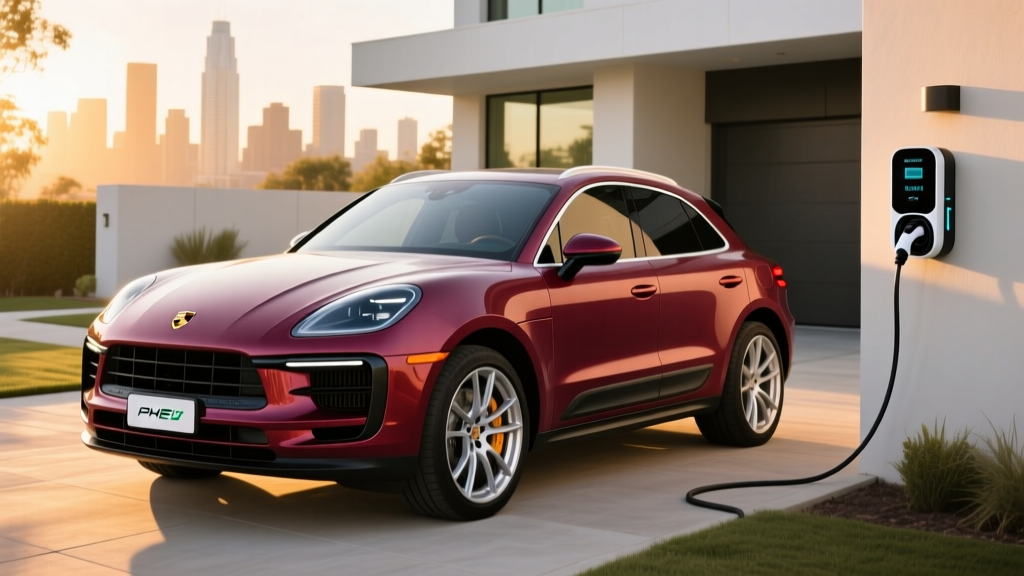
The Porsche Macan has long been the entry point into Porsche ownership, and for 2026, the lineup now includes a plug-in hybrid variant alongside the all-electric Macan EV and the legacy turbocharged gas models. The Macan hybrid — specifically the Macan S E-Hybrid — targets buyers who want Porsche performance and daily electric commuting without fully committing to a battery-electric vehicle. But with Porsche's transition to the all-new EV platform, where does the PHEV fit, and is it the right bridge for your garage?
This guide breaks down every spec that matters: real-world MPG, electric-only range, battery capacity, charging logistics, powertrain output, pricing by trim, federal tax credit eligibility under current IRS §30D rules, and long-term battery reliability. We'll also clarify the difference between a conventional hybrid (HEV) and the plug-in hybrid (PHEV) that Porsche actually sells in the Macan lineup.
HEV vs PHEV: What Porsche Actually Offers in the Macan
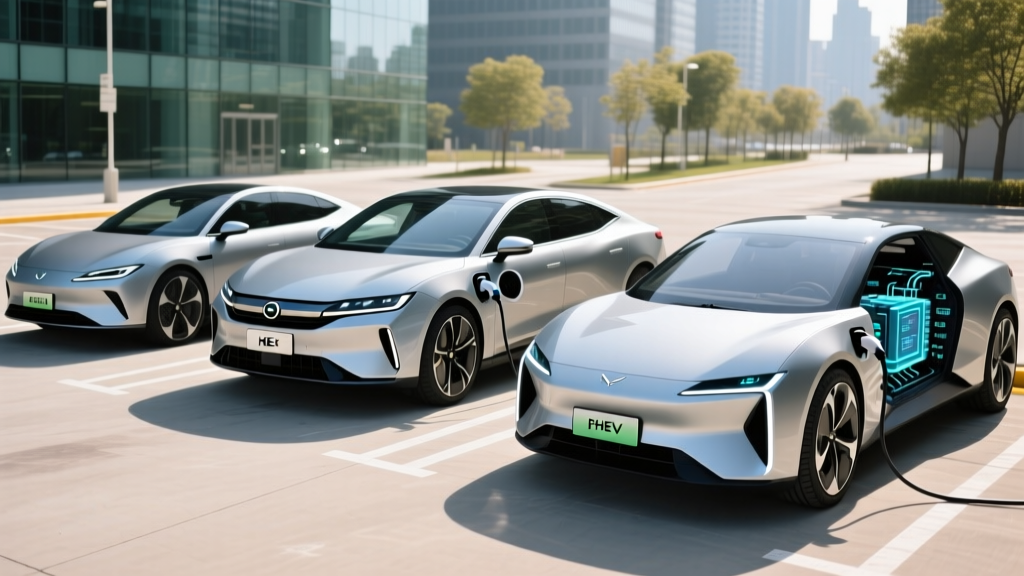
Before diving into specs, it's critical to distinguish the two hybrid architectures, because Porsche only offers one in the Macan:
Conventional Hybrid (HEV)
- No plug — charges via regenerative braking and the engine
- Small battery (typically 1–2 kWh)
- No meaningful electric-only range
- Improves MPG modestly over gas-only
- Example: Toyota RAV4 Hybrid
Plug-In Hybrid (PHEV)
- Plugs in to charge — Level 1 or Level 2 AC
- Larger battery (14–25+ kWh usable)
- 20–50+ miles of electric-only driving
- Gas engine extends range indefinitely once battery depletes
- Example: Porsche Macan S E-Hybrid
The Macan hybrid is a PHEV, not a conventional HEV. Porsche does not sell a non-plug-in hybrid Macan. If you see "Macan hybrid" referenced, it means the plug-in variant. This matters because PHEVs require charging access (ideally at home) to deliver their full efficiency and cost-savings benefit. If you can't plug in regularly, a PHEV operates as a heavy, less-efficient gas car once the battery depletes.
Powertrain and Performance Specs
| Specification | 2026 Macan S E-Hybrid |
|---|---|
| Engine | 2.0L turbocharged inline-4 |
| Electric Motor | Integrated into 8-speed PDK transmission |
| Combined System Output | ~382 hp / 479 lb-ft torque (estimated) |
| 0–60 mph | ~5.0 seconds (estimated) |
| Drivetrain | All-wheel drive (AWD) |
| Transmission | 8-speed PDK dual-clutch automatic |
| Battery (Usable) | ~17.9 kWh lithium-ion (NMC chemistry) |
| Onboard Charger | 7.2 kW AC (Level 2) |
| DC Fast Charging | Not available — AC only |
The Macan S E-Hybrid pairs a turbocharged four-cylinder with an electric motor sandwiched into Porsche's quick-shifting PDK transmission. The combined output puts it between the base Macan and the Macan S in the gas-only lineup, but the instant electric torque gives it stronger low-speed responsiveness than either. Porsche has not published final 2026 power figures as of this writing, so the horsepower and 0–60 estimates above are based on the outgoing Cayenne E-Hybrid architecture and pre-production disclosures. We'll update once Porsche confirms.
EPA MPG, Electric Range, and Real-World Efficiency
| Metric | EPA Estimate | Real-World Expectation |
|---|---|---|
| Combined MPGe (electric + gas) | ~50 MPGe (estimated) | 45–52 MPGe depending on charge frequency |
| Gas-Only Combined MPG | ~24 MPG (estimated) | 21–26 MPG (city-favoring; highway ~22) |
| Electric-Only Range | ~27 miles (estimated) | 22–28 miles (cold weather: 17–20 miles) |
| Total Combined Range | ~380 miles (estimated) | 350–400 miles depending on driving style |
How many MPG does this hybrid get? Once the battery is depleted, the Macan S E-Hybrid operates as a conventional (though heavy) hybrid, returning an estimated 24 MPG combined. That's a meaningful improvement over the gas-only Macan S (~21 MPG combined per fueleconomy.gov), but not dramatically so — the PHEV's real efficiency advantage comes from those first 22–27 electric-only miles. If your daily commute is under 25 miles round-trip and you charge nightly, you may use almost no gasoline for weeks.
Charging: Times, Levels, and Home Setup
| Charging Level | Power | Time (0–100%) | Notes |
|---|---|---|---|
| Level 1 (120V household) | ~1.4 kW | ~12–14 hours | Emergency/trickle only |
| Level 2 (240V home/public) | 7.2 kW | ~2.5–3 hours | Recommended daily charging |
| DC Fast Charging | N/A | N/A | Not supported on Macan PHEV |
The Macan S E-Hybrid accepts up to 7.2 kW on AC Level 2, which is standard for Porsche's PHEV lineup. A full charge from empty takes roughly 2.5 hours on a 240V/32A home charger — fast enough to top up during a workday or between errands. On a standard 120V outlet (Level 1), expect 12–14 hours, which works for overnight replenishment if your daily electric use is modest.
No DC fast charging. This is a deliberate engineering choice — Porsche's PHEVs use smaller batteries that charge quickly enough on AC for daily use, and adding DC hardware would add weight and cost. For road trips, the gas engine takes over seamlessly, so the lack of DC charging is irrelevant once the battery depletes.
For home Level 2 installation, budget $800–$2,500 total (charger unit: $400–$700; electrician labor and permit: $400–$1,800), depending on whether your electrical panel needs an upgrade. A 240V/40A circuit is typical. Always get a quote from a licensed electrician before committing.
Pricing, Trims, and Federal Tax Credit Eligibility
The 2026 Porsche Macan S E-Hybrid is expected to start at approximately $68,000–$72,000 MSRP before destination and options. Porsche typically offers the E-Hybrid in a single well-equipped trim rather than multiple sub-trims, though packages (Premium, Sport Chrono, adaptive air suspension) add $3,000–$12,000 quickly. A realistically optioned Macan S E-Hybrid will land in the $74,000–$82,000 range.
Federal §30D Tax Credit Eligibility (2026 Rules)
The Macan S E-Hybrid may qualify for a partial or full $7,500 federal tax credit, but eligibility depends on several factors that change annually. Per IRS §30D guidelines:
- MSRP Cap: SUVs must have an MSRP at or below $80,000. A base Macan S E-Hybrid likely qualifies; a heavily optioned one may exceed the cap.
- Buyer Income Cap: Modified AGI must not exceed $150,000 (single), $225,000 (head of household), or $300,000 (joint filers).
- Battery Sourcing: Critical minerals and battery components must meet escalating domestic-content thresholds. Porsche's supply chain compliance varies by model year — verify at purchase.
- Point-of-Sale Transfer: As of 2024+, eligible buyers can transfer the credit to the dealer at purchase for an immediate price reduction rather than waiting to claim it on their tax return.
- Assembly: Final assembly must occur in North America. The Macan is assembled in Leipzig, Germany — this likely disqualifies it from the §30D new-vehicle credit.
Bottom line: Because the Macan is built in Germany, it almost certainly does not qualify for the $7,500 federal new-vehicle tax credit under current §30D rules. Consult a tax professional and check the VIN against the DOE's qualifying vehicle list before assuming eligibility. Some state-level incentives (e.g., utility rebates for PHEV purchase or home charger installation) may still apply — check your local programs.
Battery Reliability, Warranty, and Replacement Cost
Porsche PHEV Battery Warranty
- Hybrid Battery Warranty: 8 years / 100,000 miles (whichever comes first), covering defects and capacity loss below a specified threshold (typically 70% of original capacity).
- Powertrain Warranty: 4 years / 50,000 miles (Porsche's standard limited warranty).
- Expected Battery Lifespan: 10–15 years / 150,000+ miles before significant degradation, based on data from the Cayenne E-Hybrid and Panamera E-Hybrid platforms.
Is this hybrid reliable, and what is battery replacement cost? Porsche's E-Hybrid system has been in production since 2014 (Panamera) and 2019 (Cayenne), giving it a solid track record. The high-voltage battery uses NMC (nickel manganese cobalt) chemistry with active liquid thermal management — the same architecture proven in the Cayenne E-Hybrid, which has shown modest degradation of 8–12% over 8 years in owner-reported data.
If the battery does need replacement out of warranty, expect $8,000–$14,000 for the pack and labor at a Porsche dealer. This is a worst-case scenario; most PHEV batteries outlast the vehicle's practical ownership life. The 8-year/100,000-mile warranty provides strong protection during the highest-risk early years. Porsche also covers the electric motor and power electronics under the hybrid warranty.
For long-term reliability context, IIHS and NHTSA ratings for the Macan PHEV specifically may be limited (the EV variant gets more testing attention), but the platform shares structural DNA with the well-rated Macan lineup.
Who Should Choose the Macan Hybrid vs. a Full EV or Gas Car
Choose the Macan S E-Hybrid (PHEV) If:
- Your daily commute is under 30 miles round-trip and you can charge at home nightly
- You want electric weekday driving but gas flexibility for weekend road trips
- You're not ready for full EV ownership due to apartment living, unreliable public charging, or frequent long-distance travel
- You value Porsche driving dynamics and brand cachet
Choose the All-Electric Macan EV Instead If:
- You have reliable home Level 2 charging and your daily driving is under 250 miles
- You want zero tailpipe emissions and lower per-mile fuel cost
- You want DC fast charging (up to 270 kW) for road trips
- You want to avoid engine maintenance entirely (no oil changes, no spark plugs)
Choose the Gas-Only Macan If:
- You have no home charging access and don't want to install it
- Your daily driving exceeds 50+ miles in stop-start traffic where PHEV advantage diminishes
- Upfront cost is the primary concern (gas Macan starts ~$10,000 lower)
Macan S E-Hybrid Pros
- 22–27 miles of silent, zero-emission electric commuting
- Gas engine eliminates range anxiety on road trips
- Strong combined performance (~382 hp, ~5.0s 0–60)
- Lower fuel cost if you charge regularly
- Porsche build quality, handling, and resale value
Macan S E-Hybrid Cons
- Likely ineligible for $7,500 federal tax credit (German assembly)
- No DC fast charging
- Higher MSRP than gas Macan; options add up fast
- Heavier than gas variant (battery + motor weight)
- Electric range drops significantly in cold weather
- Requires home charging to realize efficiency benefits
Frequently Asked Questions
How many MPG does the Macan hybrid get?
An estimated 24 MPG combined once the battery is depleted, and approximately 50 MPGe when factoring in electric-only driving. Real-world gas-only MPG ranges from 21–26 depending on city vs. highway driving. The PHEV's biggest efficiency gain comes from using electric mode for short trips — if you charge daily and drive under 25 miles, your actual gasoline consumption may be near zero on weekdays.
How far can the Macan PHEV go on electric only?
An estimated 27 miles EPA, with real-world results of 22–28 miles in mild weather and 17–20 miles in cold conditions (below 40°F). Highway speeds above 70 mph reduce electric range by 15–20%. Once depleted, the gas engine engages automatically — there is no range limitation beyond the fuel tank.
Hybrid vs PHEV vs EV — which Macan fits me?
The Macan hybrid is a PHEV (plug-in hybrid), not a conventional hybrid. It bridges the gap: electric for daily commuting, gas for road trips. If you have home charging and drive under 250 miles daily, the all-electric Macan EV offers lower running costs and DC fast charging. If you can't charge at home and don't want to install a Level 2 outlet, the gas-only Macan is simpler and cheaper upfront.
Is the Macan hybrid reliable and what does a battery replacement cost?
Porsche's E-Hybrid system has been in production since 2014 with solid reliability data. The high-voltage battery is warranted for 8 years/100,000 miles and typically lasts 10–15 years. Out-of-warranty replacement costs $8,000–$14,000, though most owners never need one. The system uses proven NMC chemistry with liquid thermal management.
Does the Macan hybrid qualify for any tax credit?
The Macan S E-Hybrid is assembled in Leipzig, Germany, which almost certainly disqualifies it from the $7,500 federal §30D new-vehicle tax credit under current rules requiring North American final assembly. Always verify with the IRS qualifying vehicle list and a tax professional before purchase. Some state, local, or utility incentives for PHEVs and home charger installation may still apply — check your jurisdiction.
Can the Macan PHEV DC fast charge?
No. The Macan S E-Hybrid supports AC charging only — up to 7.2 kW on Level 2 (240V), taking about 2.5 hours for a full charge. Level 1 (120V) takes 12–14 hours. DC fast charging is not available on any Porsche PHEV; it's reserved for the all-electric Macan EV, which supports up to 270 kW DC.