Search for the 919 Porsche Hybrid and you'll find one of the most successful endurance racing machines ever built — not a road-going plug-in hybrid you can drive to work. The Porsche 919 Hybrid is a Le Mans Prototype 1 (LMP1) race car that dominated the FIA World Endurance Championship from 2015 through 2017, capturing three consecutive overall victories at the 24 Hours of Le Mans and three drivers' and manufacturers' world championships. But its engineering DNA — a compact turbocharged engine paired with an advanced energy recovery system — directly informs every hybrid Porsche you can buy today, from the Panamera E-Hybrid to the Cayenne E-Hybrid and the upcoming all-electric platforms.
This guide breaks down exactly what the 919 Hybrid is, how its powertrain works, the specific numbers behind its performance, and what buyers looking for a Porsche hybrid road car should actually be shopping for in 2026.
What Is the Porsche 919 Hybrid?
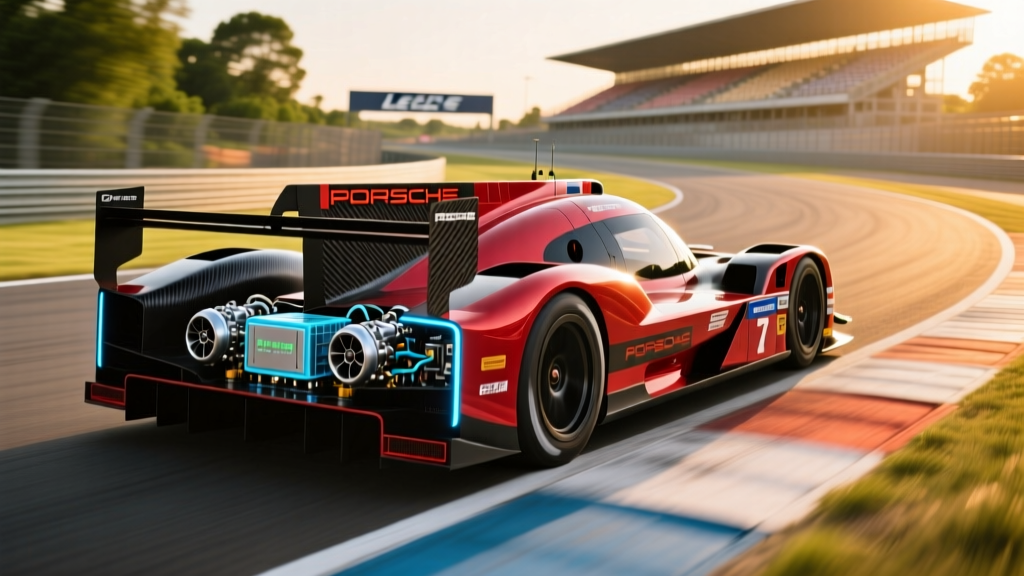
The Porsche 919 Hybrid is a purpose-built LMP1 prototype race car developed by Porsche AG for the FIA World Endurance Championship (WEC). It competed from 2014 to 2017, with its most dominant seasons coming in 2015, 2016, and 2017. The "Hybrid" in its name refers to its dual energy recovery systems — a kinetic motor-generator unit on the front axle and a thermal exhaust gas energy recovery system — that work alongside a mid-mounted 2.0-liter turbocharged V4 gasoline engine.
This is not a vehicle available for consumer purchase. It was never produced as a road car, and you won't find it on any dealer lot. However, understanding the 919's engineering helps explain Porsche's approach to hybrid technology in its production lineup.
| Attribute | Specification |
|---|---|
| Vehicle Type | LMP1 Prototype Race Car (not road-legal) |
| Combustion Engine | 2.0L turbocharged V4, direct injection |
| Engine Output | ~500 PS (368 kW / ~493 hp) |
| Electric Motor (Front Axle) | Motor-generator unit (MGU), ~400 PS (294 kW / ~395 hp) |
| Combined System Output | ~900 PS (662 kW / ~888 hp) |
| Battery Capacity | 8.75 kWh (lithium-ion, liquid-cooled) |
| Energy Recovery Class | 8 MJ class (maximum allowed per lap at Le Mans) |
| Drivetrain | Rear-wheel drive (engine), front-wheel drive (electric) — temporary AWD under boost |
| Weight | 875 kg (1,929 lbs) minimum with driver |
| 0-100 km/h (0-62 mph) | ~2.3 seconds (estimated) |
| Top Speed | ~340 km/h (211 mph) at Le Mans low-downforce setup |
| Years Active | 2014–2017 (WEC competition) |
919 Hybrid Powertrain: V4 Engine Meets Dual Energy Recovery
The 919's powertrain was revolutionary for its era — and remains one of the most thermally efficient racing engines ever built. Porsche chose a small-displacement 2.0-liter V4 rather than the larger V6 or V8 configurations competitors used. The engine uses direct fuel injection and a single turbocharger, producing approximately 500 PS (493 hp) on its own.
Where the 919 truly differentiates itself is in its hybrid energy recovery architecture, which harvests energy from two sources:
- Kinetic Energy Recovery (MGU-K): A motor-generator unit on the front axle captures braking energy during deceleration and converts it to electrical energy stored in the battery. Under acceleration, this motor drives the front wheels, temporarily making the car all-wheel drive and adding approximately 400 PS (395 hp) to the system output.
- Thermal Exhaust Energy Recovery (MGU-H equivalent): A second system captures waste heat energy from the exhaust stream via a turbine connected to a generator. This was one of the most innovative aspects of the 919 — no other LMP1 competitor used exhaust gas recovery in the same way.
The recovered electrical energy is stored in a liquid-cooled lithium-ion battery mounted in the cockpit area. The 919 competed in the highest energy recovery class allowed by WEC regulations — the 8 MJ class — meaning it could deploy up to 8 megajoules of recovered electrical energy per lap of the Circuit de la Sarthe at Le Mans. This allowed the most aggressive electric boost strategy of any car in the field.
The combined system output of approximately 900 PS (888 hp) from a car weighing just 875 kg gives the 919 a power-to-weight ratio that exceeds virtually any production car ever made.
The 8.75 kWh Battery: Small Pack, Extreme Performance
The 919 Hybrid's battery capacity of 8.75 kWh may sound modest compared to a road-going EV — a 2026 Porsche Taycan carries over 100 kWh. But in an 875-kg race car, that pack is sized for rapid charge-and-deploy cycles, not sustained range.
The battery chemistry and cell design were optimized for extremely high C-rates (charge and discharge rates). During heavy braking zones at Le Mans, the front-axle MGU can recover energy at rates exceeding 900 kW for brief periods — far higher than any public DC fast charger available to consumers. The pack must then discharge that energy just as quickly under acceleration. This cycle repeats hundreds of times per race.
From the 919 to the Showroom: Porsche's Road-Going Hybrids in 2026
If you landed on this page searching for a 919 Porsche Hybrid you can actually buy, you're looking for one of Porsche's production plug-in hybrid (PHEV) models. These are the vehicles that inherit the 919's hybrid philosophy — pairing turbocharged engines with electric motors and energy recovery systems — in a road-legal package. Here's how Porsche's 2026 hybrid lineup stacks up:
| Model | Powertrain | Combined HP | Electric-Only Range | Battery (kWh) | MPGe (Combined) | MPG (Gas Only, Combined) |
|---|---|---|---|---|---|---|
| Panamera 4 E-Hybrid | 2.9L V6 TT + Electric Motor | 463 hp | ~30 mi (EPA est.) | 25.9 kWh | ~52 MPGe | ~24 mpg |
| Panamera Turbo E-Hybrid | 4.0L V8 TT + Electric Motor | 670 hp | ~28 mi (EPA est.) | 25.9 kWh | ~48 MPGe | ~21 mpg |
| Cayenne E-Hybrid | 3.0L V6 TT + Electric Motor | 389 hp | ~27 mi (EPA est.) | 25.9 kWh | ~46 MPGe | ~21 mpg |
| Cayenne Turbo E-Hybrid | 4.0L V8 TT + Electric Motor | 729 hp | ~26 mi (EPA est.) | 25.9 kWh | ~44 MPGe | ~19 mpg |
Sources: fueleconomy.gov (EPA estimates). Real-world electric range varies with temperature, terrain, and driving style. Expect 20–25 mi electric-only in cold weather or aggressive highway driving.
PHEV vs. HEV vs. EV: Which Porsche Powertrain Fits You?
The 919 was a unique racing hybrid that doesn't map directly to any consumer powertrain category. For Porsche buyers in 2026, the choice comes down to three options:
| Feature | Conventional Hybrid (HEV) | Plug-In Hybrid (PHEV) | Battery Electric (BEV) |
|---|---|---|---|
| Plugs In? | No — self-charging via regenerative braking | Yes — Level 2 AC charging | Yes — Level 2 AC + DC fast charging |
| Electric-Only Range | None (motor assists engine only) | 26–30 mi (Porsche PHEVs) | 220–300+ mi (Porsche BEVs) |
| Battery Size | ~1–2 kWh | 25.9 kWh | 100+ kWh |
| Home Charging Needed? | No | Yes (Level 2 recommended for daily EV driving) | Yes (Level 2 essential) |
| Best For | Drivers without home charging access | Commuters with short electric range + long road trips | Drivers with home charging who rarely exceed 250 mi/day |
| Porsche Example (2026) | Not offered (Porsche skipped HEV) | Panamera E-Hybrid, Cayenne E-Hybrid | Taycan, Macan Electric |
The 919 connection: The race car's dual energy recovery concept — harvesting both kinetic (braking) and thermal (exhaust) energy — lives on in Porsche's PHEV architecture. The road cars use regenerative braking to recharge their larger batteries, and the combustion engine's efficiency has been improved through lessons learned in WEC competition about thermal management and downsized turbocharging.
Charging, Range, and Real-World Ownership for Porsche PHEVs
Porsche's 2026 E-Hybrid models use a 25.9 kWh lithium-ion battery pack. Here's what charging and daily driving actually looks like:
- Level 1 (120V household outlet): ~1.4 kW charge rate. A full charge from empty takes approximately 18 hours — impractical for daily use.
- Level 2 (240V home charger, 7.2 kW onboard charger): A full charge takes roughly 3.5–4 hours. This is the practical home-charging solution — plug in after work, wake up with a full battery every morning.
- DC Fast Charging: Porsche's 2026 E-Hybrid models do not support DC fast charging. The onboard charger is AC-only. This is typical for PHEVs — the battery is small enough that Level 2 covers overnight needs.
Real-world electric range reality: While EPA estimates put Porsche PHEVs at 26–30 miles of electric-only range, expect that number to drop to 20–25 miles in winter conditions (below 40°F) due to battery chemistry limitations and cabin heating demands. On warm days with moderate driving, you may slightly exceed the EPA estimate in city traffic where regenerative braking is most effective.
Total combined range (electric + gasoline) typically exceeds 400 miles, making Porsche PHEVs practical for long road trips where charging infrastructure is sparse.
Pricing, Tax Credits, and the §30D Federal Credit for Porsche PHEVs
Porsche's E-Hybrid models command a premium over their gasoline-only counterparts. Here's where pricing and incentives stand for 2026:
- Panamera 4 E-Hybrid: Starting MSRP approximately $108,000
- Panamera Turbo E-Hybrid: Starting MSRP approximately $165,000
- Cayenne E-Hybrid: Starting MSRP approximately $97,000
- Cayenne Turbo E-Hybrid: Starting MSRP approximately $148,000
Federal tax credit eligibility (§30D): Under current IRS rules, the new clean vehicle credit provides up to $7,500 for qualifying PHEVs, but eligibility depends on several factors that frequently exclude luxury vehicles like Porsche:
- MSRP cap: Sedans must be priced under $55,000; SUVs/vans/trucks under $80,000. This eliminates every Porsche PHEV from the new-vehicle credit.
- Buyer income cap: Modified adjusted gross income must not exceed $150,000 (single), $225,000 (head of household), or $300,000 (joint filers).
- Battery component and critical mineral sourcing: Even if price and income qualify, battery components and critical minerals must meet North American sourcing thresholds that tighten annually.
Bottom line: As of 2026, no new Porsche PHEV qualifies for the $7,500 federal tax credit due to the MSRP cap. Buyers should consult a tax professional and check the latest eligibility list at IRS.gov before assuming credit availability.
- 26–30 mi electric range covers most daily commutes with zero tailpipe emissions
- Combined output up to 729 hp (Cayenne Turbo E-Hybrid) — performance-car acceleration
- 400+ mi total range eliminates road-trip range anxiety
- No reliance on public charging infrastructure for long trips
- Porsche build quality, driving dynamics, and resale value
- 8-year/100,000-mile hybrid battery warranty
- MSRP well above $30D tax credit cap — no $7,500 federal incentive
- Electric-only range is modest compared to BEVs (26–30 mi vs. 250+ mi)
- Higher maintenance costs than BEVs (engine oil, filters, spark plugs, transmission fluid)
- Insurance premiums typically 15–25% higher than equivalent gas-only models
- No DC fast charging — Level 2 only
- Added weight from dual powertrain affects handling vs. gas-only Porsche models
Battery Warranty, Reliability, and Long-Term Costs
Hybrid battery longevity is one of the most common concerns among PHEV shoppers. Here's what Porsche covers:
Coverage: 8 years / 100,000 miles (whichever comes first)
Capacity threshold: Battery must retain at least 70% of original capacity to remain under warranty coverage.
Replacement cost (out of warranty): Estimated $12,000–$18,000 for the 25.9 kWh pack, including parts and labor at a Porsche dealership.
In practice, Porsche's PHEV battery packs have proven reliable. The 25.9 kWh NMC (nickel manganese cobalt) chemistry is well-understood, and Porsche's thermal management system keeps cells within optimal temperature ranges. Most PHEV batteries retain 85–90% capacity after 100,000 miles based on industry-wide degradation data from similar packs.
Reliability context: Porsche as a brand ranks mid-pack in J.D. Power dependability studies. The E-Hybrid powertrains add complexity — two power sources, additional cooling circuits, high-voltage cabling — that introduces more potential failure points than a gasoline-only powertrain. However, the hybrid components themselves (battery, electric motor, power electronics) have proven robust across the industry. Most hybrid system failures are related to ancillary components (cooling pumps, sensors, contactors) rather than cell-level battery degradation.
The 919's Legacy: What Racing Taught Porsche About Road Hybrids
The Porsche 919 Hybrid program ran from 2014 through 2017, culminating in 18 overall WEC race victories and three Le Mans 24-hour wins (2015, 2016, 2017). After withdrawing from LMP1, Porsche redirected much of its motorsport engineering talent into its Formula E program and, critically, into its production hybrid and electric vehicle development.
Key technologies that transferred from the 919 to road cars include:
- 800-volt electrical architecture: The 919 used a high-voltage system that directly informed the Taycan's 800V architecture — enabling faster DC charging and lighter wiring harnesses.
- Thermal management strategies: Lessons from keeping a race car battery at optimal temperature under extreme load translated to more sophisticated cooling systems in the Taycan and E-Hybrid models.
- Downsized turbocharging: The 919's 2.0L V4 proved that smaller displacement turbocharged engines could deliver enormous power with better efficiency — a philosophy now visible across Porsche's production engine lineup.
- Energy recovery optimization: Software algorithms for managing when to harvest and deploy electrical energy were refined over thousands of race laps and now govern the seamless transitions between electric and gasoline power in Porsche PHEVs.
Frequently Asked Questions
Can I buy a Porsche 919 Hybrid?
No. The Porsche 919 Hybrid is an LMP1 race car that competed in the FIA World Endurance Championship from 2014 to 2017. It was never produced as a road-legal vehicle and is not available for consumer purchase. Porsche retains ownership of the race cars, with some displayed in museums or used for demonstration events.
How many MPG does a Porsche PHEV get?
Porsche's 2026 E-Hybrid models achieve approximately 44–52 MPGe combined (electric + gas operation) and 19–24 MPG combined on gasoline alone after the battery is depleted. The Panamera 4 E-Hybrid is the most efficient at ~52 MPGe and ~24 mpg gas-only. Real-world city driving often exceeds EPA gas-only estimates due to regenerative braking, while highway driving may fall slightly below.
How far can a Porsche PHEV go on electric only?
Porsche's 2026 E-Hybrid lineup delivers 26–30 miles of EPA-estimated electric-only range, depending on the model. The Panamera 4 E-Hybrid achieves the longest electric range at approximately 30 miles. Expect 20–25 miles in cold weather (below 40°F) or during aggressive highway driving.
Does a Porsche PHEV qualify for the federal tax credit?
No. Under current IRS §30D rules, new sedans must have an MSRP under $55,000 and SUVs under $80,000 to qualify for the up-to-$7,500 clean vehicle credit. All Porsche PHEVs exceed these caps. Additionally, buyer income limits and battery sourcing requirements further restrict eligibility. Always verify current rules at IRS.gov.
Is the Porsche PHEV battery reliable and what does replacement cost?
Porsche covers the PHEV battery for 8 years/100,000 miles with a 70% capacity retention threshold. Industry data suggests most PHEV packs retain 85–90% capacity at 100,000 miles. Out-of-warranty replacement costs are estimated at $12,000–$18,000. The hybrid system has proven reliable, with most issues arising from ancillary components rather than battery cell failure.
Should I buy a Porsche PHEV or a full EV like the Taycan?
Choose a Porsche PHEV (Panamera E-Hybrid or Cayenne E-Hybrid) if you have a short commute (under 30 miles), access to Level 2 home charging, and frequently take road trips exceeding 250 miles where charging stops would be inconvenient. Choose a Porsche BEV (Taycan or Macan Electric) if you have reliable home charging, rarely drive more than 200 miles in a day, want lower maintenance costs (no oil changes, fewer moving parts), and prefer maximum performance and instant torque. The PHEV is the pragmatic bridge; the BEV is the lower-maintenance, higher-efficiency endpoint.
What is the difference between the 919 Hybrid and a production Porsche hybrid?
The 919 is a ~900 hp, 875-kg race car with dual energy recovery systems (kinetic + exhaust thermal), an 8.75 kWh battery, and no road-legal equipment. Production Porsche PHEVs are 4,800–5,400 lb luxury vehicles with a single kinetic energy recovery system, a 25.9 kWh battery, 26–30 miles of electric range, and full road amenities. The 919's engineering principles — high-voltage architecture, thermal management, downsized turbocharging — directly influenced Porsche's road car development, but the vehicles share no direct parts.