What Is the Porsche 919 Hybrid Evo?
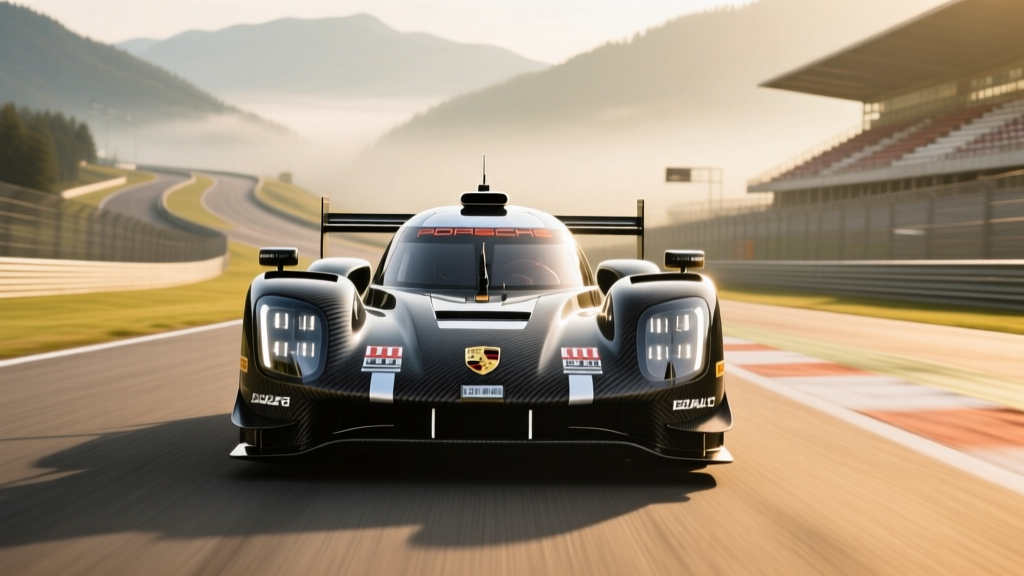
The Porsche 919 Hybrid Evo is not a road car — and that's precisely what makes it one of the most fascinating hybrid machines ever built. Developed as an unrestricted evolution of Porsche's Le Mans–winning 919 Hybrid LMP1 prototype, the Evo variant was unleashed in 2018 after Porsche withdrew from the FIA World Endurance Championship. Freed from race regulations governing fuel flow, energy deployment, and aerodynamics, Porsche engineers extracted a combined 1,160 horsepower from a compact 2.0-liter turbocharged V4 engine paired with an electric motor on the front axle.
While you cannot buy or drive a 919 Hybrid Evo on public roads, understanding its hybrid architecture offers a masterclass in how high-performance hybrid systems work at the extreme end of the spectrum — and how those principles have filtered into Porsche's road-going hybrid lineup, including the Panamera E-Hybrid, Cayenne E-Hybrid, and the 918 Spyder that preceded it.
LMP1 Hybrid vs. Road Hybrids: HEV, PHEV, and the 919's Unique Approach
To contextualize the 919 Hybrid Evo, it helps to distinguish the three hybrid categories consumers encounter:
| Attribute | Conventional Hybrid (HEV) | Plug-in Hybrid (PHEV) | Porsche 919 Hybrid Evo (LMP1) |
|---|---|---|---|
| Plugs in? | No — regenerative braking only | Yes — Level 1/2 AC charging | No — regen + pit energy recovery only |
| Battery size | 0.5–2.0 kWh (typical) | 10–30 kWh (typical road PHEV) | ~2.0 kWh (LMP1-spec lithium-ion) |
| Electric-only range | <1 mile at low speed | 20–50 miles (EPA rated) | Not designed for EV-only driving |
| Primary purpose | Fuel economy | Electric commuting + gas flexibility | Maximum lap performance |
| Energy recovery | Braking regen | Braking regen + grid charging | Front-axle MGU + exhaust energy recovery (MGU-H, removed on Evo) |
The 919 Hybrid operates as a conventional hybrid (HEV) in principle — it never plugs into a wall. Its battery is recharged exclusively through regenerative braking from the front-axle motor-generator unit (MGU-K) and, in its original WEC race form, an exhaust-mounted MGU-H that harvested waste heat energy. The Evo variant removed the MGU-H system (a regulation-mandated component) to simplify the powertrain and reduce weight, relying solely on kinetic braking recovery.
Powertrain Deep-Dive: 1,160 Combined Horsepower
The 919 Hybrid Evo's powertrain is a two-part system combining internal combustion and electric propulsion:
| Component | Specification |
|---|---|
| Internal combustion engine | 2.0L turbocharged V4, direct injection |
| ICE output | ~720 hp (unrestricted fuel flow on Evo) |
| Electric motor (front axle) | MGU-K, motor-generator unit |
| Electric motor output | ~440 hp |
| Combined system output | ~1,160 hp |
| Battery | Lithium-ion, ~2.0 kWh (water-cooled) |
| Drivetrain | Rear-wheel drive (ICE), front-wheel drive (electric) = e-AWD |
| 0–60 mph (estimated) | ~2.2 seconds |
| Top speed | ~229 mph (369 km/h, Nürburgring setup) |
| Weight | ~1,874 lbs (850 kg, with ballast removal) |
The internal combustion engine in the 919 is remarkably small — just 2.0 liters in a V4 configuration — but it was the most efficient engine Porsche had ever built at the time, achieving thermal efficiency figures above 40%. In its original WEC form, fuel flow was capped by regulations at 1.8 kg per lap of Le Mans. The Evo removed that restrictor, allowing substantially more fuel and boost pressure, which pushed ICE output from approximately 500 hp to over 700 hp.
The front-axle electric motor serves a dual purpose: under braking, it acts as a generator, converting kinetic energy into electrical energy stored in the lithium-ion battery. Under acceleration, it deploys that stored energy to the front wheels, effectively providing all-wheel-drive traction off corners. This system is conceptually similar to the torque-vectoring electric front axles found in modern road PHEVs like the Panamera Turbo S E-Hybrid, but operating at far higher power densities.
Battery Technology and Energy Management
The 919 Hybrid Evo's battery pack is small by road-car standards — approximately 2.0 kWh of usable capacity — but it is engineered for extreme charge and discharge rates rather than energy storage volume. In endurance racing, the battery must absorb massive regen energy spikes during braking (at rates exceeding 1,000 kW equivalent for fractions of a second) and then redeploy that energy within the next acceleration zone, repeatedly, for hours.
Note on road-going hybrid batteries: Porsche's consumer hybrid and PHEV models carry high-voltage battery warranties of 8 years / 100,000 miles (whichever comes first), in compliance with standard industry hybrid battery coverage. The 919's race-spec battery has no consumer warranty analog — it is a consumable race component replaced on a cycle-based schedule.
The battery uses lithium-ion cells in a configuration optimized for power density (rapid charge/discharge) rather than energy density (total storage). This is the inverse of what you find in a road-going PHEV or BEV, where maximizing kWh capacity for range is the priority. The 919's battery is liquid-cooled and mounted in the chassis for optimal weight distribution and thermal management.
Performance Records: What the Evo Actually Achieved
The 919 Hybrid Evo was built to answer one question: how fast could an unrestricted LMP1 car actually go? The results were staggering:
- Spa-Francorchamps (2018): Neel Jani lapped in 1:41.770 — faster than the existing F1 track record at the time.
- Nürburgring Nordschleife (June 2018): Timo Bernhard set a lap time of 5:19.55, obliterating Stefan Bellof's 35-year-old record of 6:11.13 set in a Porsche 956. This remains the all-time fastest lap of the Nordschleife.
These records were possible because the Evo combined hybrid electric torque fill (eliminating turbo lag and providing instant front-axle thrust) with unrestricted aerodynamics — the Evo generated approximately 53% more downforce than the WEC-spec 919 Hybrid. The hybrid system's contribution was essential: without the electric front axle, the car would have lacked the traction to exploit its aerodynamic platform through corners and would have suffered turbo lag from the small-displacement engine.
How the 919's Hybrid Tech Connects to Porsche's Road Cars
The engineering lessons from the 919 Hybrid program directly influenced Porsche's production hybrid vehicles:
- Porsche 918 Spyder (2013–2015): The 919's predecessor in hybrid philosophy. The 918 used a 4.6L V8 + two electric motors (front and rear) for 887 combined hp and ~12 miles of electric-only range as a PHEV.
- Panamera Turbo S E-Hybrid (2026): A PHEV with a 25.9 kWh battery, ~30 miles of EPA electric-only range, and 750 combined hp. It uses a decoupled electric motor integrated into the transmission, a concept validated by the 919 program.
- Cayenne Turbo E-Hybrid (2026): PHEV SUV with ~30 miles electric range, 729 hp combined, and the ability to DC fast charge at up to 50 kW — a rarity among PHEVs.
The 919's MGU-K architecture — where a single electric motor on one axle handles both regeneration and deployment — has become the standard approach in modern performance PHEVs. The key difference is that road cars add grid-charging capability and larger batteries for meaningful electric-only commuting.
Pricing, Tax Credits, and Ownership Reality
The Porsche 919 Hybrid Evo was never offered for sale. Porsche built a single unit and ran it as a demonstration and record-setting project. It has no MSRP, no VIN, and no road-legal homologation. Estimated program costs for the unrestricted Evo conversion and demonstration tour were in the tens of millions of euros, funded as a marketing and engineering exercise.
For readers interested in Porsche's road-going hybrid lineup, here is the current landscape:
| Model (2026) | Type | Combined HP | EPA EV Range | EPA MPG (combined, hybrid mode) | Base MSRP | §30D Tax Credit Eligible? |
|---|---|---|---|---|---|---|
| Panamera Turbo S E-Hybrid | PHEV | 750 hp | ~30 mi | ~22 MPG (gas) / 50 MPGe | ~$198,000 | No — exceeds MSRP cap |
| Cayenne Turbo E-Hybrid | PHEV | 729 hp | ~30 mi | ~21 MPG (gas) / 46 MPGe | ~$151,000 | No — exceeds MSRP cap |
Under current IRS §30D rules, the federal clean vehicle credit of up to $7,500 has MSRP caps ($55,000 for sedans, $80,000 for SUVs/vans/pickups), buyer income limits, and battery critical-mineral sourcing requirements. Porsche's hybrid models far exceed these MSRP caps, making them ineligible for the federal credit. Always verify current-year eligibility with a tax professional.
Who Should Care About the 919 Hybrid Evo?
The 919 Hybrid Evo matters to three audiences:
- Engineering enthusiasts who want to understand how hybrid systems perform at the absolute limit — where the goal is not fuel savings but lap-time reduction through torque fill, energy recovery, and all-wheel-drive traction.
- Porsche buyers evaluating the brand's hybrid road cars and wanting to understand the motorsport lineage behind the technology in their Panamera or Cayenne E-Hybrid.
- Hybrid skeptics who associate "hybrid" only with fuel-economy compromises. The 919 Hybrid Evo demonstrates that hybridization, properly applied, is a performance multiplier — the electric motor doesn't replace the combustion engine; it fills its weaknesses (turbo lag, traction limits, energy waste under braking).
What the 919 Hybrid Evo Demonstrates
- Hybrid systems can exceed 1,000 hp from a 2.0L engine + electric motor
- Regenerative braking recovers energy that would otherwise be wasted as heat
- Front-axle electric drive provides instant torque and e-AWD without mechanical complexity
- Small, power-dense batteries can outperform large energy-dense packs in track applications
What It Does Not Tell You About Road Hybrids
- No electric-only range — it was never designed for emissions-free driving
- No fuel economy data — MPG is irrelevant in a 1,874-lb, 1,160-hp prototype
- No consumer availability, pricing, or warranty
- Battery and component lifespan measured in race cycles, not years or miles
Frequently Asked Questions
How many MPG does the Porsche 919 Hybrid Evo get?
The 919 Hybrid Evo has no EPA MPG rating because it is not a road-legal vehicle and was never submitted for fuel economy testing. In its original WEC race form, the 919 Hybrid consumed approximately 2.0–2.5 liters of fuel per lap at Le Mans under regulated fuel-flow limits. The Evo, running unrestricted, would consume significantly more. MPG as a metric does not apply to this vehicle.
How far can it go on electric only?
The 919 Hybrid Evo was not designed for electric-only driving. Its ~2.0 kWh battery stores energy recovered from braking and deploys it in bursts during acceleration. There is no EV-only mode. For comparison, Porsche's road-going PHEVs like the 2026 Panamera E-Hybrid offer approximately 30 miles of EPA-rated electric-only range from a 25.9 kWh battery.
Hybrid vs PHEV vs EV — which Porsche fits a real buyer?
If you're considering a Porsche hybrid: choose a PHEV (Panamera or Cayenne E-Hybrid) if you have home charging and want 25–30 miles of electric commuting with gas flexibility for road trips. Choose a BEV (Taycan) if you want full electric operation with ~300 miles of range and access to DC fast charging at up to 320 kW on the Taycan Turbo GT. The 919 Hybrid Evo is a motorsport artifact, not a purchase option.
Is the hybrid system reliable, and what does battery replacement cost?
The 919's race-spec hybrid system has no consumer reliability data or replacement cost analog. For Porsche's production hybrids and PHEVs, the high-voltage battery is warrantied for 8 years / 100,000 miles. Out-of-warranty replacement costs for a Porsche PHEV battery typically range from $15,000 to $25,000 depending on the model. According to fueleconomy.gov, hybrid battery longevity has improved substantially, with most modern units lasting well beyond warranty periods under normal use.
Does the 919 Hybrid Evo qualify for any tax credit?
No. The 919 Hybrid Evo is not a consumer vehicle and has no tax credit eligibility. Porsche's current road-going PHEVs (Panamera, Cayenne E-Hybrid) exceed the IRS §30D MSRP caps ($55,000 sedans / $80,000 SUVs), making them ineligible for the federal clean vehicle credit regardless of income or battery sourcing. State-level incentives may apply in some jurisdictions — check your local DMV or energy office.
Can I see the 919 Hybrid Evo in person?
The 919 Hybrid Evo has appeared at the Porsche Museum in Stuttgart and at select motorsport events since its 2018 record-setting tour. It is not available for test drives, purchase, or private ownership.