The Prius Plug-In Hybrid Reinvented: Quick Verdict
Toyota's Prius Prime — the plug-in Prius hybrid — has shed its penalty-box reputation. The current generation pairs a 2.0-liter four-cylinder engine with dual electric motors for a combined 220 horsepower, reaching 60 mph in 6.6 seconds. With 44 miles of EPA-rated electric-only range and 52 MPG combined once the battery depletes, it occupies a practical middle ground between a conventional hybrid and a full battery-electric vehicle.
Starting at $33,445 for the SE trim, the plug-in Prius hybrid undercuts most PHEV competitors while offering genuine daily electric driving. The question isn't whether it's competent — it is — but whether its specific blend of electric range, hybrid efficiency, and pricing matches your commute and charging access.
HEV vs PHEV: Understanding the Two Prius Models
Toyota sells two distinct Prius models. The conventional Prius (HEV) uses a small battery charged only by the engine and regenerative braking — you never plug it in. The Prius Prime (PHEV) carries a larger battery you charge from a wall outlet or charging station, enabling extended electric-only driving before the gasoline engine engages.
| Attribute | Prius HEV (Conventional) | Prius Prime PHEV (Plug-In) |
|---|---|---|
| Plug-in required | No | Yes (for electric range) |
| Electric-only range | ~1 mile at low speed | 44 miles (EPA) |
| Battery capacity | 0.9 kWh (NiMH) | 13.6 kWh (Li-ion) |
| Combined output | 194 hp | 220 hp |
| EPA combined MPG | 57 MPG (LE FWD) | 52 MPG (hybrid mode) |
| Starting MSRP | $28,345 | $33,445 |
| Federal tax credit | Not eligible | Up to $3,750 (§30D) |
The conventional Prius is the efficiency king for drivers who can't charge at home. The Prius Prime targets drivers with predictable sub-40-mile commutes and access to a standard 120V outlet or Level 2 charger.
Fuel Economy: EPA Ratings and Real-World MPG
The Prius Prime operates in two distinct modes, each with its own efficiency profile:
| Driving Mode | City | Highway | Combined |
|---|---|---|---|
| Charge-depleting (EV mode) | 127 MPGe combined (electric + gas assist) | ||
| Charge-sustaining (hybrid mode) | 53 MPG | 51 MPG | 52 MPG |
Once the 44-mile electric buffer is exhausted, the Prius Prime operates as a conventional hybrid returning 52 MPG combined according to EPA data on fueleconomy.gov. That's roughly 5 MPG less than the lighter, non-plug-in Prius LE — the trade-off for carrying a 13.6 kWh battery pack.
Real-world expectations: Hybrid MPG typically exceeds EPA estimates in stop-and-go city driving where regenerative braking recaptures energy. On sustained highway trips at 75+ mph, expect 46-49 MPG in hybrid mode. Cold weather (below 35°F) reduces electric-only range by roughly 15-25% due to cabin heating demands and reduced battery efficiency — plan for 33-37 electric miles in winter conditions.
Electric Range, Battery Specs, and Charging
The Prius Prime's 13.6 kWh lithium-ion traction battery delivers 44 miles of EPA-rated electric range. That figure assumes moderate temperatures, mixed driving, and a fully charged pack. In practice:
- Summer city driving: 44-48 miles achievable with gentle acceleration and regen use
- Highway at 70 mph: 36-40 miles before engine engagement
- Winter (20-35°F): 33-37 miles due to heating load and battery chemistry limitations
| Specification | Value |
|---|---|
| Battery capacity (usable) | ~10.9 kWh (13.6 kWh gross, Li-ion) |
| EPA electric-only range | 44 miles |
| Total range (EV + hybrid) | ~440 miles |
| Level 1 charging (120V) | ~4 hours (0-100%) |
| Level 2 charging (240V) | ~4 hours (0-100%) |
| DC fast charging | Not supported |
| Charge connector | J1772 (Level 1/2) |
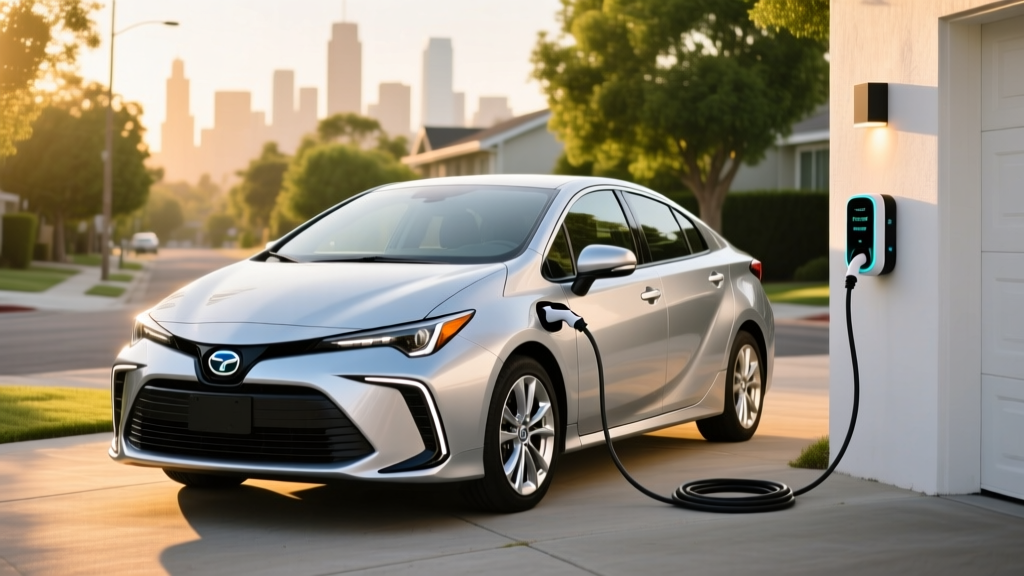
A notable limitation: the Prius Prime does not support DC fast charging. Toyota limited the onboard charger to approximately 3.3 kW, meaning Level 1 (standard 120V household outlet) and Level 2 (240V) charging take roughly the same four hours. For a 44-mile range PHEV, overnight Level 1 charging from a standard outlet is sufficient for most owners — a genuine advantage for apartment dwellers or those without dedicated 240V circuits.
Powertrain: Engine, Motors, and Performance
The current Prius Prime pairs a 2.0-liter Atkinson-cycle four-cylinder engine (150 hp, 139 lb-ft) with two motor-generators. The primary drive motor contributes 161 hp, and the combined system output reaches 220 hp — a substantial upgrade from the previous generation's 121 hp.
Acceleration to 60 mph takes 6.6 seconds (SE trim, FWD), placing the plug-in Prius hybrid firmly in "adequate for merging and passing" territory rather than sporty. The AWD-e variant adds a rear axle motor, dropping 0-60 to approximately 6.7 seconds while providing traction in inclement weather at the cost of 2 miles of electric range (42 miles EPA).
Driving dynamics reflect Toyota's efficiency-first tuning: the CVT prioritizes smooth power delivery, steering is light, and body roll is present in corners. The Prius Prime is a composed commuter, not a canyon carver.
Pricing, Trims, and Federal Tax Credit Eligibility
The 2026 Prius Prime carries three trims, all sharing the same powertrain:
| Trim | MSRP | Key Features |
|---|---|---|
| SE | $33,445 | 17" alloy wheels, 8" touchscreen, wireless CarPlay/Android Auto, TSS 3.0 |
| XSE | $36,745 | 19" wheels, heated front seats, SofTex upholstery, power liftgate |
| XSE Premium | $40,445 | 12.3" touchscreen, fixed glass roof, heated/ventilated front seats, JBL audio |
Federal §30D tax credit: The Prius Prime qualifies for up to $3,750 under current IRS rules — not the full $7,500. The reduced amount reflects battery component and critical mineral sourcing requirements that phase in under the Inflation Reduction Act. Eligibility depends on:
- Buyer AGI limits: $150,000 (single), $225,000 (head of household), $300,000 (married filing jointly)
- Vehicle MSRP cap: $55,000 for sedans (all Prius Prime trims qualify)
- Point-of-sale transfer available — the dealer applies the credit as a down-payment reduction
Verify current eligibility at irs.gov before purchase, as sourcing rules tighten annually. State incentives vary — check your local energy office for additional rebates.
With the $3,750 federal credit applied at point of sale, the SE trim's effective price drops to approximately $29,695 — competitive with well-equipped compact sedans and a compelling entry point for plug-in hybrid ownership.
Reliability and Battery Warranty: What Owners Should Know
Toyota's hybrid systems have accumulated decades of real-world durability data. The Prius nameplate has been in continuous production since 1997, and the plug-in variant since 2012. Toyota's hybrid battery warranty provides strong protection:
| Component | Warranty Coverage |
|---|---|
| Hybrid battery (traction) | 10 years / 150,000 miles (whichever comes first) |
| Hybrid system components | 8 years / 100,000 miles |
| Powertrain (engine, transaxle) | 5 years / 60,000 miles |
| Battery capacity retention | Warranted against defects; no minimum SoH threshold published |
Real-world data from fleet operators and owner surveys shows Toyota hybrid batteries routinely lasting 150,000-200,000+ miles before significant degradation. The lithium-ion pack in the Prius Prime is less stressed than a full EV battery — it operates in a narrow state-of-charge window (roughly 20-80%) and never experiences the extreme discharge depths that accelerate wear in BEVs.
If replacement becomes necessary outside warranty, a refurbished Prius Prime traction battery costs approximately $2,500-$3,500 installed at a dealership, or $1,500-$2,200 through independent hybrid specialists. New OEM batteries run $4,000-$5,500 installed. These figures are substantially lower than full EV battery replacements, which often exceed $10,000.
Who Should Buy the Plug-In Prius Hybrid?
Choose the Prius Prime if:
- Your daily round-trip commute is under 40 miles and you can charge overnight at home (even a standard 120V outlet works)
- You want electric daily driving but need gasoline flexibility for road trips without charging-station planning
- You lack access to reliable DC fast charging infrastructure in your area
- You prioritize low operating costs — electricity at $0.14/kWh costs roughly $0.04/mile in EV mode vs. $0.11/mile at 52 MPG with $3.50/gallon gas
- You want Toyota's proven hybrid reliability and strong resale value
Consider a full EV or conventional hybrid instead if:
- Full BEV (e.g., Tesla Model 3, Hyundai Ioniq 6): You can install Level 2 home charging, your daily driving exceeds 44 miles, and you want to eliminate gasoline entirely
- Conventional Prius HEV: You cannot charge at home or work — without regular plug-in, the Prime's electric advantage disappears and you're carrying dead battery weight
- Larger PHEV (e.g., RAV4 Prime): You need SUV cargo space, AWD capability, or more than 44 miles of electric range
The Prius Prime's sweet spot is the one-car household with a predictable commute, home charging access, and occasional road-trip needs. It eliminates daily fuel consumption without introducing range anxiety or charging-infrastructure dependence.
Frequently Asked Questions
How many MPG does the plug-in Prius hybrid get?
The Prius Prime returns 52 MPG combined (53 city / 51 highway) in hybrid mode after the battery is depleted. In electric mode, it achieves 127 MPGe. Real-world city driving often exceeds EPA estimates by 2-5 MPG thanks to regenerative braking, while sustained highway speeds above 70 mph typically yield 46-49 MPG.
How far can the Prius Prime go on electric only?
The EPA rates the Prius Prime at 44 miles of electric-only range. In real-world conditions, expect 44-48 miles in warm city driving, 36-40 miles at highway speeds, and 33-37 miles in freezing temperatures. Once depleted, the gasoline engine engages seamlessly and the car operates as a conventional hybrid.
Does the Prius Prime qualify for a tax credit?
Yes — the Prius Prime qualifies for up to $3,750 under the federal §30D clean vehicle credit. The reduced amount (vs. the maximum $7,500) reflects current battery sourcing requirements. Eligibility requires meeting IRS income caps ($150K single / $300K joint), and the vehicle's MSRP must be under $55,000 (all trims qualify). The credit can be transferred to the dealer at point of sale as a purchase-price reduction. Confirm eligibility at irs.gov before buying.
Is the Prius Prime reliable and what does battery replacement cost?
Toyota's hybrid systems are among the most proven in the industry, with the hybrid battery warranted for 10 years / 150,000 miles. Real-world data shows these batteries regularly exceeding 150,000 miles with minimal degradation. Out-of-warranty replacement costs $2,500-$3,500 for a refurbished unit or $4,000-$5,500 for a new OEM battery — significantly less than full EV battery replacements.
Do I need a special charger for the Prius Prime?
No. The Prius Prime charges on a standard 120V household outlet (Level 1) in about 4 hours, which is sufficient for overnight replenishment of its 44-mile range. A 240V Level 2 charger also takes approximately 4 hours due to the 3.3 kW onboard charger limitation. The Prius Prime does not support DC fast charging. It uses the standard J1772 connector common to all non-Tesla plug-in vehicles.
How does the Prius Prime compare to a full EV?
A full EV like the Tesla Model 3 or Chevrolet Equinox EV offers 250-350 miles of range, lower per-mile fuel costs, and less maintenance — but requires reliable home or workplace charging and route planning for long trips. The Prius Prime sacrifices all-electric range for gasoline flexibility: you'll burn no gas on a 30-mile commute but can drive 440 total miles without stopping to charge. If charging access is uncertain or you frequently drive 300+ miles between stops, the PHEV removes that friction.