Plug-in hybrids promise the best of both worlds: electric commuting with a gas-engine safety net. But a growing body of real-world data reveals a plug-in hybrids emissions flaw that catches many owners off guard — PHEVs frequently emit far more CO₂ than their EPA stickers suggest, simply because most drivers don't plug them in as often as regulators assume.
This guide breaks down the engineering, the data, and the ownership math behind that gap — and helps you decide whether a PHEV, a conventional hybrid (HEV), or a full battery-electric vehicle (BEV) actually fits your driving life in 2026.
HEV vs PHEV vs BEV: What You're Actually Buying
Before examining the emissions flaw, it's worth anchoring the three electrified powertrain types, because confusing them is where many buyers start making bad decisions.
| Attribute | HEV (Conventional Hybrid) | PHEV (Plug-In Hybrid) | BEV (Battery Electric) |
|---|---|---|---|
| Plugs in? | No — charges via regen + engine | Yes — Level 1 or Level 2 | Yes — Level 1, 2, or DC fast |
| Battery size | 0.5–2 kWh (small buffer) | 10–25 kWh usable | 50–130 kWh usable |
| Electric-only range | 0–1 mi at low speed | 20–50 mi (EPA) | 200–400+ mi (EPA) |
| Gas engine? | Yes — primary propulsion | Yes — kicks in after battery depletes | No |
| Tailpipe emissions (when plugged in regularly) | Low but constant | Very low on EV days, moderate on gas days | Zero at tailpipe |
| Tailpipe emissions (never plugged in) | Low | Higher than HEV — heavier, less optimized engine | N/A |
The critical row is the last one. When a PHEV is never plugged in, it operates as a heavy, less-efficient hybrid — and that scenario is far more common than policy models assume.
The Plug-In Hybrids Emissions Flaw, Explained With Data
Regulators and automakers calculate PHEV emissions using an assumption called the utility factor — the percentage of miles a PHEV is expected to drive on electricity. The EPA's window sticker for a PHEV like the 2026 Toyota RAV4 Prime blends its electric and gas efficiency into a single MPGe figure, assuming roughly 60–75% electric driving depending on rated range.
Real-world telemetry tells a different story. The International Council on Clean Transportation (ICCT) analyzed over 100,000 PHEVs in Europe and North America and found that real-world electric driving shares are 30–50% lower than regulatory assumptions. A PHEV rated for 40 miles of electric range often sees only 20–25 miles of actual electric use per day, because owners forget to plug in, lack home charging, or take longer trips than expected.
The result: real-world PHEV CO₂ emissions are typically two to four times higher than type-approval values suggest. This is the plug-in hybrids emissions flaw in a nutshell — it's not a mechanical defect, it's a behavioral and policy mismatch.
"PHEVs can deliver outstanding efficiency, but only if they are actually plugged in. The gap between lab assumptions and real-world charging behavior is the single largest source of PHEV emissions underperformance." — ICCT analysis, 2024–2025 fleet data
Real-World MPG vs EPA: What PHEVs Actually Deliver
Let's look at three popular 2026 PHEVs and compare their EPA numbers to what owners report when charging habits vary. All EPA figures sourced from fueleconomy.gov.
| 2026 Model | Battery (kWh usable) | EPA EV Range | EPA Combined MPGe | EPA Gas-Only MPG (Combined) | Real-World Gas-Only MPG |
|---|---|---|---|---|---|
| Toyota RAV4 Prime | 18.1 kWh | 42 mi | 94 MPGe | 38 MPG | 33–36 MPG |
| Jeep Wrangler 4xe | 17.3 kWh | 21 mi | 49 MPGe | 20 MPG | 17–19 MPG |
| Hyundai Tucson PHEV | 13.8 kWh | 33 mi | 80 MPGe | 35 MPG | 30–33 MPG |
Notice the pattern: gas-only real-world MPG consistently undershoots EPA stickers by 2–4 MPG. That's because EPA testing cycles are relatively gentle and don't fully capture highway-speed aero drag, cold-start enrichment, or accessory loads. When a PHEV is driven primarily on gas — which the ICCT data shows is common — its emissions and fuel costs look much worse than the sticker implies.
Charging Specs: What It Takes to Avoid the Flaw
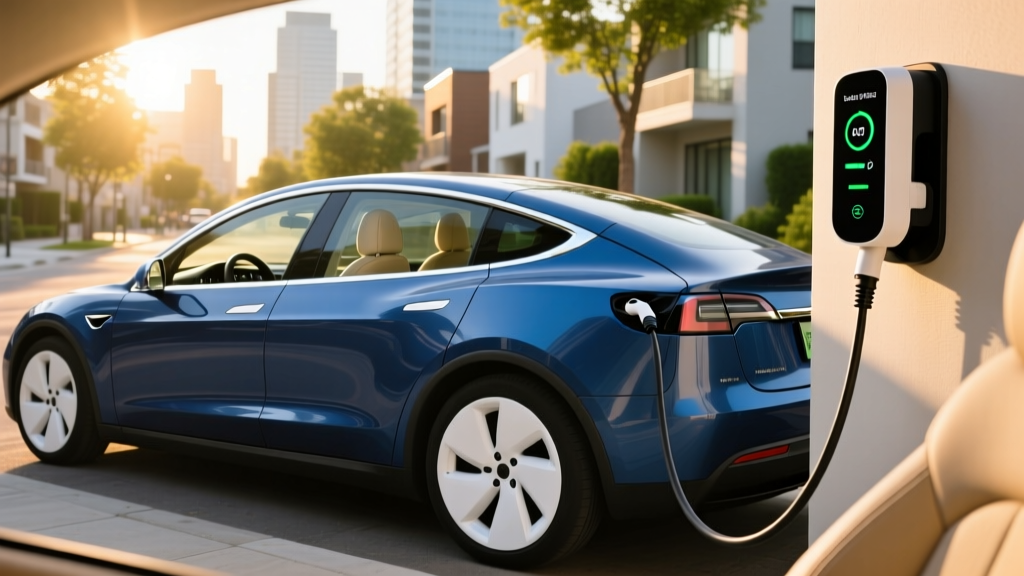
The emissions flaw disappears entirely if you plug in daily. Here's what that looks like in practice for a typical PHEV battery:
| Charging Level | Power (kW) | Time to Full (15 kWh battery) | Typical Cost |
|---|---|---|---|
| Level 1 (120V household outlet) | 1.2–1.4 kW | 11–13 hours | ~$0.13/kWh (home) |
| Level 2 (240V home charger) | 3.3–7.2 kW | 2–4.5 hours | ~$0.13/kWh (home) |
| DC Fast Charge | Rarely supported on PHEVs | N/A for most models | $0.30–0.50/kWh public |
Key detail most buyers miss: The vast majority of 2026 PHEVs do not support DC fast charging. The Mitsubishi Outlander PHEV is a rare exception with CHAdeMO compatibility, but even it maxes out around 22 kW — far below the 150+ kW speeds BEV owners enjoy. For PHEV owners, Level 2 home charging is the practical ceiling, and Level 1 is technically sufficient for overnight replenishment of a 15–20 kWh pack.
A Level 2 home charger installation (240V, 40-amp circuit) typically costs $800–$2,000 including equipment, electrician labor, and permitting. If your electrical panel is maxed out, a panel upgrade adds $1,500–$3,000. This is a non-trivial upfront cost that PHEV emissions models rarely factor in.
Powertrain Deep Dive: What Moves a PHEV
A PHEV combines a gasoline engine with one or more electric motors and a medium-sized lithium-ion battery. Let's use the 2026 RAV4 Prime as a representative example:
- Engine: 2.5L inline-4, 177 hp
- Electric motors: Front (134 kW) + rear (40 kW) — combined system output 302 hp
- Battery: 18.1 kWh usable, lithium-ion (NMC chemistry)
- 0–60 mph: 5.7 seconds
- Drivetrain: Electronic AWD (eAWD), no mechanical driveshaft
The dual-motor eAWD setup means the rear axle is purely electric — there's no mechanical connection between the engine and rear wheels. This is efficient and responsive, but it also means that once the battery depletes, the engine must generate electricity to power the rear motor, adding a conversion loss that conventional AWD systems don't have. This contributes to the gas-only MPG penalty.
Pricing and Tax Credit Eligibility for PHEVs
| 2026 Model | Base MSRP | Federal Tax Credit (§30D) | Effective Price After Credit |
|---|---|---|---|
| Toyota RAV4 Prime SE | $44,915 | $3,750 (partial — battery sourcing) | ~$41,165 |
| Jeep Wrangler 4xe Sport S | $51,790 | $3,750 (partial — battery sourcing) | ~$48,040 |
| Hyundai Tucson PHEV SEL | $39,440 | $3,750 (partial — battery sourcing) | ~$35,690 |
Battery Longevity, Warranty, and Replacement Costs
• Coverage: 8 years / 100,000 miles (10 years / 150,000 miles in CARB states)
• Capacity threshold: Most warranties cover replacement if the battery falls below 60–70% of original capacity
• Chemistry: NMC (nickel-manganese-cobalt) in most PHEVs — higher energy density than LFP but slightly faster degradation
• Replacement cost (out of warranty): $4,000–$8,000 depending on model
PHEV batteries face a harder life than BEV batteries in one specific way: they cycle through a much larger percentage of their capacity daily. A 15 kWh PHEV battery used for a 30-mile commute might see an 80% depth of discharge every day, while a 75 kWh BEV doing the same commute only cycles about 10%. This means PHEV battery cells endure more stress per mile driven.
That said, real-world degradation data from Toyota and Hyundai PHEV fleets shows that most batteries retain 80–85% of original capacity after 100,000 miles — well within warranty thresholds. The smaller pack size means replacement is also substantially cheaper than a BEV battery swap ($4K–$8K vs $12K–$22K).
For conventional hybrids (HEVs), battery replacement is even cheaper — typically $2,000–$4,000 — because the packs are tiny (1–2 kWh) and rarely cycle deeply.
Who Should Choose a PHEV, HEV, or BEV?
Choose a PHEV if:
- You have reliable daily access to Level 1 or Level 2 charging (home garage or dedicated workplace charger)
- Your daily commute is under 40 miles round-trip — you'll drive mostly electric
- You regularly take road trips exceeding 300 miles and don't want to plan around DC fast chargers
- You live in a region with extreme cold where BEV range loss (25–40% below 20°F) is a real concern
Choose a conventional HEV if:
- You cannot install a home charger and have no workplace charging
- You want maximum simplicity — no plug, no charging habits to manage
- Your budget is tighter — HEVs typically cost $3,000–$7,000 less than PHEV equivalents
- You want consistent, predictable fuel economy regardless of charging behavior (this is the group most immune to the PHEV emissions flaw)
Choose a full BEV if:
- You have home Level 2 charging and your daily driving is under 200 miles
- You want zero tailpipe emissions with no behavioral caveats
- You want the lowest per-mile fuel cost (~$0.04/mi on home electricity vs $0.12/mi on gas)
- You're eligible for the full $7,500 federal credit, which many BEVs now achieve more readily than PHEVs
Frequently Asked Questions
How many MPG does a plug-in hybrid get?
It depends entirely on whether you charge. On electricity alone, a PHEV like the 2026 RAV4 Prime achieves 94 MPGe. Once the battery depletes, it operates as a conventional hybrid and returns 38 MPG combined (EPA), though real-world gas-only driving typically yields 33–36 MPG. If you never plug in, you're paying for a heavier, more complex vehicle that delivers worse fuel economy than a purpose-built HEV.
How far can a PHEV go on electric only?
Most 2026 PHEVs offer 20–50 miles of EPA-rated electric range. The RAV4 Prime leads at 42 miles; the Tucson PHEV delivers 33 miles; the Wrangler 4xe manages just 21 miles due to its weight and aerodynamics. In cold weather (below 35°F), expect 20–30% less electric range due to cabin heating loads and reduced battery efficiency.
Does a PHEV qualify for a tax credit?
Some do, but rarely the full amount. Under current IRS §30D rules, most 2026 PHEVs qualify for $3,750 rather than $7,500 due to battery-component sourcing restrictions. The vehicle must also meet MSRP caps ($80K for SUVs) and buyer income limits ($150K single / $300K joint). The credit can be applied at point of sale. Always confirm with your tax advisor before relying on credit eligibility.
Is a PHEV reliable? What does battery replacement cost?
PHEVs from Toyota, Hyundai, and Ford have demonstrated strong reliability records, with battery warranties covering 8 years/100,000 miles (10 years/150,000 in CARB states). Out-of-warranty battery replacement typically costs $4,000–$8,000. The dual powertrain (engine + electric motor + battery) means more components that could fail than a BEV, but in practice, electric motors and hybrid batteries have proven extremely durable. IIHS crash ratings for popular PHEVs are generally strong.
What causes the plug-in hybrids emissions flaw?
The flaw is a gap between regulatory assumptions and owner behavior. Regulators assume PHEVs will be plugged in daily and driven mostly on electricity. In practice, ICCT fleet data shows that many PHEV owners charge infrequently — sometimes only a few times per week or less. When running on gas, PHEVs are heavier and often less efficient than conventional hybrids, producing more CO₂ per mile than their labels suggest. The fix is simple: plug in every night. But policy can't guarantee behavior.
Are conventional hybrids better for the environment than PHEVs?
It depends on the owner. A PHEV that's plugged in nightly and driven 30 miles on electricity before switching to gas will produce far fewer annual emissions than an HEV. But an HEV driven by someone who would never plug in a PHEV is the greener choice — because HEV emissions are consistent and predictable, while an uncharged PHEV's emissions exceed its label promises.
The Bottom Line
The plug-in hybrids emissions flaw isn't a reason to avoid PHEVs — it's a reason to be honest about whether you'll actually plug one in. If you have a garage, a charger, and the discipline to use it nightly, a PHEV delivers outstanding real-world efficiency and genuine emissions reductions. If you won't plug in, a conventional hybrid gives you better gas-only MPG for less money and less complexity. And if you can charge at home and rarely drive more than 200 miles in a day, a full BEV eliminates the behavioral gap entirely.
The most environmentally responsible choice is the one that matches your actual life — not the one that looks best on a sticker.