Plug In Hybrid Rebates in 2026: What Buyers Need to Know
The landscape for plug in hybrid rebates has tightened considerably as we move through 2026. Under the revised IRS §30D Clean Vehicle Credit rules, only a handful of plug-in hybrid electric vehicles (PHEVs) still qualify for federal tax incentives — and the amount you receive depends on battery sourcing, your income, and the vehicle's MSRP. Meanwhile, a patchwork of state-level rebates from California to New York continues to offer additional savings for PHEV buyers who know where to look.
This guide breaks down exactly which PHEVs qualify for federal and state incentives in 2026, what real-world fuel economy and electric-only range you can expect, and whether a plug-in hybrid is the right bridge between a conventional hybrid (HEV) and a full battery-electric vehicle (BEV) for your driving needs.
HEV vs. PHEV — The Core Difference
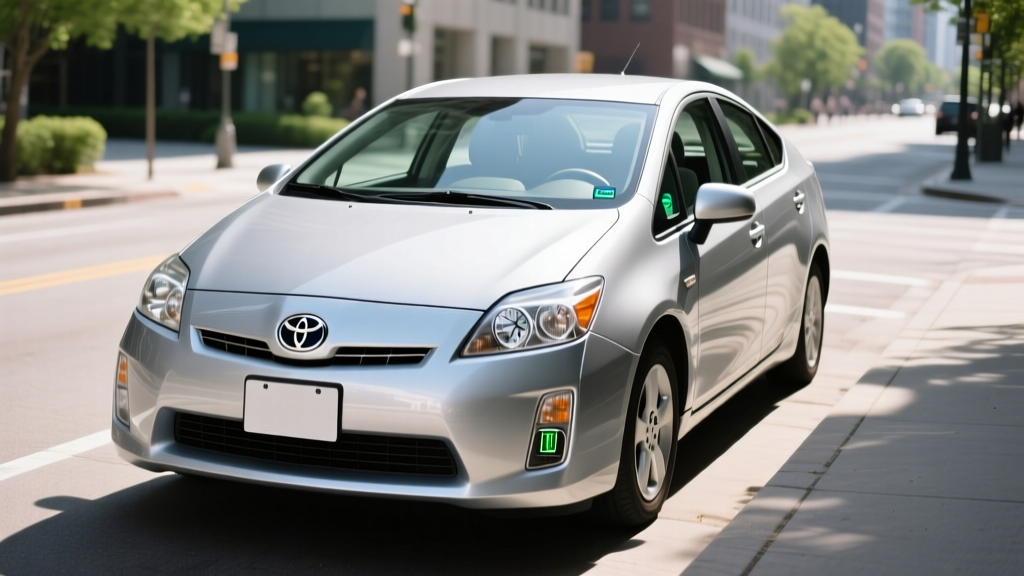
Conventional Hybrid (HEV): Uses a small battery charged exclusively through regenerative braking and the gasoline engine. You never plug it in. Examples: Toyota Prius, Honda CR-V Hybrid. Typical electric-only driving is under 1 mile at low speeds.
Plug-In Hybrid (PHEV): Carries a larger battery (typically 13–25 kWh) that you charge by plugging in. Delivers 25–45 miles of electric-only range before the gasoline engine takes over. Examples: Toyota RAV4 Prime, Jeep Wrangler 4xe. Once the battery depletes, it operates like a conventional hybrid.
Only PHEVs — not HEVs — are eligible for federal plug in hybrid rebates under §30D.
Federal Tax Credit Rules for PHEVs in 2026
The federal Clean Vehicle Credit under IRS §30D remains the largest single incentive for PHEV buyers, but qualifying has become significantly harder since the battery-sourcing and critical-minerals requirements phased in fully. Here is the current framework:
- Maximum credit: Up to $7,500 — split into $3,750 for battery components (North American manufacturing) and $3,750 for critical minerals (sourced from the U.S. or free-trade-agreement partners).
- MSRP caps: Vans, SUVs, and pickup trucks — $80,000; sedans and other body styles — $55,000.
- Buyer income limits: AGI cannot exceed $300,000 (joint), $225,000 (head of household), or $150,000 (single).
- Battery capacity: The PHEV must have at least 7 kWh of battery capacity to qualify.
- Point-of-sale transfer: As of 2024, you can transfer the credit to the dealer at purchase for an immediate price reduction rather than waiting to claim it on your tax return.
- Final assembly: Vehicle must undergo final assembly in North America.
Top 2026 PHEVs That May Qualify for Rebates
Below is a snapshot of popular 2026 plug-in hybrids, their EPA ratings, electric-only range, and current federal credit eligibility status. Note: eligibility can change; always confirm at point of sale.
| Vehicle | Battery (kWh) | EV Range | Combined MPGe/MPG | HP | Base MSRP | §30D Status |
|---|---|---|---|---|---|---|
| Toyota RAV4 Prime | 18.1 kWh (NMC) | 42 mi | 94 MPGe / 38 MPG | 302 hp | $44,900 | Partial ($3,750) |
| Jeep Wrangler 4xe | 17.3 kWh (NMC) | 22 mi | 49 MPGe / 20 MPG | 375 hp | $52,095 | Partial ($3,750) |
| Chrysler Pacifica PHEV | 16.0 kWh (NMC) | 32 mi | 82 MPGe / 30 MPG | 260 hp | $51,095 | Partial ($3,750) |
| Ford Escape PHEV | 14.4 kWh (NMC) | 37 mi | 105 MPGe / 40 MPG | 210 hp | $40,500 | Partial ($3,750) |
| Toyota Prius Prime | 13.6 kWh (NMC) | 44 mi | 127 MPGe / 52 MPG | 220 hp | $33,975 | Partial ($3,750) |
| Hyundai Tucson PHEV | 13.8 kWh (NMC) | 33 mi | 80 MPGe / 35 MPG | 261 hp | $39,525 | Not eligible |
Sources: fueleconomy.gov (EPA), manufacturer press sites. §30D status reflects early-2026 IRS guidance and may change.
Real-World MPG: What the EPA Sticker Doesn't Tell You
PHEV fuel economy is uniquely tricky to summarize because your actual results depend heavily on how often you charge. The EPA publishes two numbers for PHEVs: MPGe (miles per gallon equivalent, measuring efficiency while running on electricity) and charge-sustaining MPG (gasoline-only efficiency after the battery depletes).
Here's what real owners and testers consistently report:
| Vehicle | EPA City MPG | EPA Hwy MPG | EPA Combined | Real-World Note |
|---|---|---|---|---|
| RAV4 Prime (gas mode) | 40 | 36 | 38 | City driving often yields 42+ MPG thanks to regen; highway drops to ~33 in winter |
| Prius Prime (gas mode) | 53 | 51 | 52 | Consistently exceeds EPA in city; owners report 55–58 MPG in mild weather |
| Escape PHEV (gas mode) | 42 | 37 | 40 | Aero-sensitive: roof racks and high speeds drop highway MPG to ~32 |
| Wrangler 4xe (gas mode) | — | — | 20 | Brick aerodynamics; real-world highway is 17–19 MPG once battery depletes |
PHEV Charging: Speeds, Connectors, and Home Setup
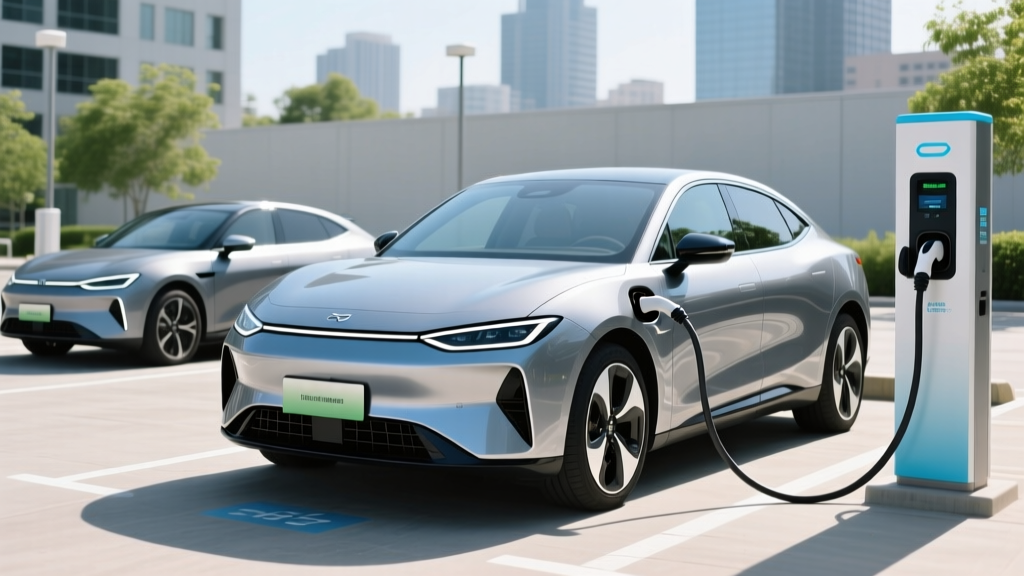
One of the most common PHEV buyer surprises: most plug-in hybrids cannot DC fast charge. The smaller batteries (13–18 kWh) and cost packaging mean manufacturers typically equip PHEVs with only AC charging capability.
| Charge Level | Power | Typical PHEV Time (0–100%) | Notes |
|---|---|---|---|
| Level 1 (120V household) | 1.4 kW | 10–14 hours | Works overnight for most PHEV batteries; included cord |
| Level 2 (240V home/public) | 3.3–6.6 kW | 2–5 hours | Ideal for daily top-ups; most PHEVs accept 3.3 kW onboard |
| DC Fast Charge | — | — | Not available on most PHEVs; Mitsubishi Outlander PHEV is a rare exception (22 kW DC) |
For most PHEV owners, a standard 120V outlet is sufficient to fully recharge overnight given the small battery. However, a Level 2 home charger ($400–$700 for equipment, $500–$2,000 for electrician installation depending on panel capacity) ensures you always start each day with a full battery — maximizing your electric-only driving and minimizing gasoline use.
Battery Longevity, Warranty, and Replacement Costs
PHEV battery degradation is generally less severe than in full BEVs because the smaller battery cycles through a narrower state-of-charge window, and the vehicle's thermal management system protects it from extreme highs and lows. Toyota's hybrid and PHEV battery packs have an especially strong track record — many first-generation Prius packs lasted 200,000+ miles with minimal capacity loss.
If replacement is needed out of warranty, expect:
- Toyota PHEV battery replacement: $3,000–$5,000 (parts + labor)
- Stellantis (Jeep/Chrysler) PHEV battery: $5,000–$8,000
- Ford/Hyundai PHEV battery: $4,000–$7,000
Third-party refurbished hybrid batteries are increasingly available for 30–50% less than OEM pricing. For most buyers, however, the battery will outlast the vehicle's useful life or be covered under warranty.
State-Level Plug In Hybrid Rebates and Incentives
Beyond the federal §30D credit, several states offer their own PHEV incentives. These vary widely and change frequently, so always check your state's energy or environmental agency for current programs:
- California (CVRP): The Clean Vehicle Rebate Project historically offered up to $1,500 for PHEVs, but funding has shifted toward low-income buyers and full BEVs. Check California Energy Commission for current availability.
- Colorado: Offers a state tax credit of up to $2,500 for qualifying PHEVs with a battery of at least 7 kWh, though income caps apply.
- New York (Drive Clean Rebate): Point-of-sale rebates of up to $1,000–$2,000 for eligible PHEVs, scaled by battery size and MSRP.
- Massachusetts (MOR-EV): Offers rebates for PHEVs, though amounts are lower than BEV incentives and subject to income eligibility.
- Utility company rebates: Many local electric utilities offer $250–$1,000 rebates for PHEV purchases or home charger installations. Check with your provider.
State incentive amounts, eligibility, and availability change frequently. Consult your state's official energy or environmental agency website for current figures before budgeting around a specific rebate.
PHEV vs. HEV vs. BEV: Which Powertrain Fits You?
Choose a PHEV if:
- Your daily commute is under 30–40 miles round-trip and you can charge at home overnight
- You take road trips regularly and don't want to plan around charging stations
- You live in an apartment or area with limited public charging infrastructure
- You want to drive electric most days but keep gas as a safety net
Choose a conventional HEV if:
- You cannot charge at home or at work (no access to any plug)
- You want maximum MPG with zero behavior change
- Your budget is tighter and you don't want to pay the PHEV premium ($3,000–$7,000 more)
Choose a full BEV if:
- You can install a Level 2 home charger and your daily driving is under 250 miles
- You want the lowest per-mile fuel cost and near-zero maintenance
- You want access to the full $7,500 federal credit (more BEVs qualify than PHEVs)
- You're ready to plan road trips around DC fast-charging networks
Frequently Asked Questions
Do conventional hybrids qualify for plug in hybrid rebates?
No. Conventional hybrids (HEVs) like the standard Toyota Prius or Honda CR-V Hybrid do not qualify for the federal §30D Clean Vehicle Credit or most state PHEV rebates. Only vehicles with a plug-in capability and a battery of at least 7 kWh are eligible. HEVs also don't qualify because they cannot be charged from the grid.
How far can a PHEV really go on electric only?
EPA-rated electric-only range for current PHEVs spans from 22 miles (Jeep Wrangler 4xe) to 44 miles (Toyota Prius Prime). In real-world driving, expect 80–90% of the EPA figure in moderate weather and 65–80% in cold weather (below 40°F). If your daily round-trip commute falls within the EV range and you charge nightly, you may go months without buying gasoline.
Is the PHEV battery reliable, and what does replacement cost?
PHEV batteries have proven highly reliable, particularly Toyota's designs. The federal minimum warranty is 8 years/100,000 miles (10 years/150,000 miles in CARB states). Out-of-warranty replacement typically costs $3,000–$8,000 depending on the model, but most packs last the vehicle's lifetime. Degradation is minimal because PHEV batteries operate in a narrow charge window, reducing stress.
Does my PHEV qualify for the $7,500 federal tax credit?
Most PHEVs in 2026 qualify for only a partial credit of $3,750 because they meet the battery-component requirement but fail the critical-minerals sourcing threshold. Full $7,500 eligibility requires both halves to be satisfied. Additionally, you must meet AGI income caps ($150K single / $300K joint), the vehicle must be under the MSRP cap ($80K for SUVs, $55K for sedans), and final assembly must be in North America. Check IRS.gov for the current qualifying vehicle list before purchasing.
Do I need to install a home charger for a PHEV?
Not necessarily. Because PHEV batteries are small (13–18 kWh), a standard 120V household outlet (Level 1) can fully recharge most PHEVs in 10–14 hours — typically sufficient for overnight charging. A Level 2 charger (240V) cuts that to 2–5 hours and is worthwhile if you want faster turnaround or have a larger PHEV battery. Installation costs $500–$2,000 depending on your electrical panel.
Can a PHEV use DC fast chargers?
Most PHEVs cannot. The onboard chargers are AC-only, typically rated at 3.3 kW or 6.6 kW. The Mitsubishi Outlander PHEV is one of the few exceptions, offering DC charging capability (up to 22 kW). For daily use, this limitation is rarely an issue — you charge at home overnight and the gasoline engine covers longer trips.
✅ PHEV Advantages
- 25–44 miles of zero-emission daily driving
- No range anxiety — gas engine covers road trips
- Charges on standard 120V outlet overnight
- Lower fuel costs when charged regularly
- Partial federal tax credit + state rebates available
- Strong battery warranties (8–10 years)
❌ PHEV Limitations
- $3,000–$7,000 price premium over HEV equivalent
- Most do not support DC fast charging
- Full $7,500 federal credit rarely available
- Two powertrains mean more maintenance complexity
- EV range drops significantly in cold weather
- Must plug in regularly to realize fuel savings
Always verify current federal credit eligibility at IRS.gov and check fueleconomy.gov for the latest EPA ratings before purchasing. State incentive programs change frequently — consult your state energy office for current details.