The State of Plug-In Hybrid Rebates in 2026
If you're shopping for a vehicle that bridges the gap between gasoline convenience and electric efficiency, the plug-in hybrid (PHEV) market has never been more compelling — or more confusing. The federal plug in hybrid rebate under IRS §30D can knock up to $7,500 off the purchase price of qualifying PHEVs, but eligibility depends on a web of requirements: battery capacity, critical-mineral sourcing, MSRP caps, buyer income limits, and point-of-sale transfer rules. Not every PHEV qualifies, and qualifying models change as automakers restructure supply chains.
This guide breaks down exactly which 2026 PHEVs are eligible for federal incentives, how much you can save, and whether a PHEV is the right powertrain for your driving habits — compared to a conventional hybrid (HEV) or a full battery-electric vehicle (BEV).
- Conventional Hybrid (HEV): No plug. A small battery (1–2 kWh) recharges via regenerative braking and the engine. Examples: Toyota Prius, Honda CR-V Hybrid. No federal tax credit.
- Plug-In Hybrid (PHEV): Larger battery (12–25 kWh). Plugs into a wall or charger for 25–45 miles of electric-only driving, then operates as a hybrid. Examples: Toyota RAV4 Prime, Jeep Wrangler 4xe. May qualify for federal tax credit.
Only PHEVs with a battery capacity of at least 7 kWh are eligible for the §30D federal plug in hybrid rebate.
2026 PHEVs Eligible for the Federal Plug In Hybrid Rebate
Under current IRS §30D rules, a qualifying PHEV must meet several criteria. The vehicle must have a battery capacity of at least 7 kWh, be assembled in North America (final assembly), meet critical-mineral and battery-component sourcing thresholds, and fall under MSRP caps ($80,000 for SUVs/pickups/vans; $55,000 for sedans). The buyer must also meet income caps: $300,000 joint / $225,000 head of household / $150,000 single.
As of early 2026, the following popular PHEVs are confirmed or likely eligible for some portion of the federal credit. Always verify current eligibility on the IRS clean vehicle credit page before purchasing, as sourcing requirements tighten annually.
| Model | Est. Credit | Battery (kWh) | EV Range | Combined HP | Base MSRP |
|---|---|---|---|---|---|
| 2026 Chrysler Pacifica PHEV | $7,500 | 16 kWh | 32 mi | 260 hp | $51,095 |
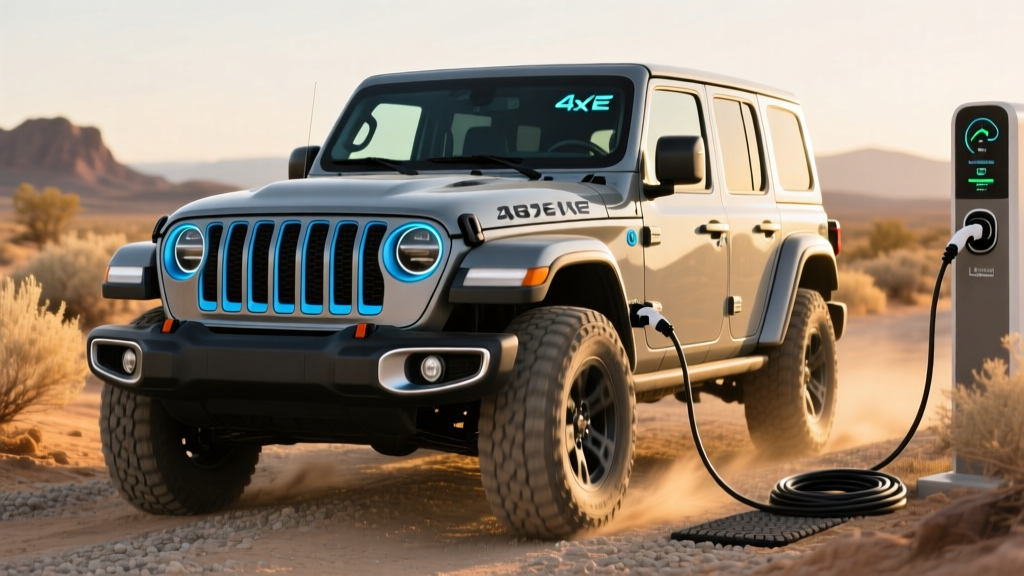
| 2026 Jeep Wrangler 4xe | $3,750–$7,500 | 17.3 kWh | 22 mi | 375 hp | $51,790 |
| 2026 Jeep Grand Cherokee 4xe | $3,750–$7,500 | 17.3 kWh | 26 mi | 375 hp | $60,490 |
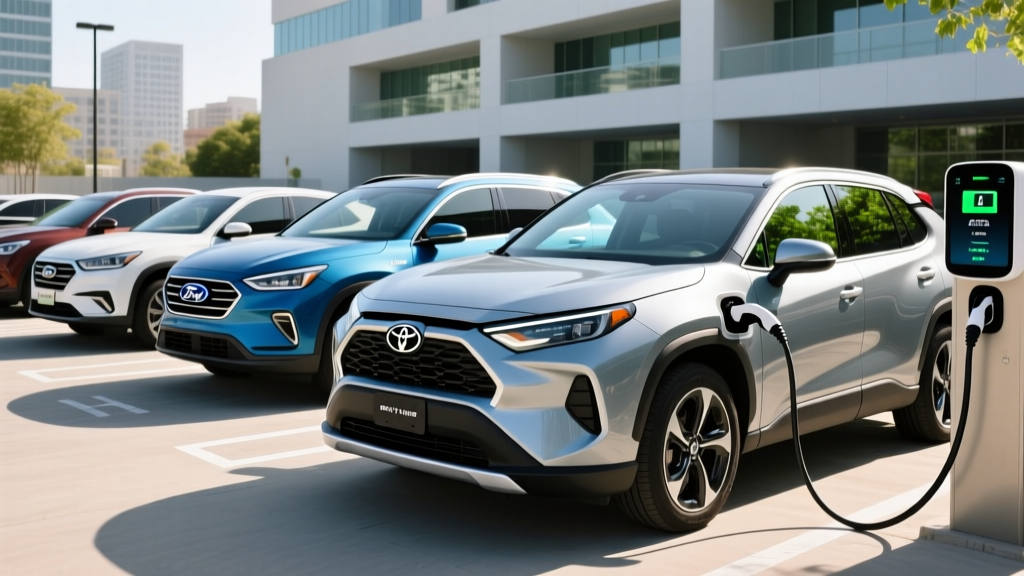
| 2026 Toyota RAV4 Prime | $0–$3,750* | 18.1 kWh | 42 mi | 302 hp | $44,615 |
| 2026 Toyota Prius Prime | $0–$3,750* | 13.6 kWh | 44 mi | 220 hp | $33,775 |
*Toyota PHEVs face challenges with the battery-component and critical-mineral sourcing rules due to Japanese supply chains. Credit amounts may be partial or zero depending on the current IRS sourcing determination. Always check the fueleconomy.gov tax credit tracker before purchasing.
Fuel Economy and Electric Range: What to Expect
The appeal of a PHEV is dual-mode efficiency. On short commutes under the electric-only range, you're driving a battery-electric car with zero tailpipe emissions. On longer trips, the gasoline engine kicks in and you get hybrid-level fuel economy without range anxiety.
| Model | EV Range (mi) | MPGe (combined) | MPG (gas, combined) | Total Range (mi) |
|---|---|---|---|---|
| Chrysler Pacifica PHEV | 32 | 82 MPGe | 30 MPG | ~430 |
| Jeep Wrangler 4xe | 22 | 49 MPGe | 20 MPG | ~370 |
| Jeep Grand Cherokee 4xe | 26 | 56 MPGe | 23 MPG | ~440 |
| Toyota RAV4 Prime | 42 | 94 MPGe | 38 MPG | ~600 |
| Toyota Prius Prime | 44 | 127 MPGe | 52 MPG | ~480 |
Real-world note: EPA electric range assumes moderate temperatures and mixed driving. In cold weather (below 30°F), expect PHEV electric range to drop 15–25% due to battery chemistry limitations and cabin heating demands. Highway driving at 75+ mph also reduces electric-only range versus the EPA combined figure. The Prius Prime's 44-mile EPA rating may deliver closer to 33–37 miles in winter or sustained highway use.
On the gas side, PHEVs generally match or slightly trail their conventional hybrid siblings once the battery is depleted, because they carry the extra weight of a larger battery pack. The RAV4 Prime, however, is an exception — its 302-hp combined output and 38 MPG gas-mode figure actually outperform the standard RAV4 Hybrid (219 hp, 39 MPG combined) on power while nearly matching it on efficiency.
Charging: What PHEV Owners Need to Know
PHEV batteries are small enough that charging is straightforward — but the speeds vary significantly by model.
| Model | Level 1 (120V) | Level 2 (240V) | DC Fast Charge | 0–100% Time (L2) |
|---|---|---|---|---|
| Pacifica PHEV | ~14 hours | ~2 hours (7.2 kW) | No | ~2 hours |
| Wrangler 4xe | ~12 hours | ~2.5 hours (7.2 kW) | No | ~2.5 hours |
| RAV4 Prime | ~10 hours | ~2.5 hours (3.3 kW) / ~4.5 hours (6.6 kW option) | No | ~2.5–4.5 hours |
| Prius Prime | ~11 hours | ~4 hours (3.5 kW) | No | ~4 hours |
Key insight: No mainstream 2026 PHEV supports DC fast charging. The batteries are simply too small (12–18 kWh) to justify the infrastructure, and most PHEV owners charge overnight at home. A standard 120V outlet (Level 1) adds roughly 3–5 miles of electric range per hour of charging — enough for some commuters who drive under 20 miles round-trip and can plug in at work. A Level 2 home charger (240V, $400–$700 for equipment plus $500–$1,500 for electrician installation) will fully replenish any PHEV battery in 2–5 hours.
One practical advantage: because PHEV batteries are small, you don't need an expensive 48-amp Level 2 charger. A 16-amp or 32-amp unit is typically sufficient, keeping home charging setup costs lower than a full BEV installation.
Tax Credit Eligibility: The Fine Print on the Plug In Hybrid Rebate
The §30D federal credit is structured in two halves, each worth up to $3,750:
- Battery capacity: Minimum 7 kWh (all PHEVs listed above qualify)
- Final assembly: Must occur in North America — check the VIN via the DOE VIN lookup tool
- Critical minerals (up to $3,750): A percentage of battery minerals must be sourced from the US or a free-trade-agreement country; thresholds increase annually
- Battery components (up to $3,750): A percentage of battery components must be manufactured or assembled in North America; thresholds increase annually
- FEOC exclusion: Battery components and minerals cannot come from a "foreign entity of concern" (primarily targeting Chinese supply chains)
- MSRP caps: $80,000 for SUVs, pickups, vans; $55,000 for sedans
- Buyer income caps: AGI ≤ $300k joint / $225k head of household / $150k single
- Point-of-sale transfer: As of 2024+, you can transfer the credit to the dealer for an immediate price reduction rather than claiming it on your tax return
Source: IRS.gov — Clean Vehicle Credits
The practical effect: Stellantis (Jeep, Chrysler) PHEVs assembled in the US or Canada have generally been better positioned to capture the full $7,500 credit, while Toyota's Japanese-sourced PHEVs have struggled with the battery-component and critical-mineral requirements. This can mean a $7,500 price swing between a Wrangler 4xe and a RAV4 Prime at the point of sale — a decisive factor for budget-conscious buyers.
State rebates may stack on top of the federal credit. States like California (CVRP, up to $2,000 for income-qualified buyers), Colorado (up to $5,000 state credit), and New York offer additional PHEV incentives. Check your state energy office for current programs, as these change frequently.
Battery Reliability, Warranty, and Replacement Cost
- Toyota (RAV4 Prime, Prius Prime): 10 years / 150,000 miles (hybrid battery); 8 years / 100,000 miles (emission-related components)
- Stellantis (Pacifica PHEV, Wrangler 4xe, Grand Cherokee 4xe): 8 years / 100,000 miles (hybrid/EV battery)
Warranties cover battery capacity loss below a specified threshold (typically 60–70% of original capacity). Normal degradation above that threshold is considered wear and is not covered.
PHEV battery reliability has proven strong in real-world data. Toyota's hybrid systems — now in their third decade — have demonstrated exceptional longevity, with many Prius batteries lasting 150,000–200,000+ miles before significant degradation. The larger PHEV batteries in the RAV4 Prime and Prius Prime benefit from conservative state-of-charge buffers (Toyota typically locks out the top and bottom ~15% of the battery to prevent overcharge and deep-discharge stress).
Stellantis PHEVs have a shorter track record but have not shown systemic battery failures. The Wrangler 4xe, introduced for the 2021 model year, has accumulated substantial fleet miles without widespread battery issues.
Replacement cost if out of warranty: PHEV battery pack replacement runs approximately $4,000–$8,000 depending on the model (parts plus labor). This is significantly less than a full BEV battery replacement ($10,000–$20,000+) because PHEV packs are smaller. For most owners who sell or trade within 8–10 years, battery replacement is unlikely to be a personal expense.
PHEV vs. Hybrid vs. Full EV: Which Powertrain Fits You?
- You can't charge at home or work (apartment, street parking, no outlet access)
- You want maximum simplicity — no plugs, no charging habits to learn
- Your priority is low cost of ownership with proven reliability (Prius at 57 MPG combined)
- You don't need the plug in hybrid rebate — HEVs don't qualify
- You can charge at home (even a standard 120V outlet works for small PHEV batteries)
- Your daily commute is under 30–40 miles (you'll run almost entirely on electricity)
- You take regular road trips and don't want to plan around charging stations
- You want to capture the federal plug in hybrid rebate (up to $7,500) to reduce purchase price
- You're not ready to commit to a full EV but want electric driving for daily use
- You have reliable Level 2 home charging and your daily driving is under 250 miles
- You want zero tailpipe emissions and minimal maintenance (no oil changes, no engine)
- You want the full $7,500 federal credit — more BEVs qualify than PHEVs
- You're comfortable planning longer road trips around DC fast-charging infrastructure
The PHEV sweet spot is the driver with home charging access and a commute under the vehicle's electric range who also takes 4–8 road trips per year exceeding 200 miles. In that scenario, a PHEV like the RAV4 Prime can operate as an EV for 90%+ of daily driving while eliminating range anxiety on long hauls. Owners who never plug in their PHEV, however, are simply driving a heavier, more expensive conventional hybrid — defeating the purpose entirely.
Pros and Cons of Buying a PHEV in 2026
- 25–44 miles of zero-emission electric driving for daily commutes
- No range anxiety — gas engine covers any distance
- Federal plug in hybrid rebate up to $7,500 (qualifying models)
- Lower home charging cost vs. BEV (smaller battery = cheaper Level 2 setup)
- Strong combined horsepower (RAV4 Prime: 302 hp; Wrangler 4xe: 375 hp)
- 8–10 year battery warranties provide long-term peace of mind
- Must plug in regularly to realize efficiency and cost benefits
- No DC fast charging on any mainstream 2026 PHEV
- Higher purchase price than equivalent conventional hybrid ($5,000–$10,000 premium)
- Tax credit eligibility is uncertain for some models (sourcing rules)
- Two systems to maintain (engine + electric motor/battery) long-term
- Electric range drops 15–25% in cold weather
Frequently Asked Questions
Do conventional hybrids qualify for the plug in hybrid rebate?
No. The §30D federal tax credit requires a minimum battery capacity of 7 kWh and the ability to recharge from an external power source. Conventional hybrids (HEVs) like the standard Toyota Prius, Honda CR-V Hybrid, or Hyundai Tucson Hybrid have small batteries (1–2 kWh) that recharge only from the engine and regenerative braking. They do not qualify for any federal purchase credit.
How much can I save with a PHEV vs. a gas car?
If you charge daily and your commute falls within the electric range, a PHEV can cut fuel costs by 50–70% compared to a gas-only vehicle. At $3.50/gallon gas and $0.15/kWh electricity, driving 40 miles costs roughly $4.80 in a 30 MPG gas car versus $1.20–$1.80 in electric mode on a PHEV. Over 15,000 miles per year with 70% electric driving, annual fuel savings typically range from $800–$1,400.
Is the plug in hybrid rebate available at point of sale?
Yes. Since 2024, the §30D credit can be transferred to the dealer at the time of purchase, reducing the vehicle's purchase price directly. You do not need to wait until tax season to benefit. The dealer must be registered with the IRS Energy Credits portal. If your tax liability is less than the credit amount, the point-of-sale transfer still allows you to capture the full benefit — a significant advantage over the previous non-refundable structure.
What happens if I never plug in my PHEV?
The vehicle will still operate as a conventional hybrid once the battery is depleted, so it won't stop running. However, you'll get lower fuel economy than a purpose-built HEV (because you're carrying the dead weight of a larger, uncharged battery), you'll miss the cost savings of electric driving, and you'll have paid a premium for PHEV capability you never use. If you can't commit to regular plugging in, a conventional hybrid is the more honest choice.
How reliable are PHEV batteries, and what does replacement cost?
PHEV battery reliability has been strong. Toyota's hybrid battery systems have a 25+ year track record, with many lasting 150,000–200,000+ miles. Stellantis PHEVs are newer but have not shown systemic issues. All 2026 PHEVs carry 8–10 year / 100,000–150,000 mile battery warranties. Out-of-warranty replacement costs range from approximately $4,000–$8,000 depending on the model — substantially less than a full BEV battery swap.
Can I charge a PHEV on a regular household outlet?
Yes. Because PHEV batteries are small (12–18 kWh), a standard 120V household outlet (Level 1) can fully charge most PHEVs overnight in 10–14 hours. This adds roughly 3–5 miles of range per hour. If your daily commute is under 20 miles, Level 1 charging alone may be sufficient. A Level 2 charger (240V) reduces charge time to 2–5 hours and is recommended if you drive more or want faster turnaround between trips.