What Is a Plug-In Hybrid PHEV — and How Does It Differ From a Regular Hybrid?
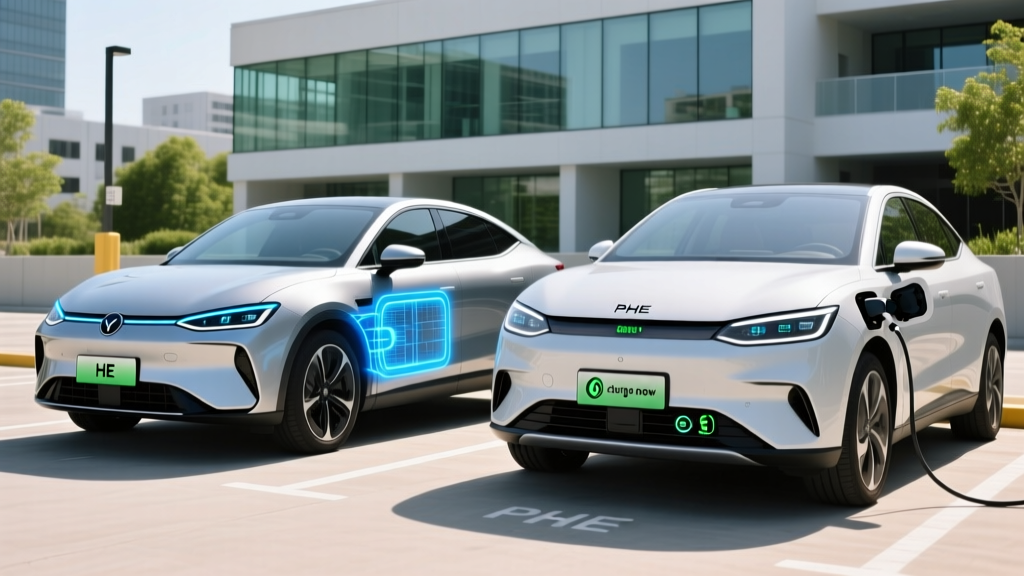
A plug-in hybrid electric vehicle (PHEV) pairs a gasoline engine with a larger battery and electric motor than a conventional hybrid (HEV). The critical difference: a PHEV can be plugged in to charge its battery, giving it a dedicated electric-only driving range — typically 25 to 50 miles on current models — before the gas engine engages. A conventional hybrid like the Toyota Prius HEV never plugs in; it recovers energy through regenerative braking and the engine to maintain a small battery that assists but cannot drive the car on electricity alone for meaningful distances.
| Feature | Conventional Hybrid (HEV) | Plug-In Hybrid (PHEV) |
|---|---|---|
| Plugs in to charge? | No | Yes (Level 1 or Level 2) |
| Battery size | 0.5–2.0 kWh | 10–30+ kWh (usable) |
| Electric-only range | ~1 mile or less at low speed | 25–50+ miles (EPA) |
| Fuel economy (gas mode) | 45–57 MPG combined typical | 25–40 MPG combined (varies by model) |
| Federal tax credit eligible? | No | Potentially — up to $7,500 under §30D (rules apply) |
| DC fast charging? | N/A | Rare — most PHEVs are Level 2 only |
| Ideal for | No home charging access; want MPG improvement | Home charging + short daily commute + road-trip flexibility |
If you can charge at home and your daily driving falls within a PHEV's electric range, you may go weeks without buying gas. But if you lack reliable charging access, a PHEV's extra battery weight becomes dead weight once the battery depletes — and a conventional HEV may actually deliver better real-world fuel economy per dollar spent.
Real-World MPG and Electric Range: What the EPA Numbers Actually Mean
PHEVs carry two efficiency ratings: an MPGe (miles-per-gallon-equivalent) figure for electric+gas combined operation, and a standard MPG figure for gas-only driving after the battery is depleted. MPGe converts the energy in electricity to a gasoline-equivalent number — it looks impressive on a sticker but can mislead if you don't understand what it measures. The gas-only MPG is what you'll see on longer trips once the battery is exhausted.
| Model | EV Range (mi) | MPGe (combined) | Gas MPG (combined) | Battery (kWh usable) |
|---|---|---|---|---|
| Toyota RAV4 Prime | 42 | 94 MPGe | 38 MPG | 14.9 kWh |
| Chrysler Pacifica Hybrid | 32 | 82 MPGe | 30 MPG | 16.0 kWh |
| Jeep Wrangler 4xe | 22 | 49 MPGe | 20 MPG | 17.3 kWh |
| Hyundai Tucson PHEV | 33 | 80 MPGe | 35 MPG | 13.8 kWh |
| BMW X5 xDrive50e | 38 | 58 MPGe | 27 MPG | 25.7 kWh |
Real-world caveat: EPA electric-range figures assume moderate temperatures and mixed driving. Expect 15–25% range loss in cold weather (below 35°F) due to cabin heating demands and reduced battery chemistry efficiency. Highway-speed driving at 70+ mph also reduces electric range because of aerodynamic drag. On the flip side, hybrids — especially HEVs — often exceed their EPA city MPG in stop-and-go traffic where regenerative braking recovers the most energy. Source: fueleconomy.gov.
PHEV Powertrains: Combined Horsepower and How the Systems Work
Modern PHEVs typically use a parallel hybrid architecture: the electric motor and gasoline engine can both drive the wheels, either independently or together. This means a PHEV can deliver combined horsepower figures significantly higher than either power source alone. The Toyota RAV4 Prime, for example, pairs a 2.5-liter four-cylinder engine with front and rear electric motors for a combined 302 horsepower and a 5.7-second 0–60 mph time — making it one of the quickest vehicles in Toyota's lineup.
| Model | Engine | Combined HP | 0–60 mph (sec) | Drivetrain |
|---|---|---|---|---|
| Toyota RAV4 Prime | 2.5L I4 + 2 motors | 302 HP | 5.7 | AWD (eAWD) |
| Jeep Wrangler 4xe | 2.0L turbo I4 + motor | 375 HP | 6.0 | 4WD |
| Hyundai Tucson PHEV | 1.6L turbo I4 + motor | 261 HP | 7.1 | AWD (HTRAC) |
| BMW X5 xDrive50e | 3.0L turbo I6 + motor | 483 HP | 4.6 | AWD (xDrive) |
| Lincoln Corsair Grand Touring | 2.5L I4 + motor | 266 HP | 7.5 (est.) | AWD (eAWD) |
One nuance worth understanding: the engine and motor don't simply add their peak outputs together. Combined HP reflects the system's maximum simultaneous output, which is often lower than the arithmetic sum. Manufacturers publish the combined figure — that's the number that matters for real acceleration.
Charging a PHEV: Times, Connectors, and the DC Fast-Charging Gap
Most PHEVs charge via Level 1 (120V household outlet) or Level 2 (240V, like a dryer outlet or dedicated wall charger). Here's what that looks like in practice:
| Charging Level | Power (kW) | Miles of EV Range per Hour | Full Charge Time (typical 15 kWh battery) |
|---|---|---|---|
| Level 1 (120V / 12A) | ~1.4 kW | ~4–5 mi/hr | 10–12 hours |
| Level 2 (240V / 16A) | ~3.3 kW | ~10–12 mi/hr | 4.5–5 hours |
| Level 2 (240V / 32A) | ~6.6–7.2 kW | ~20–25 mi/hr | 2–2.5 hours |
The DC fast-charging gap: Unlike full battery-electric vehicles (BEVs), the vast majority of PHEVs do not support DC fast charging. Their smaller batteries and onboard charger designs limit them to AC Level 2 at best. The Mitsubishi Outlander PHEV is a rare exception that has offered DC fast charging (CHAdeMO) in past model years, though at modest speeds around 22 kW. For most PHEV owners, overnight Level 1 or Level 2 charging at home is the expected routine — and for a 30-mile electric range, even Level 1 is sufficient if you plug in when you get home.
Connector standard: Nearly all PHEVs sold in the US use the J1772 connector for AC charging. NACS (Tesla's connector) is being adopted by BEV manufacturers but has not meaningfully reached PHEVs as of 2026.
Pricing, Tax Credits, and Total Cost of Ownership
PHEVs carry a price premium over their HEV and gas-only siblings, typically $4,000 to $10,000 more depending on the model. The question is whether fuel savings and potential tax incentives close that gap.
| Model | Base MSRP | HEV/Gas Equivalent | Premium | §30D Credit Eligible? |
|---|---|---|---|---|
| Toyota RAV4 Prime SE | $44,985 | RAV4 Hybrid: ~$33,000 | ~$12,000 | Check current sourcing rules |
| Hyundai Tucson PHEV SEL | $39,485 | Tucson Hybrid: ~$33,500 | ~$6,000 | Check current sourcing rules |
| Jeep Wrangler 4xe Willys | $51,790 | Wrangler gas: ~$38,000 | ~$14,000 | Check current sourcing rules |
| Chrysler Pacifica Hybrid | $51,095 | Pacifica gas: ~$41,000 | ~$10,000 | Check current sourcing rules |
Federal §30D Tax Credit for PHEVs (2026 Rules)
Under IRS §30D, qualifying new PHEVs may be eligible for up to $7,500 in federal tax credits, but eligibility depends on several factors that change frequently:
- Battery capacity: The vehicle must have at least 7 kWh of battery capacity — most current PHEVs meet this.
- MSRP caps: Vans/SUVs/pickups: $80,000 max. Sedans: $55,000 max.
- Buyer income caps: Modified AGI must not exceed $150K (single), $225K (head of household), or $300K (joint).
- Battery sourcing and critical minerals: Increasingly strict requirements on where battery components and minerals are sourced — this is where many models lose eligibility year to year.
- Point-of-sale transfer: As of 2024+, eligible buyers can transfer the credit to the dealer for an immediate price reduction rather than waiting for a tax refund.
Critical: Always verify current eligibility on fueleconomy.gov and consult a tax professional before relying on credit amounts. Rules shift as sourcing requirements tighten annually.
Total cost of ownership: If you charge nightly and commute within electric range, a PHEV can cut fuel costs by 60–80% versus a gas-only equivalent. At $3.50/gallon gas and $0.14/kWh electricity, driving 30 miles costs roughly $4.20 in gasoline but only about $1.26 in electricity (assuming 3.3 kWh consumed for 30 miles). Over five years and 75,000 miles, that's potentially $5,000–$7,000 in fuel savings — but only if you actually plug in regularly. A PHEV that's never charged is just a heavier, less efficient hybrid.
Battery Reliability, Warranty Coverage, and Replacement Costs
PHEV Battery Warranty — What's Covered
Federal law mandates that hybrid and PHEV battery packs carry a minimum warranty of 8 years / 100,000 miles (in California Air Resources Board states, this extends to 10 years / 150,000 miles). Most manufacturers match or exceed this baseline:
- Toyota: 10 years / 150,000 miles on hybrid battery (all 50 states from 2020+)
- Hyundai/Kia: 10 years / 100,000 miles
- BMW: 8 years / 80,000 miles (capacity retention warranty — covers drop below 70% of original capacity)
- Stellantis (Jeep/Chrysler): 8 years / 100,000 miles
These warranties cover capacity loss below a defined threshold (typically 60–70% of original capacity), not just total failure.
Real-world reliability data: PHEV battery packs have proven durable. Toyota's hybrid systems, refined over 25+ years since the original Prius, show degradation rates of roughly 1–2% per year in normal use. A 10-year-old RAV4 Prime (when data becomes available) would be expected to retain 80–90% of its original electric range. Lithium-ion PHEV batteries benefit from conservative state-of-charge windows — manufacturers buffer the top and bottom of the battery to prevent the stress that accelerates degradation in full BEVs that regularly charge to 100%.
Replacement cost if out of warranty: PHEV battery pack replacement runs $4,000–$9,000 depending on the model, plus labor. The RAV4 Prime battery replacement has been estimated around $5,000–$7,000; the Wrangler 4xe pack closer to $7,000–$9,000 due to its larger capacity and more complex packaging. These costs are lower than full BEV replacements ($10,000–$20,000+) because PHEV batteries are smaller, but they're still a significant out-of-pocket expense if they fail after the warranty window.
PHEV vs HEV vs Full EV: Which One Fits Your Life?
Choose a PHEV If:
- You have home or workplace Level 1/2 charging access
- Your daily commute is under 40 miles round-trip
- You take road trips where charging infrastructure is sparse
- You want EV-like daily driving without range anxiety
- You live in a region with extreme cold that hammers BEV range
Choose a Conventional HEV If:
- You cannot charge at home or work (apartment, street parking)
- You want maximum MPG with zero behavior change
- Your budget doesn't accommodate the PHEV premium
- You mostly drive highway miles (where HEVs excel and PHEV electric range is less useful)
Choose a Full BEV If:
- You have reliable home Level 2 charging
- Your daily driving is under 200 miles and you can plan road-trip charging
- You want zero tailpipe emissions and minimum maintenance (no oil changes, no engine)
- You want access to the full $7,500 §30D credit (more BEVs qualify than PHEVs)
The 80/20 Rule for PHEVs
If 80% or more of your driving is within a PHEV's electric range and you'll plug in daily, a PHEV gives you the best of both worlds: electric commuting with gas-engine backup for the 20% of trips that are longer. But if you can't commit to plugging in, you're paying thousands extra for battery weight you'll never use — buy an HEV instead. And if you have home charging and rarely drive more than 250 miles between stops, a BEV will cost less to operate and maintain over the long term.
Frequently Asked Questions
How many MPG does a plug-in hybrid get?
It depends on the model and whether the battery is charged. In gas-only mode (battery depleted), current PHEVs return 20–40 MPG combined depending on the vehicle — the RAV4 Prime achieves 38 MPG combined, while the boxy Wrangler 4xe manages about 20 MPG. When operating with a charged battery on short trips, MPGe ratings range from 49 to 94 MPGe. Real-world note: hybrids and PHEVs in gas mode often exceed their EPA city MPG in stop-and-go traffic thanks to regenerative braking, but may fall short of EPA highway estimates at sustained 75+ mph speeds.
How far can a PHEV go on electric only?
Current 2026 PHEVs offer 22 to 50 miles of EPA-rated electric-only range. The Toyota RAV4 Prime leads the mainstream market at 42 miles; the BMW X5 xDrive50e achieves 38 miles with its larger 25.7 kWh battery. Expect 15–25% less range in freezing weather and at highway speeds. Once the battery depletes, the gas engine takes over seamlessly — total combined range (electric + gas) typically exceeds 400–500 miles.
Do PHEVs qualify for the federal tax credit?
Some do, but eligibility under IRS §30D depends on battery sourcing, critical-mineral requirements, MSRP caps ($80K for SUVs/trucks, $55K for sedans), and buyer income limits ($150K single / $300K joint). These sourcing rules tighten annually, and models that qualified last year may not qualify this year. Always check fueleconomy.gov's credit lookup tool for the specific model year and trim you're considering, and consult a tax professional.
Is a PHEV battery reliable and what does replacement cost?
PHEV batteries are well-protected by conservative charge buffers and robust thermal management. Federal law requires 8 years/100,000 miles of battery warranty coverage (10/150,000 in CARB states), and most manufacturers exceed this. Real-world degradation is typically 1–2% per year. Out-of-warranty replacement costs range from $4,000 to $9,000 depending on the model — significant, but lower than full BEV battery replacements. Toyota's hybrid track record over 25+ years provides the strongest long-term reliability data in the segment.
Do I need to plug in a PHEV, or can I just drive it like a regular hybrid?
You can drive a PHEV without ever plugging it in — the gas engine and regenerative braking will keep the battery at a low state of charge and the car functions as a (heavy) conventional hybrid. But you'll forfeit the entire purpose of the PHEV: the electric-only range and fuel savings. If you won't plug in regularly, save the $5,000–$14,000 PHEV premium and buy a conventional HEV instead. You'll get comparable gas-mode MPG in a lighter, cheaper vehicle.
Can a PHEV DC fast charge?
Almost no current PHEVs support DC fast charging. The smaller battery packs and cost/packaging constraints mean most are limited to AC Level 2 charging at 3.3–7.2 kW. For a 30-mile electric range, this is adequate — a full charge takes 2–5 hours on Level 2, or overnight on a standard 120V outlet. If you need rapid public charging for long electric-only trips, you're looking at a BEV, not a PHEV.