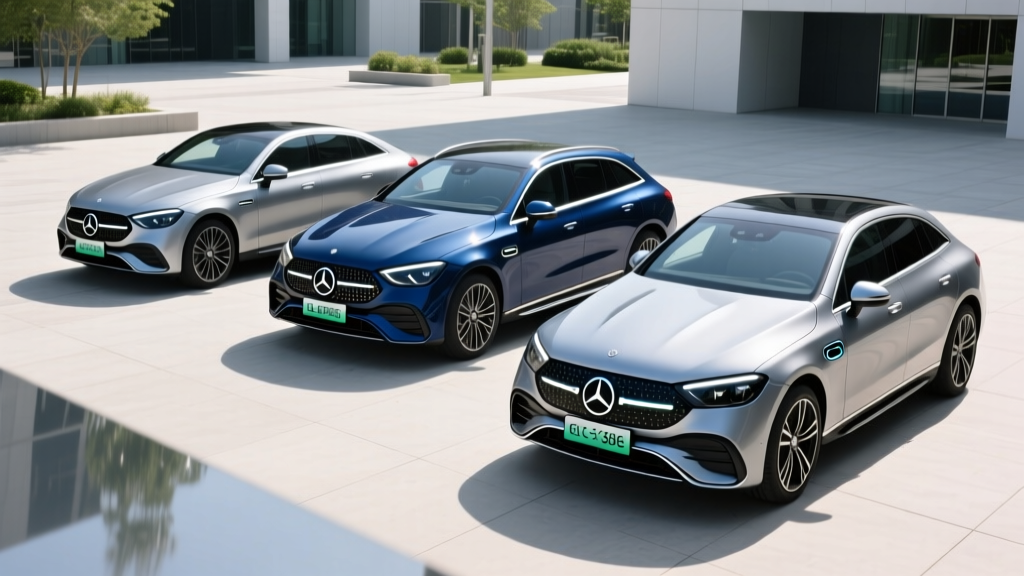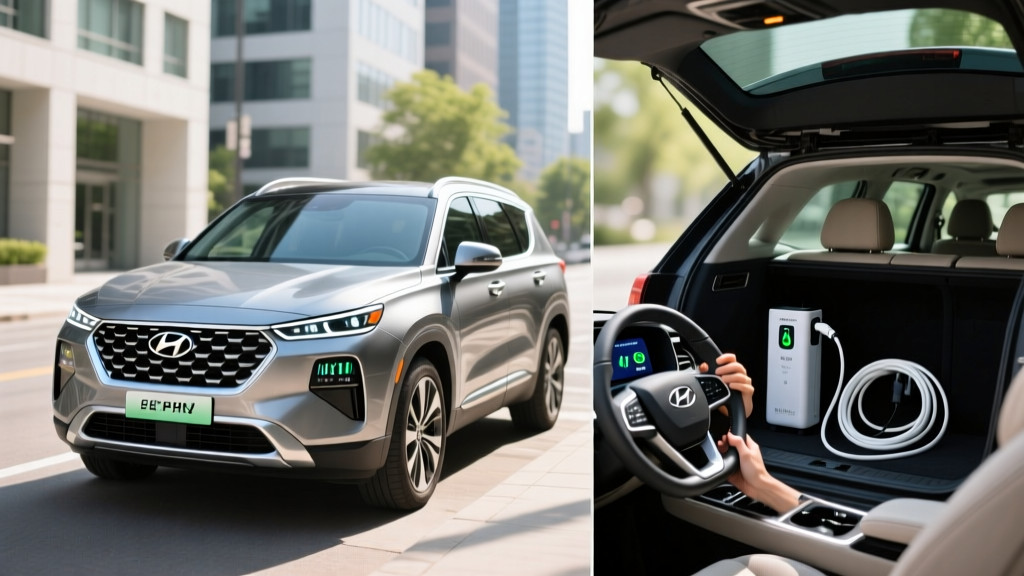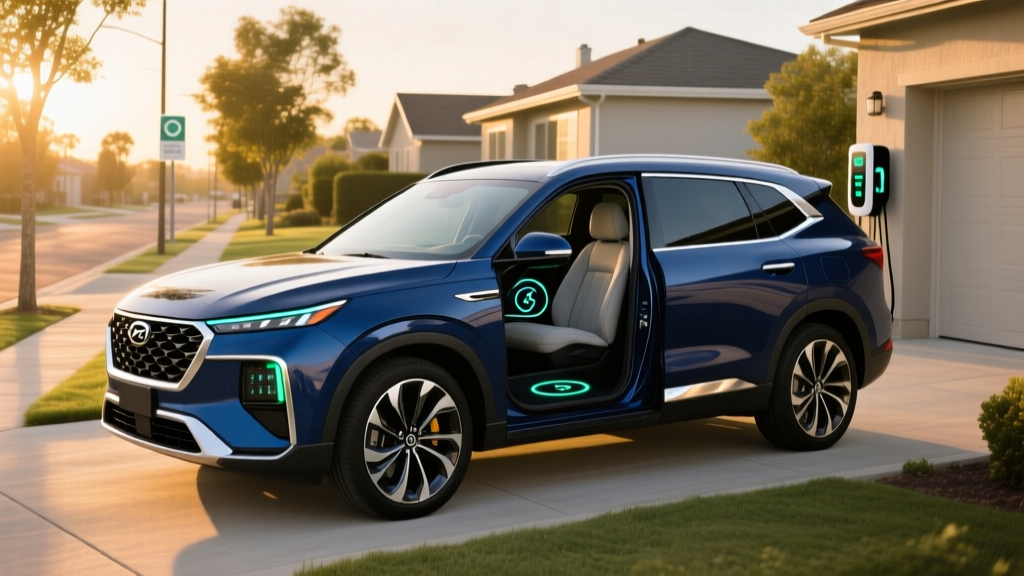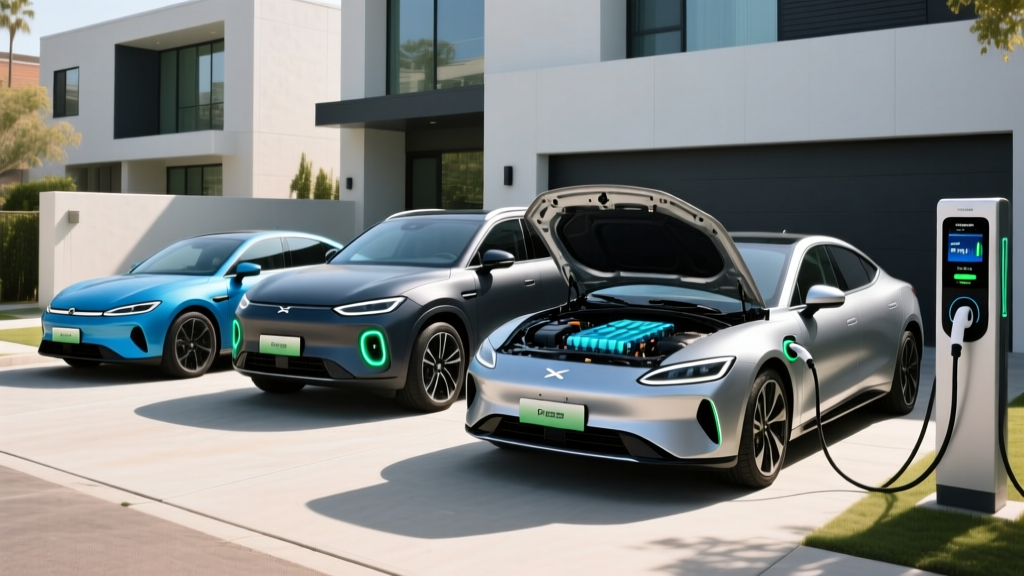
If you want to slash your fuel bill without depending on public charging infrastructure, plug in hybrid electric vehicles (PHEVs) offer a compelling middle ground. Unlike full battery-electric vehicles (BEVs), a PHEV pairs a medium-capacity traction battery with a gasoline engine, giving you 25–45 miles of electric-only commuting plus unlimited gas-engine range for road trips. For 2026, the PHEV segment has matured: larger batteries, faster Level 2 charging, and broader model availability make these vehicles more practical than ever—provided you understand exactly what you're buying.
This guide breaks down how PHEVs work, how they differ from conventional hybrids, which models lead the pack in 2026, and whether a PHEV, HEV, or BEV is the right call for your driving pattern.
HEV vs PHEV vs BEV: Clearing Up the Confusion
The biggest mistake shoppers make is conflating a conventional hybrid (HEV) with a plug-in hybrid (PHEV). They operate very differently day-to-day.
| Attribute | HEV (Conventional Hybrid) | PHEV (Plug-In Hybrid) | BEV (Battery Electric) |
|---|---|---|---|
| Plugs in to charge? | No — charges via regenerative braking & engine | Yes — Level 1 or Level 2 | Yes — Level 1, Level 2, or DC fast |
| Battery size (usable) | 0.6–1.6 kWh | 13–25 kWh | 55–110 kWh |
| Electric-only range | 0.5–2 miles at low speed | 25–45 miles EPA | 230–400+ miles EPA |
| Gasoline engine? | Yes (primary) | Yes (backup + highway assist) | No |
| Federal tax credit (§30D)? | No | Up to $7,500 (eligibility varies) | Up to $7,500 (eligibility varies) |
| Home charging install needed? | No | Recommended for daily EV-mode use | Essential |
The bottom line: If you never plan to plug in, buy an HEV like the Toyota Camry Hybrid (49 MPG combined). If you can charge at home and want electric commuting with gas-engine insurance for road trips, a PHEV is your sweet spot. If you have reliable home charging and drive under 300 miles between charges, a BEV eliminates gas entirely.
How Plug In Hybrid Electric Vehicles Actually Work
A PHEV operates in two distinct modes. When the battery is charged, the electric motor (typically 100–200 hp on its own) handles acceleration and cruising up to highway speeds. Once the battery depletes to its programmed buffer—usually around 10–15% state of charge—the gasoline engine seamlessly engages and the vehicle operates as a conventional hybrid.
Key powertrain components in a typical 2026 PHEV:
- Electric motor: 100–200 hp, drawing from the traction battery
- Gasoline engine: 1.5L–2.5L four-cylinder, 130–250 hp
- Combined system output: 200–400+ hp depending on model
- Traction battery: 13–25 kWh usable (NMC chemistry dominates the segment)
- Onboard charger: 3.3 kW to 7.2 kW for Level 2 AC charging
Most 2026 PHEVs can be charged on a standard 120V household outlet (Level 1) at roughly 1.2 kW, adding about 4–5 miles of range per hour. That's enough for overnight replenishment of a 30-mile electric range. A Level 2 home charger at 7.2 kW will fully recharge most PHEV batteries in 2–3 hours. Notably, most PHEVs do not support DC fast charging—the Toyota RAV4 Prime is a rare exception, accepting up to 50 kW DC on higher trims.
2026 PHEV Spec Comparison: Top Models Side by Side
Here's how the leading 2026 plug in hybrid electric vehicles stack up on the metrics that matter most. All figures reflect EPA data and manufacturer specifications for the 2026 model year.
| Model | Battery (kWh usable) | EV Range (mi) | Combined HP | MPG (gas mode) | MPGe (EV mode) | 0-60 (sec) | Base MSRP |
|---|---|---|---|---|---|---|---|
| Toyota RAV4 Prime | 18.1 | 42 | 302 | 38 city / 36 hwy / 38 comb | 94 MPGe | 5.7 | $44,500 |
| Hyundai Tucson PHEV | 13.8 | 33 | 261 | 35 city / 35 hwy / 35 comb | 80 MPGe | 7.1 | $39,750 |
| Chrysler Pacifica PHEV | 16.0 | 32 | 260 | 30 city / 31 hwy / 30 comb | 82 MPGe | 7.4 | $51,095 |
| Jeep Wrangler 4xe | 17.3 | 22 | 375 | 20 city / 20 hwy / 20 comb | 49 MPGe | 6.0 | $51,895 |
| BMW X5 xDrive50e | 25.7 | 38 | 483 | 22 city / 24 hwy / 23 comb | 56 MPGe | 4.6 | $67,900 |
| Toyota Prius Prime | 13.6 | 44 | 220 | 52 city / 48 hwy / 50 comb | 127 MPGe | 6.6 | $34,275 |
Sources: fueleconomy.gov, manufacturer press sites. MPGe (miles per gallon equivalent) measures energy efficiency in electric mode; 33.7 kWh = 1 gallon of gasoline for this calculation.
Fuel Economy Deep Dive: EPA Numbers vs Real-World MPG
PHEV fuel economy is uniquely dependent on your driving and charging habits. The EPA reports two figures: MPGe when operating on battery power, and MPG when the engine takes over. Here's what real ownership looks like.
| Model | EPA EV Range | EPA Gas MPG (Combined) | Real-World Gas MPG (Observed) | Real-World EV Range Notes |
|---|---|---|---|---|
| RAV4 Prime | 42 mi | 38 | 34–37 (highway-heavy); 38–41 (city) | 35–38 mi highway; 40–44 mi city. Cold weather drops to ~30 mi. |
| Tucson PHEV | 33 mi | 35 | 31–33 (highway); 35–38 (city) | 28–30 mi highway; 33–35 mi city. Cold weather drops to ~24 mi. |
| Prius Prime | 44 mi | 50 | 47–49 (highway); 52–56 (city) | 38–42 mi highway; 44–48 mi city. Best-in-class efficiency. |
| Pacifica PHEV | 32 mi | 30 | 27–29 (highway); 30–32 (city) | 26–30 mi loaded with passengers/cargo. |
Key insight: Hybrids and PHEVs in gas mode consistently exceed their EPA city rating because regenerative braking recovers energy in stop-and-go traffic. Highway driving, however, often falls 2–4 MPG below the EPA combined number. If your commute is 80% city, expect to beat the sticker. If you're mostly on the interstate at 75 mph, plan for less.
Real-world EV range reality check: The EPA electric-range test includes a mix of city and low-speed highway driving. Expect 10–15% less electric range at sustained 70+ mph highway speeds, and 20–30% less in freezing temperatures (below 32°F), since battery chemistry slows and cabin heating draws from the pack. Preconditioning while plugged in mitigates some cold-weather loss.
Charging a PHEV: What You Actually Need at Home
One of the strongest PHEV advantages is that charging requirements are modest. You don't need a $2,000 electrical panel upgrade or a 48-amp hardwired station. Here's the practical breakdown:
| Charging Level | Power (kW) | Outlet/Circuit | Miles of EV Range Per Hour | Full Charge Time (18 kWh battery) |
|---|---|---|---|---|
| Level 1 (120V household) | 1.2 kW | Standard 15A outlet | ~4–5 mi/hr | ~15 hours (0–100%) |
| Level 2 (240V, 16A) | 3.3 kW | NEMA 14-50 or hardwired | ~12–14 mi/hr | ~5.5 hours (0–100%) |
| Level 2 (240V, 32A) | 7.2 kW | NEMA 14-50 or hardwired | ~25–28 mi/hr | ~2.5 hours (0–100%) |
| DC Fast (RAV4 Prime only) | Up to 50 kW | CHAdeMO connector | N/A (0–80% in ~30 min) | ~30 min (0–80%) |
Our recommendation: A Level 2 charger at 32 amps / 7.2 kW is the sweet spot for PHEV owners. It fully replenishes any PHEV battery overnight and costs $500–$800 for the unit plus $300–$800 for electrician installation (assuming a 240V circuit near your parking spot). If your electrical panel is maxed out, a 16A Level 2 on a 20A circuit still works—just expect longer charge times. Level 1 on a standard outlet is adequate if your daily commute is under 20 miles round-trip.
Battery Longevity, Warranty, and Replacement Costs
PHEV battery anxiety is understandable but largely misplaced. PHEV batteries are smaller and less stressed than BEV packs, and manufacturers use conservative charge buffers (never letting you use the full 100% or discharge to true 0%) to prolong cell life.
Federal mandate on hybrid battery warranty: By law, all PHEV batteries sold in the US must carry a minimum warranty of 8 years / 100,000 miles (10 years / 150,000 miles in CARB states including California, New York, Massachusetts, and others). This covers battery capacity loss below a manufacturer-defined threshold—typically 60–70% of original capacity.
| Model | Battery Warranty | Powertrain Warranty | Estimated Replacement Cost (Out of Warranty) |
|---|---|---|---|
| RAV4 Prime | 10 yr / 150,000 mi (CARB) or 8 yr / 100,000 mi | 5 yr / 60,000 mi | $4,000–$6,000 |
| Tucson PHEV | 10 yr / 100,000 mi | 10 yr / 100,000 mi | $5,000–$7,000 |
| Prius Prime | 10 yr / 150,000 mi (CARB) or 8 yr / 100,000 mi | 5 yr / 60,000 mi | $3,500–$5,000 |
| Pacifica PHEV | 10 yr / 100,000 mi (CARB) or 8 yr / 100,000 mi | 5 yr / 60,000 mi | $6,000–$8,500 |
| Wrangler 4xe | 8 yr / 100,000 mi | 5 yr / 60,000 mi | $6,500–$9,000 |
In practice, PHEV battery degradation is mild. Toyota's hybrid synergy drive system has an extensive real-world track record—Prius packs routinely exceed 200,000 miles with under 15% capacity loss. Hyundai/Kia's 10-year powertrain warranty is among the best in the segment. The risk of a catastrophic out-of-pocket battery replacement is low, but the cost is real if it happens post-warranty: budget $4,000–$9,000 depending on the model.
Federal Tax Credit Eligibility for PHEVs (2026 Rules)
Not every PHEV qualifies for the federal §30D clean vehicle credit, and eligibility has tightened significantly since the Inflation Reduction Act reshaped the rules. Here's the checklist for 2026:
- Battery capacity: Must be at least 7 kWh (all major PHEVs meet this)
- MSRP caps: Vans, SUVs, and pickups ≤ $80,000; sedans ≤ $55,000
- Buyer income caps (MAGI): $300,000 joint / $225,000 head of household / $150,000 single
- Battery component sourcing: Must meet North American assembly thresholds for battery components and critical minerals (phased percentages increase annually through 2029)
- Point-of-sale transfer: Eligible buyers can apply the credit as a down-payment reduction at the dealership rather than waiting for a tax refund
- One credit per VIN: The vehicle must not have been previously titled as new with the credit claimed
2026 PHEV credit snapshot: The Toyota RAV4 Prime and Toyota Prius Prime currently qualify for up to $3,750 (meeting critical-mineral requirements but not full battery-component thresholds as of early 2026). The Jeep Wrangler 4xe and Chrysler Pacifica PHEV, assembled in the US with qualifying sourcing, may qualify for up to $7,500 depending on the specific build and battery supplier. The BMW X5 xDrive50e (assembled in South Carolina) may qualify for partial credit depending on battery sourcing. Always verify the exact VIN on the IRS clean vehicle eligibility list at irs.gov before purchasing.
Note: State incentives vary widely. California, Colorado, New York, and others offer additional rebates or HOV-lane access for PHEVs. Check your state energy office or afdc.energy.gov for local programs.
Who Should Buy a PHEV vs an HEV or Full EV?
Choose a PHEV if:
- Your daily commute is 20–40 miles round-trip and you can charge at home (even Level 1)
- You take 4+ road trips per year exceeding 200 miles and don't want to plan around DC fast chargers
- You live in an apartment or area with unreliable public charging
- You want EV-mode silence and instant torque for daily driving but need towing capacity or off-road capability (e.g., Wrangler 4xe, RAV4 Prime)
Choose a conventional HEV if:
- You cannot plug in at home or work (no garage, no outlet access)
- Your budget is tighter and you don't want the PHEV price premium ($3,000–$8,000 more than the HEV equivalent)
- You drive under 12,000 miles/year and the fuel savings won't offset the higher purchase price
Choose a full BEV if:
- You have reliable Level 2 home charging
- Your daily driving is under 250 miles and you're comfortable with DC fast charging on road trips
- You want to eliminate oil changes, spark plugs, and exhaust-system maintenance entirely
- Maximizing the $7,500 federal credit is a priority (more BEVs qualify at the full amount)
Pros and Cons of Going PHEV
Pros
- Electric-only commuting eliminates most daily fuel use
- No range anxiety — gas engine covers any trip length
- Modest home charging needs (Level 1 often sufficient)
- Eligible for partial or full federal tax credit (model-dependent)
- Regenerative braking extends brake-pad life significantly
- Strong resale demand for popular models (RAV4 Prime waitlists persist)
Cons
- Higher purchase price than HEV equivalent ($3,000–$8,000 premium)
- Two powertrains mean two systems to maintain long-term
- Electric range drops 20–30% in freezing temperatures
- Most PHEVs lack DC fast charging (road-trip EV mode not practical)
- Cargo space slightly reduced vs non-hybrid variant in some models
- Tax credit eligibility is model- and sourcing-dependent, not guaranteed
Frequently Asked Questions
How many MPG does a PHEV get once the battery runs out?
In gas-only (charge-sustaining) mode, most 2026 PHEVs deliver 30–50 MPG combined depending on the model. The Prius Prime leads at 50 MPG combined, while the RAV4 Prime achieves 38 MPG combined. Heavier models like the Wrangler 4xe and Pacifica PHEV land at 20–30 MPG. These figures are competitive with or slightly better than their non-hybrid counterparts because regenerative braking and electric assist still function in hybrid mode.
How far can a PHEV go on electric power only?
2026 PHEVs offer 22–44 miles of EPA-rated electric-only range. The Prius Prime leads at 44 miles, the RAV4 Prime delivers 42 miles, and the BMW X5 xDrive50e manages 38 miles from its large 25.7 kWh pack. Real-world highway driving reduces this by 10–15%, and cold weather (below 32°F) can cut it by 20–30%. For a 30-mile round-trip commute, most PHEVs will cover it entirely on electricity in mild weather.
Do I need to install a special charger at home for a PHEV?
Not necessarily. Every PHEV ships with a Level 1 charging cord that plugs into a standard 120V household outlet. At 1.2 kW, it adds roughly 4–5 miles of range per hour—enough to fully recharge a PHEV battery in 10–15 hours. If you want faster replenishment (2–3 hours), a Level 2 charger on a 240V circuit costs $500–$800 for equipment and $300–$800 for electrician installation. Unlike full BEVs, PHEVs don't require panel upgrades in most homes.
Is a PHEV battery reliable, and what does replacement cost?
PHEV batteries have strong reliability records, especially in Toyota's hybrid system, which has millions of real-world miles of data behind it. Federal law mandates a minimum 8-year/100,000-mile battery warranty (10 years/150,000 miles in CARB states). Out-of-warranty replacement costs range from $3,500 (Prius Prime) to $9,000 (Wrangler 4xe). In practice, most PHEV batteries retain 85%+ capacity at 150,000 miles based on fleet data from Toyota and Hyundai.
Does a plug-in hybrid qualify for the $7,500 federal tax credit?
Some do, but eligibility depends on MSRP caps ($80,000 for SUVs, $55,000 for sedans), buyer income limits ($150,000–$300,000 MAGI), and battery sourcing requirements. As of 2026, the Jeep Wrangler 4xe and Chrysler Pacifica PHEV may qualify for the full $7,500, while Toyota PHEVs (RAV4 Prime, Prius Prime) typically qualify for $3,750 due to partial battery-component sourcing compliance. Always check the specific VIN against the IRS eligibility database before committing.
Can a PHEV tow or handle off-road driving?
Yes, and this is where PHEVs shine over BEVs in certain use cases. The RAV4 Prime tows up to 3,500 lbs. The Wrangler 4xe maintains full off-road capability (articulation, ground clearance, locking differentials) while offering 22 miles of silent electric trail running. The Pacifica PHEV handles family hauling with 1,800 lbs of towing. A BEV with equivalent towing range would require a 150+ kWh battery that doesn't yet exist at a mainstream price point.
Editor's note: PHEV pricing, tax credit eligibility, and specifications change throughout the model year as manufacturers adjust battery sourcing and trim configurations. Verify all figures with your dealer and the IRS clean vehicle portal before purchasing. This guide reflects data available as of early 2026.