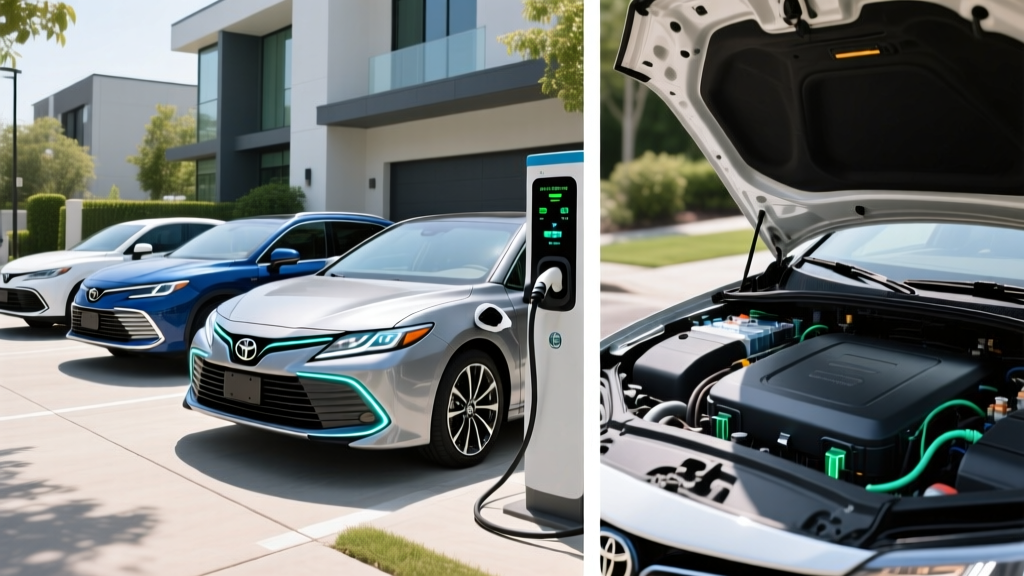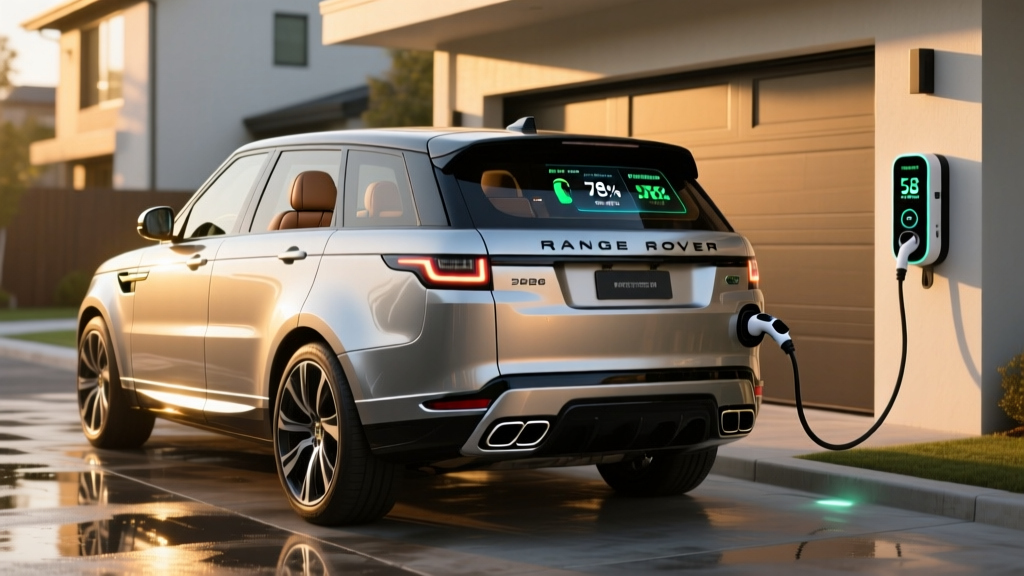
Plug-in hybrid electric vehicles (PHEVs) occupy a unique middle ground in the electrified-vehicle spectrum: enough electric-only range to cover most daily commutes without burning a drop of gasoline, plus a gasoline engine that eliminates range anxiety on longer road trips. For 2026, the PHEV segment has expanded significantly, with models spanning compact SUVs to luxury sedans — and federal tax credit rules that can knock thousands off the purchase price if you meet the eligibility requirements.
This guide breaks down how plug in automobiles work, how they differ from conventional hybrids, and how to decide whether a PHEV, a standard HEV, or a full battery-electric vehicle (BEV) is the right fit for your driving pattern.
HEV vs PHEV: What's the Difference?
Before comparing specific models, it's critical to understand the distinction between a conventional hybrid (HEV) and a plug-in hybrid (PHEV). Both use a gasoline engine paired with an electric motor, but they differ fundamentally in battery size, electric-only capability, and how they recharge.
Conventional Hybrid (HEV)
- Battery: Small (typically 1.0–2.0 kWh), not user-replaceable or plug-in chargeable
- Electric-only range: None or less than 1 mile at very low speeds
- Refueling: Gasoline only — the battery recharges through regenerative braking and the engine
- Example: Toyota Prius (HEV), Honda CR-V Hybrid
Plug-In Hybrid (PHEV)
- Battery: Larger (typically 12–25 kWh usable), charges via plug or regenerative braking
- Electric-only range: 25–50+ miles EPA, covering most daily commutes
- Refueling: Plug in to charge the battery + fill up with gasoline for extended range
- Example: Toyota RAV4 Prime, Chrysler Pacifica Hybrid, Jeep Wrangler 4xe
Key takeaway: If you can charge at home and your commute is under 40 miles, a PHEV can function as a daily EV while retaining gas-engine flexibility for road trips. If you can't charge at home, a conventional HEV is likely the better choice.
Top Plug In Automobiles for 2026: Specs at a Glance
Below is a spec comparison of some of the most popular PHEV models currently on sale. All figures are from EPA or manufacturer data for the 2025–2026 model year.
| Model | EV Range (mi) | Battery (kWh) | Combined HP | MPG (gas) | Total Range (mi) | Base MSRP |
|---|---|---|---|---|---|---|
| Toyota RAV4 Prime | 42 | 18.1 | 302 | 38 | ~520 | $44,565 |
| Chrysler Pacifica Hybrid | 32 | 16.0 | 260 | 30 | ~430 | $51,095 |
| Jeep Wrangler 4xe | 22 | 17.3 | 375 | 20 | ~370 | $51,790 |
| Toyota Prius Prime | 44 | 13.6 | 220 | 48 | ~440 | $33,675 |
| Hyundai Tucson PHEV | 33 | 13.8 | 261 | 35 | ~420 | $39,090 |
Sources: EPA fueleconomy.gov, manufacturer spec sheets. MSRP reflects base trim before destination charges.
Fuel Economy Breakdown: EPA MPG and Real-World Expectations
PHEVs report fuel economy in two ways: MPGe (miles per gallon equivalent) when running on electricity, and standard MPG when the gasoline engine takes over after the battery is depleted. Understanding both numbers is essential for estimating your actual fuel costs.
| Model | MPGe (EV mode) | MPG City (gas) | MPG Hwy (gas) | MPG Combined (gas) |
|---|---|---|---|---|
| Toyota RAV4 Prime | 94 | 40 | 36 | 38 |
| Chrysler Pacifica Hybrid | 82 | 29 | 30 | 30 |
| Jeep Wrangler 4xe | 49 | 20 | 20 | 20 |
| Toyota Prius Prime | 114 | 50 | 47 | 48 |
| Hyundai Tucson PHEV | 80 | 35 | 35 | 35 |
Real-world MPG note: Hybrid and PHEV vehicles often exceed their EPA city ratings in real-world stop-and-go driving, because regenerative braking recaptures more energy at lower speeds. On the highway, however, expect MPG to fall 5–15% below the EPA combined figure, especially at speeds above 70 mph or in cold weather when the engine runs more frequently for cabin heat.
If you charge nightly and drive less than your PHEV's electric-only range, your gasoline consumption may drop to near zero for daily use. The EPA's fueleconomy.gov site lets you personalize estimates based on your commute distance and driving mix.
Charging a PHEV: What You Need to Know
PHEV batteries are small enough that Level 1 charging (a standard 120V household outlet) is genuinely practical — a major advantage over full BEVs, which require Level 2 for reasonable overnight charging.
PHEV Charging Times (Typical)
- Level 1 (120V / 1.4 kW): 5–10 hours for a full charge — sufficient for overnight top-up on most models
- Level 2 (240V / 3.3–7.2 kW): 1.5–3 hours — ideal for quick turnaround between commutes
- DC Fast Charging: Most PHEVs do NOT support DC fast charging. The Mitsubishi Outlander PHEV is a rare exception with CHAdeMO DC capability. Do not assume CCS or NACS compatibility on a PHEV.
A PHEV's smaller battery (12–25 kWh) means even a Level 1 outlet can replenish it overnight, eliminating the need for an expensive Level 2 home installation in many cases.
If you do install a Level 2 charger, expect to pay $500–$1,200 for the charger unit and $800–$2,500 for electrical installation (assuming your panel has capacity). Consult a licensed electrician for a site-specific quote.
Federal Tax Credits for Plug In Automobiles
Under IRS §30D, qualifying new PHEVs may be eligible for a federal tax credit of up to $7,500 — but eligibility depends on multiple requirements that change frequently. As of 2026, the key criteria are:
- ✅ Battery capacity: At least 7 kWh (most current PHEVs qualify)
- ✅ MSRP cap: Vans/SUVs/pickups ≤ $80,000; sedans ≤ $55,000
- ✅ Buyer income cap: Modified AGI ≤ $150,000 (single) / $300,000 (joint)
- ✅ Battery sourcing: Critical minerals and battery components must meet phased-in domestic/free-trade sourcing thresholds (increasing annually)
- ✅ Final assembly: Vehicle must be assembled in North America
- ✅ Point-of-sale transfer: As of 2024, the credit can be transferred to the dealer at purchase, reducing your out-of-pocket cost immediately (rather than waiting for tax filing)
Important: Not all PHEVs qualify for the full $7,500. Battery sourcing requirements have tightened each year, and some models may qualify for only $3,750 (meeting one of the two sourcing thresholds) or nothing at all. Always verify current eligibility on the IRS Clean Vehicle Credits page and confirm with your tax professional before purchasing.
Conventional hybrids (HEVs) do not qualify for the §30D federal tax credit, as they lack the minimum battery capacity and plug-in capability. Some states offer separate rebates for HEVs, but these vary by jurisdiction.
Battery Longevity, Warranty, and Replacement Cost
Hybrid & PHEV Battery Warranty Standards
Federal law mandates that hybrid and PHEV batteries carry a minimum warranty of 8 years / 100,000 miles. In California Air Resources Board (CARB) states, the requirement extends to 10 years / 150,000 miles.
Most manufacturers match or exceed these minimums:
- Toyota: 10 years / 150,000 miles on hybrid battery (all 50 states, from 2020 model year)
- Hyundai/Kia: 10 years / 100,000 miles (original owner) on hybrid battery
- Chrysler/Jeep (Stellantis): 8 years / 100,000 miles
The warranty typically covers battery capacity falling below 60–70% of original capacity within the warranty period.
Real-world degradation: PHEV batteries experience less total degradation than full BEV batteries because they use a smaller portion of their total capacity (the system maintains larger charge buffers). Many Prius owners report original batteries lasting 150,000–200,000+ miles with gradual capacity loss of 10–20% over 10 years.
Replacement cost if out of warranty: PHEV battery replacement typically costs $4,000–$8,000 (parts and labor), depending on the model. Conventional hybrid batteries are generally less expensive to replace ($2,000–$5,000) because they are smaller. Third-party refurbishment shops offer remanufactured hybrid batteries for $1,500–$3,000 as a cost-saving alternative.
Hybrid vs PHEV vs EV: Which Fits Your Driving Pattern?
Choose a Conventional Hybrid (HEV) If:
- You cannot charge at home or work (no garage, no outlet access)
- You want maximum fuel efficiency with zero behavior change
- You drive a mix of city and highway without a predictable short commute
- Upfront budget is a priority — HEVs cost $2,000–$5,000 less than PHEV equivalents
Choose a Plug-In Hybrid (PHEV) If:
- You can charge at home (even a standard 120V outlet works)
- Your daily round-trip commute is under 30–40 miles
- You regularly take road trips exceeding 200+ miles and don't want to plan around charging stations
- You want EV-like daily driving with gas-engine insurance for longer trips
Choose a Full EV (BEV) If:
- You have reliable Level 2 home charging
- Your daily driving is within the vehicle's real-world range (accounting for 15–30% highway/cold-weather loss)
- You want the lowest per-mile fuel cost and minimal maintenance
- You're ready to plan longer road trips around DC fast-charging infrastructure
Pros and Cons of Plug In Automobiles
✅ Pros
- 25–44 miles of zero-emission electric driving covers most commutes
- No range anxiety — gas engine provides 300+ miles of backup range
- Level 1 (120V) charging is sufficient — no expensive electrical upgrade needed
- Federal tax credit up to $7,500 (if eligible)
- Lower daily fuel cost than gas-only vehicles when charged regularly
- Proven hybrid powertrain reliability with 8–10 year battery warranties
❌ Cons
- Higher purchase price than conventional hybrid equivalents ($3,000–$7,000 premium)
- Two systems to maintain (engine + electric powertrain) long-term
- Electric-only range is limited — less practical for drivers with long commutes
- Most PHEVs lack DC fast charging, limiting road-trip EV-mode usefulness
- If you don't plug in regularly, you're carrying dead battery weight and getting worse MPG than an HEV
- Tax credit eligibility is complex and subject to sourcing/battery rules
Frequently Asked Questions
How many MPG does a PHEV get?
When the battery is depleted and the gasoline engine takes over, PHEVs typically achieve 20–50 MPG combined depending on the model. The Toyota Prius Prime leads the segment at 48 MPG combined (50 city / 47 highway), while larger vehicles like the Jeep Wrangler 4xe return around 20 MPG combined on gas. When running on electricity, PHEVs are rated in MPGe — the Prius Prime achieves 114 MPGe.
How far can a PHEV go on electric only?
Current 2025–2026 PHEVs offer 22–44 miles of EPA-rated electric-only range. The Toyota Prius Prime leads at 44 miles, followed by the RAV4 Prime at 42 miles. Real-world electric range may drop 10–20% in cold weather (below 40°F) due to cabin heating demands and reduced battery efficiency, and at sustained highway speeds above 70 mph.
Do I need to plug in a PHEV, or does it charge itself?
To get the benefit of a PHEV's electric-only range, you should plug it in regularly — ideally nightly. The vehicle will still function perfectly without plugging in (the engine and regenerative braking keep the battery at a minimum charge), but you'll miss the electric-only driving benefit and essentially operate it as a heavier, slightly less efficient conventional hybrid.
Are PHEV batteries reliable, and what does replacement cost?
PHEV batteries are covered by federal mandate for at least 8 years / 100,000 miles (10 years / 150,000 miles in CARB states). Real-world data from Toyota's hybrid lineup shows many batteries lasting well beyond 150,000 miles with gradual capacity loss. Out-of-warranty replacement costs $4,000–$8,000 depending on the model, with refurbished options available for less.
Does a plug-in hybrid qualify for the federal tax credit?
Many PHEVs qualify for up to $7,500 under IRS §30D, but eligibility depends on MSRP caps (≤$80,000 for SUVs, ≤$55,000 for sedans), buyer income limits, North American assembly, and battery component/critical mineral sourcing requirements that tighten annually. Check the IRS Clean Vehicle Credits page for the current qualifying vehicle list and consult a tax professional for your specific situation.
Is a PHEV better than a full EV?
Neither is universally better — it depends on your charging access and driving pattern. A PHEV is better if you lack reliable home charging or frequently drive 300+ miles without time to stop at DC fast chargers. A full EV is better if you have Level 2 home charging, drive within the vehicle's daily range, and want the lowest possible per-mile cost and maintenance burden. For many two-car households, one PHEV and one BEV is a practical combination.
Data sourced from EPA fueleconomy.gov, manufacturer specifications, and IRS.gov. Tax credit rules are subject to change; verify current eligibility before purchasing. MSRP figures reflect base trims and exclude destination charges.