Why PHEV Owners Search for 'Car Plug In Aircon'
If you've ever sat in a sweltering driveway wondering whether you can blast the AC while your plug-in hybrid charges, you're not alone. The search for car plug in aircon capability reflects one of the most practical — and misunderstood — features of modern electrified vehicles. The short answer: yes, most 2026 plug-in hybrids (PHEVs) can run their climate control systems while plugged in, and many can even precondition the cabin using grid power before you ever turn the key. But the details vary dramatically by model, and understanding how your PHEV's HVAC system interacts with its battery and charging hardware is essential for maximizing comfort, efficiency, and battery longevity.
This guide breaks down how plugged-in climate control works across today's leading PHEVs, compares conventional hybrids (HEVs) with PHEVs on this feature, and gives you the exact specs — EPA MPG, electric-only range, battery kWh, charging times, and pricing — you need to choose the right electrified vehicle for your daily routine.
HEV vs PHEV: How Plugged-In Aircon Actually Works
Before we get into specific models, it's critical to distinguish between a conventional hybrid (HEV) and a plug-in hybrid (PHEV), because the answer to "can I run aircon while plugged in" depends entirely on which one you drive.
Conventional Hybrid (HEV)
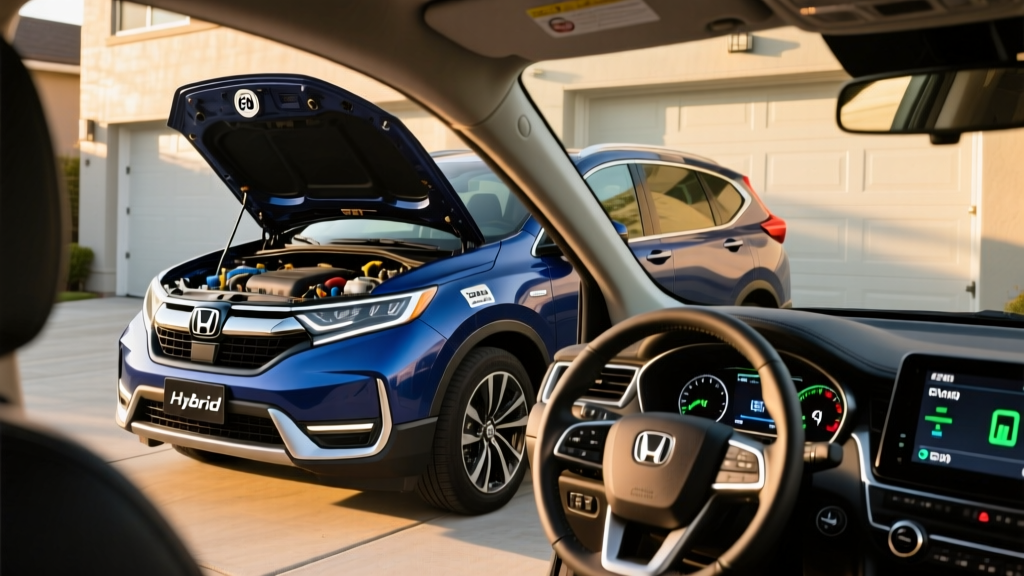
An HEV like the Toyota Prius (non-plug-in) or Honda CR-V Hybrid has a small battery (typically 1.0–1.5 kWh) that charges only through regenerative braking and the gasoline engine. There is no plug. The air conditioning compressor is typically driven by the engine or an electric motor powered by the hybrid battery. You cannot run AC while "plugged in" because there is no plug. When the car is off, the AC is off.
Plug-In Hybrid (PHEV)
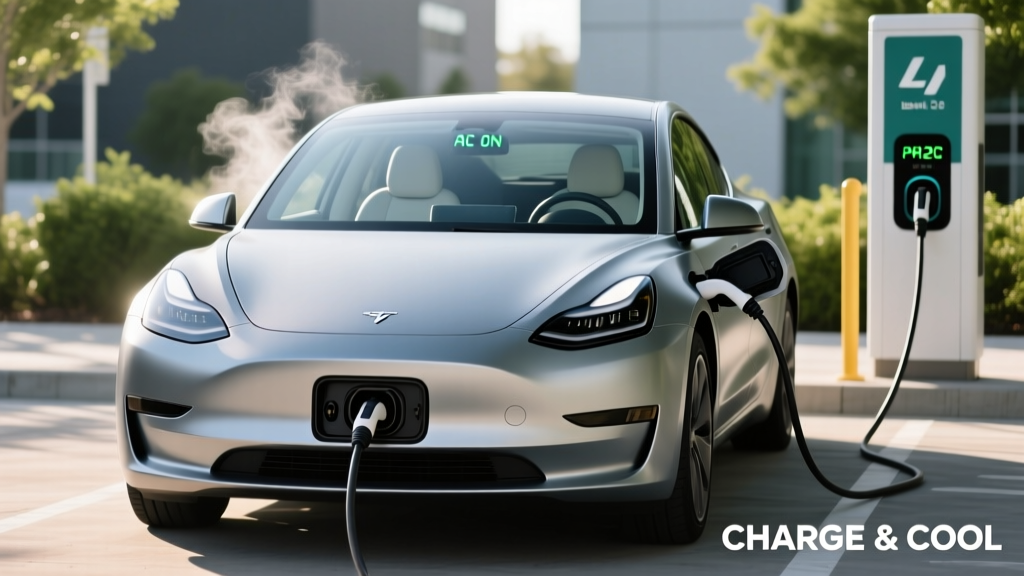
A PHEV like the Toyota RAV4 Prime or Jeep Wrangler 4xe carries a much larger battery (13–25+ kWh) and connects to an external power source via a J1772 (or NACS) charge port. When plugged in at a Level 2 charger, the vehicle can draw grid power to run the HVAC compressor, precondition the cabin, and maintain battery temperature — all without starting the gasoline engine. This is the car plug in aircon capability most shoppers are looking for.
2026 PHEVs That Support Plugged-In Climate Control
Not every PHEV handles plugged-in HVAC the same way. Some allow full cabin preconditioning via a smartphone app while connected to a Level 2 charger; others only run climate control when the vehicle is in "Ready" mode. Below are five popular 2026 PHEVs with exact specs and how their plugged-in aircon features work.
| Model | Battery (kWh) | EV Range (mi) | Combined HP | Level 2 Charge | DC Fast? | Plugged-In HVAC |
|---|---|---|---|---|---|---|
| Toyota RAV4 Prime | 18.1 kWh | 42 mi | 302 hp | ~2.5 hrs (6.6 kW) | No | Yes (app + timer) |
| Chrysler Pacifica PHEV | 16.0 kWh | 32 mi | 260 hp | ~2.0 hrs (7.2 kW) | No | Yes (Uconnect app) |
| Jeep Wrangler 4xe | 17.3 kWh | 22 mi | 375 hp | ~2.5 hrs (6.6 kW) | No | Yes (app remote start) |
| Hyundai Tucson PHEV | 13.8 kWh | 33 mi | 261 hp | ~2.0 hrs (7.2 kW) | No | Yes (Bluelink app) |
| Ford Escape PHEV | 14.4 kWh | 37 mi | 210 hp | ~3.5 hrs (3.7 kW) | No | Yes (FordPass app) |
Key observation: None of the mainstream 2026 PHEVs support DC fast charging. They all use Level 2 (240V AC) via a J1772 connector (or NACS on newer Ford models). Plugged-in HVAC runs off the Level 2 AC connection, drawing power from the grid rather than depleting your battery.
Real-World MPG: EPA Stickers vs What You'll Actually Get
PHEV fuel economy is uniquely complex because your actual MPG depends heavily on how often you charge. Drive a 30-mile commute within your EV range and you may burn zero gasoline for weeks. Forget to plug in and you're driving a heavy hybrid with worse MPG than a purpose-built HEV.
| Model | EPA City MPG | EPA Hwy MPG | EPA Combined | MPGe (EV Mode) | Real-World Note |
|---|---|---|---|---|---|
| Toyota RAV4 Prime | 40 | 36 | 38 | 94 MPGe | Owners report 42+ city in hybrid mode |
| Chrysler Pacifica PHEV | 29 | 30 | 30 | 82 MPGe | Heavy minivan; highway drops to ~27 loaded |
| Jeep Wrangler 4xe | 20 | 20 | 20 | 49 MPGe | Aerodynamic penalty; 17–18 hwy common |
| Hyundai Tucson PHEV | 35 | 35 | 35 | 80 MPGe | Strong city regen; ~37 city real-world |
| Ford Escape PHEV | 42 | 36 | 39 | 105 MPGe | Excellent city efficiency; 44+ reported |
Real-world tip: Hybrids and PHEVs in hybrid mode often exceed their EPA city MPG because regenerative braking recovers energy in stop-and-go traffic. Highway MPG, however, frequently falls 2–5 MPG below the sticker due to aerodynamic drag at sustained speeds. Data sourced from fueleconomy.gov and owner-reported logs.
Electric-Only Range and Total Range for 2026 PHEVs
The electric-only range is the single most important PHEV spec if your goal is to minimize gasoline consumption. Here's how the current crop stacks up, along with total combined range (EV + gasoline tank):
- Ford Escape PHEV: 37 miles EV-only | ~520 miles total range
- Toyota RAV4 Prime: 42 miles EV-only | ~600 miles total range
- Hyundai Tucson PHEV: 33 miles EV-only | ~420 miles total range
- Chrysler Pacifica PHEV: 32 miles EV-only | ~520 miles total range
- Jeep Wrangler 4xe: 22 miles EV-only | ~370 miles total range
If your daily round-trip commute is under 35 miles and you charge at home every night, you could go months without visiting a gas station in the RAV4 Prime or Escape PHEV. The Wrangler 4xe, with its brick-like aerodynamics and shorter EV range, is the least efficient choice for electric-only commuting but offers unmatched off-road capability.
Battery Warranty, Reliability, and Replacement Costs
Hybrid & PHEV Battery Warranty Standards (2026)
Every major automaker covers PHEV and HEV traction batteries for a minimum of 8 years / 100,000 miles. In California Air Resources Board (CARB) states, that extends to 10 years / 150,000 miles for emissions-related components including the hybrid battery.
- Toyota: 10 yr / 150,000 mi (all 50 states for hybrid battery)
- Hyundai/Kia: 10 yr / 100,000 mi (original owner); 10 yr / 150,000 mi in CARB states
- Ford: 8 yr / 100,000 mi; extended in CARB states
- Stellantis (Jeep/Chrysler): 8 yr / 100,000 mi; 10 yr / 150,000 mi in CARB states
Battery replacement cost: If your PHEV battery fails outside warranty, expect to pay between $4,000 and $8,500 for parts and labor depending on the model. The RAV4 Prime's 18.1 kWh pack runs approximately $6,000–$7,500 installed; the smaller Escape PHEV battery is closer to $4,500–$5,500. However, real-world data shows that modern PHEV batteries rarely require full replacement within the first 150,000 miles. Most degradation manifests as a 10–15% reduction in EV range after 8–10 years — not catastrophic failure.
For conventional HEVs, the battery is even smaller and less stressed. Toyota's Prius hybrid battery, for example, routinely lasts 200,000+ miles with minimal degradation, and replacement costs around $2,500–$3,500 if needed.
Pricing and Federal Tax Credit Eligibility for 2026 PHEVs
Under current IRS §30D Clean Vehicle Credit rules, qualifying PHEVs can receive up to $7,500 — but eligibility is far from guaranteed. The credit depends on battery sourcing, critical minerals requirements, MSRP caps, and buyer income limits.
| Model | Base MSRP | §30D Credit (est.) | Effective Price |
|---|---|---|---|
| Toyota RAV4 Prime SE | $44,965 | $3,751* | ~$41,214 |
| Ford Escape PHEV | $39,500 | $3,751* | ~$35,749 |
| Hyundai Tucson PHEV SEL | $39,750 | $3,751* | ~$35,999 |
| Chrysler Pacifica PHEV | $51,495 | $7,500† | ~$43,995 |
| Jeep Wrangler 4xe Sport S | $51,790 | $3,751* | ~$48,039 |
*Partial credit reflects the battery component portion meeting sourcing requirements. †Pacifica PHEV may qualify for the full $7,500 depending on current-year sourcing compliance — verify at the IRS Clean Vehicle Credit portal before purchasing.
- MSRP cap: SUVs/vans/pickups must be ≤$80,000; sedans ≤$55,000
- Income cap: AGI ≤$150,000 (single) / $300,000 (joint) / $225,000 (head of household)
- Battery sourcing: A percentage of critical minerals and battery components must be sourced from the US or FTA partners (thresholds increase annually through 2026)
- Point-of-sale transfer: You can transfer the credit to the dealer for an upfront price reduction at purchase
Hybrid vs PHEV vs EV: Which Should You Choose?
Decision Framework
Choose a conventional hybrid (HEV) if:
- You cannot charge at home (apartment, no garage, street parking only)
- Your budget is under $35,000 and you want maximum MPG without plug-in complexity
- You want zero behavior change — just fill up with gas and drive
- Example: Toyota Prius (57 MPG combined, ~$29,000)
Choose a plug-in hybrid (PHEV) if:
- You have reliable home Level 2 charging and a commute under 40 miles round-trip
- You take occasional long road trips where EV charging infrastructure is sparse
- You want electric commuting with a gasoline safety net for 300+ mile trips
- You want plugged-in aircon/preconditioning for extreme climates
- Example: Toyota RAV4 Prime (42 mi EV, 38 MPG hybrid)
Choose a full battery EV (BEV) if:
- You have home charging and your daily driving is under 250 miles
- You want zero tailpipe emissions and minimal maintenance (no oil changes, no engine)
- You want access to the full $7,500 federal credit on qualifying models
- You're comfortable planning around DC fast charging on road trips
- Example: Tesla Model Y (320 mi range, ~$44,990)
How Plugged-In Aircon and Preconditioning Actually Save You Money
Running your PHEV's aircon while plugged in isn't just about comfort — it's a legitimate efficiency strategy. Here's why:
1. Grid-powered preconditioning preserves EV range. If you cool (or heat) your cabin using grid power before departure, your battery starts at full charge rather than having surrendered 3–8 miles of EV range to HVAC use during the first 15 minutes of your commute. In summer heat, cabin cooling can consume 1–3 kW of power — that's energy better drawn from your $0.13/kWh home electricity than from your 18 kWh battery.
2. Battery thermal management extends longevity. Most PHEVs use their plugged-in connection to maintain optimal battery temperature (typically 20–35°C / 68–95°F). In extreme heat, the thermal management system runs the cooling loop while plugged in, preventing the battery from sitting at elevated temperatures — the primary driver of lithium-ion degradation.
3. You avoid idling the gasoline engine. In a conventional car or an unplugged PHEV, running the AC at idle requires the engine to run, burning 0.2–0.4 gallons per hour and generating unnecessary emissions. A plugged-in PHEV runs the electric AC compressor directly from the grid.
Pros and Cons of PHEVs with Plugged-In Climate Control
Pros
- Precondition cabin on grid power — zero EV range lost to HVAC
- Electric-only commute eliminates gas for short trips
- Gasoline engine eliminates range anxiety on road trips
- Hybrid-mode MPG often exceeds EPA in city driving
- Partial federal tax credit on qualifying models
- 8–10 year battery warranty coverage
Cons
- Most PHEVs lack DC fast charging — Level 2 only
- Higher purchase price than equivalent HEV ($5,000–$10,000 premium)
- EV range drops 20–30% in freezing temperatures
- Requires home Level 2 charger for meaningful electric driving
- Battery replacement costs $4,000–$8,500 out of warranty
- Tax credit eligibility varies by model year and sourcing rules
Frequently Asked Questions
Can I run the air conditioner in my PHEV while it's plugged in and charging?
Yes, most 2026 PHEVs allow climate control operation while connected to a Level 2 charger. The HVAC system draws power from the grid rather than depleting your battery. Use the manufacturer's app (Toyota app, FordPass, Bluelink, Uconnect) to set a preconditioning schedule so your cabin is cool before you get in.
How many MPG does a PHEV get when the battery is empty?
In hybrid mode (battery depleted), PHEV fuel economy ranges from 20 MPG (Jeep Wrangler 4xe) to 42 MPG city (Ford Escape PHEV). The Toyota RAV4 Prime delivers 38 MPG combined, while the Hyundai Tucson PHEV achieves 35 MPG combined. Real-world city MPG often exceeds EPA estimates by 2–4 MPG thanks to regenerative braking.
How far can a PHEV go on electric only?
Current 2026 PHEVs offer 22–42 miles of electric-only range. The Toyota RAV4 Prime leads at 42 miles, followed by the Ford Escape PHEV at 37 miles and the Hyundai Tucson PHEV at 33 miles. The Jeep Wrangler 4xe offers just 22 miles due to its heavy, boxy design.
Do conventional hybrids (HEVs) have plug-in aircon capability?
No. Conventional hybrids like the standard Toyota Prius or Honda CR-V Hybrid have no charge port. The air conditioning system operates only when the vehicle is powered on and runs off the small hybrid battery and gasoline engine. You cannot plug in an HEV to run climate control.
Is a PHEV battery reliable, and what does replacement cost?
PHEV batteries are covered by 8–10 year / 100,000–150,000 mile warranties. Real-world data shows most PHEV batteries experience 10–15% capacity loss after 8–10 years, not total failure. Out-of-warranty replacement costs range from $4,000 (Ford Escape PHEV) to $7,500 (Toyota RAV4 Prime). According to NHTSA and long-term fleet data, catastrophic PHEV battery failures within the warranty period are rare.
Does a PHEV qualify for the federal tax credit?
Some PHEVs qualify for a partial or full §30D Clean Vehicle Credit of up to $7,500, but eligibility depends on battery sourcing requirements, MSRP caps ($80,000 for SUVs), and buyer income limits ($150,000 single / $300,000 joint). Check the current eligibility list at irs.gov before purchasing, as qualifying models change periodically.
Can a PHEV use DC fast charging?
As of 2026, nearly all mainstream PHEVs are limited to Level 2 AC charging (3.7–7.2 kW). The Mitsubishi Outlander PHEV is a rare exception with CHAdeMO DC fast charging capability. Most PHEV batteries are too small (13–18 kWh) to justify the cost and weight of DC fast charging hardware, and a Level 2 charge completes in 2–3.5 hours — sufficient for overnight home charging.