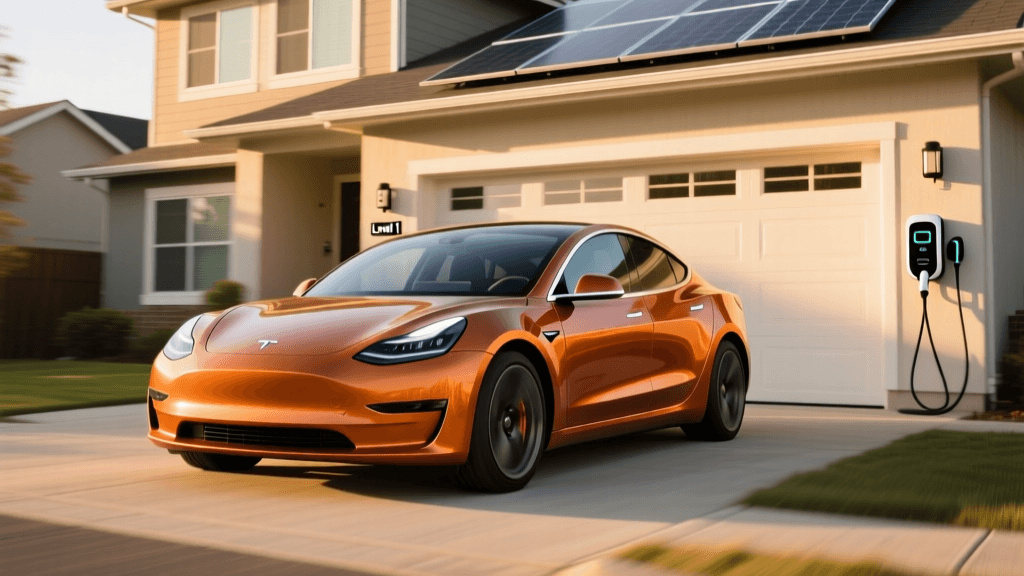
The PHEV Charging Dilemma: Maximizing Your Investment
Plug-in Hybrid Electric Vehicles (PHEVs) offer an incredible compromise: electric efficiency for daily commutes and a gas engine for weekend road trips. However, the true financial value of a PHEV is only realized when you charge it at home. Relying solely on the gas engine turns your PHEV into a heavy, less efficient traditional hybrid, entirely defeating the purpose of the plug. According to the U.S. Environmental Protection Agency, PHEV owners who regularly charge their vehicles can reduce their fuel costs by 30% to 60% compared to conventional vehicles. But setting up a home charging station involves upfront costs that can range from zero dollars to over two thousand. This guide breaks down the exact costs, electrical requirements, and return on investment (ROI) for PHEV home charging setups.
Level 1 vs. Level 2 Charging: The Core Comparison
Every PHEV comes with a Level 1 charging cord that plugs into a standard 120-volt household outlet. For PHEVs, which typically have smaller battery packs (ranging from 10 kWh to 25 kWh) compared to fully electric vehicles, Level 1 charging is often sufficient for overnight replenishment. However, Level 2 (240-volt) charging offers significant speed and convenience advantages, especially for larger PHEV batteries like those in the Chrysler Pacifica Hybrid or the Toyota RAV4 Prime.
| Feature | Level 1 (120V Standard Outlet) | Level 2 (240V Dedicated Circuit) |
|---|---|---|
| Voltage / Amperage | 120V / 12-15 Amps | 240V / 32-48 Amps |
| Charge Rate (Miles of Range/Hour) | 3 to 5 miles | 15 to 25+ miles |
| Time to Full Charge (18 kWh Battery) | 8 to 12 hours | 2 to 3.5 hours |
| Hardware Cost | $0 (Included with vehicle) | $300 to $700 |
| Installation Cost | $0 | $500 to $2,000+ |
As noted by the U.S. Department of Energy, while Level 1 is adequate for many PHEV owners, Level 2 becomes essential if you want to utilize 'opportunity charging'—topping off your battery quickly between errands or ensuring a full battery even if you plug in late at night.
Breaking Down Level 2 Hardware Costs
If you decide to upgrade to Level 2, the first expense is the Electric Vehicle Supply Equipment (EVSE). PHEV owners do not necessarily need the most expensive, ultra-high-power chargers designed for massive EV batteries. A 32-amp or 40-amp charger is usually the sweet spot for PHEVs.
- Emporia Level 2 EV Charger (~$399): An exceptional value proposition. It features excellent energy monitoring, allowing you to track exactly how much electricity your PHEV is consuming, which is vital for calculating your ROI.
- ChargePoint Home Flex (~$699): A premium, highly reliable option with adjustable amperage (up to 50 amps) and excellent app integration for scheduling charges during off-peak utility hours.
- Wallbox Pulsar Plus (~$449): A compact, aesthetically pleasing unit that offers great smart-charging features without taking up much garage wall space.
Electrical Panel and Wiring Requirements
The most variable cost in any home charging setup is the electrical work. The Department of Energy strongly recommends hiring a licensed electrician to assess your home's electrical panel before purchasing hardware.
1. Panel Capacity Assessment
Your home's electrical panel must have enough spare capacity to handle a new 40-amp to 60-amp breaker. Older homes with 100-amp panels may not have the headroom, especially if you use central air conditioning or electric heating. Upgrading a panel from 100 amps to 200 amps typically costs between $1,500 and $2,500. Modern homes with 200-amp panels usually have sufficient spare capacity, eliminating this massive expense.
2. Wiring and Labor
If your panel has space, the electrician will run heavy-gauge wire (usually 6 AWG copper) from the panel to your garage or driveway. The cost depends heavily on the distance. Running wire through an unfinished basement or an attached garage might cost $500 to $800. Trenching across a yard or drilling through multiple finished walls can push labor costs to $1,500 or more.
3. NEMA 14-50 Receptacle vs. Hardwired
You must choose between a plug-in setup or a hardwired setup. A NEMA 14-50 outlet installation (the same type used for heavy-duty welders or large RVs) allows you to unplug the charger and take it with you if you move. However, the National Electrical Code (NEC) requires GFCI breakers for receptacles, which can add $150 to $250 to the bill and sometimes cause nuisance tripping. Hardwiring the charger directly into the panel bypasses the need for a GFCI breaker, often making it cheaper, safer, and more reliable for a permanent installation.
Calculating the ROI: Gas vs. Electricity
To determine if a $1,000+ Level 2 setup is worth the investment, you must calculate your break-even point based on local fuel and electricity prices. Let's look at a standard scenario for a PHEV owner commuting 30 miles a day, entirely within their electric range.
- Gasoline Scenario: If your PHEV gets 35 MPG on gas and gas costs $3.50 per gallon, your fuel cost is $0.10 per mile.
- Electricity Scenario: If your PHEV achieves 3.5 miles per kWh and your local electricity rate is $0.16 per kWh, your fuel cost is $0.045 per mile.
By charging at home, you save roughly $0.055 per mile. If you drive 10,000 electric miles a year, your annual savings amount to $550. At this rate, a $1,200 Level 2 installation pays for itself in just over two years. After the break-even point, the savings become pure profit, drastically lowering your total cost of vehicle ownership.
Smart Charging and Time-of-Use (TOU) Rates
To maximize the value of your PHEV home charging setup, you must pair it with your utility company's Time-of-Use (TOU) rates. Many utilities offer drastically reduced electricity rates during off-peak hours (typically between 11:00 PM and 6:00 AM). By using the scheduling features built into modern Level 2 chargers or your PHEV's native infotainment system, you can ensure your vehicle only draws power when rates are at their lowest—sometimes as cheap as $0.05 per kWh. This strategy can cut your charging costs in half, accelerating your hardware ROI significantly.
Federal and Local Incentives
The financial sting of a Level 2 installation is often softened by tax credits. The IRS offers the Alternative Fuel Vehicle Refueling Property Credit (Form 8911), which can cover up to 30% of the cost of home charging hardware and installation, up to a maximum credit of $1,000. Detailed eligibility requirements, including specific census tract restrictions based on rural or low-income areas, can be found on the official IRS tax credits page. Additionally, many local utility companies offer instant rebates ranging from $200 to $500 simply for installing a smart Level 2 charger, which can sometimes cover the entirety of the labor costs.
Final Verdict: Which Setup Offers the Best Value?
For PHEV owners, the 'best value' setup depends entirely on your battery size and daily routine. If you drive a PHEV with a smaller battery (10-15 kWh) and have a predictable schedule where the car sits parked for 12+ hours overnight, stick with the free Level 1 cord. The ROI on a Level 2 system is difficult to justify when Level 1 easily replenishes your daily usage.
However, if you own a long-range PHEV (18+ kWh battery), frequently make multiple trips throughout the day requiring mid-day top-offs, or plan to eventually upgrade to a fully electric vehicle, investing in a 32-amp or 40-amp hardwired Level 2 charger is the superior financial move. By leveraging off-peak utility rates, federal tax credits, and the massive per-mile savings of electricity over gasoline, a Level 2 home charging setup transforms your PHEV from a clever compromise into an unmatched bargain.