The True Cost of Charging Your PHEV at Home
When you purchase a Plug-in Hybrid Electric Vehicle (PHEV) like the Toyota RAV4 Prime, Chrysler Pacifica Hybrid, or Hyundai Tucson PHEV, you are essentially buying two powertrains in one. To maximize the value of your investment, keeping the battery charged is paramount. Driving a PHEV on an empty battery turns it into a heavy, less-efficient traditional hybrid, negating the fuel savings you paid a premium for. This brings us to a critical financial crossroads for new PHEV owners: Should you rely on the included Level 1 charging cable, or invest in a dedicated Level 2 home charging setup?
From a cost and value perspective, the decision is not just about convenience; it is a calculated financial move. While Level 1 charging is technically 'free' to set up, the hidden cost is time and potential battery degradation from constant trickle charging. Upgrading to a Level 2 home charger requires upfront capital for hardware and electrical work, but it guarantees a full battery every morning, maximizes your electric-only range, and drastically improves your daily return on investment (ROI). In this comprehensive cost and value breakdown, we will dissect the exact expenses of installing a PHEV home charger and calculate how long it takes for the setup to pay for itself.
Level 1 vs. Level 2 Charging: Time and Value Breakdown
Every PHEV comes with a Level 1 charging cord that plugs into a standard 120-volt household outlet. While this requires zero installation cost, the value proposition is poor for drivers with larger PHEV batteries or longer daily commutes. Level 1 charging typically delivers between 1.2 kW and 1.4 kW of power. For a PHEV with a 15 kWh usable battery (like the Toyota RAV4 Prime), a full charge from 0% can take up to 12 hours. If you only have 8 hours between getting home and leaving for work, you will never reach a full charge, effectively capping your daily electric range and forcing you to burn expensive gasoline.
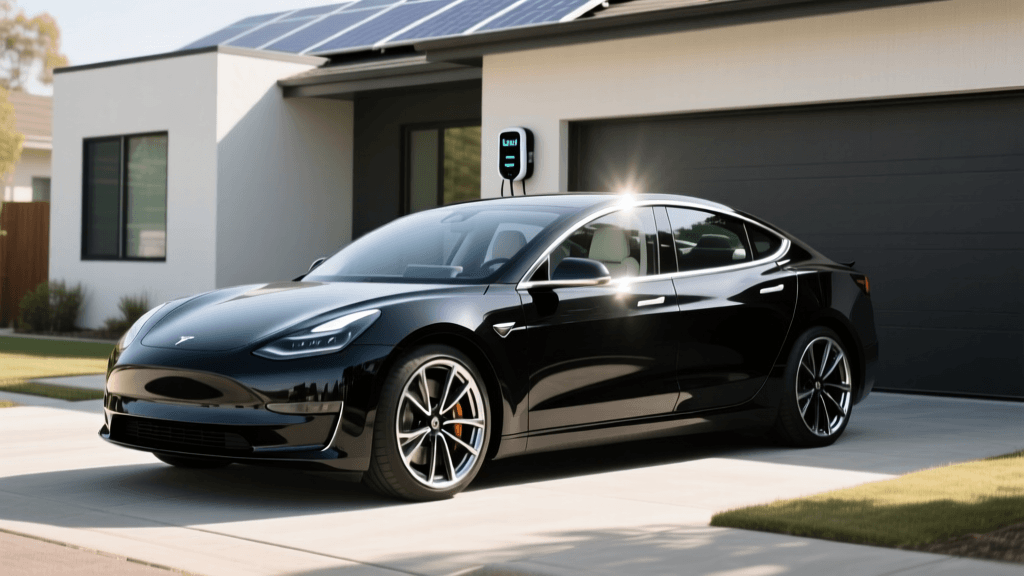
Level 2 chargers operate on a 240-volt circuit—the same voltage used by your electric oven or clothes dryer. They deliver anywhere from 3.3 kW to 11.5 kW of power, easily replenishing any PHEV battery in 2 to 4 hours. This ensures your vehicle is always topped off, maximizing your electric-only miles and minimizing your reliance on the gas tank.
| Feature | Level 1 (120V / 12A) | Level 2 (240V / 32A) | Level 2 (240V / 48A) |
|---|---|---|---|
| Power Output | ~1.4 kW | ~7.7 kW | ~11.5 kW |
| Time to Full Charge | 11 - 13 Hours | ~2 Hours | ~1.5 Hours |
| Hardware Cost | $0 (Included) | $350 - $600 | $500 - $750 |
| Daily Value | Low (Incomplete charges) | High (Guaranteed full battery) | High (Future-proof for EVs) |
Breaking Down the Level 2 Installation Costs
To accurately calculate your ROI, you must understand the upfront capital required to install a Level 2 charger. The total cost is generally split into three categories: the charger hardware, electrical panel capacity, and the physical wiring labor.
1. The Charger Hardware ($350 - $750)
The market is flooded with Level 2 smart chargers. For PHEV owners, a 32-amp charger (7.7 kW) is usually the sweet spot, as most PHEVs have onboard chargers capped at 3.3 kW to 6.6 kW, meaning a massive 48-amp or 80-amp charger is overkill unless you plan to buy a full battery electric vehicle (BEV) in the future. Excellent, reliable options include the Emporia Vue Smart EV Charger (often priced around $350-$400) and the ChargePoint Home Flex (typically $500-$650). These units offer Wi-Fi connectivity, allowing you to schedule charging during off-peak utility hours when electricity rates are lowest, further improving your long-term ROI.
2. Electrical Panel Upgrades ($1,500 - $3,000+)
Before installing a 240-volt circuit, a licensed electrician must evaluate your home's main electrical panel. Most modern homes have a 200-amp service panel, which usually has enough spare capacity to add a 40-amp or 50-amp breaker for a Level 2 charger. However, older homes with 100-amp panels may require a full service upgrade. According to the Home Charging Installation guide by the U.S. Department of Energy, upgrading an electrical panel from 100 amps to 200 amps can cost between $1,500 and $3,000. If your panel has adequate space and amperage, you can bypass this massive expense entirely.
3. Wiring and NEMA 14-50 Outlet Installation ($500 - $1,500)
If your panel is up to the task, the electrician will run specialized copper wiring (typically 6 AWG or 4 AWG, depending on the amperage and distance) from the panel to your garage or driveway. You have two installation choices:
- NEMA 14-50 Outlet (Plug-in): This is the most popular route. The electrician installs a 240-volt receptacle on your garage wall. You simply plug your Level 2 charger into it. This costs between $500 and $1,200 for labor and materials, depending on the distance from your electrical panel. The added value here is portability; if you move, you can unplug the charger and take it with you.
- Hardwired Connection: The charger is wired directly into the electrical panel without an outlet. This is slightly safer for high-amperage (48A+) continuous loads and may be required by local code if installing outdoors, but it makes the charger a permanent fixture of the house. Labor costs are similar to the outlet installation.
Hidden Costs and Permit Requirements
Many buyers overlook the bureaucratic costs of home charging. Most municipalities require an electrical permit for installing a 240-volt circuit. Permit fees generally range from $50 to $200. After the work is completed, a city inspector will visit your home to ensure the installation meets the National Electrical Code (NEC). Do not skip this step; unpermitted electrical work can void your home insurance policy and cause severe issues when you eventually sell your home. Furthermore, if the charger is installed outdoors, you may need to purchase a weatherproof enclosure or a charger specifically rated for outdoor use (NEMA 4 rating), which can add $50 to $100 to your hardware budget.
Calculating Your PHEV Charging ROI
To determine if the $1,000 to $2,000 investment in a Level 2 setup is worth it, we must look at the operational savings. The primary financial benefit of a PHEV is substituting expensive gasoline with relatively cheap electricity. However, if Level 1 charging is too slow to fully charge your battery overnight, you are forced to burn gas on your morning commute. Level 2 charging guarantees you capture 100% of your electric range every single day.
The Math: Gas vs. Electricity
Let's assume you drive a PHEV with a 35-mile electric range and a 30 MPG combined rating when running on gas. You commute 30 miles round-trip, 5 days a week.
- Electricity Cost: The national average electricity rate is roughly $0.16 per kWh. Charging a 15 kWh battery costs about $2.40. (Annual cost for 250 workdays: $600)
- Gasoline Cost: If you fail to charge and burn gas, you will use 1 gallon per day. At $3.50 per gallon, that is $3.50 daily. (Annual cost for 250 workdays: $875)
By guaranteeing a full charge every morning via a Level 2 setup, you save approximately $275 per year on this specific commute compared to driving on an empty battery. While this fuel savings alone might take 4 to 5 years to pay off a $1,500 installation, the true ROI is unlocked through tax incentives and vehicle longevity.
The Federal Tax Credit Multiplier
The U.S. government heavily incentivizes home charging infrastructure. Under the IRS Alternative Fuel Vehicle Refueling Property Credit (Form 8911), you can claim a tax credit equal to 30% of the cost of your home charger hardware and installation, up to a maximum credit of $1,000. If your total Level 2 installation (charger plus electrician labor) costs $1,500, a $450 tax credit brings your net out-of-pocket cost down to $1,050. This dramatically shrinks your payback period and instantly increases the value proposition of the upgrade. You can verify your eligibility and census tract requirements through the Alternative Fuels Data Center.
Is a Level 2 Charger Worth It for a PHEV?
From a pure cost and value breakdown, installing a Level 2 home charger for a PHEV is highly recommended if your electrical panel already has the capacity to support it. If you require a $3,000 electrical panel upgrade, the ROI plummets, and you may be better off relying on Level 1 charging or utilizing public chargers and workplace charging stations until you upgrade your home or transition to a full BEV.
However, if your panel is ready, the combination of off-peak electricity scheduling, the $1,000 federal tax credit, and the absolute guarantee of a full battery every morning makes a Level 2 charger an indispensable asset. It not only maximizes your daily fuel savings but also preserves the health of your PHEV's battery by reducing the time it spends sitting at low states of charge. Ultimately, a Level 2 setup transforms your PHEV from a 'sometimes-electric' vehicle into a reliable daily EV, extracting the maximum financial and environmental value from your purchase.