What Is a PHEV? The Plain-English Definition
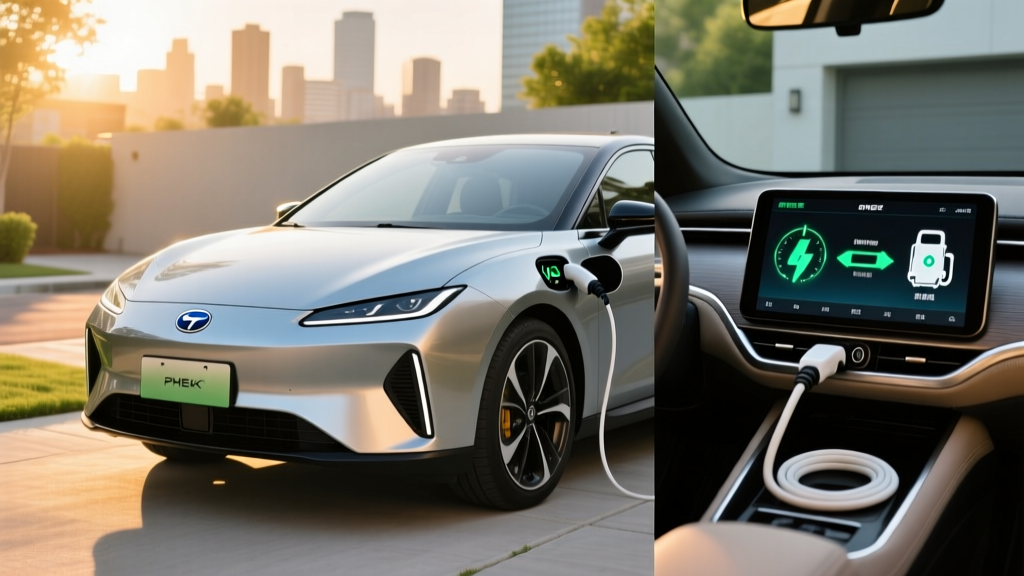
A plug-in hybrid electric vehicle (PHEV) is a car that combines a gasoline engine with a larger battery and electric motor you can recharge from a wall outlet or charging station. Unlike a conventional hybrid, a PHEV can drive on electricity alone for a meaningful distance — typically 25 to 50 miles in current 2026 models — before the gas engine seamlessly takes over. Once the battery depletes, it operates exactly like a standard hybrid, using regenerative braking and the engine to sustain efficiency.
The PHEV definition matters because it occupies a specific niche: you get daily electric-only commuting with zero range anxiety on road trips. If your commute is 30 miles round-trip and you charge at home, you might burn gas only a handful of times per year. But unlike a battery-electric vehicle (BEV), a PHEV never strands you when chargers are sparse.
HEV vs PHEV: The Core Differences
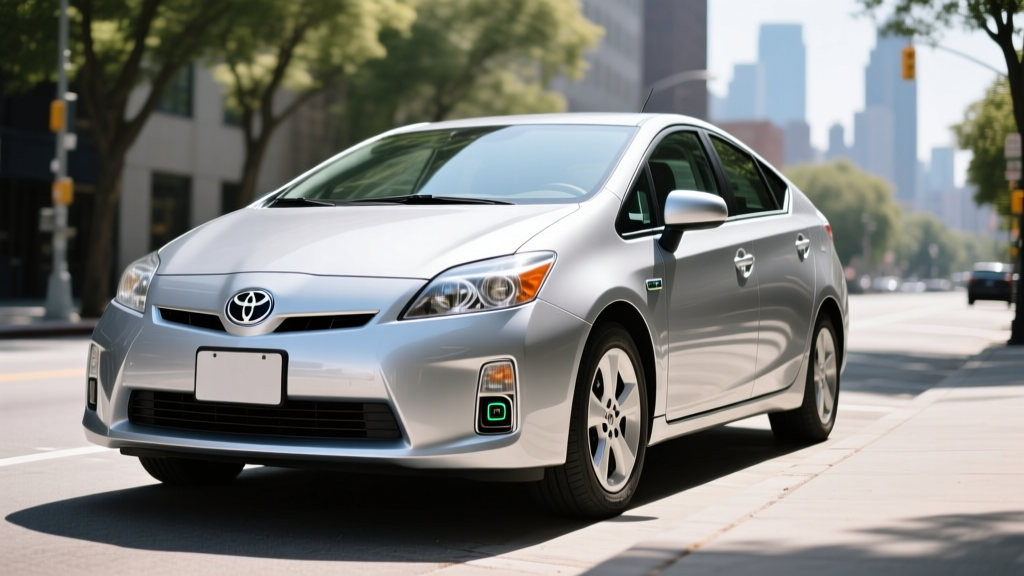
Conventional hybrids (HEVs) like the Toyota Prius or Honda Accord Hybrid cannot be plugged in. They generate all electricity internally through regenerative braking and the engine. Their batteries are small — typically 1.0 to 1.5 kWh — and they can only creep on electric power for a mile or two at low speeds. The electric system exists to assist the engine and improve MPG, not to replace it.
PHEVs carry a much larger battery — usually 13 to 25 kWh of usable capacity — paired with a more powerful electric motor (often 100 to 200+ hp on its own). You plug them in to recharge, just like an EV. The result is a dual-mode vehicle: electric car first, hybrid car second.
| Feature | Conventional Hybrid (HEV) | Plug-In Hybrid (PHEV) | Battery Electric (BEV) |
|---|---|---|---|
| Plugs in to charge? | No | Yes | Yes |
| Battery size | 1.0–1.5 kWh | 13–25 kWh | 50–120+ kWh |
| Electric-only range | ~1–2 mi (low speed) | 25–50 mi | 200–400+ mi |
| Gas engine? | Yes (primary) | Yes (backup) | No |
| Federal tax credit (§30D)? | No | Up to $7,500* | Up to $7,500* |
| Home charging needed? | No | Recommended | Essential |
* §30D credit eligibility depends on MSRP caps, buyer income limits, battery component sourcing, and critical-mineral requirements. See IRS.gov §30D rules for current-year details.
How Far Can a PHEV Go on Electric Only?
Electric-only range is the single most important number in any PHEV spec sheet. For 2026 models, the spread is wide:
- Toyota RAV4 Prime: 42 miles EPA electric-only (18.1 kWh battery)
- Chrysler Pacifica Hybrid: 32 miles EPA electric-only (16.0 kWh battery)
- Hyundai Tucson PHEV: 33 miles EPA electric-only (13.8 kWh battery)
- BMW X5 xDrive50e: 38 miles EPA electric-only (25.7 kWh battery)
- Jeep Wrangler 4xe: 22 miles EPA electric-only (17.3 kWh battery)
These are EPA-rated figures. In real-world driving, expect electric range to drop 10–20% in cold weather (below 40°F), on sustained highway speeds above 70 mph, or with aggressive acceleration. A RAV4 Prime rated at 42 miles might deliver 34–36 miles on a 30°F morning with the heater running. Conversely, in mild 65°F weather on surface streets, some owners report matching or slightly exceeding EPA range thanks to regenerative braking.
Once the battery depletes, total combined range typically reaches 400–550 miles, since the gas tank takes over and the vehicle operates as a conventional hybrid.
PHEV Fuel Economy: EPA MPG and Real-World Results
PHEV fuel economy is measured two ways: MPGe (miles per gallon equivalent) when running on electricity, and MPG when running on gas after the battery depletes. MPGe converts the energy in electricity to a gasoline-equivalent number — it's useful for comparing efficiency but doesn't tell you what you'll spend at the pump. The depleted-battery MPG is what matters on road trips.
| Model | EV Range | MPGe (elec.) | MPG City | MPG Hwy | MPG Comb. |
|---|---|---|---|---|---|
| Toyota RAV4 Prime | 42 mi | 94 | 40 | 36 | 38 |
| Hyundai Tucson PHEV | 33 mi | 80 | 35 | 34 | 35 |
| Chrysler Pacifica Hybrid | 32 mi | 82 | 30 | 30 | 30 |
| BMW X5 xDrive50e | 38 mi | 58 | 21 | 22 | 22 |
| Jeep Wrangler 4xe | 22 mi | 49 | 20 | 20 | 20 |
Real-world note: Hybrids and PHEVs in hybrid mode often exceed their EPA city MPG in stop-and-go traffic, where regenerative braking recaptures the most energy. Highway MPG tends to run 1–3 MPG below the EPA estimate at sustained 75+ mph speeds. A RAV4 Prime owner doing mostly city driving after battery depletion might see 41–43 MPG; the same vehicle at 80 mph on the interstate might return 34–35 MPG.
PHEV Powertrain and Charging: What's Under the Hood
A PHEV powertrain pairs a gasoline engine (typically a 4-cylinder, 1.5L to 2.5L) with one or more electric motors. Combined output ranges from around 200 hp in mainstream models to 400+ hp in performance-oriented PHEVs. The Toyota RAV4 Prime, for example, combines a 2.5L four-cylinder with front and rear electric motors for a total of 302 hp and standard all-wheel drive — making it one of the quickest RAV4 variants Toyota sells.
Charging a PHEV is simpler than a full EV because the battery is smaller:
- Level 1 (120V household outlet): Adds roughly 4–5 miles of range per hour. A full charge on a 16 kWh battery takes 8–12 hours — fine for overnight topping up.
- Level 2 (240V home charger): Adds 12–20 miles of range per hour. Most PHEVs fully charge in 2–4 hours on a Level 2 unit.
- DC fast charging: Most PHEVs do not support DC fast charging. Notable exceptions include the Mitsubishi Outlander PHEV (DC CHAdeMO capability, ~38 minutes to 80%) and some European-market models. If road-trip fast charging matters to you, verify this spec before buying — the majority of 2026 PHEVs are Level 2 maximum.
⚡ kW vs kWh reminder: kW (kilowatts) measures power — how fast energy flows into the battery. kWh (kilowatt-hours) measures energy capacity — how much the battery holds. A 7.2 kW Level 2 charger filling a 16 kWh battery takes roughly 2.2 hours. Don't let dealer brochures confuse the two.
PHEV Pricing and Federal Tax Credit Eligibility
PHEVs carry a price premium over their conventional hybrid siblings — typically $4,000 to $8,000 more — due to the larger battery pack, more powerful motor, and onboard charger hardware. Here's where 2026 models land:
- Toyota RAV4 Prime: Starting ~$44,500 MSRP
- Hyundai Tucson PHEV: Starting ~$39,500 MSRP
- Chrysler Pacifica Hybrid: Starting ~$51,000 MSRP
- BMW X5 xDrive50e: Starting ~$73,000 MSRP
Under current IRS §30D rules, qualifying PHEVs may be eligible for a federal clean vehicle credit of up to $7,500. However, eligibility hinges on several requirements that change periodically:
- MSRP caps: Vans, SUVs, and pickups must be under $80,000; sedans under $55,000.
- Buyer income limits: Modified adjusted gross income cannot exceed $300,000 (joint), $225,000 (head of household), or $150,000 (single).
- Battery sourcing: The credit splits into two halves ($3,750 each) — one for critical-mineral sourcing and one for battery-component manufacturing, both with escalating domestic-content thresholds through 2026.
- Point-of-sale transfer: Eligible buyers can transfer the credit to the dealer at purchase, reducing the upfront price rather than waiting for a tax refund.
Always verify current eligibility on IRS.gov and consult a tax professional. State incentives vary widely — some states offer additional rebates for PHEVs, while others restrict incentives to full BEVs.
Battery Reliability, Warranty, and Replacement Costs
Hybrid and PHEV battery longevity remains a top buyer concern, but the data is reassuring. Modern PHEV batteries use proven lithium-ion chemistries (typically NMC — nickel manganese cobalt) with sophisticated thermal management. Toyota's hybrid battery track record extends back to the 1997 Prius, with many original-pack units still running past 200,000 miles.
Battery Warranty Standard
Federal law mandates that hybrid and PHEV batteries carry a minimum warranty of 8 years / 100,000 miles. In California Air Resources Board (CARB) states, that extends to 10 years / 150,000 miles. Most manufacturers warranty the battery against capacity loss below 60–70% of original capacity during the warranty period.
If a PHEV battery does need replacement out of warranty, costs typically range from $4,000 to $8,000 depending on the model and whether you choose OEM or refurbished. This is significantly less than a full BEV battery replacement ($10,000–$20,000+) because PHEV packs are smaller. In practice, widespread PHEV battery failures remain rare — degradation of 10–15% over 10 years is more typical than catastrophic failure.
Hybrid vs PHEV vs EV: Which One Fits You?
The right choice depends on your driving patterns, charging access, and budget. Here's a practical decision framework:
Choose a conventional hybrid (HEV) if:
- You have no access to home or workplace charging
- You want maximum MPG with zero behavior change
- Your budget is tighter and you don't want to pay the PHEV premium
- You drive mostly highway miles where electric-only range provides little benefit
Choose a PHEV if:
- You can charge at home (even a standard 120V outlet works overnight)
- Your daily driving is under 40 miles round-trip (most commutes)
- You take road trips where charging infrastructure is uncertain
- You want EV-like daily driving without committing to a full BEV
- You live in a cold climate where BEV range loss is a concern
Choose a full BEV if:
- You have reliable Level 2 home charging
- Your daily driving is under 250 miles and you can plan road-trip charging
- You want the lowest per-mile fuel cost and minimal maintenance
- You want to maximize federal and state incentives (some credits are BEV-only)
The PHEV's sweet spot is the household with one vehicle that must do everything — school runs, commutes, and cross-state road trips — where a BEV's charging logistics feel risky but a gas car's fuel costs sting.
Frequently Asked Questions
Do I have to plug in a PHEV, or can I just drive it on gas?
You never have to plug in a PHEV — it will run indefinitely on gasoline like a conventional hybrid. However, if you never plug in, you've paid extra for a larger battery you're not using, and your fuel economy will match a regular hybrid's MPG rather than benefiting from cheaper electric miles. A PHEV only makes financial sense if you charge regularly.
How long does it take to charge a PHEV at home?
On a standard 120V outlet (Level 1), expect 8–14 hours for a full charge depending on battery size. On a 240V Level 2 home charger (typically 32–48 amps), most PHEVs charge fully in 2–4 hours. Because PHEV batteries are small (13–25 kWh), even Level 1 charging is practical for overnight top-ups.
Does a PHEV qualify for the $7,500 federal tax credit?
Some PHEVs qualify, but not all. Under current §30D rules, the vehicle must meet MSRP caps, the buyer must fall within income limits, and the battery must satisfy critical-mineral and component-sourcing thresholds. The credit amount can range from $3,750 to $7,500 depending on how many sourcing requirements the vehicle meets. Check fueleconomy.gov's tax credit tool for model-specific eligibility.
Are PHEVs more expensive to maintain than regular hybrids?
Maintenance costs are comparable. PHEVs still have an engine, so you'll need oil changes, but intervals may be longer if you drive mostly on electric. Brake wear is often reduced thanks to regenerative braking. The added complexity of a larger battery and more powerful motor hasn't translated into meaningfully higher repair costs in reliability surveys from Consumer Reports and J.D. Power.
What happens if the PHEV battery dies completely on the road?
It won't strand you. PHEVs maintain a hidden battery buffer (typically 10–15% of capacity) that the system reserves to ensure the gas engine can always start and power the vehicle. When the dashboard shows "0 miles EV," the car simply transitions to hybrid mode. You'll need to refuel the gas tank — just like any other car — but the vehicle remains fully operational.