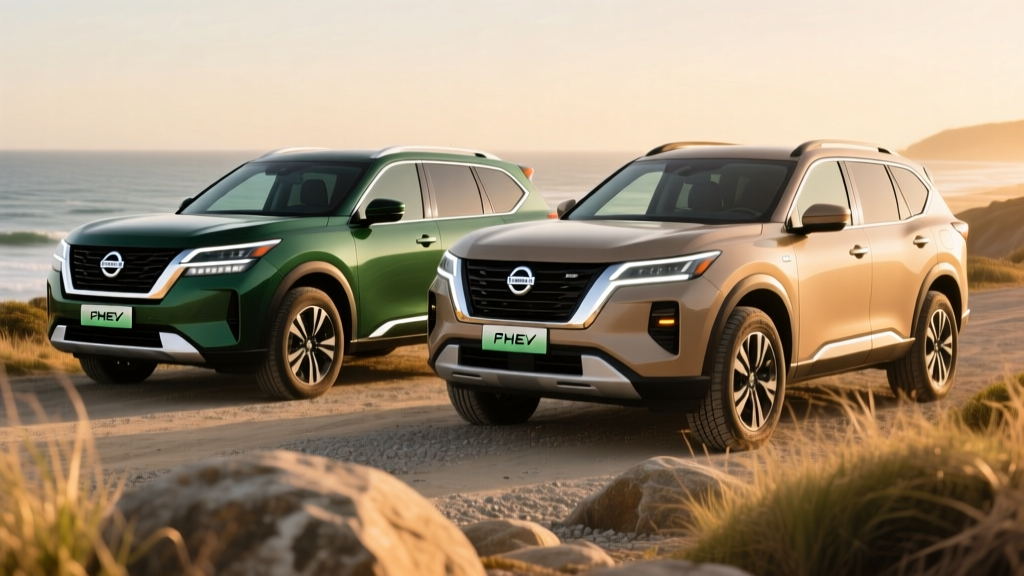
Nissan's midsize SUV lineup is undergoing a significant electrification push for 2026, and buyers searching for a Nissan Xterra Pathfinder revival hybrid SUV are finding a two-pronged strategy: the established Pathfinder gaining a hybrid variant, and the Xterra nameplate returning with a plug-in hybrid (PHEV) powertrain aimed at the off-road crowd. If you've been cross-shopping the Toyota 4Runner Hybrid, Jeep Wrangler 4xe, or Toyota Grand Highlander Hybrid, Nissan's 2026 offerings deserve a hard look — but only if the specs match your driving reality.
Below, we break down exactly what Nissan has announced for these electrified SUVs: EPA-estimated MPG, electric-only range for the PHEV, battery chemistry and warranty, powertrain output, pricing, and tax-credit eligibility. We'll also clarify the critical difference between the conventional hybrid (HEV) Pathfinder and the plug-in hybrid (PHEV) Xterra, because confusing the two is the most common mistake hybrid SUV shoppers make.
HEV vs PHEV: Which Nissan Electrified SUV Is Which?
Before diving into specs, let's establish the fundamental difference between the two powertrains Nissan is deploying:
| Feature | 2026 Pathfinder Hybrid (HEV) | 2026 Xterra PHEV |
|---|---|---|
| Powertrain Type | Conventional Hybrid (no plug) | Plug-in Hybrid (requires charging) |
| Battery Size | ~1.5 kWh (self-charging) | ~18-20 kWh usable (estimated) |
| Plug-in Charging | No — regenerative braking only | Yes — Level 1/Level 2 AC; no DC fast charge |
| Electric-Only Range | None (EV assist only) | ~30-35 miles (preliminary) |
| Best For | Drivers without home charging access | Drivers with home/garage charging who commute short distances |
The bottom line: The Pathfinder Hybrid operates like a traditional hybrid — you never plug it in, and the small battery charges via regenerative braking and the engine. The Xterra PHEV has a much larger battery that you charge by plugging in, enabling roughly 30-35 miles of pure electric driving before the gasoline engine kicks in. If you don't have access to a garage or driveway outlet, the PHEV's electric-range advantage largely disappears.
Powertrain Specs: Horsepower, Engine, and Motor Output
| Spec | 2026 Pathfinder Hybrid (HEV) | 2026 Xterra PHEV (Preliminary) |
|---|---|---|
| Engine | 2.5L turbocharged 4-cylinder | 2.0L turbo 4-cylinder + electric motor |
| Combined Horsepower | ~295 hp (estimated) | ~310 hp (estimated) |
| Combined Torque | ~310 lb-ft (estimated) | ~350 lb-ft (estimated) |
| Electric Motor | Integrated mild-hybrid assist | Rear-axle or integrated P2 motor |
| Transmission | 9-speed automatic | 9-speed automatic with hybrid module |
| Drivetrain | FWD / AWD available | 4WD standard (off-road oriented) |
| 0-60 mph | ~7.0 sec (estimated) | ~6.5 sec (estimated) |
| Towing Capacity | ~6,000 lbs (estimated) | ~5,000 lbs (estimated) |
Both powertrains represent a meaningful step up from Nissan's previous CVT-heavy approach. The Pathfinder Hybrid's turbocharged 2.5L paired with hybrid assist delivers torque that feels immediate off the line, while the Xterra PHEV's electric motor provides low-end grunt that's useful both on pavement and on trails. The Xterra's standard 4WD and body-on-frame construction (revived from its heritage) mean it sacrifices some efficiency for capability — a tradeoff the off-road buyer expects.
Fuel Economy: EPA MPG and Real-World Expectations
Fuel economy is where these two SUVs diverge significantly, and where real-world conditions matter most.
| EPA Estimate | Pathfinder Hybrid (HEV) AWD | Xterra PHEV (Charge-Sustaining) | Xterra PHEV (MPGe, EV Mode) |
|---|---|---|---|
| City | ~28 MPG | ~24 MPG | ~75 MPGe |
| Highway | ~27 MPG | ~23 MPG | ~68 MPGe |
| Combined | ~27 MPG | ~23 MPG | ~72 MPGe |
Note: These are preliminary estimates based on Nissan's announced powertrain targets and comparable vehicles in the segment. Final EPA figures will be published at fueleconomy.gov once the vehicles are certified.
Real-World MPG: What to Actually Expect
Conventional hybrids like the Pathfinder HEV typically exceed their EPA city estimates in stop-and-go traffic, where regenerative braking recovers the most energy. Expect 29-31 MPG in urban driving, but closer to 25-26 MPG on sustained highway trips at 75+ mph, where the engine does all the work without hybrid assist benefit.
The Xterra PHEV's gasoline-only MPG is lower because of its heavier curb weight (body-on-frame, larger battery) and boxier aerodynamics. Once the battery is depleted, you're essentially driving a heavy 4WD SUV on gas alone. The real economy win comes from daily electric-only commuting: if your round-trip commute is under 30 miles and you charge nightly, you may use gasoline only on weekend road trips.
For PHEV: Electric-Only Range and Total Range
The Xterra PHEV's estimated 18-20 kWh battery pack should deliver approximately 30-35 miles of electric-only range under mild conditions (flat terrain, 55-65 mph, moderate temperatures). Expect that to drop to 22-27 miles in cold weather (below 40°F) or at sustained highway speeds above 70 mph, where electric drivetrains consume energy faster.
Total combined range (electric + full gas tank) is estimated at 450-500 miles, making the Xterra PHEV viable for long road trips without range anxiety — you simply refuel at any gas station once the battery depletes.
Battery, Charging, and Warranty: What Hybrid Buyers Need to Know
Battery longevity is consistently the top concern for hybrid and PHEV buyers, and for good reason — replacement costs are significant. Here's what we know about Nissan's 2026 hybrid battery strategy:
Battery Warranty & Replacement Cost
| Hybrid Battery Warranty | 8 years / 100,000 miles (federal mandate minimum); 10 years / 100,000 miles in CARB states |
| Capacity Retention Threshold | Warranty covers defects and capacity loss below ~70% of original |
| Estimated Replacement Cost (Out of Warranty) | Pathfinder HEV: $2,500-$4,000 | Xterra PHEV: $6,000-$9,000 |
| Battery Chemistry | Pathfinder HEV: Lithium-ion (NMC) | Xterra PHEV: Lithium-ion (likely NMC, higher capacity) |
Nissan's hybrid battery warranty meets the federal minimum of 8 years/100,000 miles, and in California Air Resources Board (CARB) states — which include California, Colorado, Connecticut, Maine, Maryland, Massachusetts, New Jersey, New York, Oregon, Rhode Island, Vermont, and Washington — that extends to 10 years/100,000 miles under PZEV rules.
Charging the Xterra PHEV
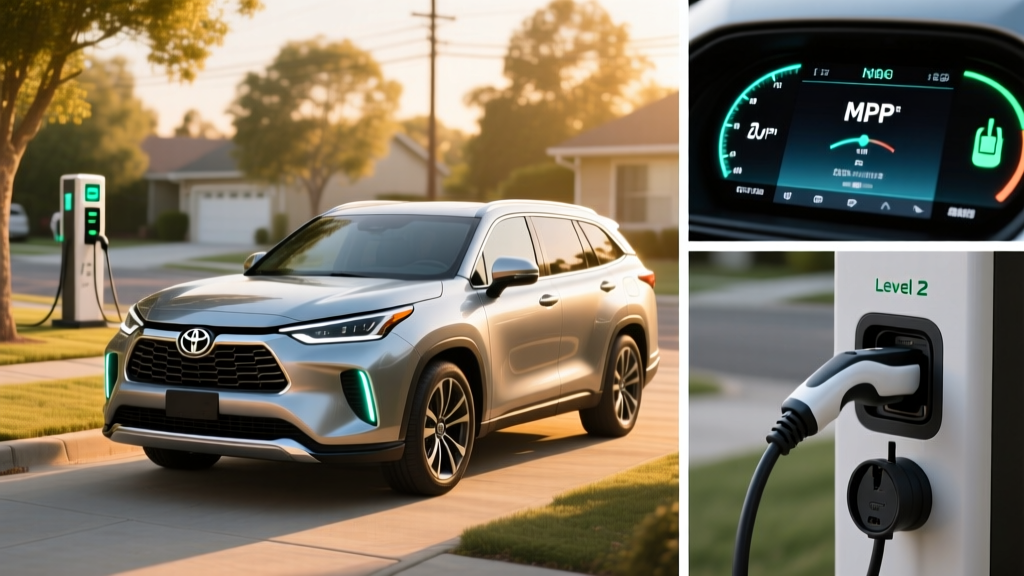
The Xterra PHEV charges via AC only — there is no DC fast-charging capability, which is typical for PHEVs with batteries under 25 kWh.
| Charging Level | Power | Time (0-100%) | Notes |
|---|---|---|---|
| Level 1 (120V household outlet) | ~1.4 kW | ~12-14 hours | Overnight top-up from partial depletion |
| Level 2 (240V home charger) | ~3.6-6.6 kW | ~3-5 hours | Recommended for daily full charges |
| DC Fast Charge | N/A | N/A | Not supported — battery too small to justify |
For most PHEV owners, a standard 120V outlet in the garage is sufficient if you're replenishing 20-25 miles of range overnight. A Level 2 home charger (240V) is a nice upgrade that ensures a full battery every morning, and installation typically runs $500-$1,500 depending on your electrical panel's proximity to the charging location. Consult a licensed electrician for your specific setup.
Pricing, Trims, and Tax Credit Eligibility
Pricing for the 2026 Pathfinder Hybrid and Xterra PHEV positions them competitively against the Toyota 4Runner, Grand Highlander Hybrid, and Jeep Wrangler 4xe.
| Model / Trim | Est. MSRP | Federal Tax Credit Eligibility |
|---|---|---|
| Pathfinder Hybrid SV | ~$44,000 | No — conventional HEVs do not qualify for §30D credit |
| Pathfinder Hybrid SL | ~$48,000 | No — conventional HEVs do not qualify for §30D credit |
| Pathfinder Hybrid Platinum | ~$54,000 | No — conventional HEVs do not qualify for §30D credit |
| Xterra PHEV S | ~$47,000 | Potentially up to $7,500 (see eligibility below) |
| Xterra PHEV PRO-4X | ~$53,000 | Potentially up to $7,500 (see eligibility below) |
| Xterra PHEV Platinum | ~$57,000 | Potentially up to $7,500 (see eligibility below) |
All prices are preliminary estimates. Final MSRP will be confirmed at launch.
Federal §30D Tax Credit: Does the Xterra PHEV Qualify?
The Xterra PHEV, as a plug-in hybrid with a battery exceeding 7 kWh, is potentially eligible for the federal §30D Clean Vehicle Credit of up to $7,500. However, eligibility depends on several requirements that change frequently:
- MSRP Cap: SUVs must have an MSRP at or below $80,000 (all Xterra trims should qualify).
- Buyer Income Cap: Modified AGI must not exceed $150,000 (single), $225,000 (head of household), or $300,000 (joint).
- Battery Sourcing: A percentage of critical minerals and battery components must be sourced from the U.S. or free-trade-agreement countries. This threshold increases annually and is the most common reason vehicles lose partial or full credit eligibility.
- North American Assembly: The vehicle must undergo final assembly in North America. Nissan's Smyrna, Tennessee plant is a likely production site.
- Point-of-Sale Transfer: As of 2024, buyers can transfer the credit to the dealer at purchase, reducing the purchase price directly rather than waiting for a tax refund.
Critical caveat: Battery-sourcing requirements tighten every year. A PHEV that qualifies for the full $7,500 in early 2026 may see that credit reduced if Nissan's supply chain shifts. Always verify current eligibility on the IRS website or with a tax professional before purchasing.
The Pathfinder Hybrid, as a conventional HEV, does not qualify for the §30D federal credit. Some states offer modest hybrid incentives (typically $500-$1,500), but these vary by jurisdiction — check your state's energy office for current programs.
Who Should Choose the Pathfinder Hybrid, the Xterra PHEV, or a Full EV?
Decision Framework: Which Electrified SUV Fits Your Life?
Choose the Pathfinder Hybrid (HEV) if:
- You don't have access to home charging (apartment, street parking, no garage outlet)
- You want better fuel economy without changing any habits — just fill up with gas
- You need three-row seating for family duty
- Your priority is lower running costs, not electric-only driving
Choose the Xterra PHEV if:
- You have a garage or driveway with at least a 120V outlet for overnight charging
- Your daily commute is under 30 miles round-trip (you'll rarely burn gas on weekdays)
- You want off-road capability with some electric efficiency
- You take road trips where EV charging infrastructure is sparse
- You want to reduce fuel costs without committing to a full EV
Choose a full EV (like the Nissan Ariya or a competitor) if:
- You have reliable Level 2 home charging
- Your daily driving is under 250 miles and you can plan road-trip charging stops
- You want the lowest possible fuel and maintenance costs
- You want to maximize federal tax credit value (full EVs often qualify more easily)
Reliability, Longevity, and Ownership Costs
Nissan's hybrid systems are less proven than Toyota's, which have two decades of real-world data behind them. That said, Nissan has been deploying hybrid and e-Power systems globally for several years, and the core components — planetary gearsets, electric motors, lithium-ion packs — are well-understood technology.
Key reliability considerations:
- Hybrid battery degradation: Modern lithium-ion hybrid batteries are designed to last the life of the vehicle under normal use. Expect 10-15% capacity loss over 10 years — which on a 1.5 kWh HEV pack is negligible, and on an 18 kWh PHEV pack means ~27 miles of EV range instead of 32.
- Brake wear: Regenerative braking significantly reduces brake pad wear. Many hybrid owners report original brake pads at 80,000+ miles.
- Maintenance: Hybrids still require oil changes, coolant flushes, and transmission service. The hybrid system adds no additional routine maintenance items.
- Insurance: Hybrid and PHEV SUVs typically carry 5-10% higher insurance premiums than their gas-only counterparts due to higher repair costs for battery and power-electronics damage.
Pathfinder Hybrid Pros
- No plug-in required — zero habit change
- Estimated 27 MPG combined in a 3-row SUV
- Strong towing capacity for the class
- Familiar Nissan dealer service network
Pathfinder Hybrid Cons
- No federal tax credit eligibility
- Less proven hybrid system than Toyota's
- Higher MSRP than gas-only Pathfinder
- No electric-only driving capability
Xterra PHEV Pros
- 30-35 miles electric-only for daily commuting
- Up to $7,500 federal tax credit (if sourcing rules met)
- Off-road capable with 4WD standard
- Total range of 450+ miles eliminates range anxiety
Xterra PHEV Cons
- Requires home charging access to realize benefits
- Body-on-frame weight hurts gas-only MPG
- Preliminary specs — final numbers TBD
- Higher out-of-warranty battery replacement cost
Frequently Asked Questions
How many MPG does the 2026 Nissan Pathfinder Hybrid get?
The Pathfinder Hybrid is estimated at approximately 28 city / 27 highway / 27 combined MPG for AWD models. Real-world city driving often exceeds the EPA estimate, reaching 29-31 MPG in stop-and-go traffic where regenerative braking is most active. Highway driving at sustained speeds above 70 mph may return 25-26 MPG.
How far can the Xterra PHEV go on electric only?
The Xterra PHEV is estimated to deliver 30-35 miles of electric-only range under ideal conditions (moderate speed, flat terrain, mild temperatures). In cold weather or at highway speeds, expect 22-27 miles. Once the battery depletes, the gasoline engine takes over seamlessly, providing an additional 400+ miles of range.
Does the Pathfinder Hybrid need to be plugged in?
No. The Pathfinder Hybrid is a conventional hybrid (HEV) — it charges its small battery through regenerative braking and the gasoline engine. You never plug it in. Only the Xterra PHEV requires plug-in charging to access its electric-only range.
Is the hybrid battery reliable, and what does replacement cost?
Modern hybrid batteries are designed for 150,000+ miles of service life. Nissan covers the hybrid battery for 8 years/100,000 miles (10 years/100,000 miles in CARB states). Out-of-warranty replacement costs are estimated at $2,500-$4,000 for the Pathfinder HEV's smaller pack and $6,000-$9,000 for the Xterra PHEV's larger battery. In practice, most hybrid batteries outlast the vehicle's ownership period.
Does the Xterra PHEV qualify for the $7,500 federal tax credit?
The Xterra PHEV is potentially eligible for up to $7,500 under the IRS §30D Clean Vehicle Credit, but eligibility depends on your income (AGI caps apply), the vehicle's MSRP (must be under $80,000 for SUVs), battery critical-mineral sourcing requirements, and North American final assembly. These rules tighten annually — verify current eligibility at the time of purchase. The Pathfinder Hybrid (conventional HEV) does not qualify for this credit.
Hybrid vs PHEV vs EV — which is right for me?
If you lack home charging, choose a conventional hybrid (HEV) like the Pathfinder Hybrid — no plug, no habit change. If you have home charging and a short commute, a PHEV like the Xterra gives you electric daily driving plus gas-engine freedom for road trips. If you have reliable home charging, drive under 250 miles daily, and want the lowest running costs, a full EV is the most economical long-term choice, though it requires accepting charging-stop planning on longer trips.
Can the Xterra PHEV DC fast charge?
No. Like most PHEVs with batteries under 25 kWh, the Xterra PHEV supports only AC charging — Level 1 (120V, ~14 hours for a full charge) and Level 2 (240V, ~3-5 hours). DC fast charging is not included because the small battery doesn't justify the added cost and weight of DC hardware.
Sources: EPA Fuel Economy, IRS §30D Clean Vehicle Credit, NHTSA. All specs are preliminary estimates for announced 2026 models and subject to change at launch.