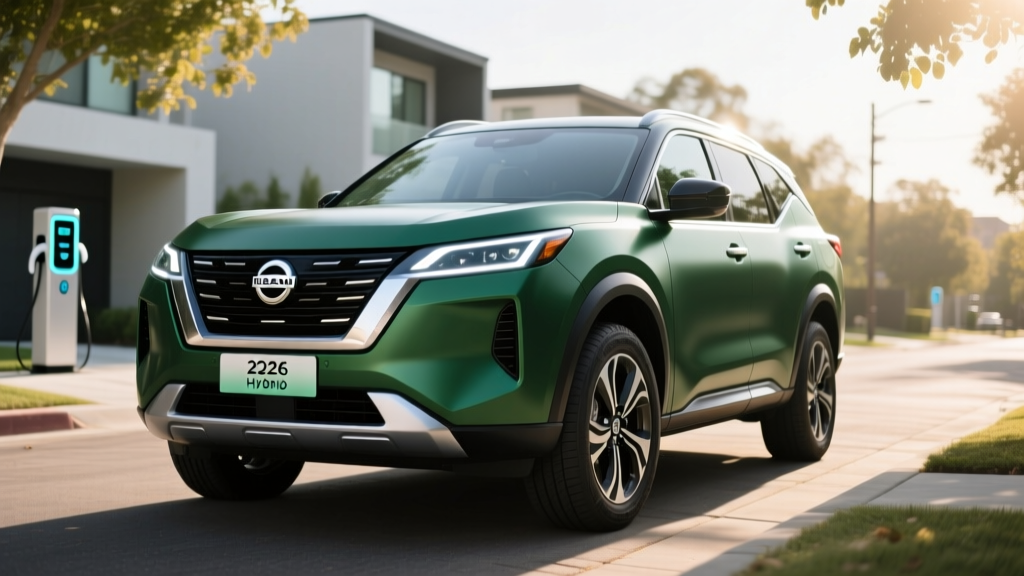
If you've been searching for news on a Nissan Xterra hybrid return, you're not alone. The second-generation Xterra was discontinued after the 2015 model year, leaving a loyal fanbase without a rugged, body-on-frame compact SUV in Nissan's lineup. Since then, speculation about a revival — particularly with hybrid or plug-in hybrid powertrains — has persisted across forums, social media, and automotive press.
As of early 2026, Nissan has not officially confirmed a new Xterra or an Xterra hybrid. However, the automotive landscape has shifted dramatically since 2015: stricter emissions standards, consumer demand for electrified powertrains, and Nissan's own commitment to electrification under its "Ambition 2030" strategy make a hybrid-powered body-on-frame SUV a plausible addition. Here's what we know, what's rumored, and what the specs might look like if the Xterra returns with a hybrid heart.
What's Driving the Nissan Xterra Hybrid Return Speculation?
Several factors converge to keep the Xterra revival rumor alive:
- Nissan Frontier platform: The current third-generation Frontier (redesigned for 2022) shares the F-Alpha platform, which could underpin a shorter-wheelbase SUV variant — much like the original Xterra was derived from the Frontier pickup.
- Electrification pressure: Nissan has committed to offering electrified powertrains across most of its lineup by 2030. A new body-on-frame SUV would likely need some form of hybridization to meet CAFE standards.
- Competitor moves: The Ford Bronco, Toyota 4Runner (now in its sixth generation with a turbo hybrid i-FORCE MAX powertrain), and Jeep Wrangler 4xe have all proven that rugged, off-road-capable SUVs can sell with electrified powertrains.
- e-Power technology: Nissan's series-hybrid e-Power system — where a gasoline engine acts solely as a generator while electric motors drive the wheels — is already deployed in global markets (Japan, Europe) on models like the Note, Kicks, and X-Trail. Adapting it for a larger SUV is technically feasible.
HEV vs. PHEV: What Kind of Hybrid Could the Xterra Be?
If Nissan brings back the Xterra with a hybrid powertrain, the first question is: conventional hybrid (HEV) or plug-in hybrid (PHEV)? Understanding the difference is critical for setting expectations.
Conventional Hybrid (HEV)
- No plug — charges via regenerative braking and engine
- Small battery (~1–2 kWh)
- Cannot drive on electric-only power for meaningful distance
- Improves fuel economy 20–35% over gas equivalent
- No federal tax credit (does not qualify under IRS §30D)
- Example: Toyota 4Runner i-FORCE MAX (hybrid, not plug-in)
Plug-In Hybrid (PHEV)
- Plugs in to charge — larger battery (~15–25 kWh)
- Electric-only range: typically 20–40 miles
- Gas engine kicks in after battery depletes
- May qualify for up to $7,500 federal tax credit (if requirements met)
- Requires home charging access to maximize value
- Example: Jeep Wrangler 4xe (25 mi electric-only)
Given Nissan's global e-Power strategy, a conventional hybrid (HEV) using a series-hybrid architecture is the more likely scenario for a new Xterra. Nissan's e-Power system eliminates the need for a plug and large battery, reducing cost and complexity while still delivering the torque-rich, electric-motor-driven feel that off-road enthusiasts appreciate. A PHEV variant is possible as a higher-trim option, similar to how Jeep offers the Wrangler 4xe alongside the standard mild-hybrid Wrangler.
Estimated Powertrain Specs: Nissan e-Power or Turbo Hybrid?
Based on Nissan's current powertrain portfolio and the Frontier's architecture, here are the two most plausible hybrid configurations for a returning Xterra:
| Attribute | Scenario A: e-Power Series Hybrid | Scenario B: Turbo Parallel Hybrid |
|---|---|---|
| Engine | 1.5L turbo 3-cylinder (generator only) | 3.8L V6 + electric motor |
| Drive Motors | Front + rear electric motors (e-4ORCE AWD) | Motor integrated with 9-speed auto |
| Combined Output (est.) | ~250–300 hp / 380–420 lb-ft torque | ~310–340 hp / 400–440 lb-ft torque |
| Battery Size (est.) | ~2.0–3.5 kWh (buffer, not plug-in) | ~1.5–2.0 kWh (mild hybrid assist) |
| Plug-In Required? | No | No |
| Transmission | Single-speed reduction gear | 9-speed automatic |
| Drivetrain | e-4ORCE dual-motor AWD | Part-time 4WD with low range |
| Towing Capacity (est.) | ~5,000–6,000 lbs | ~6,000–6,700 lbs |
Scenario A (e-Power) would give the Xterra instant electric torque at all four wheels — a genuine advantage for low-speed rock crawling and trail control — while the gasoline engine runs at optimal RPM to generate electricity. Scenario B (parallel hybrid) would mirror the Toyota i-FORCE MAX approach, pairing a proven V6 with an electric motor sandwiched into the transmission for boost and efficiency.
Expected Fuel Economy: How Many MPG Would an Xterra Hybrid Get?
This is the question most hybrid shoppers ask first. Since the vehicle doesn't exist yet, we're estimating based on comparable body-on-frame hybrids:
| Vehicle | City | Highway | Combined | Powertrain |
|---|---|---|---|---|
| Xterra Hybrid (e-Power est.) | 22–24 | 23–25 | 22–24 | HEV (series) |
| Toyota 4Runner i-FORCE MAX | 23 | 24 | 23 | HEV (parallel) |
| Ford Bronco 2.7L EcoBoost | 18 | 22 | 20 | Gas |
| Jeep Wrangler 4xe | 49 MPGe | — | 49 MPGe / 20 gas | PHEV |
| Nissan Frontier (current V6) | 18 | 24 | 20 | Gas |
Real-world MPG note: Conventional hybrids typically exceed their EPA city rating in stop-and-go driving (where regenerative braking recaptures the most energy) but may fall slightly short on sustained highway runs. If the Xterra e-Power is rated at 23 combined, expect 24–26 MPG in city-heavy commuting and 20–22 MPG at 75 mph on the interstate. Cold weather and aggressive off-road tires will reduce these figures by 10–15%.
Pricing and Tax Credit Eligibility
If Nissan positions the Xterra hybrid between the Frontier midsize truck and the Pathfinder SUV, expect pricing in this range:
- Base Xterra S (HEV): ~$38,000–$42,000 MSRP
- Xterra SV / Pro-4X (HEV): ~$44,000–$52,000 MSRP
- Xterra PHEV variant (if offered): ~$48,000–$56,000 MSRP
For tax credit eligibility, the distinction between HEV and PHEV matters enormously:
Federal Tax Credit: HEV vs. PHEV
Conventional Hybrid (HEV): Does NOT qualify for the IRS §30D Clean Vehicle Credit. No federal tax incentive applies. Some states may offer minor hybrid incentives, but these vary widely — check your state's energy office or AFDC state incentives database for details.
Plug-In Hybrid (PHEV): May qualify for up to $7,500 under §30D, but only if ALL of the following are met (per current IRS rules):
- MSRP under $80,000 (SUVs/trucks)
- Buyer income under $150,000 (single) / $300,000 (joint)
- Battery components meet North American manufacturing thresholds
- Critical minerals meet sourcing requirements (increasingly strict annually)
- Vehicle assembled in North America
Critical mineral and battery component sourcing rules tighten each year, and many PHEVs that qualified in prior years have lost eligibility. Always verify current-year status on fueleconomy.gov before purchasing. The credit can now be transferred to the dealer at point of sale, reducing your purchase price directly.
Battery Warranty, Reliability, and Replacement Cost
Hybrid battery longevity is the number-one concern for used and new hybrid buyers. Here's what to expect from a modern Nissan hybrid system:
Expected Hybrid Battery Warranty
Federal mandate: All hybrid and EV batteries sold in the US must carry a minimum warranty of 8 years / 100,000 miles (10 years / 150,000 miles in CARB states including California, New York, Massachusetts, and others).
Nissan precedent: Nissan currently offers 8-year/100,000-mile lithium-ion battery capacity coverage on the Leaf and Ariya. A new Xterra hybrid would almost certainly match or exceed this standard.
Expected replacement cost: If the hybrid battery fails out of warranty (typically after 150,000–200,000+ miles), replacement for a 2–3 kWh HEV battery pack is estimated at $2,500–$4,500 including labor. This is significantly cheaper than full EV battery replacement ($8,000–$20,000+) because the pack is much smaller.
On reliability specifically: Nissan's e-Power system has been in production since 2016 in Japan, accumulating millions of real-world miles on vehicles like the Note and Serena. The series-hybrid architecture is mechanically simpler than a parallel hybrid — no traditional transmission, no clutch packs, fewer moving parts. Toyota's hybrid systems (used in the 4Runner i-FORCE MAX and RAV4 Hybrid) have demonstrated 200,000+ mile battery lifespans as routine, not exceptional. Nissan's e-Power should offer comparable longevity, though long-term US data on a body-on-frame application doesn't yet exist.
Who Should Wait for the Xterra Hybrid — and Who Shouldn't?
Choose to Wait for the Xterra Hybrid If:
- You want a compact-to-midsize body-on-frame SUV with genuine off-road capability (locking diffs, low range, skid plates)
- You prefer not to plug in and want a no-fuss hybrid that just saves fuel
- You're currently driving an older Xterra, Frontier, or 4Runner and want a modernized replacement
- Electric-motor torque for trail crawling appeals to you
- Your timeline is flexible — this vehicle may not arrive before 2027–2028, if at all
Look Elsewhere Now If:
- You need a vehicle in the next 6–12 months — the Xterra hybrid isn't confirmed or on sale
- You want a full EV with 250+ miles of range and no gasoline engine
- You need three rows of seating (the Xterra historically seats 5; look at the Pathfinder or Toyota Grand Highlander Hybrid)
- You want a PHEV with 30+ miles of electric-only range for a short commute — the Xterra is more likely HEV
- Maximum fuel economy is your priority — a unibody crossover hybrid (RAV4 Hybrid at 41 MPG combined, Honda CR-V Hybrid at 40 MPG) will far outperform any body-on-frame SUV
✓ Potential Pros
- Electric torque for off-road trail control
- 20–30% fuel economy gain over gas Frontier
- Body-on-frame durability and towing
- No plug-in required (if HEV/e-Power)
- Proven e-Power tech in global markets
- Compact footprint for trails vs. full-size SUVs
✗ Potential Cons
- Not confirmed — may never be built
- Body-on-frame MPG ceiling (~22–24 combined max)
- Likely no federal tax credit (if HEV)
- Expected $38K+ starting price
- Smaller cargo area than Pathfinder
- May not offer PHEV variant at launch
Hybrid vs. PHEV vs. Full EV: Which Fits Your Lifestyle?
If you're cross-shopping a potential Xterra hybrid against other electrified options, here's a practical decision matrix:
| Factor | HEV (Hybrid) | PHEV (Plug-In) | BEV (Full EV) |
|---|---|---|---|
| Home charging needed? | No | Recommended | Yes |
| Fuel cost per mile | ~$0.12–$0.16 | ~$0.04–$0.14 | ~$0.03–$0.06 |
| Federal tax credit? | No | Up to $7,500* | Up to $7,500* |
| Off-road suitability | Excellent | Good (battery weight) | Good (range concern) |
| Trail range anxiety | None | Minimal | Significant |
| Maintenance complexity | Moderate | Higher | Lowest |
* §30D credit eligibility depends on MSRP caps, buyer income, battery sourcing, and North American assembly. Verify at irs.gov.
For the off-road enthusiast who drives to remote trailheads, a conventional hybrid (HEV) offers the best balance: fuel savings on the highway drive to the trail, full gasoline range with no charging infrastructure dependency, and instant electric torque when crawling. A full EV makes more sense for daily commuters with home charging who rarely venture beyond the pavement.
Frequently Asked Questions
Has Nissan officially confirmed the Xterra hybrid return?
No. As of early 2026, Nissan has not announced a new Xterra or Xterra hybrid. The vehicle discussed in this article is based on industry analysis, Nissan's platform strategy, and credible speculation. We will update this article if and when Nissan makes an official announcement.
How many MPG would a Nissan Xterra hybrid get?
Based on comparable body-on-frame hybrids (Toyota 4Runner i-FORCE MAX at 23 combined, Nissan Frontier gas at 20 combined), a hybrid Xterra using e-Power technology would likely achieve an EPA-estimated 22–24 MPG combined, with city MPG potentially reaching 24–26 in real-world stop-and-go driving thanks to regenerative braking.
Would the Xterra hybrid be a plug-in (PHEV)?
Most likely not at launch. Nissan's global electrification strategy favors its e-Power series-hybrid system, which does not require plug-in charging. A PHEV variant with ~25 miles of electric-only range is possible as a later addition, but a conventional HEV is the more probable initial offering.
Would a Nissan Xterra hybrid qualify for the $7,500 federal tax credit?
If it's a conventional hybrid (HEV), no — the IRS §30D credit applies only to plug-in electric vehicles (PHEVs and BEVs) with a minimum 7 kWh battery capacity. If Nissan offers a PHEV variant, it could qualify, but only if it meets MSRP, buyer income, battery sourcing, and North American assembly requirements. Always check fueleconomy.gov for current eligibility.
How long will the hybrid battery last, and what does replacement cost?
Nissan's hybrid battery would carry the federally mandated minimum warranty of 8 years / 100,000 miles (10 years / 150,000 miles in CARB states). Based on industry data from Toyota and Honda hybrids, expect the battery to last 150,000–200,000+ miles under normal use. Out-of-warranty replacement for a small HEV battery pack is estimated at $2,500–$4,500 — far less than a full EV battery swap.
What should I buy now instead of waiting?
If you need a rugged, body-on-frame SUV with hybrid efficiency today, your best options are the Toyota 4Runner i-FORCE MAX (23 MPG combined, ~$47,000+), the Jeep Wrangler 4xe (PHEV, 25 mi electric-only, ~$50,000+), or the Ford Bronco (gas-only, ~20 MPG, ~$38,000+). For a unibody crossover with far better fuel economy, the Toyota RAV4 Hybrid (41 MPG combined) and Honda CR-V Hybrid (40 MPG combined) are excellent, though they lack body-on-frame trail capability.