The Nissan Sentra has long been a staple of the compact sedan segment, but as buyers increasingly seek better fuel economy without committing to a full electric vehicle, the question keeps surfacing: is there a Nissan Sentra hybrid, and if so, what does it deliver? For 2026, Nissan continues to refine its compact sedan lineup, and understanding where the Sentra fits in the hybrid landscape — and what alternatives exist — is essential before you sign any paperwork.
This guide breaks down everything you need to know about the Nissan Sentra hybrid powertrain, its real-world fuel economy, battery longevity, tax credit eligibility, and whether a hybrid Sentra (or a competing hybrid, PHEV, or EV) is the right move for your commute and budget.
Is There a 2026 Nissan Sentra Hybrid?
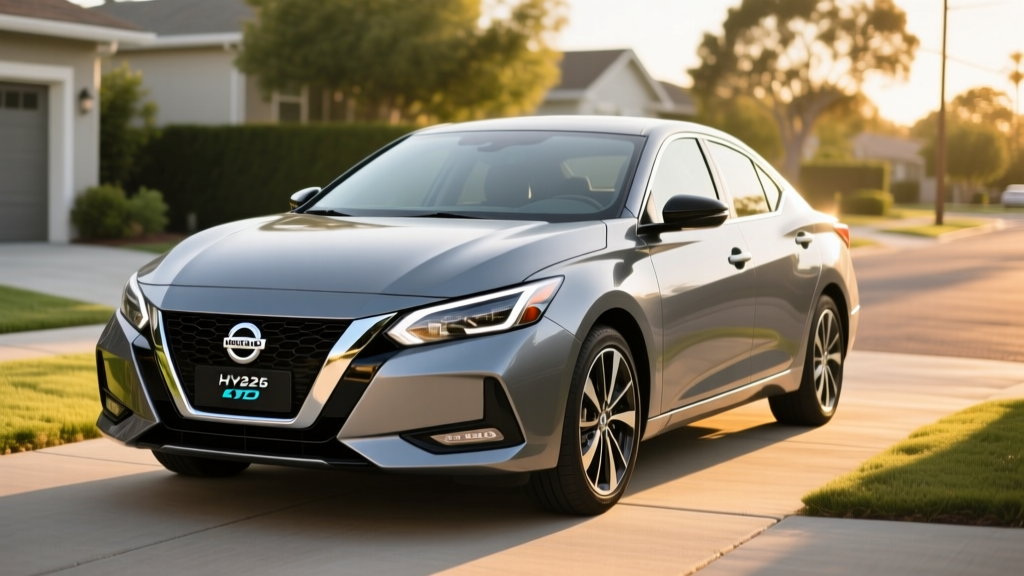
As of the 2026 model year, Nissan does not offer a dedicated hybrid or plug-in hybrid variant of the Sentra in the United States market. The Sentra is powered by a conventional 2.0-liter four-cylinder gasoline engine producing 149 horsepower, paired with a continuously variable transmission (CVT). EPA ratings for the 2026 Sentra sit at approximately 29 mpg city / 39 mpg highway / 33 mpg combined, per fueleconomy.gov.
This is a critical point because many buyers searching for a "Nissan Sentra hybrid" are either recalling Nissan's earlier mild-hybrid experiments in other markets (such as the e-Power system offered in Japan and China) or confusing the Sentra with Nissan's actual hybrid and electrified offerings. Let's clarify what Nissan actually offers and what the e-Power system is.
Nissan's e-Power System: The Hybrid Sentra Buyers Actually Want
Nissan's e-Power technology is a series hybrid system — meaning the gasoline engine never directly drives the wheels. Instead, a small internal combustion engine acts as a generator, producing electricity that powers an electric motor connected to the drive axle. The vehicle always drives like an EV, with instant torque and regenerative braking, but carries a small battery (typically 1.5–2.0 kWh) and a gas tank for extended range.
The e-Power system has been available in the Nissan Note, Kicks, and X-Trail in international markets. In some regions, a Sentra/Sylphy e-Power variant has been offered. However, as of 2026, Nissan has not confirmed a U.S.-market Sentra e-Power model. If Nissan introduces it, expect fuel economy in the range of 50–60 mpg combined based on international testing, though EPA figures would differ.
Conventional Hybrid (HEV): Uses a small battery (1–2 kWh) charged by the engine and regenerative braking. You never plug it in. Examples: Toyota Prius, Honda Accord Hybrid.
Plug-In Hybrid (PHEV): Has a larger battery (8–20+ kWh) that can be charged from a wall outlet or charger, providing 20–50 miles of electric-only driving before the gas engine kicks in. Examples: Toyota Prius Prime, Hyundai Tucson PHEV.
e-Power (Series Hybrid): A type of HEV where the engine only generates electricity — it never drives the wheels. You never plug in. The driving feel is EV-like.
2026 Nissan Sentra Gas Model: Fuel Economy and Specs
Since the U.S.-market Sentra remains a conventional gasoline vehicle for 2026, here are the exact specifications buyers should evaluate:
| Spec | Value |
|---|---|
| Engine | 2.0L DOHC 4-cylinder |
| Horsepower | 149 hp |
| Torque | 146 lb-ft |
| Transmission | CVT (Xtronic) |
| EPA City MPG | 29 mpg |
| EPA Highway MPG | 39 mpg |
| EPA Combined MPG | 33 mpg |
| Fuel Tank | 12.4 gallons |
| Total Range | ~409 miles |
| Base MSRP (S trim) | ~$22,000 |
| Federal Tax Credit | None (not electrified) |
Real-World MPG: What Sentra Owners Actually Report
The EPA's 33 mpg combined figure assumes a mix of 55% city and 45% highway driving. In practice, real-world results depend heavily on your driving pattern:
- City-heavy commuting (stop-and-go): Expect 27–30 mpg. The CVT and lack of hybrid regenerative braking mean the Sentra doesn't gain the city-mpg advantage that true hybrids enjoy.
- Highway cruising (65–75 mph): 36–40 mpg is achievable, especially at steady speeds on flat terrain.
- Cold weather (below 30°F): Expect a 5–10% reduction, bringing combined figures to roughly 30 mpg due to increased engine warm-up time and thicker fluids.
- Aggressive driving / hilly terrain: 25–28 mpg is not uncommon when the engine is working hard.
For comparison, a true compact hybrid like the Toyota Prius delivers an EPA 57 mpg combined and routinely exceeds 50 mpg in real-world city driving — a gap the gas-only Sentra simply cannot close.
Hybrid vs PHEV vs EV: Which Powertrain Fits You?
If you landed on this page looking for a Nissan Sentra hybrid, you're likely weighing fuel savings against practicality. Here's a decision framework:
- You want 50+ mpg without changing your fueling habits
- You don't have access to home or workplace charging
- You drive 15,000+ miles per year and want maximum fuel savings
- Budget is around $28,000–$35,000
Examples: Toyota Prius (57 mpg), Hyundai Elantra Hybrid (54 mpg), Honda Accord Hybrid (48 mpg)
- You can charge at home (Level 1 or Level 2)
- Your daily commute is under 40 miles round-trip (coverable on electric-only)
- You still want a gas engine for road trips
- You want to qualify for the §30D federal tax credit (up to $7,500, subject to MSRP caps, income limits, and battery sourcing rules — see IRS.gov)
Examples: Toyota Prius Prime (44 mi electric, $33,000), Hyundai Tucson PHEV (33 mi electric, $38,000)
- You have reliable home Level 2 charging
- Your daily driving is under 250 miles
- You want to eliminate gasoline entirely and minimize maintenance
- You can take advantage of the $7,500 federal credit plus state incentives
Examples: Nissan LEAF (212 mi range, ~$29,000), Chevrolet Equinox EV (315 mi range, ~$33,000), Tesla Model 3 (341 mi range, ~$39,000)
Best Hybrid Alternatives to a Sentra Hybrid
Since the U.S.-market Sentra doesn't offer a hybrid powertrain, here are the compact and midsize hybrids that deliver the fuel economy Sentra shoppers are seeking:
| Model | Type | City MPG | Hwy MPG | Combined | Base MSRP |
|---|---|---|---|---|---|
| Toyota Prius | HEV | 57 | 56 | 57 | $28,550 |
| Hyundai Elantra Hybrid | HEV | 53 | 56 | 54 | $26,500 |
| Honda Accord Hybrid | HEV | 51 | 44 | 48 | $33,000 |
| Toyota Corolla Hybrid | HEV | 53 | 46 | 50 | $24,050 |
| Nissan Sentra (gas) | ICE | 29 | 39 | 33 | $22,000 |
The math is straightforward: if you drive 15,000 miles per year at $3.40/gallon, the gas Sentra costs roughly $1,545 annually in fuel. The Toyota Corolla Hybrid at 50 mpg combined drops that to about $1,020 — a $525 annual savings. Over five years, the hybrid saves approximately $2,625 in fuel, more than offsetting its slightly higher purchase price.
Battery Warranty, Reliability, and Replacement Costs
One of the top concerns for hybrid buyers is battery longevity. Here's what you need to know — and how it applies if Nissan eventually offers a Sentra hybrid:
Federal law mandates that hybrid battery components be covered for at least 8 years / 100,000 miles. In states that follow California Air Resources Board (CARB) standards (including CA, NY, NJ, MA, CT, RI, VT, ME, OR, WA, CO, and others), the warranty extends to 10 years / 150,000 miles.
Most manufacturers, including Toyota, Honda, and Hyundai, meet or exceed these minimums. If Nissan introduces a Sentra hybrid, expect the same 8-year/100,000-mile baseline.
Real-world hybrid battery lifespan: Data from fleet operators and long-term owners shows that modern nickel-metal hydride (NiMH) and lithium-ion hybrid batteries typically last 150,000–200,000+ miles before significant degradation. The Toyota Prius, now in its fifth generation, has an extensive track record of batteries lasting well past 200,000 miles with gradual capacity loss rather than sudden failure.
Replacement cost: If a hybrid battery does need replacement outside of warranty, expect to pay between $2,000 and $4,000 for a new OEM battery pack, depending on the model. Refurbished and aftermarket options can reduce this to $1,000–$2,000. For the gas-only Sentra, this is a non-issue — there is no hybrid battery to replace.
General reliability: The 2026 Nissan Sentra carries average reliability ratings. Nissan's CVT transmissions have historically been a concern in earlier model years, though the company has made significant improvements. The Sentra's conventional powertrain is simpler than a hybrid system, meaning fewer specialized components to service — but it also means you're paying more in fuel every month.
Tax Credits: Does the Sentra Qualify?
The gas-only 2026 Nissan Sentra does not qualify for the federal §30D Clean Vehicle Tax Credit. That credit — worth up to $7,500 — is reserved for new plug-in electric vehicles (BEVs) and plug-in hybrids (PHEVs) that meet specific requirements.
For the Sentra or any conventional hybrid (HEV), there is no federal purchase incentive. Some states and local utilities offer small rebates for hybrid purchases, but these are typically $500–$1,500 and vary by jurisdiction. Check your state's energy office or utility provider for current programs.
- Vehicle type: BEV or PHEV with at least 7 kWh of battery capacity
- MSRP caps: Vans/SUVs/pickups ≤ $80,000; sedans ≤ $55,000
- Buyer income limits: AGI ≤ $150,000 (single), $225,000 (head of household), $300,000 (joint)
- Battery sourcing: Critical minerals and battery components must meet phased percentage thresholds from U.S. or FTA-partner countries
- Point-of-sale transfer: Eligible buyers can apply the credit as a down-payment reduction at the dealer
- Source: IRS Clean Vehicle Tax Credits
Rules are subject to change. Consult a tax professional before relying on credit eligibility for a purchase decision.
Pros and Cons: 2026 Nissan Sentra (Gas) vs Hybrid Alternatives
✓ Sentra Gas — Pros
- Low starting price (~$22,000)
- No hybrid battery to worry about
- Comfortable ride and spacious interior for the segment
- Standard Nissan Safety Shield 360 (AEB, lane departure, blind spot)
- Simple, proven powertrain — easy to service anywhere
✗ Sentra Gas — Cons
- 33 mpg combined trails every major hybrid competitor
- No hybrid or PHEV option available in the U.S.
- No federal tax credit eligibility
- Higher annual fuel cost (~$500+ more per year vs a 50-mpg hybrid)
- CVT lacks the responsiveness of hybrid electric-drive systems
- Depreciation may accelerate as hybrid adoption grows
Frequently Asked Questions
How many MPG does the Nissan Sentra get?
The 2026 Nissan Sentra achieves an EPA-rated 29 mpg city, 39 mpg highway, and 33 mpg combined. Real-world results vary: expect 27–30 mpg in city driving and 36–40 mpg on the highway. These figures are for the conventional gas model — no hybrid Sentra is currently sold in the U.S.
Is there a plug-in hybrid Nissan Sentra?
No. Nissan does not offer a PHEV version of the Sentra in any market as of 2026. If you want a Nissan with plug-in capability, your closest option in the Nissan lineup was the LEAF (full EV). For a compact PHEV sedan, consider the Toyota Prius Prime (44 miles electric-only, 54 mpg combined after battery depletion).
How far can a Nissan Sentra go on a full tank?
With a 12.4-gallon fuel tank and 33 mpg combined, the gas Sentra delivers approximately 409 miles of total range. A comparable hybrid like the Toyota Corolla Hybrid (11.4-gallon tank, 50 mpg combined) achieves roughly 570 miles on a tank — 160 more miles between fill-ups.
Is the Nissan Sentra reliable?
The 2026 Sentra earns average reliability ratings. Nissan's earlier CVT issues (2013–2018 model years) have been largely addressed in recent generations. The conventional powertrain is straightforward to maintain. However, the Sentra does not benefit from the proven long-term hybrid reliability track record that Toyota and Honda have established over two decades.
What is the hybrid battery replacement cost for Nissan hybrids?
Since the U.S.-market Sentra has no hybrid battery, this doesn't apply. For Nissan's hybrid models sold elsewhere (e-Power vehicles), battery replacement costs are expected to be in the $2,000–$3,500 range based on comparable series-hybrid systems. All hybrid batteries carry a minimum 8-year/100,000-mile federal warranty.
Does the Nissan Sentra qualify for any tax credit?
No. The gas-only Sentra does not qualify for the federal §30D Clean Vehicle Tax Credit, which is limited to BEVs and PHEVs meeting battery sourcing, MSRP, and buyer income requirements. Some state-level incentives may apply to efficient vehicles, but these are typically modest and vary by location.
Should I wait for a hybrid Sentra or buy a competing hybrid now?
Nissan has not announced a U.S.-market Sentra hybrid for 2026 or beyond. If fuel economy is a priority, waiting indefinitely for a model that may never arrive is not a sound strategy. The Toyota Corolla Hybrid ($24,050, 50 mpg) and Hyundai Elantra Hybrid ($26,500, 54 mpg) are available now, deliver dramatically better fuel economy, and come with proven hybrid powertrains backed by extensive warranties. Cross-shopping these against the gas Sentra makes the efficiency and long-term cost case clear.