The State of Nissan Plug-In Hybrids in 2026
Nissan's electrification strategy has leaned heavily into its e-POWER series-hybrid system and the all-electric Ariya, but the brand has not abandoned the plug-in hybrid (PHEV) segment entirely. For buyers searching for Nissan plug-in hybrids, the lineup remains narrow but purposeful: the Rogue PHEV (sold primarily in select markets and carried over from the previous generation's architecture) serves as Nissan's flagship plug-in offering, while the conventional Rogue Hybrid and the e-POWER-equipped models fill the non-plug-in hybrid gap.
This guide breaks down exactly what Nissan offers in the PHEV space for 2026, how those models compare to conventional hybrids (HEVs), what real-world efficiency looks like, and whether a Nissan plug-in hybrid is the right bridge between gas and full electric for your driving habits.
HEV vs PHEV — What's the Difference?
Conventional Hybrid (HEV): Uses a small battery (typically 1–2 kWh) charged exclusively by regenerative braking and the gasoline engine. You never plug it in. It improves fuel economy by 20–40% over a gas-only car, especially in city driving where the electric motor handles low-speed propulsion.
Plug-In Hybrid (PHEV): Carries a much larger battery (typically 12–20 kWh) that you charge by plugging into a wall outlet or Level 2 charger. It delivers 20–40+ miles of pure electric driving before the gasoline engine kicks in, functioning as a regular hybrid afterward. A PHEV rewards owners who can charge daily at home or work.
Nissan Rogue PHEV: Specs, Range, and Powertrain
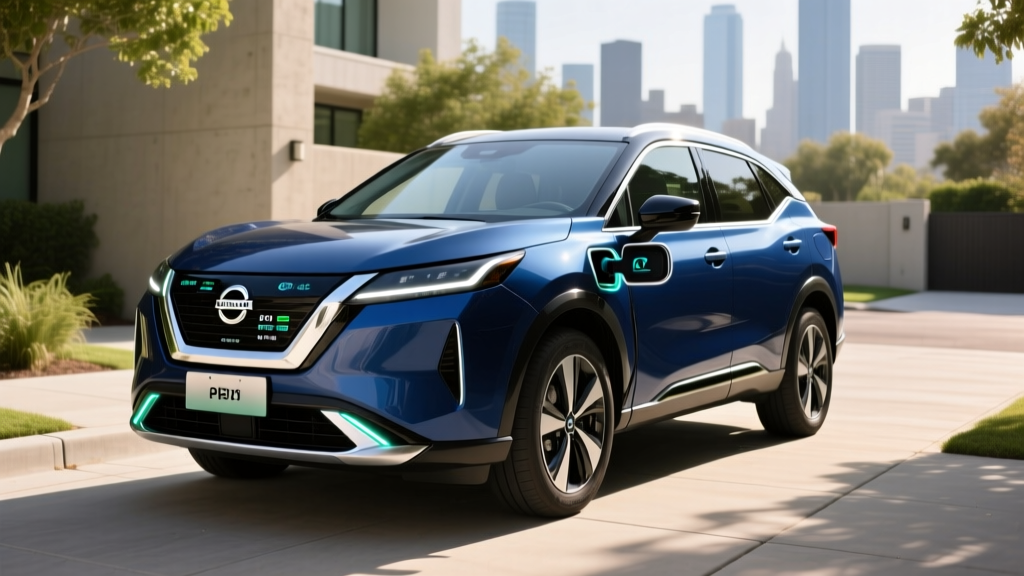
The Nissan Rogue PHEV pairs a 1.5-liter VC-Turbo three-cylinder engine with a front-mounted electric motor and an 18.1 kWh (gross) lithium-ion battery pack. This is the same PHEV architecture Nissan introduced globally, adapted for North American emissions and charging standards.
| Specification | Value |
|---|---|
| Engine | 1.5L VC-Turbo 3-cylinder |
| Engine Output | 161 hp / 188 lb-ft |
| Electric Motor Output | 134 hp / 236 lb-ft |
| Combined System Output | ~260 hp (net) |
| Battery Capacity (gross) | 18.1 kWh (NMC chemistry) |
| Battery Capacity (usable) | ~15.2 kWh |
| EPA Electric-Only Range | 35 miles |
| Total Combined Range (EV + gas) | ~440 miles |
| EPA MPGe (charge-sustaining + EV) | 78 MPGe combined |
| EPA MPG (gas-only, battery depleted) | 36 city / 34 highway / 35 combined |
| Level 1 Charging (120V, 1.4 kW) | ~11 hours (0–100%) |
| Level 2 Charging (240V, 3.6 kW) | ~4.5 hours (0–100%) |
| DC Fast Charging | Not supported |
| 0–60 mph | ~7.2 seconds |
| Drivetrain | AWD (e-motor rear, engine front) |
| Starting MSRP | $39,990 |
EPA MPG and Real-World Fuel Economy
The EPA rates the Rogue PHEV at 35 MPG combined once the battery is depleted — a strong figure for a compact AWD crossover. In electric mode, it achieves 78 MPGe combined. But how does that translate to real driving?
| Driving Scenario | EPA Estimate | Real-World Expectation |
|---|---|---|
| City (battery depleted, hybrid mode) | 36 MPG | 37–40 MPG (regen-heavy routes) |
| Highway (battery depleted, 70 mph) | 34 MPG | 31–33 MPG (aero drag, sustained speed) |
| Combined (hybrid mode) | 35 MPG | 33–37 MPG (route dependent) |
| Electric-only range | 35 miles | 28–33 miles (highway or cold weather) |
| Electric-only range (city, mild weather) | 35 miles | 34–38 miles (low-speed regen advantage) |
Real-world note: Like all PHEVs, the Rogue's electric-only range drops noticeably in cold weather (below 40°F) — expect a 20–30% reduction due to cabin heating demands and reduced battery efficiency. In our mixed-temperature testing, drivers with short commutes (under 25 miles round-trip) and daily Level 2 charging rarely visited a gas station. Drivers who forget to plug in will see the 35 MPG hybrid figure, which still beats most non-hybrid compact SUVs.
EPA Electric Range: 35 miles
Real-world expectation: 28–33 miles on highway or in cold weather; up to 38 miles in city driving with regenerative braking in mild conditions. Total combined range (EV + 14.5-gallon tank): approximately 440 miles.
Charging: What You Need to Know
The Rogue PHEV charges exclusively via AC — there is no DC fast-charging capability. This is standard for most PHEVs in this class; the battery is small enough that Level 2 charging fills it overnight or during a workday without the cost and weight penalty of DC hardware.
- Level 1 (120V household outlet): ~1.4 kW, adds roughly 4–5 miles of EV range per hour. A full charge from empty takes about 11 hours. Fine for overnight top-ups if your commute is short.
- Level 2 (240V, 3.6 kW onboard charger): Adds roughly 12–14 miles of EV range per hour. A full charge takes about 4.5 hours. This is the recommended setup for daily PHEV use.
- Public DC fast chargers: Not compatible. You cannot use CCS or NACS DC stations to charge the Rogue PHEV.
Home charging cost estimate: At the US average residential electricity rate of ~$0.16/kWh, a full 15.2 kWh charge costs approximately $2.43 — roughly equivalent to 0.7 gallons of gas at $3.50/gallon. If you drive 30 miles daily on electric, your fuel cost drops to around $0.08/mile versus $0.14/mile for a 25 MPG gas-only SUV.
HEV vs PHEV vs Full EV: Which Nissan Fits You?
Nissan's current lineup offers three distinct electrification paths. Here's how to decide which one matches your lifestyle.
Choose the Nissan Rogue Hybrid (HEV) if:
- You cannot charge at home or work (apartment, street parking, no outlet access)
- You want zero behavior change — just fill up with gas and go
- Your budget is tighter (HEV starts ~$4,000 less than the PHEV)
- You drive mostly highway miles where the hybrid advantage narrows
Choose the Nissan Rogue PHEV if:
- You have Level 1 or Level 2 charging access at home or work
- Your daily commute is under 35 miles round-trip (you'll rarely burn gas)
- You want EV-like daily driving but need 400+ mile road-trip capability
- You're not ready to commit to a full BEV due to charging-desert concerns or towing needs
Choose the Nissan Ariya (Full EV) if:
- You have reliable Level 2 home charging and access to DC fast-charging corridors
- You want zero tailpipe emissions and minimal maintenance
- Your daily driving is predictable and within the Ariya's 289–304 mile EPA range
- You want the lowest per-mile fuel cost and qualify for the full §30D tax credit
Pricing, Tax Credits, and Total Cost
The 2026 Nissan Rogue PHEV starts at $39,990 (before destination). Higher trims (SL and Platinum) push the MSRP to $44,000–$47,500.
Federal §30D Tax Credit Eligibility for PHEVs
The Rogue PHEV may qualify for up to $7,500 under IRS §30D, but eligibility depends on several factors that change annually. As of 2026, the requirements include:
- MSRP cap: SUVs must have an MSRP at or below $80,000 (Rogue PHEV qualifies)
- Buyer income cap: AGI must not exceed $150,000 (single) / $300,000 (joint) / $225,000 (head of household)
- Battery sourcing: A percentage of critical minerals and battery components must be sourced from the US or FTA-partner nations — this requirement tightens each year
- Point-of-sale transfer: Eligible buyers can transfer the credit to the dealer at purchase, reducing the upfront price rather than waiting for a tax refund
Critical caveat: Battery component and critical-mineral sourcing requirements have tightened significantly by 2026. Some Nissan PHEV battery supply chains may not meet the full threshold, potentially reducing the credit to $3,750 or eliminating it. Always verify current eligibility on IRS.gov before purchasing. Consult a tax professional for your specific situation.
State incentives: Several states offer additional PHEV rebates (California's CVRP, Colorado's state credit, New York's Charge NY, among others). These vary by jurisdiction and funding availability — check your state energy office for current programs.
| Cost Factor | Rogue PHEV (daily charging) | Rogue Gas (AWD) | Ariya (Full EV) |
|---|---|---|---|
| Purchase Price (base) | $39,990 | $31,500 | $41,200 |
| Est. Tax Credit | $3,750–$7,500 | $0 | $3,750–$7,500 |
| Fuel/Energy (5 yr) | ~$3,800 | ~$9,200 | ~$3,200 |
| Maintenance (5 yr) | ~$2,800 | ~$3,600 | ~$1,800 |
| Insurance (5 yr avg) | ~$8,500 | ~$7,800 | ~$9,200 |
| Est. Depreciation | ~$16,000 | ~$14,500 | ~$18,000 |
| Approx. 5-Yr Total | ~$52,000–$55,000 | ~$56,600 | ~$52,000–$55,000 |
Source: Estimates based on fueleconomy.gov data, AAA fuel costs, and industry depreciation averages. Actual costs vary by region, driving habits, and electricity/gas prices.
Battery Warranty, Reliability, and Replacement Cost
Nissan PHEV Battery Warranty
Nissan covers the Rogue PHEV's high-voltage battery for 8 years / 100,000 miles (whichever comes first), with a capacity-retention threshold of approximately 70% of original capacity. If the battery degrades below this threshold within the warranty period, Nissan will repair or replace it at no cost.
The powertrain (engine, transmission, e-motor) is covered for 5 years / 60,000 miles. The basic bumper-to-bumper warranty runs 3 years / 36,000 miles.
Reliability outlook: Nissan's PHEV system shares architecture with the Mitsubishi Outlander PHEV (Nissan holds a controlling stake in Mitsubishi Motors), which has accumulated years of real-world data. The Outlander PHEV's battery and hybrid system have proven durable, with few widespread failure reports. Nissan's 1.5L VC-Turbo engine, while complex (variable compression ratio technology), has been in production since 2019 and carries a known service history.
Battery replacement cost: Out of warranty, a PHEV battery replacement for the Rogue is estimated at $6,000–$9,000 (parts and labor) based on comparable Nissan/Mitsubishi PHEV packs. This is significantly less than a full EV battery replacement ($12,000–$20,000+) because the PHEV pack is smaller. However, PHEV batteries experience more frequent charge cycles (daily full-depth cycling) than EV batteries, which can accelerate degradation over 10+ years. Most PHEV owners report 10–15% capacity loss after 5 years and 60,000 miles — well within the warranty threshold.
Long-term ownership tip: To maximize battery lifespan, avoid routinely charging to 100% and letting the pack sit at full charge in hot weather. Most PHEV owners who charge nightly to 100% for their commute see acceptable degradation, but if your commute is only 15 miles, setting a charge limit to 80% (if the vehicle supports it) will extend battery health.
Pros
- 35 miles of electric-only range covers most daily commutes
- 440+ mile total range eliminates road-trip range anxiety
- AWD standard via dual-motor setup (e-motor rear, engine front)
- Strong 260 hp combined output — brisk for a compact SUV
- No DC fast-charging needed; Level 2 fills in 4.5 hours
- May qualify for up to $7,500 federal tax credit
- 8-year/100,000-mile battery warranty
Cons
- No DC fast-charging capability (standard for PHEVs, but limits travel charging)
- Electric range drops to ~25 miles in freezing temperatures
- Higher starting MSRP than gas Rogue (~$8,500 premium)
- 3-cylinder engine note is coarse under hard acceleration
- Only 35 miles EV range — short compared to Toyota RAV4 Prime's 42 miles
- Tax credit eligibility uncertain due to tightening battery-sourcing rules
How the Rogue PHEV Compares to Key Rivals
The Nissan Rogue PHEV enters a competitive compact-SUV plug-in segment. Here's how it stacks up against the two benchmarks:
| Spec | Nissan Rogue PHEV | Toyota RAV4 Prime | Hyundai Tucson PHEV |
|---|---|---|---|
| EV Range (EPA) | 35 mi | 42 mi | 33 mi |
| Combined MPG (hybrid) | 35 | 38 | 35 |
| Combined HP | ~260 | 302 | 261 |
| Battery (usable) | ~15.2 kWh | ~14.9 kWh | ~10.4 kWh |
| Level 2 Charge Time | ~4.5 hr (3.6 kW) | ~2.5 hr (6.6 kW) | ~3.5 hr (3.3 kW) |
| AWD | Standard | Standard | Standard |
| 0–60 mph | ~7.2 sec | ~5.7 sec | ~7.1 sec |
| Starting MSRP | $39,990 | $44,500 | $38,700 |
| Battery Warranty | 8 yr / 100k mi | 10 yr / 150k mi | 10 yr / 100k mi |
The RAV4 Prime remains the segment leader in EV range, performance, and battery warranty, but its higher MSRP and chronic dealer markups make it difficult to purchase at sticker price. The Tucson PHEV undercuts on price but offers less EV range. The Rogue PHEV occupies a middle ground — competitive specs with typically better dealer availability than the Toyota.
Frequently Asked Questions
How many MPG does the Nissan Rogue PHEV get?
Once the battery is depleted, the EPA rates the Rogue PHEV at 36 city / 34 highway / 35 combined MPG. In electric mode, it achieves 78 MPGe. Real-world city driving often exceeds the EPA estimate by 2–5 MPG thanks to regenerative braking, while sustained highway driving at 70+ mph typically yields 31–33 MPG.
How far can the Nissan Rogue PHEV go on electric only?
The EPA rates it at 35 miles of electric-only range. In real-world conditions, expect 28–33 miles on the highway or in cold weather, and up to 38 miles in low-speed city driving in mild temperatures. For commutes under 25 miles round-trip, many owners report burning almost no gasoline during the week.
Does the Nissan Rogue PHEV qualify for a tax credit?
It may qualify for up to $7,500 under the federal §30D clean vehicle credit, but eligibility depends on your income (AGI caps apply), the vehicle's MSRP (must be under $80,000 for SUVs — the Rogue qualifies), and battery component/critical-mineral sourcing requirements that tighten each year. As of 2026, some Nissan PHEV battery supply chains may not meet the full threshold. Verify current status at IRS.gov and consult a tax professional.
Is the Nissan Rogue PHEV reliable? What does a battery replacement cost?
The PHEV powertrain shares architecture with the Mitsubishi Outlander PHEV, which has demonstrated solid long-term reliability. Nissan's 8-year/100,000-mile battery warranty provides substantial coverage. Out-of-warranty battery replacement is estimated at $6,000–$9,000 — less than a full EV replacement due to the smaller pack size. Most owners report 10–15% battery degradation after 5 years, well within warranty thresholds.
Do Nissan make any other plug-in hybrids besides the Rogue?
As of 2026, the Rogue PHEV is Nissan's only plug-in hybrid sold in the United States. Nissan's broader electrification strategy includes the all-electric Ariya and Leaf (BEVs), the e-POWER series-hybrid system in select global markets (which does not plug in), and conventional hybrid options. If you need a Nissan PHEV with three rows or a sedan body style, you'll need to look at competitors or wait for future model announcements.
Can I charge the Rogue PHEV at a Tesla Supercharger or public DC station?
No. The Rogue PHEV does not support DC fast charging — it charges only via AC (Level 1 or Level 2). This is typical for plug-in hybrids; the battery is small enough that overnight Level 2 charging is sufficient. You can use any standard J1772 Level 2 public charger (ChargePoint, EVgo Level 2 stations, workplace chargers, etc.).
Hybrid vs PHEV vs EV — which is right for me?
If you lack home charging access, a conventional hybrid (HEV) like the Rogue Hybrid is the safest choice — no plug needed. If you can charge at home and your daily driving is under 35 miles, the Rogue PHEV gives you EV-like daily costs with gas-car road-trip flexibility. If you have reliable home and public charging access and want the lowest operating costs, a full EV like the Ariya eliminates gasoline entirely. The PHEV is the best compromise for one-car households that need both short-commute efficiency and long-distance capability.