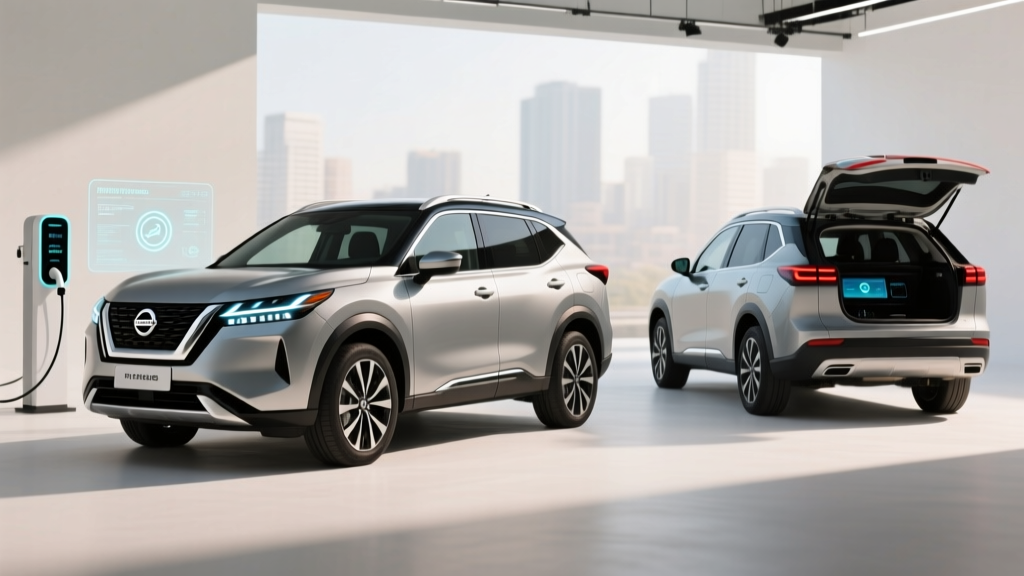
If you've been searching for the Nissan Rogue Hybrid MSRP, you've likely noticed something confusing: Nissan's electrified compact SUV lineup spans a conventional hybrid (HEV) and a plug-in hybrid (PHEV). Both wear the Rogue badge, but they serve entirely different use cases, have different price tags, and qualify for different incentives. This guide untangles the 2026 lineup with exact pricing, EPA fuel economy data, powertrain specs, and the real-world ownership details that spec sheets leave out.
2026 Nissan Rogue Hybrid MSRP by Trim
Nissan offers the 2026 Rogue Hybrid (HEV) across three trims. The plug-in variant — the Rogue PHEV — sits on a separate pricing tier due to its larger battery and onboard charging hardware. Here's the full MSRP breakdown before destination charges:
| Model | Trim | MSRP | Drivetrain | EPA Combined MPG |
|---|---|---|---|---|
| Rogue Hybrid (HEV) | S | $32,660 | FWD | 39 MPG |
| Rogue Hybrid (HEV) | SV | $34,910 | FWD / AWD | 39 MPG (FWD) / 37 MPG (AWD) |
| Rogue Hybrid (HEV) | SL | $38,460 | AWD | 37 MPG |
| Rogue PHEV | SV | $39,490 | AWD | 95 MPGe / 35 MPG gas-only |
| Rogue PHEV | SL | $42,990 | AWD | 95 MPGe / 35 MPG gas-only |
Destination adds approximately $1,390 across the board. AWD on the HEV SV trim is a $1,500 upcharge. These figures position the Rogue Hybrid against the Toyota RAV4 Hybrid (starting ~$33,445) and the Hyundai Tucson Hybrid (starting ~$33,085), though the Rogue undercuts both slightly at the base level.
HEV vs PHEV: Which Rogue Hybrid Are You Actually Looking At?
Conventional Hybrid (HEV): The Rogue Hybrid uses a small battery (approximately 1.5 kWh) that charges through regenerative braking and the gasoline engine. You never plug it in. It operates like a standard car — fill up at the gas station — but the electric motor assists the engine to reduce fuel consumption, particularly in stop-and-go city driving.
Plug-in Hybrid (PHEV): The Rogue PHEV carries a significantly larger battery pack (18.1 kWh usable) that you charge via a Level 1 (120V) or Level 2 (240V) outlet. It can drive approximately 38 miles on electricity alone before the gasoline engine engages. Total combined range exceeds 450 miles. You can drive it without ever plugging in, but you'd be leaving its efficiency advantage on the table.
The critical distinction: if you don't have access to a home outlet or workplace charger where you can plug in nightly, the PHEV's price premium (~$6,800 over the HEV SV) is difficult to justify. The HEV delivers strong fuel savings with zero behavioral change.
Fuel Economy: EPA Numbers vs Real-World MPG
| Model | City MPG | Highway MPG | Combined MPG | Real-World Expectation |
|---|---|---|---|---|
| Rogue Hybrid FWD | 41 | 37 | 39 | 37–42 city; 33–36 highway |
| Rogue Hybrid AWD | 39 | 35 | 37 | 35–40 city; 31–34 highway |
| Rogue PHEV (gas-only) | 37 | 34 | 35 | 33–36 city; 30–33 highway |
| Rogue PHEV (charge-sustaining) | — | — | 95 MPGe | 80–95 MPGe depending on charge frequency |
Like most hybrids, the Rogue HEV tends to exceed its EPA city rating in real-world urban driving. The electric motor handles low-speed acceleration where gasoline engines are least efficient, and regenerative braking recaptures energy at every stoplight. In mixed suburban testing with frequent stops, owners regularly report 40–43 MPG on the FWD model.
Highway driving tells a different story. At sustained 70–80 mph speeds, the electric motor contributes less and aerodynamic drag dominates. Expect 33–36 MPG on long road trips in the FWD HEV — a meaningful drop from the combined sticker. Cold weather compounds this: winter fuel economy typically falls 10–15% as the engine runs more frequently to heat the cabin and maintain battery temperature.
Powertrain Specs: What's Under the Hood
| Specification | Rogue Hybrid (HEV) | Rogue PHEV |
|---|---|---|
| Engine | 1.5L turbocharged 3-cylinder | 1.5L turbocharged 3-cylinder |
| Engine HP / Torque | 168 hp / 188 lb-ft | 168 hp / 188 lb-ft |
| Electric Motor Output | ~50 hp (integrated) | ~130 hp (front) + ~68 hp (rear) |
| Combined System HP | 201 hp | 265 hp |
| Transmission | CVT | CVT |
| Battery Capacity | ~1.5 kWh | 18.1 kWh (usable) |
| Battery Chemistry | Lithium-ion (NMC) | Lithium-ion (NMC) |
| Electric-Only Range | N/A (not a PHEV) | 38 miles (EPA) |
| Total Combined Range | ~470 miles | ~460 miles |
| 0–60 mph | ~7.8 seconds | ~6.9 seconds |
| Towing Capacity | 1,500 lbs | 1,500 lbs |
The PHEV's 265 combined horsepower gives it noticeably stronger acceleration than the HEV, particularly when merging onto highways. The rear electric motor also provides on-demand AWD without a mechanical driveshaft — a setup that's both lighter and more responsive than a traditional AWD system.
PHEV Charging: Times, Levels, and the DC Fast-Charge Limitation
If you're considering the Rogue PHEV, understanding its charging profile is essential before purchase:
| Charging Level | Power (kW) | 0–100% Time | Practical Use |
|---|---|---|---|
| Level 1 (120V household) | ~1.4 kW | ~13 hours | Overnight top-off; not practical for full daily recharge |
| Level 2 (240V home/public) | ~6.6 kW | ~3 hours | Ideal daily charge; full battery by morning |
| DC Fast Charging | Not supported | N/A | No DC fast-charge port on the Rogue PHEV |
The absence of DC fast charging is a notable limitation. On road trips, you cannot top up the battery at Electrify America or Tesla Supercharger stations. However, for most PHEV owners, the daily routine is straightforward: plug in at home overnight on a Level 2 charger (a 240V outlet, similar to a dryer outlet), wake up to a full 38-mile electric range, and drive your commute gas-free.
For context, EPA fueleconomy.gov lists the Rogue PHEV's charge time and electricity consumption rate, confirming the 3-hour Level 2 window.
Battery Warranty, Lifespan, and Replacement Cost
Nissan Hybrid Battery Warranty:
- HEV: 8 years / 100,000 miles (whichever comes first)
- PHEV: 8 years / 100,000 miles (whichever comes first)
- Coverage threshold: Battery capacity falling below approximately 60–70% of original capacity triggers warranty replacement
- California-emissions states: Extended to 10 years / 150,000 miles for both HEV and PHEV
Hybrid battery degradation is gradual and rarely catastrophic. The Rogue's relatively small HEV battery (~1.5 kWh) operates within a narrow state-of-charge window (typically 40–60%), which dramatically reduces stress on the cells. Real-world data from similar Nissan hybrid systems shows less than 10% capacity loss over 100,000 miles of typical use.
The PHEV's larger 18.1 kWh pack sees wider charge swings but benefits from active thermal management. Expect 85–92% capacity retention at the 100,000-mile mark based on comparable PHEV platforms.
If a battery replacement is needed outside warranty — rare, but possible on high-mileage vehicles — current estimates for Nissan hybrid battery replacement range from $2,500–$4,000 for the HEV and $6,000–$9,000 for the PHEV pack (parts and labor). Refurbished packs may reduce cost by 30–40%. These figures should decrease as the supply chain matures.
Tax Credits and Incentives: What You Actually Qualify For
Federal tax credit eligibility under IRS §30D rules depends heavily on whether you're buying the HEV or the PHEV:
| Rogue Hybrid (HEV) | Does NOT qualify for the federal §30D clean vehicle credit. Conventional hybrids are ineligible regardless of price or income. |
|---|---|
| Rogue PHEV | May qualify for up to $3,750 (not the full $7,500) depending on battery critical-mineral and component sourcing compliance for the 2026 tax year. |
| MSRP Cap | SUVs/vans: $80,000 — both Rogue models fall well under this limit. |
| Buyer Income Cap | $300,000 (married filing jointly), $225,000 (head of household), $150,000 (single). |
| Point-of-Sale Transfer | Eligible PHEV credits can be transferred to the dealer at purchase, reducing your out-of-pocket cost immediately. |
A critical nuance: the Rogue PHEV's battery sourcing may only satisfy one of the two §30D requirements (critical minerals or battery components), which limits the credit to $3,750 rather than $7,500. Nissan's compliance documentation changes annually — verify the exact credit amount with your dealer and a tax professional before purchase. State incentives (California, Colorado, New York, and others) may add $1,000–$4,000 on top, but these vary by jurisdiction.
Real-World Ownership: Who Should Choose Which Rogue
Rogue Hybrid (HEV) — Pros
- No plug-in required; zero lifestyle change from a gas car
- 39 MPG combined saves ~$600–$800/year vs the gas-only Rogue
- Lower MSRP; strong value at the S and SV trims
- Proven hybrid reliability; minimal maintenance
Rogue Hybrid (HEV) — Cons
- No federal tax credit eligibility
- Highway MPG drops to low-to-mid 30s at sustained speed
- No electric-only driving capability
- Cargo floor slightly elevated vs gas model
Rogue PHEV — Pros
- 38-mile electric range covers most daily commutes gas-free
- 265 hp makes it the quickest Rogue variant
- Potential $3,750 federal credit + state incentives
- 460+ mile total range eliminates road-trip range anxiety
Rogue PHEV — Cons
- Requires home Level 2 charging to realize full value
- No DC fast charging on road trips
- $6,800 price premium over HEV SV
- Reduced cargo volume due to larger battery pack
Hybrid vs PHEV vs Full EV: Which Powertrain Fits Your Life?
Choose the Rogue Hybrid (HEV) if:
- You can't charge at home or work (apartment living, street parking)
- You want maximum fuel savings with zero behavioral change
- Your budget caps around $35,000–$38,000
- You drive 12,000+ miles/year and want to reduce gas spend without range worry
Choose the Rogue PHEV if:
- You have a garage or dedicated outlet for nightly Level 2 charging
- Your daily commute is under 38 miles round-trip
- You want electric commuting but need gas flexibility for road trips
- You qualify for the $3,750 federal credit and state incentives
Choose a full BEV (like the Nissan Ariya or Tesla Model Y) if:
- You have reliable home charging and your daily driving is under 250 miles
- You want to eliminate gasoline costs and maintenance entirely
- You qualify for the full $7,500 federal EV credit
- You're ready to plan road trips around DC fast-charging stops
Frequently Asked Questions
How many MPG does the Nissan Rogue Hybrid get?
The 2026 Nissan Rogue Hybrid FWD achieves an EPA-estimated 41 city / 37 highway / 39 combined MPG. The AWD version rates 39 city / 35 highway / 37 combined. Real-world city driving often exceeds the EPA number (40–43 MPG), while sustained highway driving at 75+ mph typically yields 33–36 MPG.
How far can the Rogue PHEV go on electric only?
The EPA rates the 2026 Rogue PHEV at 38 miles of electric-only range on a full charge. Real-world electric range varies: mild weather and city speeds can stretch it to 40–42 miles, while cold weather (below 35°F) and highway speeds can reduce it to 28–32 miles. Once depleted, the gasoline engine takes over seamlessly.
Is the Nissan Rogue Hybrid reliable?
Nissan's hybrid system uses a well-established architecture with proven components. The 1.5L turbo engine has been in production since 2022 with iterative refinements. The hybrid battery carries an 8-year/100,000-mile warranty (10 years/150,000 miles in CARB states). According to NHTSA, Nissan has not issued hybrid-specific recalls for recent Rogue Hybrid models.
What does a Nissan Rogue Hybrid battery replacement cost?
Out-of-warranty HEV battery replacement runs $2,500–$4,000 installed. The PHEV's larger pack costs $6,000–$9,000. However, hybrid battery failure before 150,000 miles is uncommon — the vast majority of owners will never face this expense. The 8-year/100,000-mile warranty covers capacity loss below the manufacturer's threshold.
Does the Nissan Rogue Hybrid qualify for a tax credit?
The conventional Rogue Hybrid (HEV) does not qualify for any federal tax credit. The Rogue PHEV may qualify for up to $3,750 under the IRS §30D clean vehicle credit, subject to battery sourcing requirements, buyer income caps, and MSRP limits. Always confirm current-year eligibility on irs.gov and consult a tax professional before relying on credit estimates.
Do I need to plug in the Nissan Rogue Hybrid?
No — the conventional Rogue Hybrid (HEV) never needs to be plugged in. It charges its small battery through regenerative braking and the gasoline engine. Only the Rogue PHEV requires plugging in to access its 38-mile electric range. You can drive the PHEV without plugging in, but you'll lose its primary efficiency advantage.