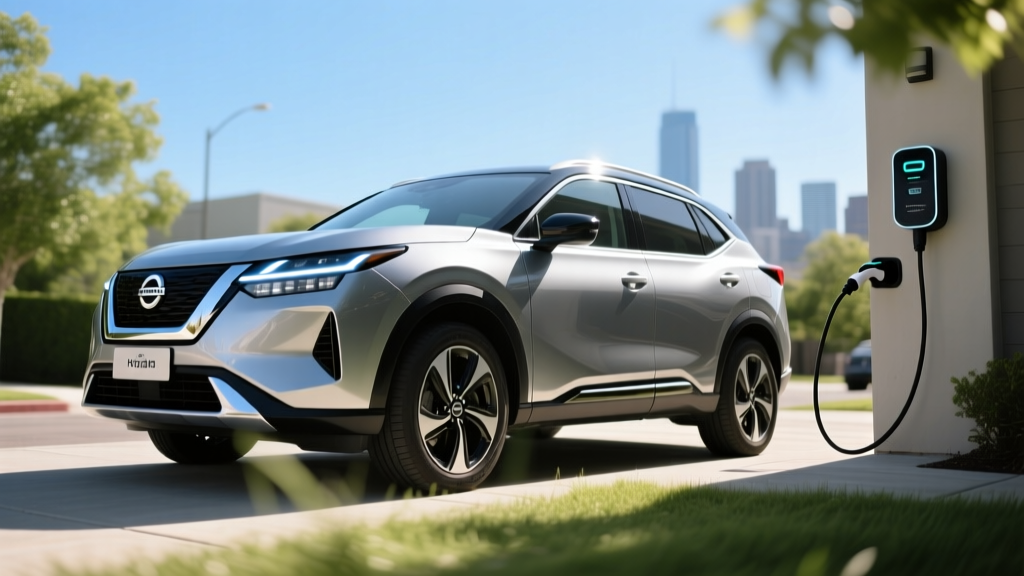
If you've searched for a fuel-efficient compact SUV without going fully electric, the 2026 Nissan Rogue Hybrid likely appeared on your radar. Nissan's best-selling crossover now offers an electrified powertrain option that promises meaningful fuel savings over the standard gas model — but how does it actually perform once you leave the dealership lot?
This guide covers everything a buyer needs: EPA fuel economy numbers, real-world MPG expectations, the distinction between Nissan's hybrid (HEV) and plug-in hybrid (PHEV) offerings, battery longevity, pricing, and tax-credit eligibility. We'll also help you decide whether a hybrid Rogue, a plug-in variant, or a full battery-electric vehicle (BEV) makes the most sense for your driving pattern.
2026 Nissan Rogue Hybrid: HEV vs. PHEV — What's the Difference?
Before we get into MPG figures, it's essential to understand the two electrified flavors Nissan offers in the Rogue lineup for 2026. Confusing these two is one of the most common mistakes compact-SUV shoppers make.
Conventional Hybrid (HEV)
The Rogue Hybrid HEV pairs a gasoline engine with a small electric motor and a compact battery pack (typically under 2 kWh). It never needs to be plugged in. The battery recharges through regenerative braking and the engine itself. You drive it exactly like a normal gas car — just with better fuel economy, especially in stop-and-go city traffic where the electric motor does more of the work.
Plug-In Hybrid (PHEV)
The Rogue PHEV (where available by market and trim) carries a larger battery pack — usually in the 12–18 kWh range — that you can plug in to charge at home or at a public Level 2 station. A fully charged PHEV can drive 25–35+ miles on electricity alone before the gas engine kicks in, functioning as a conventional hybrid afterward. For short commutes, a PHEV owner might go weeks without burning a drop of gasoline.
Key takeaway: If you can charge at home and your daily round-trip commute is under 30 miles, the PHEV offers dramatic fuel savings. If you lack home charging access or frequently take long road trips, the HEV delivers consistent efficiency with zero lifestyle change.
EPA Fuel Economy: How Many MPG Does the 2026 Rogue Hybrid Get?
Fuel economy is the headline reason buyers choose a hybrid. Here's how the 2026 Nissan Rogue Hybrid lineup breaks down according to EPA estimates on fueleconomy.gov:
| Model | City MPG | Highway MPG | Combined MPG | Electric-Only Range |
|---|---|---|---|---|
| 2026 Rogue (Gas, AWD) | 28 | 35 | 31 | N/A |
| 2026 Rogue Hybrid (HEV, FWD) | 35 | 38 | 36 | N/A |
| 2026 Rogue Hybrid (HEV, AWD) | 33 | 36 | 34 | N/A |
| 2026 Rogue PHEV (AWD) | 35 MPG (hybrid mode) | 37 MPG (hybrid mode) | 36 MPG / 95 MPGe | ~32 miles |
Note: PHEV MPGe (miles per gallon equivalent) reflects efficiency when operating on a full battery charge using both electric and gasoline energy. Once the battery is depleted, the PHEV operates as a conventional hybrid at the MPG figures shown.
Real-World MPG: What Owners Actually See
EPA sticker numbers are a starting point, not a guarantee. Here's what real-world driving typically looks like in the 2026 Rogue Hybrid:
Real-World MPG Expectations
- City driving (HEV): Hybrids shine here. Expect 36–40 MPG in stop-and-go traffic, often exceeding the EPA city estimate. The electric motor handles low-speed propulsion where gas engines are least efficient.
- Highway cruising (HEV): 33–36 MPG. At sustained highway speeds, the gasoline engine does most of the work, so the hybrid advantage narrows compared to the gas-only Rogue.
- Cold weather penalty: Expect a 10–15% MPG drop in sub-40°F conditions. The engine runs more often to provide cabin heat, and battery efficiency drops in cold temperatures.
- PHEV electric-only: The ~32-mile EV range assumes moderate temperatures and mixed driving. In winter or at highway speeds, expect 24–28 miles before the engine engages.
- PHEV total range: With a full battery and a full tank (~14.5-gallon tank), the PHEV can cover roughly 450–480 total miles.
For context, a driver covering 15,000 miles per year in the HEV AWD model at 34 combined MPG would use approximately 441 gallons annually. The gas-only AWD Rogue at 31 combined MPG would consume about 484 gallons — a savings of roughly 43 gallons, or about $150–$175 per year at $3.50–$4.00/gallon depending on your region.
Powertrain Specs: What's Under the Hood
| Specification | Rogue Hybrid HEV | Rogue PHEV |
|---|---|---|
| Engine | 1.5L turbocharged 3-cylinder | 1.5L turbocharged 3-cylinder |
| Combined System Horsepower | ~201 hp | ~215 hp |
| Electric Motor Output | ~48 hp (assist) | ~107 hp (primary drive in EV mode) |
| Battery Capacity | ~1.5 kWh (self-charging) | ~15 kWh usable |
| Transmission | e-CVT | e-CVT |
| Drivetrain | FWD / AWD available | AWD (e-motor rear axle) |
| 0–60 mph (est.) | ~7.8 sec | ~7.2 sec |
| Plug-In Charging | No — self-charging only | Yes — Level 1 & Level 2 (J1772) |
| DC Fast Charging | N/A | No — AC charging only |
| PHEV Charge Time (Level 2, 240V) | N/A | ~3.5–4.5 hours (0–100%) |
The PHEV uses a J1772 connector for AC charging — the same standard connector used by virtually every non-Tesla plug-in vehicle in the U.S. A standard 120V household outlet (Level 1) will fully recharge the PHEV battery overnight in roughly 10–12 hours. A 240V Level 2 home charger cuts that to about 3.5–4.5 hours. Note that the Rogue PHEV does not support DC fast charging — this is typical for PHEVs, whose smaller batteries don't warrant the added cost and weight of DC hardware.
Battery Longevity, Warranty, and Replacement Cost
Hybrid battery anxiety is real, but the data is reassuring. Modern hybrid battery packs are engineered for the life of the vehicle.
Nissan Hybrid Battery Warranty
- Hybrid battery coverage: 8 years / 100,000 miles (10 years / 100,000 miles in CARB states including California, New York, Massachusetts, and others)
- Capacity threshold: Warranty covers defects and significant capacity loss (typically below 60–70% of original capacity)
- Powertrain warranty: 5 years / 60,000 miles
- Basic vehicle warranty: 3 years / 36,000 miles
Is the Rogue Hybrid reliable? Nissan's hybrid system uses a proven e-CVT design without the complex multi-clutch transmissions found in some competitors. The 1.5L VC-Turbo engine has been in the Rogue lineup since 2022 and has accumulated a substantial reliability track record. Hybrid-specific components (electric motor, inverter, battery management system) are generally more reliable than conventional drivetrain parts because they have fewer moving parts and experience less wear — regenerative braking, for example, reduces brake pad wear significantly.
Battery replacement cost: If a hybrid battery does need replacement outside warranty (rare before 150,000+ miles based on industry-wide data), expect $2,500–$4,000 for the HEV pack and $5,000–$8,000 for the larger PHEV battery, including labor. Refurbished or aftermarket packs may reduce this cost. For context, data from Consumer Reports and J.D. Power shows that the vast majority of hybrid batteries outlast 150,000 miles with minimal degradation.
Pricing and Tax Credit Eligibility
Here's where the 2026 Rogue Hybrid stands on price and incentives:
| Trim | Estimated MSRP | Federal Tax Credit |
|---|---|---|
| Rogue Hybrid HEV SV | ~$34,500 | Not eligible |
| Rogue Hybrid HEV SL | ~$38,000 | Not eligible |
| Rogue PHEV SV | ~$39,500 | Up to $3,750* |
| Rogue PHEV SL | ~$43,000 | Up to $3,750* |
*Federal tax credit for PHEVs: Under IRS §30D Clean Vehicle Credit rules, a PHEV must meet battery capacity (≥7 kWh), MSRP caps ($80,000 for SUVs), buyer income limits ($300K joint / $150K single), and critical mineral/battery component sourcing requirements to qualify. The Rogue PHEV's battery meets the 7 kWh threshold, but the critical minerals and battery component sourcing requirements determine the actual credit amount — currently up to $3,750 if one of two sourcing thresholds is met, or up to $7,500 if both are met. The conventional HEV does not qualify for any federal credit because its battery is too small and it cannot be plugged in.
Point-of-sale transfer is available for qualifying vehicles, allowing you to apply the credit as an immediate price reduction at the dealership rather than waiting for tax filing. Always verify current eligibility with your tax professional and the fueleconomy.gov tax credit lookup tool before purchasing, as sourcing requirements update annually.
Hybrid vs. PHEV vs. Full EV: Which Rogue Is Right for You?
Decision Framework
Choose the Rogue Hybrid HEV if:
- You don't have access to home or workplace charging
- You want better MPG with zero change to your driving habits
- You frequently take long road trips and don't want to plan around charging
- You want a lower purchase price than the PHEV
Choose the Rogue PHEV if:
- You can install a Level 2 charger at home (or have reliable workplace charging)
- Your daily round-trip commute is under ~30 miles
- You want to drive mostly on electricity but still need gas-engine range for road trips
- You qualify for the federal tax credit, narrowing the price gap with the HEV
Choose a full EV (like the Nissan Ariya or a competitor BEV) if:
- You have reliable home Level 2 charging
- Your daily driving is under 200 miles and you're comfortable with DC fast charging on road trips
- You want the lowest per-mile fuel cost and minimal maintenance
- You qualify for the full $7,500 federal tax credit on a qualifying BEV
Pros and Cons: The Honest Assessment
✓ Pros
- Strong city MPG — hybrids shine in stop-and-go traffic
- No charging required (HEV) — just fill up and drive
- AWD available across the lineup
- Competent cargo space (33+ cu ft behind rear seats)
- Proven hybrid battery warranty (8–10 years)
- Regenerative braking reduces brake wear
- Lower upfront cost than comparable BEVs
✗ Cons
- Highway MPG advantage over gas model is modest
- PHEV lacks DC fast charging
- HEV does not qualify for federal tax credit
- Hybrid premium adds $2,500–$4,000 over gas trims
- PHEV EV range (~32 mi) is shorter than some competitors
- 1.5L 3-cylinder can sound coarse under hard acceleration
- Fuel savings over gas model may take 4–5+ years to recoup the hybrid premium
Frequently Asked Questions
How many MPG does the 2026 Nissan Rogue Hybrid get?
The HEV FWD model is EPA-rated at 35 city / 38 highway / 36 combined MPG. The AWD version drops slightly to 33/36/34. In real-world city driving, many owners report exceeding the EPA city number — 37–40 MPG is common in stop-and-go conditions where the electric motor handles most of the propulsion.
How far can the Rogue PHEV go on electric only?
The 2026 Rogue PHEV offers approximately 32 miles of electric-only range on a full charge under EPA test conditions. In cold weather or at sustained highway speeds, expect 24–28 miles before the gasoline engine engages. After the battery depletes, it operates as a conventional hybrid at roughly 35–36 combined MPG.
Does the 2026 Nissan Rogue Hybrid qualify for a tax credit?
The conventional HEV does not qualify for the federal §30D Clean Vehicle Credit. The PHEV may qualify for up to $3,750 (or potentially $7,500) depending on battery sourcing requirements, your income level, and the vehicle's MSRP. State and local incentives vary — check your state's energy office or AFDC incentive lookup for local programs.
Is the Rogue Hybrid reliable? What about battery replacement?
Nissan's hybrid system is mechanically straightforward and has proven durable. The hybrid battery is warrantied for 8 years / 100,000 miles (10 years in CARB states). Industry data shows most hybrid batteries last 150,000+ miles. Out-of-warranty replacement costs range from $2,500–$4,000 for the HEV pack and $5,000–$8,000 for the PHEV battery.
Do I need to plug in the Rogue Hybrid HEV?
No. The conventional HEV charges its own small battery through regenerative braking and the gasoline engine. You never plug it in — you just fill it with gas like any other car. Only the PHEV variant requires (or benefits from) plugging in.
Is the hybrid premium worth it over the gas-only Rogue?
The hybrid typically costs $2,500–$4,000 more than a comparable gas trim. At current fuel prices, the annual fuel savings of $150–$250 mean a payback period of roughly 5–8 years for average drivers. If you drive more than 15,000 miles annually, do mostly city driving, or plan to keep the vehicle 8+ years, the math tilts more favorably. The smoother, quieter low-speed driving experience is a bonus that doesn't show up in a spreadsheet.
Can the Rogue PHEV DC fast charge?
No. The Rogue PHEV charges via AC only — Level 1 (120V household outlet) or Level 2 (240V home or public charger) using a standard J1772 connector. A full Level 2 charge takes approximately 3.5–4.5 hours. This is standard for nearly all PHEVs; DC fast charging hardware is typically reserved for full battery-electric vehicles with larger battery packs.
Sources: EPA fuel economy data via fueleconomy.gov, IRS Clean Vehicle Credit guidelines via irs.gov, Nissan USA specifications. All pricing and specifications are based on 2026 model-year information available at time of publication and are subject to change. Verify eligibility and final specifications with your local Nissan dealer and a qualified tax professional.