Nissan's Hybrid Strategy: Why e-POWER Changes the Conversation
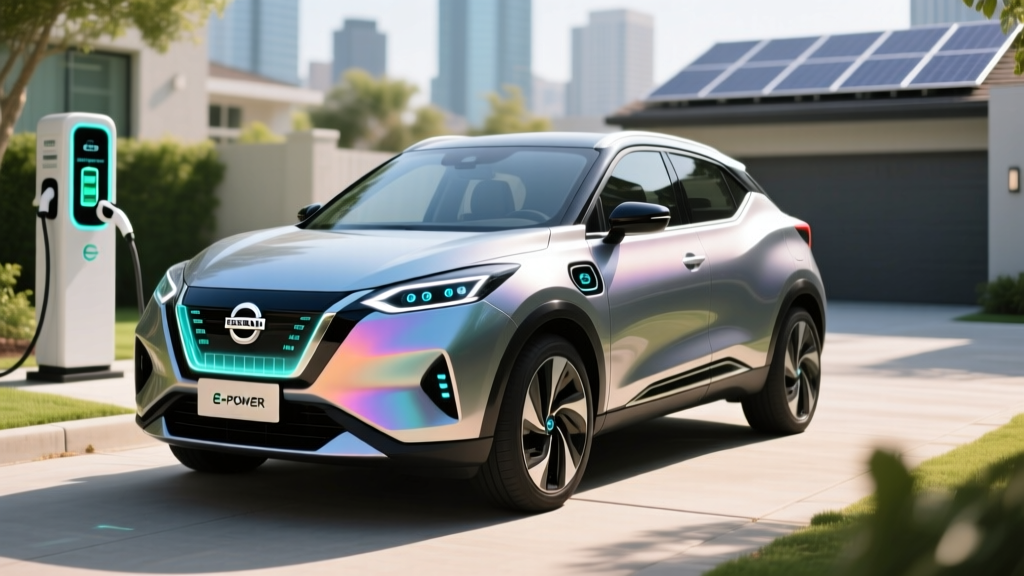
If you've searched for Nissan hybrid autos expecting a lineup rivaling Toyota's dozen-strong hybrid roster, you'll find a narrower — but strategically distinct — offering. For the 2026 model year, Nissan's hybrid playbook in the U.S. market centers on the Kicks e-POWER, a subcompact crossover that uses a series-hybrid architecture fundamentally different from the parallel-hybrid systems in a RAV4 Hybrid or CR-V Hybrid. Nissan also offers the Rogue with its VC-Turbo variable-compression engine (not a hybrid), and the all-electric Ariya and Leaf. But if you want a Nissan that sips fuel without ever plugging in, the Kicks e-POWER is where to focus.
This guide dissects the Kicks e-POWER's real-world efficiency, powertrain engineering, pricing, warranty coverage, and how it stacks up against both full battery-electric vehicles (BEVs) and conventional gas cars. We'll also clarify where Nissan's global hybrid lineup (including the X-Trail e-POWER sold in Europe and Japan) may eventually expand stateside.
HEV vs PHEV vs EV: Where Nissan Hybrids Fit
Conventional Hybrid (HEV): The Kicks e-POWER is a series hybrid — the gasoline engine never drives the wheels. It acts solely as a generator to charge a small onboard battery, while an electric motor provides 100% of the propulsion. You never plug it in. The battery recharges through regenerative braking and the onboard engine-generator.
Plug-in Hybrid (PHEV): Nissan does not currently sell a PHEV in the U.S. market. A PHEV has a larger battery (typically 12–20 kWh) that charges via a plug, delivering 25–45 miles of electric-only range before the gas engine engages. Examples include the Toyota RAV4 Prime or Hyundai Tucson PHEV.
Battery Electric Vehicle (BEV): Nissan's Leaf and Ariya are fully electric — no gas engine, larger batteries (40–91 kWh), and dependence on charging infrastructure. A BEV makes sense if you have reliable home charging and a daily commute under the vehicle's range.
The Kicks e-POWER occupies a specific niche: it delivers an EV-like driving feel (instant electric torque, one-pedal-style regen) while eliminating range anxiety and any need for charging infrastructure. For apartment dwellers, street parkers, or anyone in a charging desert, this is the core value proposition.
Kicks e-POWER: EPA MPG, Powertrain Specs, and Real-World Efficiency
| Specification | 2026 Nissan Kicks e-POWER |
|---|---|
| Powertrain Type | Series hybrid (e-POWER) |
| Engine | 1.5L DOHC 3-cylinder (generator only) |
| Electric Motor Output | 134 hp / 206 lb-ft torque |
| Combined System Output | 134 hp (motor-driven) |
| Battery Capacity | ~2.1 kWh (lithium-ion, buffer-limited) |
| EPA City MPG | 42 MPG |
| EPA Highway MPG | 38 MPG |
| EPA Combined MPG | 40 MPG |
| Fuel Tank Capacity | 10.8 gallons |
| Total Driving Range | ~432 miles (EPA est.) |
| 0–60 mph | ~7.9 seconds (est.) |
| Drivetrain | FWD standard; AWD available |
| Plug-in Required? | No — never plugs in |
| DC Fast Charge Capable? | No |
| Starting MSRP | $29,830 (S trim) |
| Battery Warranty | 8 years / 100,000 miles |
How Many MPG Does the Kicks e-POWER Get?
The EPA rates the 2026 Kicks e-POWER at 42 city / 38 highway / 40 combined MPG. According to fueleconomy.gov, that combined figure places it among the most efficient non-plug-in crossovers on the market — though slightly behind the Toyota Corolla Cross Hybrid (42 combined) and well behind a Prius (57 combined).
Real-world expectation: Series hybrids like e-POWER tend to exceed their EPA city ratings in stop-and-go driving because regenerative braking recaptures energy that parallel hybrids partially waste. In urban testing, owners and reviewers frequently report 43–46 MPG in city conditions. Highway driving is the relative weakness — at sustained 70–80 mph speeds, the engine-generator must run more frequently to keep the small battery charged, and real-world highway figures often land in the 35–37 MPG range. In cold weather (below 30°F), expect a 5–10% efficiency drop due to cabin heating demands and reduced battery efficiency, bringing combined figures closer to 36–38 MPG.
Battery Longevity Note: The Kicks e-POWER's ~2.1 kWh battery is small and buffer-limited — Nissan's software prevents it from fully charging or fully depleting, which dramatically reduces cycle wear. This is the same principle Toyota uses in its hybrids, and it's why hybrid batteries routinely last 150,000+ miles. Nissan covers the hybrid battery for 8 years or 100,000 miles, whichever comes first.
How e-POWER Works: The Engineering Behind Nissan's Hybrid System
Understanding e-POWER requires setting aside assumptions about how most hybrids work. In a conventional parallel hybrid (like the Toyota RAV4 Hybrid), both the gas engine and electric motor can mechanically drive the wheels, and the system blends between them based on speed and load.
In Nissan's series-hybrid e-POWER system:
- The 1.5L three-cylinder engine never connects to the wheels. It drives a generator that produces electricity.
- That electricity either powers the drive motor directly or charges the battery — managed by an onboard inverter/controller.
- The electric motor (134 hp, 206 lb-ft) is the sole source of propulsion, delivering linear, instant torque identical to a BEV.
- Regenerative braking recaptures kinetic energy during deceleration, feeding it back into the battery.
The result is a driving experience that feels electric — smooth, quiet, torque-forward — while the engine operates only at its most efficient RPM range to generate electricity. The engine does rev audibly under hard acceleration (a characteristic Nissan has worked to smooth with its "Linear Tune" engine mounting), but at cruising speeds it's nearly imperceptible.
The AWD variant adds a second, smaller electric motor on the rear axle, providing torque-vectoring all-wheel drive without any mechanical driveshaft. This system adds roughly 1 MPG of consumption but improves traction and handling confidence in adverse conditions.
Pricing, Trims, and Tax Credit Eligibility
| 2026 Kicks e-POWER Trim | MSRP | Key Features |
|---|---|---|
| S (base) | $29,830 | 8" touchscreen, Nissan Safety Shield 360, wireless CarPlay |
| SV | $31,630 | Adaptive cruise, heated seats, 12.3" display, roof rails |
| SR (top) | $34,130 | AWD standard, Bose audio, ProPILOT Assist, panoramic roof |
Does the Kicks e-POWER Qualify for a Federal Tax Credit?
No. Under IRS §30D Clean Vehicle Credit rules, the federal tax credit of up to $7,500 applies only to battery electric vehicles (BEVs) and plug-in hybrids (PHEVs) that meet battery capacity, critical mineral sourcing, and MSRP/income thresholds. The Kicks e-POWER is classified as a conventional hybrid (HEV) — it has no plug-in capability and its battery capacity falls well below the §30D minimum. No federal purchase credit applies.
Some states and utilities offer separate rebates or incentives for hybrid vehicles, though these are less common and less generous than BEV incentives. Check your state's energy office or utility provider for current programs. A tax professional can confirm eligibility for any local credits.
Reliability, Battery Replacement Cost, and Long-Term Ownership
Is the Kicks e-POWER Reliable?
Nissan's e-POWER system has been on the road since 2016 (first in Japan's Note compact), accumulating billions of miles of real-world operation across multiple global models including the Serena minivan, X-Trail, and Qashqai. The series-hybrid architecture is mechanically simpler than a parallel hybrid — there's no transmission, no clutch pack, no mechanical linkage between engine and wheels. Fewer moving parts generally means fewer failure points.
Nissan's hybrid battery warranty covers 8 years or 100,000 miles, consistent with industry standards. The powertrain (engine-generator, inverter, drive motor) is covered under the standard 5-year/60,000-mile powertrain warranty.
What Does Hybrid Battery Replacement Cost?
If the hybrid battery fails outside warranty, replacement costs for a Kicks e-POWER battery are estimated at $2,000–$3,500 (parts and labor) based on comparable Nissan hybrid battery pricing. However, because the battery is small (~2.1 kWh), buffer-limited, and never deeply cycled, premature failure is uncommon. Toyota's track record with similarly sized hybrid batteries shows typical lifespans of 150,000–200,000+ miles before capacity degradation becomes meaningful. The e-POWER battery should follow a similar trajectory.
The 12V auxiliary battery (separate from the hybrid traction battery) may need replacement every 4–6 years at typical costs of $150–$250.
Kicks e-POWER vs the Competition
| Spec | Nissan Kicks e-POWER | Toyota Corolla Cross Hybrid | Honda HR-V |
|---|---|---|---|
| Powertrain | Series hybrid | Parallel hybrid | Gas (non-hybrid) |
| Combined MPG | 40 | 42 | 28 |
| Horsepower | 134 | 196 | 158 |
| 0–60 mph | ~7.9s | ~7.5s | ~8.3s |
| AWD Available | Yes (electric) | Yes (standard) | Yes |
| Starting MSRP | $29,830 | $30,290 | $25,650 |
| Cargo Volume | 25.3 cu ft | 25.5 cu ft | 24.4 cu ft |
The Corolla Cross Hybrid edges out the Kicks on EPA MPG and horsepower, but the Kicks e-POWER delivers a noticeably smoother, more EV-like driving feel due to its pure-electric propulsion. The HR-V is cheaper but significantly thirstier. If driving refinement and EV-like torque delivery matter to you, the Kicks e-POWER has a distinct character advantage. If maximum fuel savings and AWD standard are the priority, the Corolla Cross Hybrid is the spec-sheet winner.
Who Should Choose the Kicks e-POWER — And Who Shouldn't
Pros
- EV-like driving feel without charging dependency
- 40 MPG combined with strong city performance
- No plug-in required — ideal for renters and street parkers
- Instant 206 lb-ft torque from standstill
- Simple, proven series-hybrid architecture
- 8-year/100,000-mile hybrid battery warranty
Cons
- No federal tax credit (HEV classification)
- Highway MPG trails city (38 vs 42)
- Engine noise under hard acceleration
- Small 2.1 kWh battery limits regenerative capacity on long descents
- Higher starting price than gas-only subcompact crossovers
- Limited to one Nissan model in the U.S.
Choose the Kicks e-POWER if: You want an efficient, EV-feeling daily driver but can't install a home charger, live in an apartment, or frequently drive in areas with sparse charging infrastructure. It's also ideal if your commute is city-heavy, where regenerative braking maximizes efficiency.
Choose a full EV (like the Nissan Leaf or Ariya) if: You have Level 2 home charging, your daily driving is under 200 miles, you want zero tailpipe emissions, and you qualify for the $7,500 federal tax credit (subject to IRS §30D income and sourcing rules).
Choose a conventional gas car if: Your budget is under $25,000, you drive fewer than 8,000 miles per year (where fuel savings don't offset the hybrid premium), or you need maximum cargo/towing capability in a larger vehicle.
Frequently Asked Questions
How many MPG does the Nissan Kicks e-POWER get?
The EPA rates it at 42 city / 38 highway / 40 combined MPG. Real-world city driving often exceeds the EPA figure, reaching 43–46 MPG in stop-and-go traffic. Highway driving at 75+ mph typically yields 35–37 MPG.
Does the Nissan Kicks e-POWER need to be plugged in?
No. It is a conventional series hybrid — the gasoline engine generates electricity to charge the battery, and regenerative braking recaptures energy. You never plug it in. Just fill it with gas like any other car.
Is the Kicks e-POWER considered a PHEV?
No. A plug-in hybrid (PHEV) has a larger battery and can be charged via a plug for 25–45 miles of electric-only range. The Kicks e-POWER has a small ~2.1 kWh battery, no plug, and the engine-generator is always available to produce electricity. It is classified as an HEV (hybrid electric vehicle).
How long will the hybrid battery last?
Nissan covers the hybrid battery for 8 years or 100,000 miles. Based on Nissan's global e-POWER track record and the battery's buffer-limited design (it never fully charges or depletes), the battery should last 150,000+ miles under normal use — consistent with industry hybrid battery longevity.
Does the Kicks e-POWER qualify for any federal tax credit?
No. The IRS §30D Clean Vehicle Credit applies only to plug-in vehicles (BEVs and PHEVs). As a conventional hybrid, the Kicks e-POWER does not qualify. Some state or utility incentives may apply — check local programs.
What is the battery replacement cost if it fails?
Estimated at $2,000–$3,500 out of warranty. Given the small battery size and buffer-limited cycling, premature failure is rare. Most hybrid batteries outlast the vehicle's useful economic life.
Is Nissan planning more hybrid models for the U.S.?
Nissan sells the X-Trail e-POWER and Qashqai e-POWER in Europe and other markets. As of early 2026, Nissan has not confirmed additional e-POWER models for the U.S. beyond the Kicks, but the company's long-term "Ambition 2030" plan includes expanding electrified offerings. Any future models would be announced through Nissan's official channels.