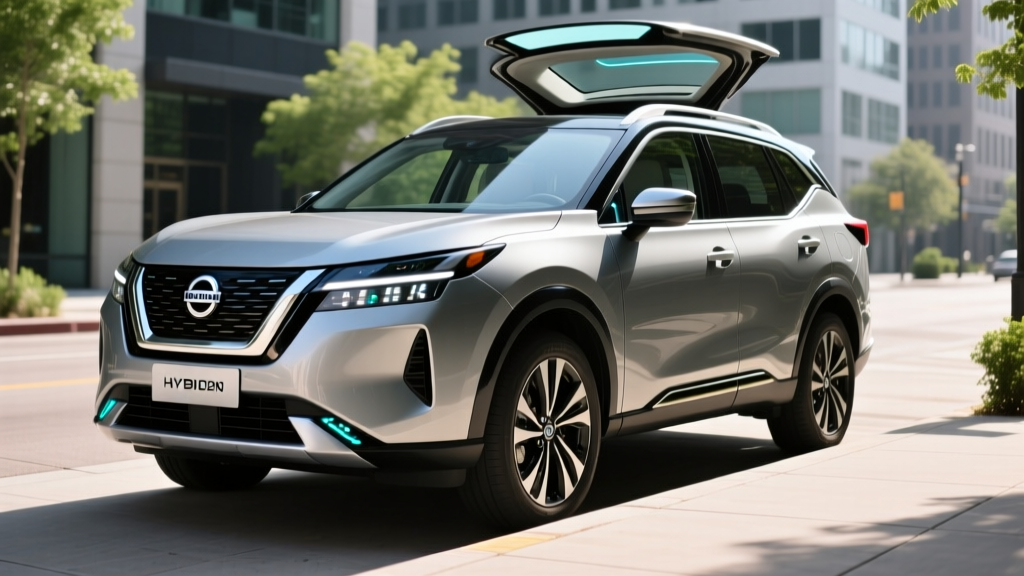
Shoppers searching for a Nissan hybrid SUV in 2026 will find a brand in transition. Unlike Toyota and Honda, which have electrified nearly every crossover in their lineup, Nissan has pulled back from conventional hybrid (HEV) offerings in the United States and is instead leaning into pure electric vehicles like the Ariya and Leaf. That makes the used and certified pre-owned market — along with potential future PHEV models — the primary path for buyers who want Nissan utility with hybrid efficiency.
This guide breaks down exactly what Nissan offers (and doesn't offer) in the hybrid SUV space for 2026, covers real-world MPG data, battery longevity, tax credit eligibility, and helps you decide whether a Nissan hybrid, a competitor, or a full EV is the right move.
Does Nissan Make a Hybrid SUV in 2026?
For the 2026 model year, Nissan does not sell a new conventional hybrid (HEV) or plug-in hybrid (PHEV) SUV in the United States. The Rogue Hybrid, which used a 2.5-liter engine paired with a small electric motor and a compact lithium-ion battery, was discontinued after the 2019 model year. Nissan's current U.S. electrified strategy focuses on the Ariya all-electric SUV and the Leaf electric hatchback.
However, the used and certified pre-owned (CPO) market still has Rogue Hybrid inventory, and Nissan has signaled interest in expanding its electrified lineup globally. Let's examine what the Rogue Hybrid delivers, what to expect from the used market, and how it stacks up.
HEV vs. PHEV: What's the Difference?
Conventional Hybrid (HEV): Uses a small battery (typically 1-2 kWh) charged by regenerative braking and the gas engine. You never plug it in. The electric motor assists the engine to reduce fuel consumption. Example: Toyota RAV4 Hybrid.
Plug-in Hybrid (PHEV): Carries a larger battery (typically 12-20 kWh) that you plug in to charge. It offers 20-40 miles of electric-only driving before the gas engine takes over. Example: Toyota RAV4 Prime.
Nissan's position: The Rogue Hybrid was an HEV — no plug required. Nissan currently has no PHEV SUV in the U.S. market.
Nissan Rogue Hybrid: MPG, Powertrain & Specs
The most recent Nissan Rogue Hybrid (2017-2019 model years) paired a 2.5-liter four-cylinder engine with an electric motor integrated into the Xtronic CVT transmission. Here are the exact figures from the EPA and Nissan's specifications:
| Specification | Value |
|---|---|
| Powertrain | 2.5L 4-cylinder + electric motor (HEV) |
| Combined Horsepower | 176 hp (engine: 129 hp / motor: 40 hp) |
| Transmission | Xtronic CVT |
| Drivetrain | FWD standard; AWD available |
| Battery Type | Lithium-ion, ~0.9 kWh (under cargo floor) |
| EPA MPG (FWD) | 33 city / 35 highway / 34 combined |
| EPA MPG (AWD) | 31 city / 33 highway / 32 combined |
| Fuel Tank | 14.5 gallons |
| Total Range (FWD) | ~493 miles |
| Cargo Volume | 61.4 cu ft (rear seats folded) |
| Towing Capacity | Not rated for towing |
How Many MPG Does the Nissan Rogue Hybrid Get?
The EPA rates the FWD Rogue Hybrid at 34 MPG combined (33 city / 35 highway). The AWD version drops slightly to 32 MPG combined (31 city / 33 highway). Source: fueleconomy.gov.
Real-World MPG vs. EPA Estimates
Hybrids typically exceed their EPA city ratings in stop-and-go traffic because regenerative braking recovers energy that gas cars waste as heat. Owner-reported data on Fuelly shows real-world averages for the Rogue Hybrid clustering around 30-33 MPG combined, with some drivers reporting up to 36 MPG in predominantly urban driving.
Highway-heavy commutes tend to land closer to the EPA highway number or slightly below, since the small battery provides less assistance at sustained speeds. In cold weather (below 35°F), expect a 3-5 MPG reduction as the engine runs more frequently to provide cabin heat and maintain battery temperature.
Battery Warranty, Longevity & Replacement Cost
Nissan Rogue Hybrid Battery Coverage
Original warranty: 8 years / 100,000 miles (hybrid battery and hybrid system components), per Nissan's standard hybrid warranty at the time of sale.
2026 status: For a 2019 model, the original hybrid battery warranty has expired (8 years from in-service date). For a 2017 model, warranty expired in 2025. CPO purchases may carry limited remaining powertrain coverage.
Expected lifespan: Nissan hybrid batteries in the Rogue Hybrid are lithium-ion packs under 1 kWh. Based on industry data and owner reports, these batteries typically last 150,000-200,000 miles before significant capacity loss affects fuel economy. Degradation is gradual — you won't experience a sudden failure but rather a slow MPG decline.
Is the Nissan Hybrid Reliable and What Does Battery Replacement Cost?
The Rogue Hybrid carries average reliability ratings. Consumer Reports and J.D. Power gave the 2018-2019 model years average to slightly-below-average scores, with complaints centering on the CVT transmission rather than the hybrid battery itself. Nissan's hybrid system is simpler and less proven than Toyota's Hybrid Synergy Drive, which has decades of fleet data behind it.
Battery replacement cost: If the hybrid battery fails out of warranty, expect to pay between $2,000 and $4,000 for a replacement pack plus labor. Refurbished and aftermarket options may reduce this to $1,500-$2,500. Because the pack is small (~0.9 kWh), it's far less expensive to replace than a full EV traction battery.
| Vehicle | City MPG | Highway MPG | Combined MPG | Type |
|---|---|---|---|---|
| Nissan Rogue Hybrid (FWD, 2019) | 33 | 35 | 34 | HEV |
| Toyota RAV4 Hybrid (AWD, 2026) | 41 | 38 | 40 | HEV |
| Honda CR-V Hybrid (FWD, 2026) | 43 | 36 | 40 | HEV |
| Ford Escape Hybrid (FWD, 2025) | 42 | 36 | 39 | HEV |
| Toyota RAV4 Prime (AWD, 2026) | 94 MPGe | 84 MPGe | 94 MPGe (42 mi EV) | PHEV |
The Rogue Hybrid trails current-generation competitors by 5-8 MPG combined. Toyota and Honda have introduced newer hybrid architectures with larger motor contributions and more efficient battery management, widening the gap since Nissan discontinued its hybrid SUV.
Pricing & Tax Credit Eligibility
Since Nissan does not sell a new hybrid SUV in 2026, pricing applies to the used and CPO market:
- Used 2017-2019 Rogue Hybrid: $14,000-$22,000 depending on mileage, condition, and trim (S, SL, SV).
- Certified Pre-Owned: Adds a limited warranty extension; typically $1,000-$2,000 above comparable used pricing.
Does the Nissan Rogue Hybrid Qualify for Any Tax Credit?
Federal tax credit (§30D): No. The IRS §30D clean vehicle credit applies only to new plug-in electric vehicles (BEVs and PHEVs) with sufficient battery capacity. The Rogue Hybrid is a conventional HEV with no plug, making it ineligible for any federal EV tax credit.
Used clean vehicle credit (§25E): Also no. The $4,000 used-EV credit requires the vehicle to be a plug-in electric vehicle or fuel cell vehicle. Conventional hybrids are excluded.
State incentives: A handful of states have offered rebates for conventional hybrids in the past, but most have shifted incentives exclusively to plug-in vehicles. Check your state's energy office or Alternative Fuels Data Center for current local programs.
Who Should Buy a Nissan Hybrid SUV — and Who Shouldn't
Pros
- No plug-in charging required — refuel at any gas station
- AWD availability for snow and rain climates
- Lower used-market pricing than comparable Toyota/Honda hybrids
- Simple hybrid system with a small, affordable battery to replace
- Familiar Nissan dealer service network
Cons
- Discontinued — no new models available, only used/CPO
- 5-8 MPG behind current Toyota and Honda hybrid SUVs
- No PHEV option for electric-only commuting
- No federal or state tax credit eligibility
- Original hybrid battery warranty expired on all model years
- CVT transmission complaints in some model years
Hybrid vs. PHEV vs. Full EV: Which Fits You?
If you're cross-shopping a Nissan hybrid SUV, you're likely weighing three paths. Here's a practical decision framework:
Choose a conventional hybrid (HEV) if:
- You cannot charge at home (no garage, apartment living, no outlet access)
- You take frequent road trips exceeding 400 miles and don't want to plan charging stops
- You want a lower purchase price and simpler ownership experience
- You live in a region with extreme cold where EV range loss is a concern
Choose a plug-in hybrid (PHEV) if:
- You can charge at home (Level 1 120V outlet is sufficient for overnight PHEV charging)
- Your daily commute is under 30-40 miles round trip (covers most PHEV electric-only range)
- You want to drive mostly on electricity but still need gas for longer trips
- You want to qualify for the §30D federal tax credit (up to $7,500, subject to MSRP caps, income limits, and battery sourcing rules — verify on IRS.gov)
Choose a full electric vehicle (BEV) if:
- You can install a Level 2 home charger (240V, typically $500-$2,000 including equipment and electrician)
- Your daily driving is under 200 miles and you have access to DC fast charging for road trips
- You want the lowest per-mile fuel cost ($0.04-$0.06/mile on electricity vs. $0.12-$0.16/mile on gas for a hybrid)
- You want maximum tax credit eligibility and lowest long-term maintenance costs (no oil changes, fewer moving parts)
For Nissan-loyal buyers in 2026, the Nissan Ariya (up to 304 miles EPA range, starting around $39,590) is the brand's electrified SUV option. If hybrid is a hard requirement, you'll need to look at Toyota (RAV4 Hybrid), Honda (CR-V Hybrid), or Ford (Escape Hybrid) for a new vehicle — or accept the used-market trade-offs of a Rogue Hybrid.
Frequently Asked Questions
Does Nissan make a hybrid SUV in 2026?
No. Nissan discontinued the Rogue Hybrid after the 2019 model year. For 2026, Nissan offers the Ariya all-electric SUV but no hybrid or plug-in hybrid SUV in the U.S. market.
How many MPG does the Nissan Rogue Hybrid get?
The EPA rates the FWD Rogue Hybrid at 33 city / 35 highway / 34 combined MPG. The AWD version is rated at 31 city / 33 highway / 32 combined. Real-world owner averages cluster around 30-33 MPG combined.
How far can the Nissan Rogue Hybrid go on electric only?
The Rogue Hybrid is a conventional HEV, not a PHEV. It cannot drive on electric power alone for any meaningful distance. The small battery assists the gas engine during acceleration and low-speed operation but does not provide standalone EV range.
Is the Nissan hybrid battery expensive to replace?
Replacement costs range from $1,500 (refurbished) to $4,000 (new OEM + labor). The battery pack is small (~0.9 kWh), making it far cheaper to replace than an EV traction battery. Most packs last 150,000-200,000 miles.
Does the Nissan Rogue Hybrid qualify for a tax credit?
No. Federal clean vehicle credits (§30D for new, §25E for used) require a plug-in electric vehicle. Conventional hybrids like the Rogue Hybrid are not eligible for any federal EV tax credit.
Should I buy a used Nissan Rogue Hybrid or a new Toyota RAV4 Hybrid?
If budget is the priority, a used Rogue Hybrid at $14,000-$22,000 saves significant money upfront. However, a new 2026 RAV4 Hybrid delivers 40 MPG combined (6 MPG better), comes with a full 8-year/100,000-mile hybrid warranty, and offers modern safety tech. Over 5 years and 75,000 miles, the RAV4 Hybrid saves roughly $400-$600 in fuel alone — and far more in avoided repair risk.
Will Nissan release a new hybrid or PHEV SUV?
Nissan has announced plans to introduce more electrified vehicles globally, including e-Power series-hybrid technology (where the gas engine generates electricity but never directly drives the wheels). As of early 2026, no PHEV or HEV SUV has been confirmed for the U.S. market. Any future model would be announced through Nissan's official channels.