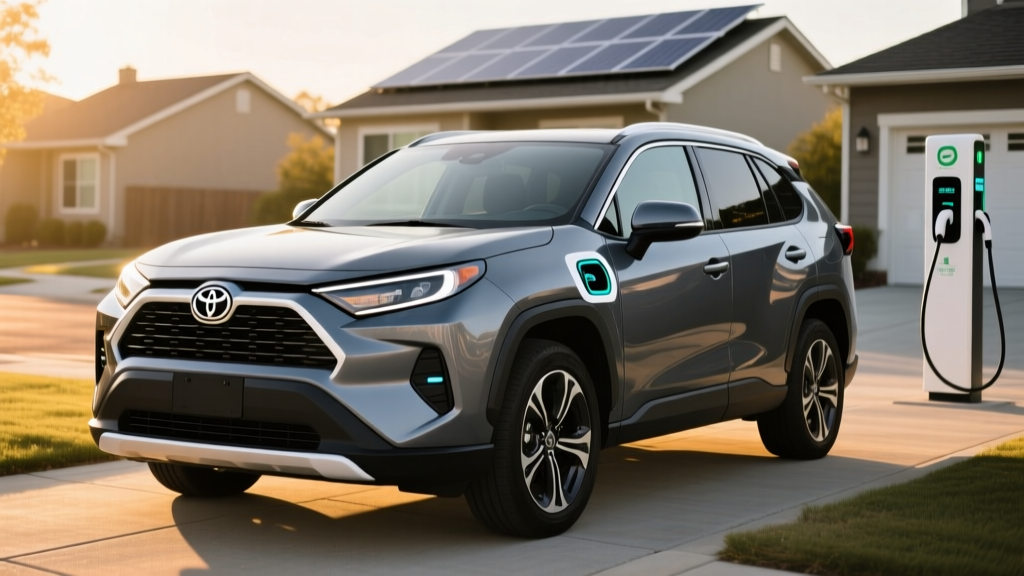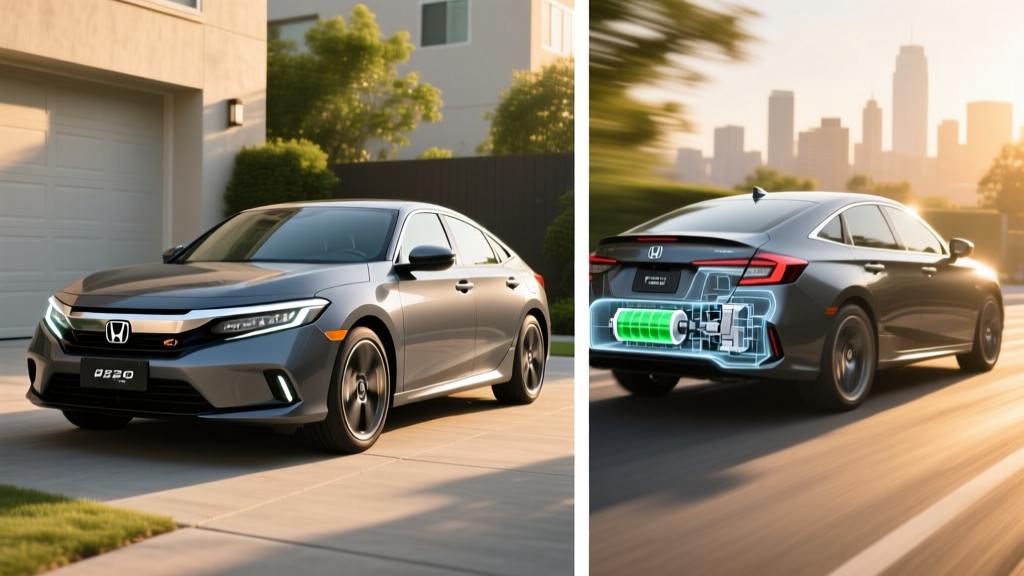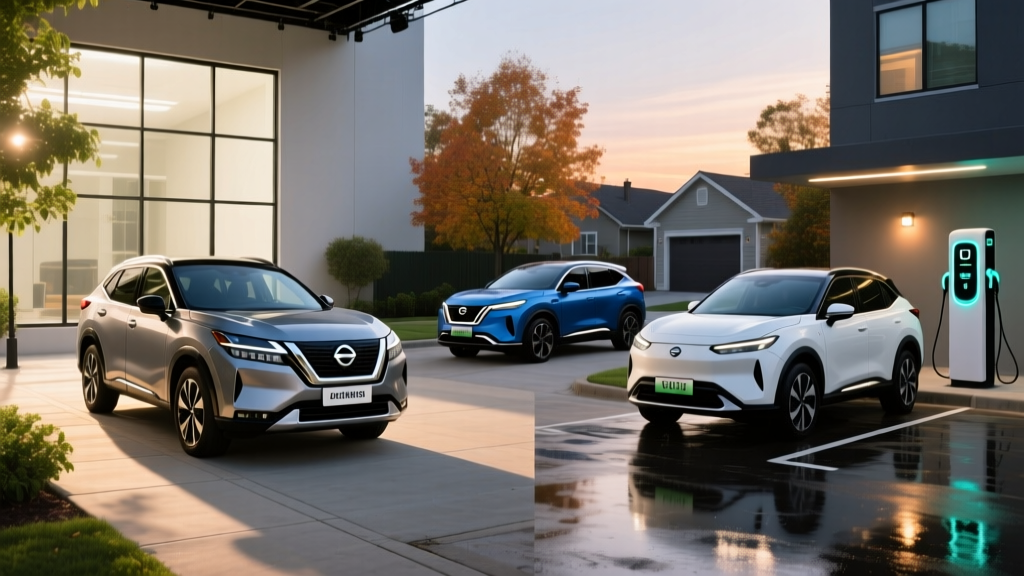
If you've been following Nissan's electrification strategy, you already know the automaker has charted a different path than most competitors. Rather than rushing headlong into battery-electric vehicles, Nissan has doubled down on its e-POWER series-hybrid system while selectively introducing plug-in hybrid options. For the 2026 model year, the Nissan hybrid lineup centers on the Rogue (known as the X-Trail in global markets) and a handful of regional offerings. Here's every detail buyers need — from real-world MPG to battery replacement costs.
Nissan's Hybrid Lineup for 2026: What's Available
Nissan's North American hybrid offerings for 2026 are more focused than sprawling. The brand has made deliberate choices about where electrification fits, and the lineup reflects that pragmatism:
- 2026 Nissan Rogue e-POWER (HEV): The core hybrid offering — a series-hybrid compact SUV that requires no plug-in charging and delivers strong city fuel economy.
- 2026 Nissan Rogue Plug-In Hybrid (PHEV): Available in select trims and markets, offering an electric-only driving mode for short commutes before the gasoline engine engages.
- 2026 Nissan X-Trail e-POWER (Global): The Rogue's international sibling, offered with e-POWER in Europe, Japan, and Australia. US availability remains limited to the Rogue badge.
Nissan discontinued the Altima Hybrid years ago and has not announced a replacement hybrid sedan for the US market. The Frontier and Pathfinder remain gasoline-only for 2026. If you're shopping Nissan hybrids, the Rogue is where the action is.
HEV vs. PHEV: Understanding Nissan's Two Hybrid Paths
Before diving into specs, it's critical to understand the difference between Nissan's conventional hybrid (HEV) and plug-in hybrid (PHEV) offerings — because the ownership experience is fundamentally different.
e-POWER (HEV) — No Plug Required
- Gasoline engine generates electricity only — never drives the wheels
- Small battery (~2.1 kWh) recharges through regenerative braking and the engine
- You refuel at gas stations only — no charging cables, no outlets needed
- Best for: Drivers without home charging access who want EV-like smoothness
Plug-In Hybrid (PHEV) — Plug In for Electric Miles
- Larger battery (~18-20 kWh) provides 25-35 miles of electric-only range
- Charge at home (Level 2) or public chargers to maximize electric driving
- Gasoline engine takes over when battery depletes — total range exceeds 400 miles
- Best for: Commuters with home charging who want electric daily driving plus gas flexibility
The key distinction: conventional hybrids (HEVs) do not need to be plugged in. The e-POWER system charges its own small battery through the engine and regenerative braking. The PHEV, by contrast, rewards owners who plug in regularly — if you never charge a PHEV, you're carrying dead battery weight and getting worse fuel economy than the HEV.
Fuel Economy and Electric Range: The Numbers That Matter
Here's the EPA fuel economy breakdown for Nissan's 2026 hybrid models, based on fueleconomy.gov data and manufacturer specifications:
| Model | City MPG | Highway MPG | Combined MPG | Electric-Only Range | Total Range |
|---|---|---|---|---|---|
| Rogue e-POWER (HEV) | 37 | 34 | 36 | N/A | ~470 mi |
| Rogue PHEV (AWD) | — | — | 33 (gas) / 84 MPGe (elec+gas) | ~30 mi | ~440 mi |
Real-World MPG vs. EPA Sticker
As with most series-hybrid systems, the Rogue e-POWER's real-world fuel economy depends heavily on your driving profile:
- City driving (stop-and-go): Expect to meet or exceed the EPA city estimate of 37 MPG. Series hybrids thrive in urban traffic because regenerative braking recaptures energy at every stop, and the engine runs only when needed to recharge the small battery.
- Highway driving (65-80 mph sustained): Expect 30-33 MPG — below the EPA highway estimate. At sustained high speeds, the engine runs more frequently as a generator, and the aerodynamic penalty of the Rogue's SUV profile compounds. On a 300-mile highway trip, plan for roughly 31 MPG average.
- Cold weather (below 30°F): Expect a 10-15% reduction in fuel economy. The engine runs more often to provide cabin heat and maintain battery temperature. City MPG may drop to 32-34 in deep winter.
- For the PHEV: If you charge nightly and your commute is under 30 miles round-trip, you may use gasoline only on weekend road trips. If you never plug in, expect roughly 30-33 MPG combined — worse than the HEV due to the PHEV's heavier battery pack.
Powertrain Specs: How e-POWER Actually Works
Nissan's e-POWER system is fundamentally different from the parallel-hybrid setups used by Toyota and Honda. Understanding the architecture matters for setting expectations about driving feel and efficiency.
| Specification | e-POWER (HEV) | PHEV (AWD) |
|---|---|---|
| Engine | 1.5L turbo 3-cylinder (generator only) | 1.5L turbo 3-cylinder + electric motors |
| Combined System Horsepower | 201 hp | ~210 hp (est.) |
| Electric Motor Output | 197 hp (front) / dual-motor e-4ORCE available | Front + rear motors (AWD standard) |
| Battery Capacity | ~2.1 kWh (lithium-ion) | ~19.7 kWh (lithium-ion) |
| Drivetrain | FWD or e-4ORCE AWD | AWD standard |
| 0-60 mph | ~7.8 sec | ~7.5 sec (est.) |
| Transmission | Single-speed (no traditional transmission) | Single-speed (no traditional transmission) |
Why the Engine Never Drives the Wheels
In a conventional parallel hybrid (like the Toyota RAV4 Hybrid), both the gasoline engine and the electric motor can physically turn the wheels. In Nissan's e-POWER system, the 1.5L turbocharged three-cylinder engine is connected only to a generator. It produces electricity that either charges the battery or feeds the electric motor that drives the wheels. This means:
- Acceleration feels like an EV — instant electric torque with no gear shifts, because there's no traditional transmission.
- The engine can run at its most efficient RPM regardless of vehicle speed, since it's decoupled from the drivetrain.
- Engine noise can feel disconnected from acceleration — the engine may rev up to recharge the battery even when you're stopped at a light. Some drivers find this unintuitive initially.
The variable-compression turbo three-cylinder is the same engine family Nissan uses in the gas-only Rogue, but tuned specifically for generator duty. It's a clever piece of engineering, though it's not without the NVH (noise, vibration, harshness) quirks inherent to three-cylinder designs.
PHEV Charging: What Rogue PHEV Owners Need to Know
If you're considering the Rogue PHEV, charging logistics will define your ownership experience. Here's the practical breakdown:
| Charging Level | Power (kW) | Full Charge Time (0-100%) | Connector |
|---|---|---|---|
| Level 1 (120V household outlet) | ~1.4 kW | ~14 hours | J1772 |
| Level 2 (240V home/public) | ~6.6 kW | ~3 hours | J1772 |
| DC Fast Charging | Not supported | N/A | N/A |
A critical limitation: the Rogue PHEV does not support DC fast charging. This is common among PHEVs — most lack DC fast-charge capability because the battery is too small to justify the hardware cost. With a ~19.7 kWh battery and 6.6 kW onboard charger, a Level 2 home charger will replenish the battery in roughly three hours, which is perfectly adequate for overnight charging but means you can't "top up" quickly at a public fast-charging station.
For daily commuting under 30 miles, a standard 120V outlet (Level 1) can fully recharge the PHEV battery overnight in about 14 hours — tight but workable if you plug in immediately when you get home. A 240V Level 2 home installation (typically $500-$1,500 including a basic charger and electrical work) is strongly recommended for PHEV ownership.
Pricing, Trims, and Tax Credit Eligibility
Here's where Nissan's hybrid lineup gets complicated for cost-conscious buyers. Pricing and incentive eligibility differ sharply between the HEV and PHEV variants.
| Model / Trim | Starting MSRP | Federal Tax Credit |
|---|---|---|
| Rogue e-POWER S (FWD) | ~$32,500 | None (HEV) |
| Rogue e-POWER SV (AWD) | ~$36,000 | None (HEV) |
| Rogue e-POWER SL (AWD) | ~$40,500 | None (HEV) |
| Rogue PHEV SV | ~$40,000 | Up to $3,750* |
| Rogue PHEV SL | ~$44,500 | Up to $3,750* |
Federal Tax Credit Reality Check
The IRS §30D clean vehicle credit applies only to plug-in vehicles (BEVs and PHEVs) that meet strict battery sourcing and critical mineral requirements. Here's the situation for Nissan hybrids:
- Rogue e-POWER (HEV): Does NOT qualify for any federal tax credit. Conventional hybrids are ineligible for §30D regardless of fuel economy.
- Rogue PHEV: May qualify for a partial credit (up to $3,750) depending on battery component sourcing. The full $7,500 requires meeting both the critical minerals requirement ($3,750) and the battery components requirement ($3,750). Nissan's PHEV battery sourcing has historically met one but not both thresholds, resulting in a partial credit. Eligibility is subject to change as supply chains shift — always verify current status at fueleconomy.gov before purchasing.
- Buyer AGI must not exceed $150,000 (single) / $300,000 (joint)
- Vehicle MSRP must be under $80,000 (SUVs/vans/pickups) or $55,000 (sedans)
- Battery components must meet North American manufacturing thresholds
- Critical minerals must meet US/free-trade-partner sourcing thresholds
- Credit can be transferred to the dealer as a point-of-sale discount
- Always confirm with your tax professional — rules change annually
Several states offer additional incentives for PHEVs (California, Colorado, and others), but these vary by jurisdiction and income level. Check your state's energy office or DMV for current programs.
Battery Warranty, Reliability, and Replacement Costs
Hybrid battery longevity is consistently the top concern among first-time hybrid buyers. Here's what Nissan provides and what real-world data shows:
Battery & Powertrain Warranty
- Hybrid/EV Battery: 8 years / 100,000 miles (10 years / 100,000 miles in CARB states including CA, NY, MA, and others)
- Powertrain: 5 years / 60,000 miles
- Basic/Bumper-to-Bumper: 3 years / 36,000 miles
- Capacity Retention Threshold: Nissan warrants the hybrid battery against falling below approximately 60-70% of original capacity during the warranty period (exact threshold varies by model — confirm in your purchase documents)
Reliability Track Record
Nissan's e-POWER system has been on sale in Japan since 2016 (Note, Serena) and has accumulated millions of vehicle-miles globally. The series-hybrid architecture is mechanically simpler than parallel hybrids in one key respect: there's no traditional transmission, no clutch packs, and no complex planetary gearsets blending engine and motor power. The electric motor drives the wheels directly. This simplicity is a reliability advantage.
However, Nissan's broader brand reliability has been mixed in recent years, largely due to CVT transmission issues in earlier gasoline models — which are irrelevant to e-POWER since there's no CVT. The 1.5L VC-Turbo three-cylinder is a newer engine, and long-term data on its durability as a generator unit is still accumulating.
Battery Replacement Cost
If the hybrid battery fails outside warranty coverage:
- e-POWER (HEV) ~2.1 kWh battery: Estimated $1,500-$3,000 for parts and labor. The small battery pack is relatively inexpensive to replace compared to full EV or PHEV batteries.
- PHEV ~19.7 kWh battery: Estimated $6,000-$9,000 for parts and labor. This is a significantly larger pack, and replacement costs are proportionally higher.
In practice, hybrid battery failures within the first 150,000 miles are uncommon. Most degradation is gradual — expect a PHEV's electric-only range to decrease by roughly 10-15% over 10 years and 120,000 miles. The e-POWER's tiny battery cycles frequently but at shallow depth, which is favorable for longevity.
Who Should Buy a Nissan Hybrid — and Who Shouldn't
✅ Choose the Rogue e-POWER (HEV) If:
- You want better fuel economy without changing your refueling habits
- You don't have access to home or workplace charging
- You do mostly city and suburban driving (where the series-hybrid excels)
- You want EV-like acceleration smoothness without range anxiety
- You plan to keep the vehicle 8-10 years (the warranty window)
✅ Choose the Rogue PHEV If:
- You have reliable Level 2 home charging (or can install it)
- Your daily commute is under 30 miles round-trip
- You want electric daily driving but need gas flexibility for road trips
- You want to reduce (not eliminate) gasoline consumption
- A partial federal tax credit helps close the price gap with the HEV
❌ Skip the Nissan Hybrid If:
- You want a full EV experience — consider the Nissan Ariya or Tesla Model Y instead
- You primarily drive long highway routes — the fuel economy advantage narrows significantly
- You need three rows of seating — the Rogue is a compact SUV
- You want the maximum possible federal tax credit ($7,500) — that requires a full BEV with compliant sourcing
⚠️ Consider a Competitor If:
- Toyota RAV4 Hybrid: Proven parallel-hybrid with 41 MPG combined, strong resale, and a wider dealer network. Less EV-like driving feel, but exceptional real-world efficiency.
- Toyota RAV4 Prime (PHEV): 42 miles of electric range — significantly more than Nissan's ~30 — and DC fast-charge capable. The segment benchmark, if you can find one at MSRP.
- Honda CR-V Hybrid: 40 MPG combined with a refined two-motor system. Strong competition for the e-POWER.
Hybrid vs. PHEV vs. Full EV: Which Nissan Is Right for You?
If you're cross-shopping within Nissan's own lineup — or weighing a Nissan hybrid against a full EV — here's a practical decision framework based on your driving patterns and charging access:
| Your Situation | Best Choice | Why |
|---|---|---|
| No home charging, mostly city driving | Rogue e-POWER (HEV) | No plug needed; excels in stop-and-go |
| Home charging available, commute <30 mi | Rogue PHEV | Electric commute + gas for longer trips |
| Home charging, commute <80 mi, no road trips | Nissan Ariya (BEV) | 300+ mi range; $7,500 credit eligible; lowest cost per mile |
| Frequent long road trips (>300 mi) | Rogue e-POWER or gas Rogue | Quick refueling; no charging-infrastructure dependency |
| Want maximum tax incentives | Full BEV (Ariya or competitor) | Up to $7,500 federal + state incentives |
The honest calculus: if you have reliable home charging and your daily driving is predictable, a full BEV like the Nissan Ariya will deliver lower per-mile energy costs and access to the full $7,500 federal credit. The hybrid and PHEV options make sense specifically when charging access is limited or your driving patterns are unpredictable.
Frequently Asked Questions
How many MPG does the 2026 Nissan Rogue e-POWER get?
The EPA rates the 2026 Rogue e-POWER at 37 MPG city, 34 MPG highway, and 36 MPG combined. In real-world city driving, many owners report meeting or slightly exceeding the city estimate thanks to the series-hybrid's strong regenerative braking. Highway-only driving at 75+ mph will yield closer to 30-32 MPG. Cold weather reduces efficiency by roughly 10-15%.
How far can the Rogue PHEV go on electric only?
The 2026 Rogue PHEV offers approximately 30 miles of EPA-rated electric-only range on a full charge. This is sufficient for most daily commutes but trails the Toyota RAV4 Prime's 42 miles. Range decreases with cold weather, high speeds, and climate-control use — expect roughly 22-26 miles in winter conditions.
Does the Nissan Rogue hybrid qualify for any tax credit?
The e-POWER (HEV) version does not qualify for any federal tax credit — conventional hybrids are ineligible under §30D. The Rogue PHEV may qualify for a partial federal credit of up to $3,750, depending on battery sourcing compliance. Eligibility changes as supply chains evolve, so verify current status at fueleconomy.gov and consult a tax professional before purchasing.
Is the Nissan e-POWER hybrid reliable? What about battery replacement?
Nissan's e-POWER system has been in production since 2016 in global markets and is mechanically simpler than parallel hybrids (no traditional transmission). The hybrid battery is covered by an 8-year/100,000-mile warranty (10 years in CARB states). If the small ~2.1 kWh e-POWER battery fails out of warranty, replacement is estimated at $1,500-$3,000 — significantly less than a full EV battery. The PHEV's larger ~19.7 kWh battery would cost roughly $6,000-$9,000 to replace.
Do I need to plug in the Nissan Rogue e-POWER?
No. The e-POWER is a conventional hybrid (HEV) that charges its own small battery through the gasoline engine and regenerative braking. You refuel it at gas stations just like any other car. Only the PHEV variant requires (or benefits from) plug-in charging.
How does Nissan's e-POWER compare to Toyota's hybrid system?
Toyota uses a parallel-hybrid system (Hybrid Synergy Drive) where both the engine and electric motor can drive the wheels through a planetary gearset. Nissan's e-POWER is a series-hybrid where only the electric motor drives the wheels. The result: Nissan delivers smoother, more EV-like acceleration, while Toyota's system tends to deliver slightly better highway fuel economy because the engine can mechanically drive the wheels at cruising speeds. Both are proven and reliable — the choice comes down to whether you prioritize driving feel (Nissan) or maximum highway efficiency (Toyota).
Can the Rogue PHEV use DC fast chargers?
No. Like most PHEVs, the Rogue PHEV supports only Level 1 (120V) and Level 2 (240V) AC charging. DC fast charging is not available. A full charge on a Level 2 home charger takes approximately 3 hours.