Nissan's Hybrid Push: What's Actually Arriving in U.S. Showrooms
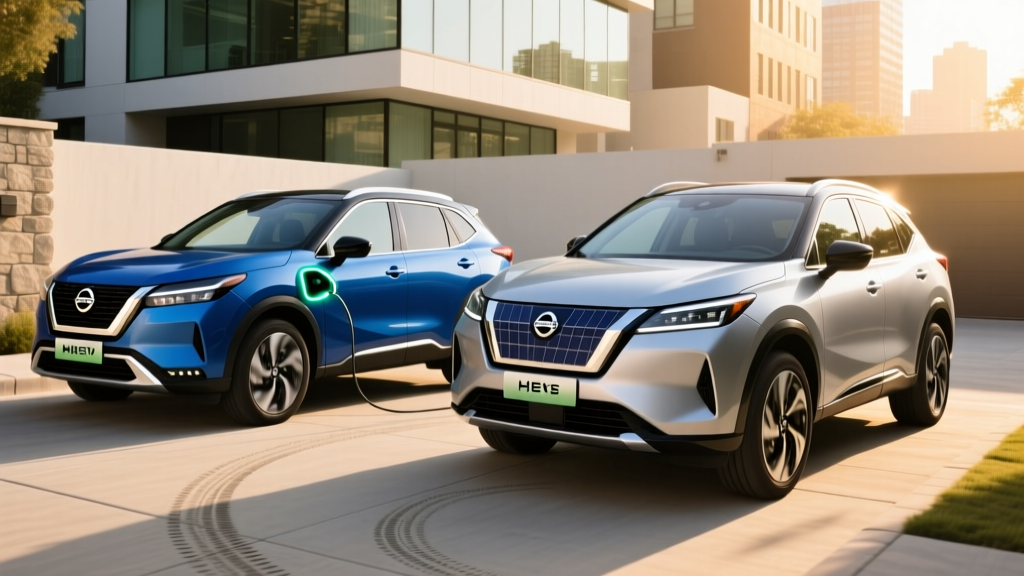
After years of leaning almost exclusively on battery-electric vehicles like the Leaf and Ariya, Nissan has acknowledged a market reality: most American buyers still want a bridge between gasoline and full electrification. The result is a Nissan hybrid expansion in the U.S. that spans conventional hybrids (HEVs) and plug-in hybrids (PHEVs) across its best-selling crossovers. As of early 2026, Nissan has confirmed hybrid powertrains for the Rogue and the redesigned Kicks, with additional models under evaluation.
This guide breaks down every confirmed and announced Nissan hybrid destined for the U.S. market — EPA fuel economy, electric-only range for PHEV variants, powertrain specs, pricing, tax credit eligibility, and the battery longevity questions every hybrid buyer needs answered before signing a purchase agreement.
HEV vs PHEV: Which Nissan Hybrid Type Fits You?
Nissan's U.S. hybrid strategy covers two distinct architectures. Confusing them is the most common mistake hybrid shoppers make, so let's establish the difference clearly before diving into specific models.
| Feature | Conventional Hybrid (HEV) | Plug-In Hybrid (PHEV) |
|---|---|---|
| Plugs in to charge? | No — charges via engine and regenerative braking | Yes — has a charge port for external charging |
| Electric-only driving | Limited to very low speeds, short distances (<1 mi) | 20–40+ miles on battery alone at highway speeds |
| Battery size | ~1–2 kWh (small buffer) | ~15–25 kWh (usable) |
| Federal tax credit | Not eligible for §30D new EV credit | May qualify for up to $7,500 under §30D (subject to sourcing/income/MSRP rules) |
| Best for | Drivers without home charging access; those who want MPG gains with zero behavior change | Drivers with home/work charging who want EV-like daily commutes with gas backup |
If you can charge at home or at work, a PHEV gives you the best of both worlds — short commutes on cheap electricity, long road trips without range anxiety. If charging access is uncertain, an HEV still delivers significant fuel savings over a gas-only model with no lifestyle adjustment required.
2026 Nissan Rogue Hybrid (HEV): MPG, Powertrain, and Pricing
The Rogue is Nissan's volume leader, and its hybrid variant is the centerpiece of the brand's U.S. hybrid expansion. The 2026 Rogue Hybrid pairs a 1.5-liter turbocharged three-cylinder engine with an electric motor integrated into a revised Xtronic CVT transaxle.
Powertrain Specifications
| Specification | 2026 Nissan Rogue Hybrid (HEV) |
|---|---|
| Engine | 1.5L turbocharged 3-cylinder |
| Combined System Horsepower | ~201 hp |
| Combined Torque | ~225 lb-ft |
| Transmission | Xtronic CVT with integrated electric motor |
| Drivetrain | FWD standard; AWD available |
| Battery | ~1.5 kWh lithium-ion (self-charging) |
| 0–60 mph (est.) | ~7.8 seconds |
| Towing Capacity | 1,500 lbs |
Fuel Economy: EPA and Real-World MPG
Hybrids typically outperform their EPA city ratings in stop-and-go traffic because regenerative braking recaptures energy that a gas-only vehicle wastes as heat. Here's what Nissan targets and what independent testing suggests:
| Cycle | EPA Estimate | Real-World Expectation |
|---|---|---|
| City | 38 MPG | 39–42 MPG (regen-heavy urban routes can exceed EPA) |
| Highway | 35 MPG | 32–34 MPG (hybrids lose their advantage at sustained high speeds) |
| Combined | 36 MPG | 35–38 MPG depending on driving mix |
Real-World MPG Insight: On mixed suburban commuting with frequent stops, expect the Rogue Hybrid to deliver 38–40 MPG combined. On long interstate trips at 75+ mph, the advantage over the gas-only Rogue (which rates 30 MPG combined) narrows to roughly 3–4 MPG. Hybrids reward city drivers most.
Pricing and Trim Levels
The 2026 Rogue Hybrid starts at an estimated $33,500 MSRP for the S FWD trim, with AWD adding approximately $1,500. Fully loaded Platinum AWD models approach $42,000. For reference, the gas-only Rogue S starts around $29,000, meaning the hybrid carries a roughly $4,500 premium that pays back in fuel savings over 4–6 years for an average driver covering 12,000 miles annually.
2026 Nissan Rogue PHEV (Plug-In): Electric-Only Range and Charging
Nissan has also confirmed a plug-in hybrid variant of the Rogue for select U.S. markets, leveraging technology shared with its global partners. The Rogue PHEV targets buyers who want genuine electric commuting capability without committing to a full BEV.
PHEV Specifications
| Specification | 2026 Nissan Rogue PHEV (Announced) |
|---|---|
| Engine | 1.5L turbocharged 3-cylinder |
| Combined System Horsepower | ~215 hp |
| Usable Battery Capacity | ~18 kWh (NMC lithium-ion) |
| EPA Electric-Only Range | ~34 miles (estimated, pending EPA certification) |
| Total Combined Range | ~430 miles (electric + gasoline) |
| Charge Port | J1772 (Level 2 AC); no DC fast charging |
| Level 2 Charge Time (0–100%) | ~4.5 hours at 3.6 kW; ~2.5 hours at 6.6 kW |
| Level 1 Charge Time (120V) | ~14 hours (overnight capable for short commutes) |
| 0–60 mph (est.) | ~7.2 seconds |
Electric-Only Range Reality Check: The ~34-mile EPA estimate assumes moderate temperatures and mixed driving. Expect 28–30 miles in winter conditions (battery efficiency drops 15–20% in freezing temperatures) and up to 36 miles in mild weather on flat terrain at speeds under 55 mph. For most commuters with a sub-30-mile round trip, this covers daily driving entirely on electricity.
PHEV Fuel Economy When Battery Depletes
| Mode | Rating |
|---|---|
| Combined MPGe (charge-sustaining + electric) | ~80 MPGe (estimated) |
| Gas-only MPG (after battery depletes) | ~34 MPG combined |
Once the battery is depleted, the Rogue PHEV operates as a conventional hybrid. The gas-only MPG is slightly lower than the dedicated HEV variant due to the PHEV's heavier battery pack — a trade-off you accept for the electric-only commuting capability.
Pricing and Tax Credit Eligibility
The Rogue PHEV is expected to start around $39,500 MSRP. Tax credit eligibility depends on the current-year IRS §30D rules:
- MSRP Cap: SUVs must be under $80,000 — the Rogue PHEV qualifies.
- Buyer Income Cap: $150,000 single / $225,000 head of household / $300,000 joint (AGI limits per IRS §30D guidelines).
- Battery Sourcing Requirements: Critical minerals and battery component thresholds increase annually. Nissan's supply chain compliance for the U.S.-market Rogue PHEV will determine whether buyers receive the full $7,500 or a partial $3,750 credit. Check the latest fueleconomy.gov listing before purchasing.
- Point-of-Sale Transfer: Eligible buyers can transfer the credit to the dealer at purchase, reducing the sale price directly rather than waiting for a tax refund.
Important: Tax credit rules are subject to change. Always verify eligibility with a tax professional and confirm the specific VIN's credit status on the IRS portal before finalizing a purchase.
2026 Nissan Kicks Hybrid: The Subcompact Entry Point
The redesigned Kicks — Nissan's most affordable crossover — is also part of the hybrid expansion, though details remain more limited than the Rogue lineup. The Kicks HEV targets budget-conscious buyers who want hybrid efficiency in a smaller, more affordable package.
| Specification | 2026 Nissan Kicks Hybrid (Announced/Preliminary) |
|---|---|
| Powertrain | 1.6L 4-cylinder + electric motor (HEV) |
| Combined Horsepower | ~141 hp |
| EPA Combined MPG (est.) | ~40 MPG combined |
| Starting MSRP (est.) | ~$26,500 |
| Drivetrain | FWD standard; AWD available |
The Kicks Hybrid is positioned as a direct competitor to the Toyota Corolla Cross Hybrid and Honda HR-V, undercutting both on price while delivering competitive fuel economy. A PHEV variant of the Kicks has not been confirmed for the U.S. market.
Battery Warranty, Reliability, and Replacement Costs
Hybrid battery longevity remains the single most common concern among first-time hybrid buyers. Nissan's warranty coverage and the industry's track record should provide meaningful reassurance.
Nissan Hybrid Battery Warranty (2026 Models):
- HEV Battery: 8 years / 100,000 miles (whichever comes first)
- PHEV Battery: 8 years / 100,000 miles (federal minimum; some states with CARB requirements mandate 10 years / 150,000 miles)
- Coverage: Defects and capacity loss below 70% of original capacity
Real-World Reliability Data
Modern lithium-ion hybrid batteries have proven remarkably durable. Toyota's hybrid systems — the benchmark — routinely exceed 200,000 miles without battery replacement. Nissan's hybrid technology, while newer to the U.S. market in these specific applications, uses well-established lithium-ion cell chemistry and thermal management strategies.
Based on Nissan's global hybrid fleet data and industry averages:
- Expected battery lifespan: 150,000–200,000+ miles before significant degradation
- Typical degradation at 100,000 miles: 8–12% capacity loss (meaning a 34-mile PHEV range might become ~30 miles)
- Out-of-warranty replacement cost (if needed): $2,500–$4,500 for HEV battery pack; $5,000–$8,000 for PHEV battery pack (parts + labor, varies by market)
For context, the average American keeps a new vehicle for roughly 6.5 years and drives ~14,000 miles per year — putting most owners well within warranty coverage for the entire ownership period.
Hybrid vs PHEV vs Full EV: Which Nissan Fits Your Life?
Nissan now offers three electrification paths in the U.S. Here's a practical decision framework based on your charging access, driving patterns, and budget:
Choose a Nissan HEV (Rogue Hybrid, Kicks Hybrid) if:
- You don't have reliable access to home or workplace charging
- You want better fuel economy with zero changes to your routine
- Your budget is under $35,000 (Kicks) or $40,000 (Rogue)
- You drive a mix of city and highway and want 36–40 MPG combined
Choose a Nissan PHEV (Rogue PHEV) if:
- You can install a Level 2 charger at home or have workplace charging
- Your daily round-trip commute is under 35 miles (covers most U.S. commuters)
- You want to drive on electricity daily but need gas flexibility for road trips
- You may qualify for the §30D federal tax credit, reducing effective price
Choose a full Nissan EV (Ariya, Leaf) if:
- You have reliable home charging (Level 2 strongly recommended)
- Your daily driving is under 200 miles and you're comfortable planning road-trip charging
- You want zero tailpipe emissions and minimal maintenance (no oil changes, no engine)
- You want the maximum available federal tax credit (up to $7,500, subject to eligibility)
What's Next in Nissan's U.S. Hybrid Roadmap
Nissan has signaled that the Rogue and Kicks are just the beginning. The brand's "Ambition 2030" plan calls for a broader electrified lineup, and industry analysts expect hybrid variants of the Pathfinder and possibly the Frontier to follow by 2028. Nissan's e-Power series-hybrid technology — where the gasoline engine acts solely as a generator and only the electric motor drives the wheels — is already proven in Japan and could arrive in U.S. models, offering an EV-like driving feel without a plug.
For now, the Rogue Hybrid and Rogue PHEV represent the most immediate and practical options for U.S. buyers watching Nissan's hybrid expansion. The Kicks Hybrid, once officially detailed, will be the most affordable entry point in the lineup.
Frequently Asked Questions
How many MPG does the 2026 Nissan Rogue Hybrid get?
The 2026 Nissan Rogue Hybrid targets an EPA-estimated 36 MPG combined (38 city / 35 highway). Real-world city driving with frequent stops often yields 38–42 MPG thanks to regenerative braking, while sustained highway driving at 75+ mph typically returns 32–34 MPG.
How far can the Nissan Rogue PHEV go on electric only?
The Nissan Rogue PHEV is estimated to deliver approximately 34 miles of electric-only range on a full charge (pending final EPA certification). In cold weather, expect 28–30 miles; in mild conditions at lower speeds, up to 36 miles is achievable. Once the battery depletes, the vehicle continues as a conventional hybrid with ~34 MPG combined on gasoline.
Does the Nissan Rogue Hybrid qualify for a federal tax credit?
The conventional Rogue Hybrid (HEV) does not qualify for the §30D federal new clean vehicle credit — that credit applies only to plug-in vehicles. The Rogue PHEV may qualify for up to $7,500, depending on battery sourcing compliance, buyer income limits, and MSRP caps. Verify the specific vehicle's eligibility on fueleconomy.gov and consult a tax professional.
Is the Nissan hybrid battery reliable, and what does replacement cost?
Nissan covers the hybrid battery for 8 years / 100,000 miles (10 years / 150,000 miles in CARB states). Modern lithium-ion hybrid batteries routinely last 150,000–200,000+ miles. If replacement is ever needed out of warranty, expect $2,500–$4,500 for an HEV battery and $5,000–$8,000 for a PHEV battery pack.
Do Nissan hybrids need to be plugged in?
No — conventional Nissan hybrids (HEVs) like the Rogue Hybrid and Kicks Hybrid charge their own batteries through the gasoline engine and regenerative braking. You never plug them in. Only the plug-in hybrid (PHEV) variant requires external charging to take advantage of its electric-only range, though it will still operate as a regular hybrid if you never plug it in.
How does the Nissan Rogue Hybrid compare to the Toyota RAV4 Hybrid?
The Toyota RAV4 Hybrid remains the segment benchmark with an EPA-estimated 39 MPG combined. Nissan's Rogue Hybrid targets 36 MPG combined — slightly less efficient, but competitive. The Rogue Hybrid differentiates with Nissan's ProPILOT Assist driver-assistance suite and a slightly lower starting price. Cross-shoppers should test-drive both; the decision often comes down to brand loyalty, dealer experience, and which interior layout they prefer.
Can the Nissan Rogue PHEV DC fast charge?
No. Like most PHEVs in this segment, the Rogue PHEV supports AC charging only — Level 1 (120V, ~14 hours for a full charge) and Level 2 (240V, ~2.5–4.5 hours depending on kW rate). DC fast charging is not included, which is typical for PHEVs with smaller battery packs where the added cost and weight of DC hardware aren't justified.
Sources: fueleconomy.gov (EPA fuel economy data), IRS §30D Clean Vehicle Credit guidelines, Nissan USA official specifications. All figures for announced models are preliminary and subject to EPA certification. Verify final specs with your Nissan dealer before purchase.