The Nissan Frontier PHEV: Rumor, Reality, and What Truck Buyers Need to Know
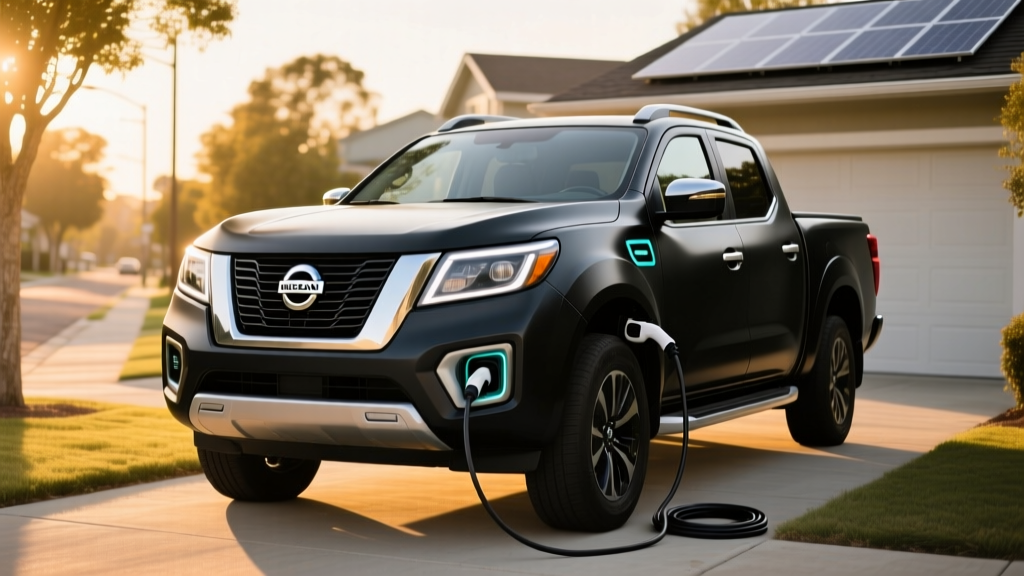
Search forums and truck communities long enough and you will inevitably encounter the question: Is Nissan building a Frontier PHEV? As of early 2026, the answer is no — there is no officially announced, production-confirmed Nissan Frontier plug-in hybrid (PHEV) on sale or in Nissan's published product pipeline. But the question persists for good reason. The midsize truck segment is under mounting pressure to electrify, and Nissan has both the hybrid powertrain expertise and the market incentive to pursue one.
This guide examines what we know from Nissan's recent product statements, what a Frontier PHEV could look like based on the company's existing hybrid architecture, and how it would stack up against the plug-in hybrid trucks already on the road — namely the Ford Maverick Hybrid and the Toyota Tacoma i-FORCE MAX. We will also clarify the critical difference between a conventional hybrid (HEV) and a plug-in hybrid (PHEV), because confusion between the two runs rampant in truck forums.
HEV vs PHEV: What Truck Buyers Must Understand First
Before evaluating any hybrid truck, you need to know which type of hybrid you are looking at. The distinction changes everything — fuel economy, electric-only driving, charging requirements, and tax credit eligibility.
Conventional Hybrid (HEV)
Example: Ford Maverick Hybrid, Toyota Tacoma i-FORCE MAX
- No plug — charges via regenerative braking and the gas engine
- Small battery (typically 1–2 kWh)
- Electric motor assists the engine but cannot drive the truck alone for meaningful distances
- No electric-only range to speak of
- No federal tax credit under §30D
- Lower MSRP premium over gas models
Plug-In Hybrid (PHEV)
Example: Toyota RAV4 Prime, Jeep Wrangler 4xe
- Has a charge port — plug into a Level 1 (120V) or Level 2 (240V) outlet
- Larger battery (typically 12–20 kWh)
- Can drive 20–45 miles on electric power alone before the gas engine starts
- Once the battery depletes, operates as a conventional hybrid
- May qualify for up to $7,500 federal tax credit (subject to §30D rules)
- Higher MSRP premium, but potential fuel and tax savings
When people search for a "Nissan Frontier PHEV," they are specifically asking about a plug-in variant — a Frontier you can charge at home and drive 25+ miles on electricity before the V6 kicks in. That is a fundamentally different vehicle from a conventional hybrid Frontier, which would simply use a small electric motor to improve MPG without any plug-in capability.
Projected Specs: What a Frontier PHEV Could Look Like
Nissan has not released official specifications for a Frontier PHEV. However, we can build a reasonable projection using Nissan's existing e-POWER hybrid system (deployed in the X-Trail e-POWER and Note e-POWER in global markets) and the current Frontier's 3.8L V6 platform. Below is an estimated spec profile alongside confirmed hybrid truck competitors.
| Spec | Nissan Frontier PHEV (Projected) | Ford Maverick Hybrid (2026) | Toyota Tacoma i-FORCE MAX (2026) |
|---|---|---|---|
| Powertrain Type | PHEV (estimated) | HEV | HEV |
| Engine | 2.0L turbo + electric motor (est.) | 2.5L I4 + electric motor | 2.4L turbo I4 + electric motor |
| Combined Horsepower | ~300–340 hp (est.) | 191 hp | 326 hp |
| Battery Capacity | ~15–18 kWh (est.) | ~1.1 kWh | ~1.9 kWh |
| Electric-Only Range | ~25–35 mi (est.) | N/A (HEV) | N/A (HEV) |
| EPA Combined MPG (est.) | ~28–32 MPG (gas-only mode) | 37 MPG combined | 24 MPG combined |
| Towing Capacity | ~5,500–6,500 lbs (est.) | 2,000 lbs | 6,000 lbs |
| Base MSRP | ~$42,000–$48,000 (est.) | ~$28,995 | ~$40,940 |
| Federal Tax Credit | Potentially up to $7,500 (§30D) | Not eligible (HEV) | Not eligible (HEV) |
Sources: fueleconomy.gov (EPA), Nissan global pressroom, Ford and Toyota manufacturer specifications. Frontier PHEV figures are projections only.
Fuel Economy: How Many MPG Would a Frontier PHEV Get?
This is where the HEV vs PHEV distinction matters enormously for truck buyers.
If Nissan builds a conventional hybrid (HEV) Frontier: Expect something in the range of 24–28 MPG combined, similar to the Toyota Tacoma i-FORCE MAX. The current gas-only Frontier with its 3.8L V6 returns an EPA-estimated 18 city / 24 highway / 20 combined MPG in 4WD configuration. A hybrid system could realistically improve that by 20–35%, particularly in stop-and-go city driving where regenerative braking recovers the most energy.
If Nissan builds a plug-in hybrid (PHEV) Frontier: The gas-only MPG once the battery depletes would likely fall in the 26–30 MPG combined range. But the real advantage is the electric-only window: with a ~15–18 kWh battery pack, a Frontier PHEV could cover 25–35 miles on electricity alone before the engine engages. For owners with short commutes and home charging, that means weeks of driving without burning a drop of gasoline.
Battery, Charging, and Powertrain: The Technical Case
Nissan's global hybrid strategy currently revolves around its e-POWER system, where the gasoline engine acts exclusively as a generator — it never directly drives the wheels. The electric motor handles all propulsion. This is a series-hybrid architecture, fundamentally different from Toyota's parallel-hybrid system in the Tacoma, where both the engine and motor can drive the wheels.
For a Frontier PHEV, Nissan would need to scale up e-POWER significantly. The current X-Trail e-POWER uses a 1.5L turbo three-cylinder generator and a ~2.1 kWh battery. A midsize truck application would require:
- Larger generator engine: Likely a 2.0L turbo four-cylinder, producing enough electricity to sustain highway speeds and towing loads
- Substantially larger battery: A PHEV variant would need 15–18 kWh of usable capacity (NMC chemistry likely, given energy density requirements for truck packaging)
- More powerful drive motor: Estimated 200–250 kW electric motor for adequate acceleration and towing torque
- Charging capability: Level 1 (120V) charging in approximately 8–10 hours; Level 2 (240V, 7.2 kW) in roughly 2.5–3 hours. DC fast charging is uncommon in PHEVs due to battery size and cost, and we would not expect it on a Frontier PHEV
Pricing and Federal Tax Credit Eligibility
A Nissan Frontier PHEV, if produced, would carry a significant price premium over the current gas-only Frontier (which starts around $32,000 MSRP for the S trim). Based on PHEV premiums in comparable vehicles — the Toyota RAV4 Prime commands roughly $7,000–$9,000 over the gas RAV4 — a Frontier PHEV would likely start in the $42,000–$48,000 range.
However, a PHEV could qualify for the federal §30D clean vehicle tax credit, which offers up to $7,500. Under current 2026 IRS rules, eligibility depends on several requirements:
- MSRP cap: Trucks/vans/SUVs must have an MSRP at or below $80,000 — a Frontier PHEV would clear this easily
- Buyer income cap: Adjusted gross income must not exceed $150,000 (single), $225,000 (head of household), or $300,000 (joint filers)
- Battery sourcing: Critical minerals and battery components must meet phased-in domestic/free-trade-partner sourcing thresholds — this is the requirement that has disqualified many vehicles in 2024–2025
- Assembly: Final assembly must occur in North America — Nissan's Canton, Mississippi plant would likely qualify
- Point-of-sale transfer: Buyers can transfer the credit to the dealer for an upfront price reduction at purchase
Source: IRS.gov — Clean Vehicle Tax Credits. Eligibility rules change frequently; consult a tax professional before relying on credit availability.
A conventional hybrid (HEV) Frontier would not qualify for the §30D credit. HEVs are not plug-in vehicles and do not meet the battery capacity threshold (at least 7 kWh for PHEVs under §30D). This means the tax credit advantage belongs exclusively to the PHEV variant, which partially offsets its higher sticker price.
Reliability, Battery Warranty, and Replacement Cost
Hybrid reliability is one of the most searched topics among truck buyers considering electrification. Here is what the data shows:
Nissan's hybrid track record: Nissan has less hybrid experience in the U.S. market than Toyota or Ford. The brand's e-POWER system has been on sale in Japan and Europe since 2016 with generally positive reliability data, but it has not been deployed in a body-on-frame truck. The current gas-only Frontier has average reliability ratings, with some model years showing transmission-related concerns in earlier generations (the 2005–2019 Frontier used a 5-speed automatic; the 2022+ generation switched to a 9-speed).
Battery warranty expectations: Federal law mandates that hybrid and PHEV battery packs carry a minimum warranty of 8 years / 100,000 miles (in California Air Resources Board states, this extends to 10 years / 150,000 miles). Nissan has historically met or exceeded these minimums on its electrified vehicles. We would expect a Frontier PHEV to carry at least an 8-year/100,000-mile hybrid battery warranty.
Who Should Wait for a Frontier PHEV — and Who Should Buy Now?
Because the Nissan Frontier PHEV is not an available vehicle, the practical question is whether to wait for a potential announcement or purchase an existing hybrid truck today.
✓ Buy a Hybrid Truck Now If:
- You need a truck in the next 6–12 months
- Your priority is fuel economy without plugging in — the Ford Maverick Hybrid delivers 37 MPG combined as an HEV, no charging required
- You want proven hybrid reliability with established dealer support
- You tow under 6,000 lbs and don't need a full-size truck
- You prefer the lower upfront cost of an HEV over a PHEV
⏳ Consider Waiting If:
- You have home charging access and a short commute (<30 miles) — a PHEV could eliminate your daily gasoline use
- You want the potential $7,500 federal tax credit, which only PHEVs qualify for
- You are loyal to the Nissan Frontier platform and prefer its ride, interior, and dealer network
- You want electric-only driving for neighborhood and job-site use without range anxiety
- Your purchase timeline is 18–36 months out
- HEV (conventional hybrid): Best for buyers who want better MPG with zero lifestyle change. No plug, no behavior change, modest fuel savings. Choose if you lack home charging.
- PHEV (plug-in hybrid): Best for buyers with home charging and short commutes who also need long-range capability for road trips or towing. Electric daily driving, gas backup for everything else.
- BEV (full electric): Best for buyers with reliable home charging, predictable routes, and minimal towing needs. Lowest operating cost, highest upfront cost, and the most infrastructure planning required. Currently, no midsize BEV pickup is widely available in the U.S.
Frequently Asked Questions
Is the Nissan Frontier PHEV officially announced?
No. As of early 2026, Nissan has not officially announced a Frontier PHEV or Frontier hybrid of any kind. The current-generation Frontier (introduced for model year 2022) is sold exclusively with a 3.8L V6 gasoline engine. Nissan has discussed expanding its e-POWER hybrid technology globally, but no U.S.-market Frontier application has been confirmed.
How many MPG does the current Nissan Frontier get?
The 2026 Nissan Frontier with the 3.8L V6 and 4WD returns an EPA-estimated 18 city / 24 highway / 20 combined MPG, per fueleconomy.gov. A conventional hybrid variant could realistically achieve 24–28 MPG combined; a PHEV variant would offer similar gas-only MPG once the battery is depleted, plus 25–35 miles of electric-only driving beforehand.
Does a hybrid truck qualify for a federal tax credit?
Only plug-in hybrid (PHEV) trucks can qualify for the federal §30D clean vehicle tax credit, which offers up to $7,500 subject to MSRP caps, buyer income limits, and battery sourcing requirements. Conventional hybrids (HEVs) like the Ford Maverick Hybrid and Toyota Tacoma i-FORCE MAX do not qualify. See IRS.gov for current eligibility details.
Are hybrid truck batteries expensive to replace?
Full PHEV battery replacement outside warranty typically costs $8,000–$15,000. Conventional hybrid (HEV) battery replacement is generally $3,000–$6,000 due to smaller pack sizes. However, hybrid batteries are designed to last the life of the vehicle — Toyota's hybrid packs routinely exceed 200,000 miles. Federal law requires at least an 8-year/100,000-mile hybrid battery warranty.
What hybrid trucks can I actually buy right now?
In the midsize and compact truck segment, your confirmed 2026 options include the Ford Maverick Hybrid (HEV, 37 MPG combined, ~$28,995 starting MSRP) and the Toyota Tacoma i-FORCE MAX (HEV, 24 MPG combined, ~$40,940 starting MSRP). In the full-size segment, the Ford F-150 PowerBoost (HEV) and Toyota Tundra i-FORCE MAX (HEV) are available. No midsize PHEV truck is currently sold in the U.S.
Could Nissan use its e-POWER system in the Frontier?
Technically, yes. Nissan's e-POWER series-hybrid system — where the gas engine generates electricity and only the electric motor drives the wheels — has been deployed in the X-Trail, Qashqai, and Note in global markets. Scaling it to a body-on-frame, 5,000+ lb truck would require a larger generator, a more powerful drive motor, and significant battery capacity. It is engineering-feasible but would represent a substantial investment Nissan has not yet publicly committed to.